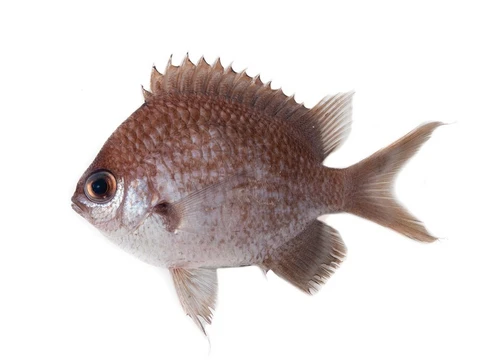
Rhomboid Chromis (Chromis bowesi)
Source-cited species reference: taxonomy from WoRMS, biology from FishBase, conservation from IUCN Red List, description from Wikipedia.

Chromis bowesi, the rhomboid chromis, is a species of damselfish in the family Pomacentridae. This species was first described in 2019 by Luiz A. Rocha and colleagues, along with Chromis hangganan and Chromis gunting, discovered and known from Verde Island, Batangas Bay and Puerto Galera Bay, in the Philippines.
- Scientific name
- Chromis bowesi
- Authority
- Arango, Pinheiro, Rocha, Greene, Pyle, Copus, Shepherd & Rocha, 2019
- Family
- Pomacentridae
- Order
- Ovalentaria incertae sedis
- Maximum length
- 8.210000038146973 cm
- Depth range
- 80–120 m
- Habitat zone
- reef-associated
- Iucn red list
- Least Concern
Taxonomic Home in the Pomacentridae
The Rhomboid Chromis, scientifically designated as Chromis bowesi, occupies a defined position within the broader classification of marine fish. It belongs to the genus Chromis, which is itself a member of the family Pomacentridae. This family grouping places the species among what are commonly referred to as damselfishes, a collective term that encompasses a variety of marine fish species. It is important to note that the label damselfish does not correspond to a single taxonomic unit; rather, it describes a group that spans more than one genus. Chromis bowesi, therefore, is one thread in a larger tapestry of related marine species that share the Pomacentridae family designation. Understanding this taxonomic nesting, from species to genus to family, helps clarify how the Rhomboid Chromis relates to its close relatives and to the wider community of marine fish that fall under the damselfish umbrella.
The Largest Genus Among Damselfishes
Within the diverse world of damselfishes, the genus Chromis holds a position of particular prominence. It is recognized as the largest genus within the damselfish group, meaning it encompasses the greatest number of distinct species among all the genera that fall under the damselfish designation. This makes Chromis a central pillar of the Pomacentridae family, with its collective species representing a substantial portion of the marine fish diversity that the term damselfish is used to describe. For the Rhomboid Chromis (Chromis bowesi), this means it is one member of a genus that outnumbers its damselfish relatives in sheer species count. The breadth of the genus suggests a wide range of forms and ecological niches occupied by its members, all united under the Chromis name. Being part of the largest damselfish genus places Chromis bowesi within a particularly rich and varied lineage, one that has clearly diversified extensively within the Pomacentridae family.
A Mosaic of Marine Genera
The common name damselfish might suggest a single, unified group of fish, but the reality is more complex. The term actually describes a collection of marine fish that includes more than one genus, meaning the damselfish identity is shared across several distinct taxonomic lineages. Chromis, as the largest of these genera, forms the most species-rich component of this multi-genus mosaic, but it is not the only contributor. The Rhomboid Chromis (Chromis bowesi) thus belongs to the dominant genus within a broader assemblage that also includes damselfish species from other genera. This multi-genus structure means that two fish both called damselfish might belong to entirely different genera, with Chromis being the one that carries the most species. For anyone studying or observing damselfishes in their natural marine habitat, recognizing this layered taxonomy, where a common name bridges multiple genera and Chromis stands as the largest among them, adds important context to the diversity one encounters.
Presence in the Aquarium Trade
Beyond their ecological roles in marine ecosystems, members of the genus Chromis have found a secondary life in the hands of hobbyists and enthusiasts. Certain species within the genus are noted as being common in the aquarium trade, a fact that elevates the visibility of the group far beyond the reefs where they naturally reside. While the Rhomboid Chromis (Chromis bowesi) is a specific species within this genus, the broader Chromis lineage benefits from the aquarium trade's interest in damselfishes. The fact that particular Chromis species are regularly available in the trade suggests that they possess qualities that make them appealing to those who keep marine fish in home or public aquaria. This commercial presence also means that the genus Chromis, the largest damselfish genus in the Pomacentridae family, reaches a wider audience than it might through field observation alone, creating a bridge between marine biology and the popular hobby of aquarium keeping.
Frequently Asked Questions
What is Rhomboid Chromis (Chromis bowesi)?
It is a species of damselfish belonging to the family Pomacentridae, classified under the order Ovalentaria incertae sedis. The name 'rhomboid' reflects its body shape, distinguishing it from other Chromis species in the region.
Where can Rhomboid Chromis (Chromis bowesi) be found?
Its known range is limited to a few sites in the Philippines, specifically Verde Island, Batangas Bay, and Puerto Galera Bay. No confirmed records exist outside these Philippine localities.
When was Rhomboid Chromis (Chromis bowesi) first described?
The species was formally named and described in 2019 by Luiz A. Rocha and a team of co-authors (Arango, Pinheiro, Rocha, Greene, Pyle, Copus, Shepherd & Rocha). It was described alongside two other new Chromis species, C. hangganan and C. gunting.
How large does Rhomboid Chromis (Chromis bowesi) grow?
It reaches a maximum total length of roughly 8.2 cm, placing it in the small-to-mid size range for damselfishes. This makes it a modestly sized reef inhabitant compared to larger pomacentrids.
At what depth does Rhomboid Chromis (Chromis bowesi) live?
It has been recorded from depths between 80 and 120 meters, which is considerably deeper than many other Chromis species that typically occupy shallower reef zones. This deeper habitat range is one of the notable traits that set it apart within the genus.
Spotted an error? Know more?
Reader corrections go straight into our review queue. Suggest an edit · How this site is sourced