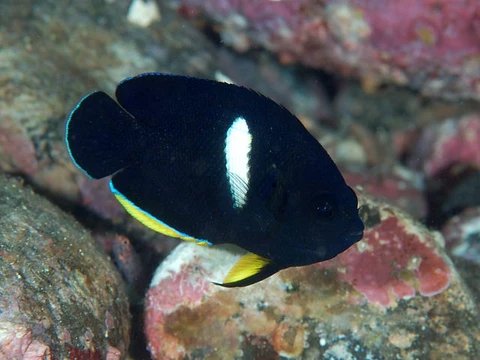
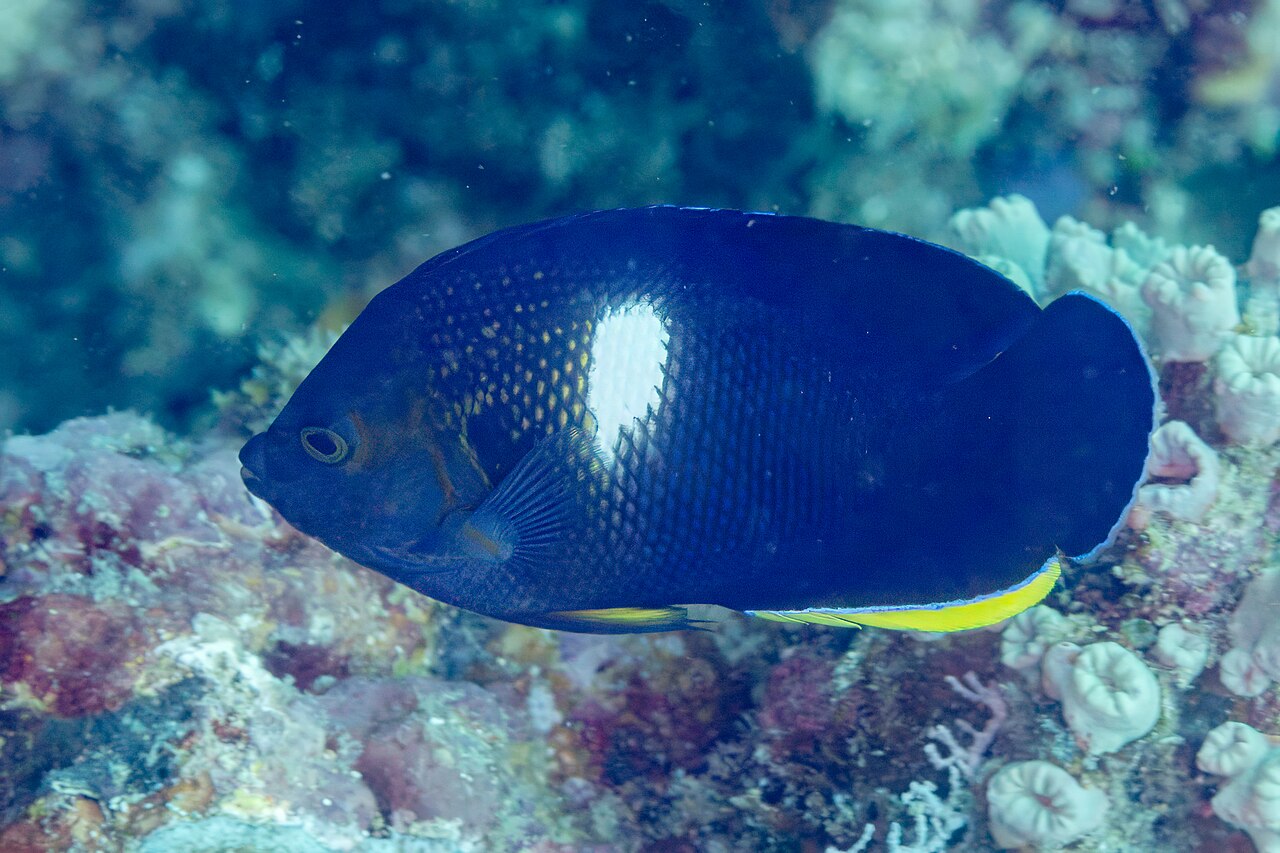
Keyhole angelfish (Centropyge tibicen)
Source-cited species reference: taxonomy from WoRMS, biology from FishBase, occurrence map from GBIF, conservation from IUCN Red List, description from Wikipedia.

Rickard Zerpe · CC BY 2.0
Centropyge tibicen, the keyhole angelfish, black angelfish, whitespot angelfish or puller angelfish, is a species of marine ray-finned fish, a marine angelfish belonging to the family Pomacanthidae. It is found in the Indo-Pacific region.
- Scientific name
- Centropyge tibicen
- Authority
- (Cuvier, 1831)
- Family
- Pomacanthidae
- Order
- Acanthuriformes
- Maximum length
- 19 cm
- Depth range
- 4–55 m
- Habitat zone
- reef-associated
- Iucn red list
- Least Concern
- Gbif occurrence records
- 1,878
Taxonomic Identity and Common Naming
The Keyhole angelfish is formally classified under the binomial name Centropyge tibicen, placing it within the genus Centropyge. Its common name, "Keyhole angelfish," distinguishes it in everyday usage from other members of the angelfish family. However, this species also falls under the broader, more ambiguous label of "black angelfish," a designation it shares with several other classified fish species. This dual naming situation means that someone searching for a "black angelfish" could encounter the Keyhole angelfish alongside entirely different organisms, making precise taxonomic identification essential for accurate reference. The genus name Centropyge and the species epithet tibicen together provide the unambiguous scientific identifier that common names alone cannot offer, anchoring the species firmly within a specific lineage of the angelfish family.
The Shared 'Black Angelfish' Designation
One of the most notable aspects of the Keyhole angelfish's nomenclature is that it occupies a shared common-name space with at least three other distinct fish species. The term "black angelfish" is not exclusive to Centropyge tibicen; it also applies to Chaetodontoplus niger, Parma alboscapularis (the New Zealand black angelfish), and even the freshwater angelfish, a breed of Pterophyllum scalare. This overlap in common naming creates a significant disambiguation challenge for hobbyists, researchers, and the general public alike. Without recourse to the full binomial name, a reference to "black angelfish" could point to any of these four organisms, each belonging to a different genus and potentially a different ecological context. The Keyhole angelfish's inclusion in this group underscores how common names, while accessible, can obscure the true taxonomic distinctness of a species.
Distinguishing It from Its Namesakes
Within the constellation of species that carry the "black angelfish" label, the Keyhole angelfish (Centropyge tibicen) stands apart from its namesakes through its specific genus and species designation. Chaetodontoplus niger belongs to a different genus entirely, as does Parma alboscapularis, which carries the geographic qualifier "New Zealand" in its common name. Most strikingly, the freshwater angelfish—a breed of Pterophyllum scalare—represents a fundamentally different lineage, distinguished not only by its genus but by its explicitly freshwater association, in contrast to the other three species in the list. The Keyhole angelfish, by virtue of its placement in the genus Centropyge, is taxonomically separate from all three of these other "black angelfish" entries. This separation highlights the importance of using the full scientific name Centropyge tibicen when precision is required, rather than relying on a common name that spans multiple unrelated lineages.
Placement Among Angelfish Lineages
The Keyhole angelfish's position within the broader angelfish family is clarified by its genus-level classification as Centropyge. This places it in a distinct lineage from the other species that share the "black angelfish" common name. Chaetodontoplus niger and Parma alboscapularis each occupy their own genera, reflecting different taxonomic trajectories. The freshwater angelfish, a breed of Pterophyllum scalare, represents yet another separate branch, notable for its freshwater association—a context that sets it apart from the other three species in the disambiguation list. The Keyhole angelfish, as a member of Centropyge, thus occupies a unique taxonomic niche. Its common name "Keyhole angelfish" serves as a practical identifier within the angelfish community, while its scientific name Centropyge tibicen anchors it firmly within the formal classification system, distinguishing it from the Chaetodontoplus, Parma, and Pterophyllum lineages that share its broader common-name label.
Gallery
Frequently Asked Questions
What is the keyhole angelfish?
The keyhole angelfish is a small marine angelfish in the family Pomacanthidae, also called the black angelfish, whitespot angelfish, or puller angelfish. It was first formally described by Cuvier in 1831 under the binomial name Centropyge tibicen.
Where does the keyhole angelfish live in the wild?
This species is native to the broad Indo-Pacific region, where it is associated with coral reef habitats. In the wild it can be encountered at depths anywhere from about 4 meters down to roughly 55 meters.
How big does a keyhole angelfish grow?
Adults top out at a maximum total length of approximately 19 centimeters, which keeps them among the smaller members of the angelfish family. That modest size is one reason they are a familiar sight in both reef ecosystems and the marine aquarium trade.
What is the keyhole angelfish's taxonomic placement?
Centropyge tibicen belongs to the genus Centropyge within the family Pomacanthidae, and it falls under the order Acanthuriformes. As a ray-finned fish, it is part of the large group of bony fishes that dominate modern marine life.
Why do reef divers and aquarists care about the keyhole angelfish?
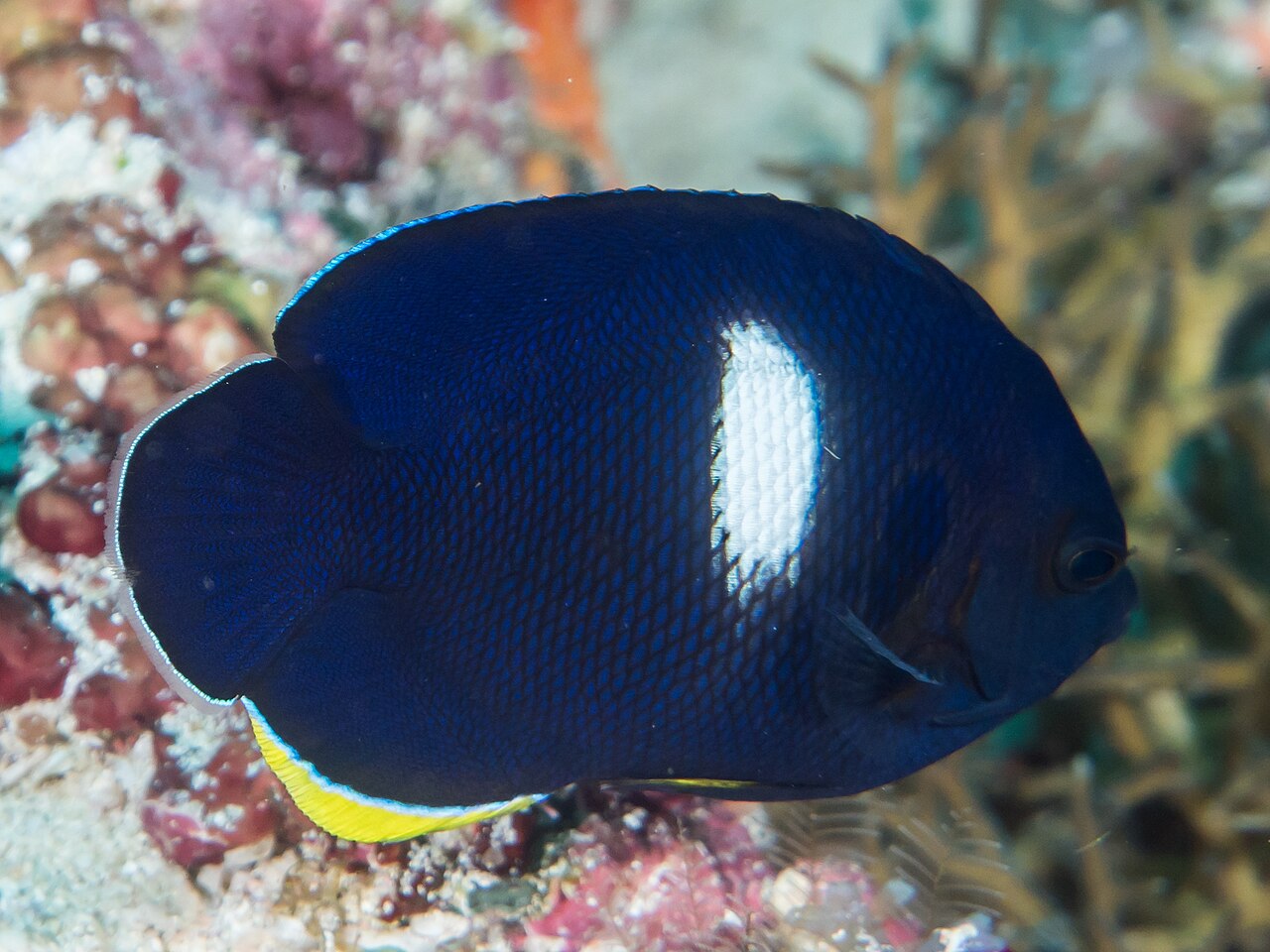
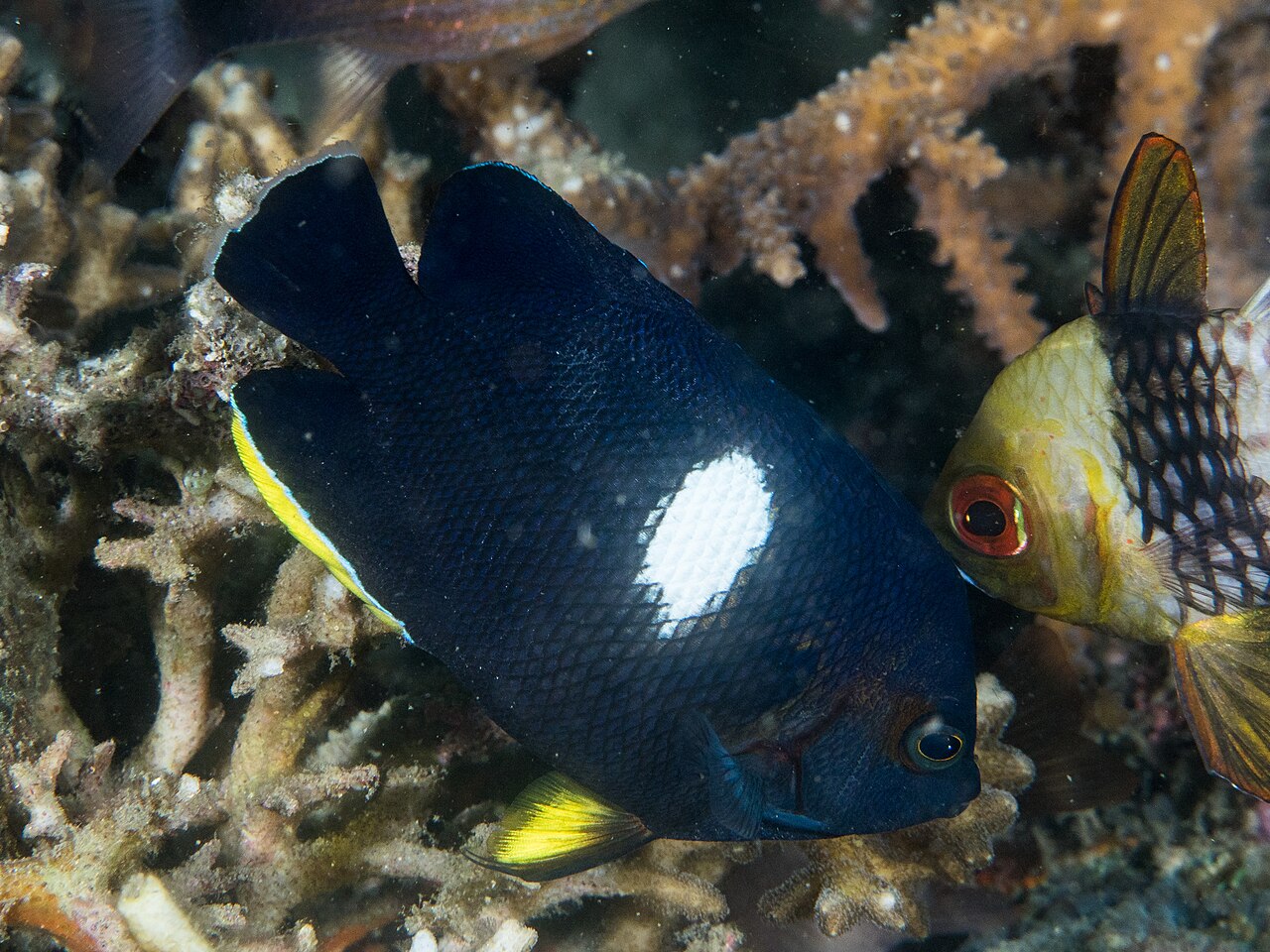
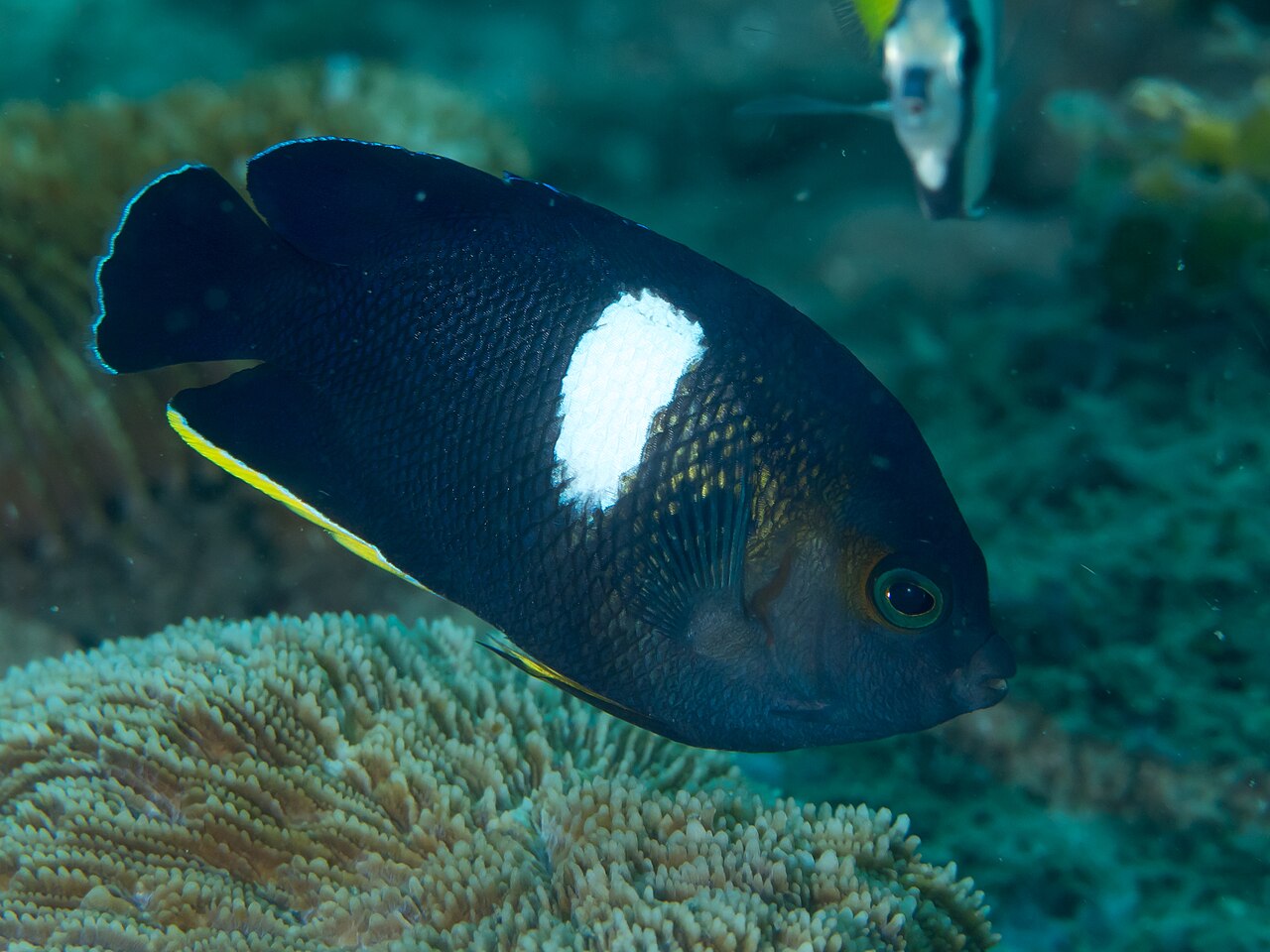
Its striking dark body marked by a distinctive pale spot near the pectoral fin gives it an instantly recognizable silhouette on Indo-Pacific reefs. Because it is a small, reef-associated species found across a wide depth band, it is a regular and beloved encounter for both divers exploring coral habitats and hobbyists curating reef tanks.
Related in Keyhole angelfish
Links follow this subject's own source article.
Elsewhere in Keyhole angelfish
Spotted an error? Know more?
Reader corrections go straight into our review queue. Suggest an edit · How this site is sourced