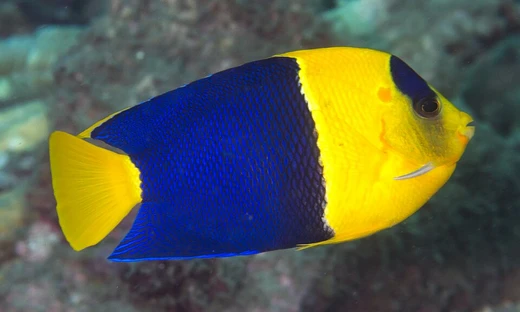
Bicolor angelfish (Centropyge bicolor)
Source-cited species reference: taxonomy from WoRMS, biology from FishBase, occurrence map from GBIF, conservation from IUCN Red List, description from Wikipedia, aquarium from Wikipedia (cited section).

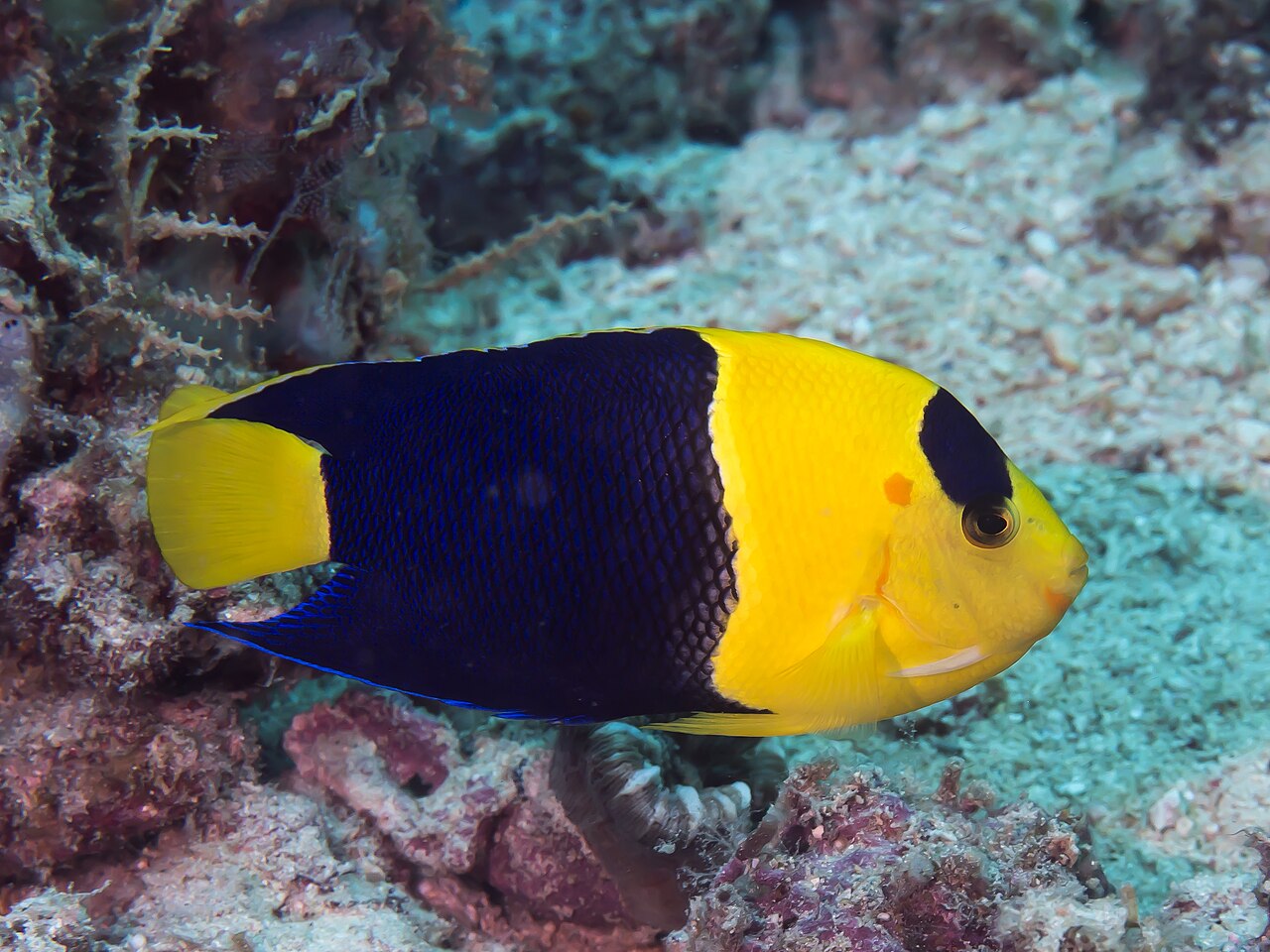
Rickard Zerpe · CC BY 2.0
The bicolor angelfish (Centropyge bicolor), also known as the Pacific rock beauty, oriole angelfish, oriole dwarf angel, blue and gold angel or two-colored angel, is a species of marine ray-finned fish in the angelfish family Pomacanthidae.
- Scientific name
- Centropyge bicolor
- Authority
- (Bloch, 1787)
- Family
- Pomacanthidae
- Order
- Acanthuriformes
- Maximum length
- 15 cm
- Depth range
- 1–25 m
- Habitat zone
- reef-associated
- Iucn red list
- Least Concern
- Gbif occurrence records
- 3,139
A Study in Contrasting Colors
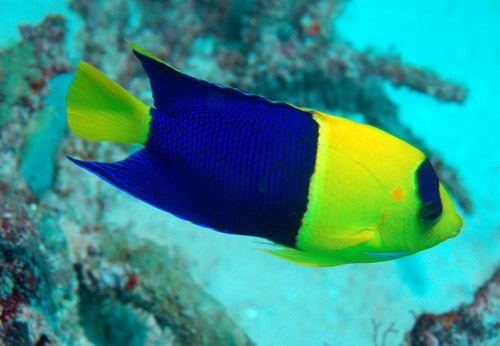
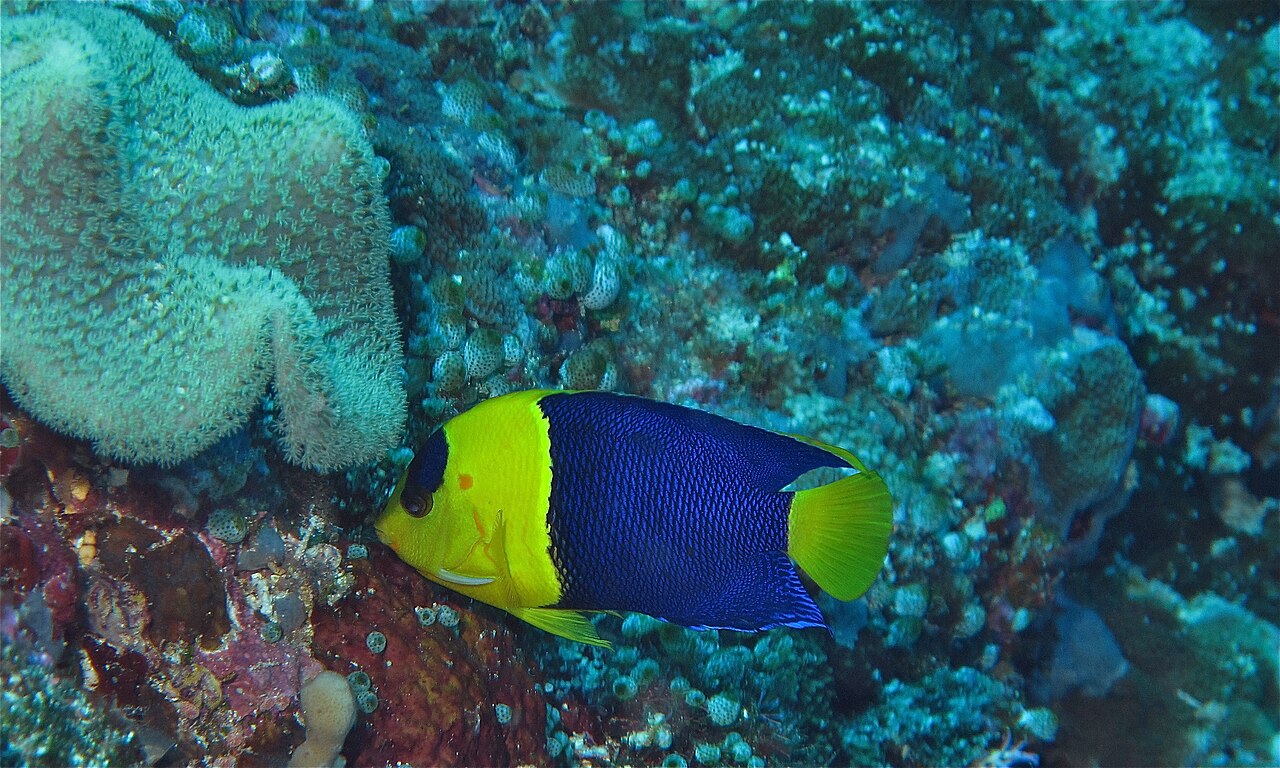
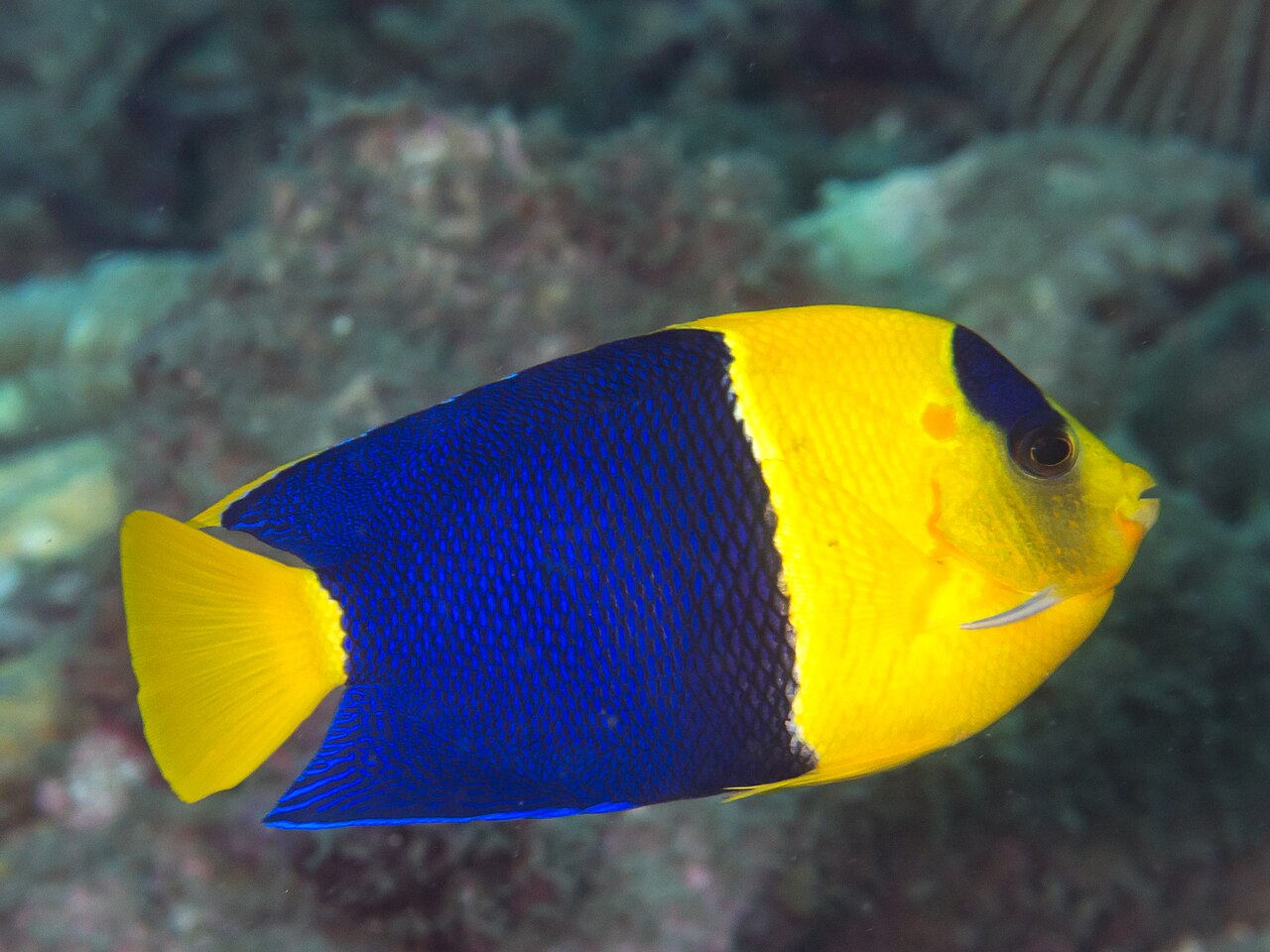
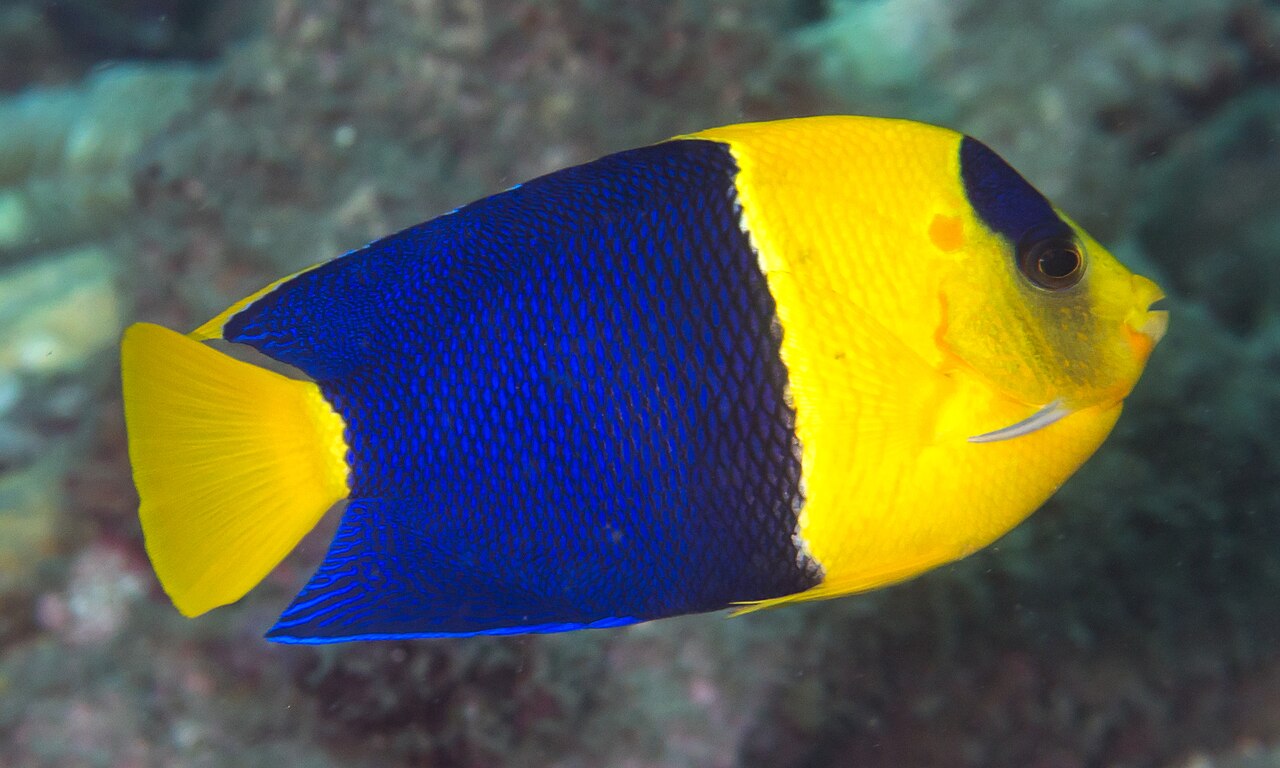
The bicolor angelfish, a member of the marine ray-finned family Pomacanthidae, is instantly identifiable by its striking two-tone coloration. The head—except for the regions surrounding and above the eyes—the forward portion of the body, and both the pelvic and caudal fins blaze in vivid yellow, while every remaining surface of the fish is a deep, saturated blue. The pectoral fins are nearly transparent, adding a subtle ghostly accent to the otherwise bold palette. This small, compact body shape and the sharp yellow-and-blue division make it one of the most recognizable dwarf angels in the hobby. Over the years, aquarists and field naturalists have accumulated a long list of common names for the species, including Pacific rock beauty, oriole angelfish, oriole dwarf angel, blue and gold angel, and two-colored angel. In the wild, it inhabits the Indo-Pacific, ranging from the waters off East Africa to southern Japan, Australia, the Philippines, and Fiji, typically at depths between one and twenty-five meters along reef slopes, coral-rich zones, lagoons, and drop-off edges.
A Hierarchy Built on Transformation
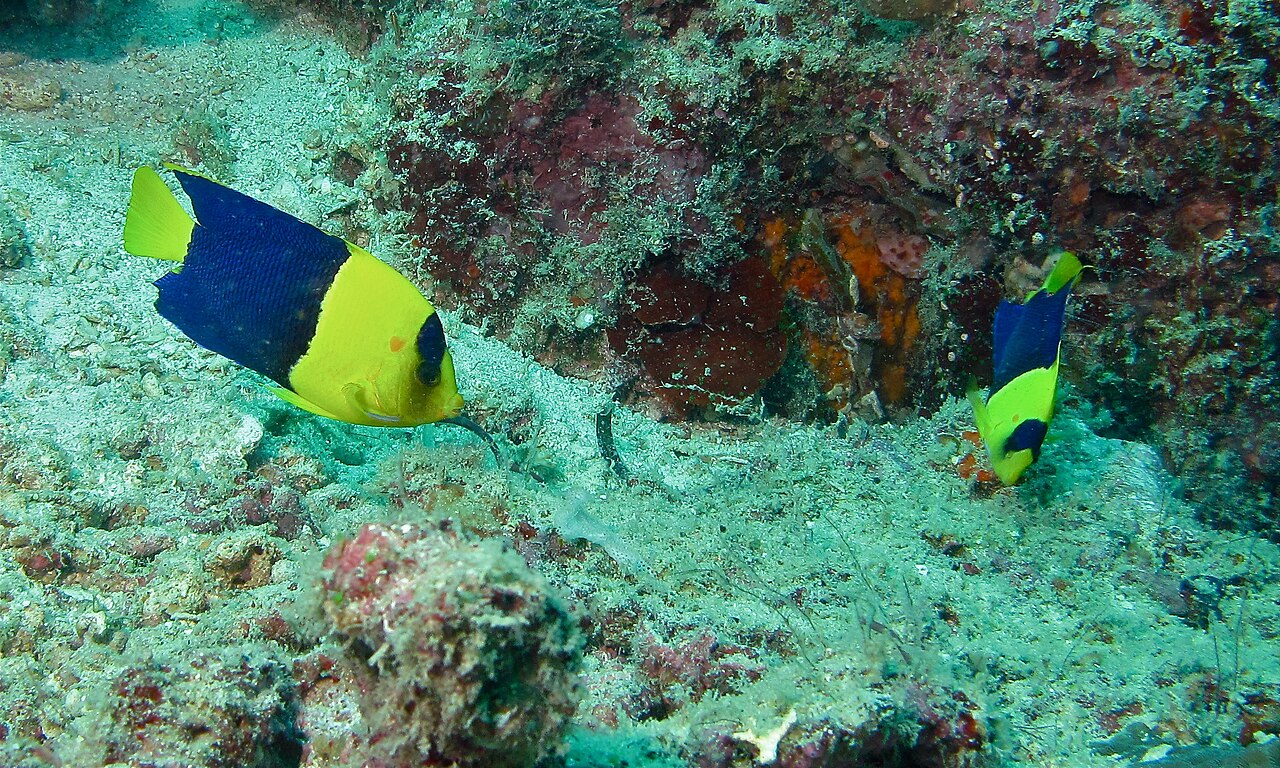
One of the most remarkable biological traits of Centropyge bicolor is its protogynous hermaphroditism. Every individual begins life as a female during the roughly thirty-two-day larval stage, and no sex change occurs until adulthood under particular social conditions. Once mature, the species organizes itself into harems: a single dominant male presides over a group of females—averaging seven in number—who are arranged in a strict linear hierarchy determined by body size. Each female mates exclusively with her harem's male. Should that male die or be removed, the largest and highest-ranking female triggers a sex-change process that unfolds over eighteen to twenty days, effectively filling the vacant leadership role. This mechanism ensures the harem's continuity without the need to recruit a new male from outside. In the wild, individual lifespan varies considerably by geographic location, spanning anywhere from five to thirteen years, giving these social groups a long window to maintain and renegotiate their internal order.
Dusk Mating and Territorial Vigilance
Reproductive activity in the bicolor angelfish is tightly choreographed around dusk. The male cycles through his harem, visiting one or several females in a single evening, while each female limits herself to a single spawning event per night. During spawning, the female scatters her eggs into the water column and the male immediately releases sperm to fertilize them. Notably, higher-ranking females within the harem have been observed to spawn more frequently than their lower-ranked counterparts, reinforcing the link between social position and reproductive output. Outside of breeding, the male devotes most of his energy to territorial defense. His home range, which typically does not exceed two hundred square meters, encompasses the foraging areas of every female in his group. He guards this space against predators, against intruders from other species, and—most persistently—against rival harems. Females, by contrast, direct their aggression almost exclusively downward in the size hierarchy, policing lower-ranked members to protect their own standing. In captivity, an additional behavior has been noted: the bicolor angel may act as a facultative cleaner fish, a role considered unlikely to occur in natural reef settings.
Life Behind Glass: Aquarium Considerations
Among dwarf angelfish, the bicolor angel sits on the larger side and demands a substantial setup. A minimum tank volume of seventy-five gallons is recommended, paired with generous grazing surfaces to satisfy its natural foraging instincts. Keepers should be aware that many individuals will nip at or outright consume stony corals and ornamental bivalves, though this is not universal. Because the species enjoys moving between multiple hiding spots, a well-structured tank with numerous caves and crevices is ideal. The bicolor angel can be one of the more sensitive dwarf angels during acclimation, so experienced keepers advise introducing it early in the tank's history, before territorial species such as tangs have firmly claimed their zones. Water parameters should be maintained near twenty-three to twenty-six degrees Celsius with a pH between 8.1 and 8.4. Its diet in captivity spans algae, shrimps, worms, and spirulina-based flakes. Housing more than one bicolor angel is only advisable when deliberately attempting to form a pair or a small harem, in which case including one noticeably larger individual alongside one or more smaller ones improves the odds of securing a male.
Gallery
Frequently Asked Questions
What is the Bicolor angelfish (Centropyge bicolor)?
It is a small marine ray-finned fish belonging to the angelfish family Pomacanthidae, first described by Bloch in 1787. Enthusiasts also call it the Pacific rock beauty, oriole angelfish, blue and gold angel, or two-colored angel.
What does the Bicolor angelfish look like?
True to its name, the species shows a bold two-tone pattern: a deep blue upper body contrasted with a vivid yellow-to-gold lower half. This clean split between the two colors is the feature behind nearly all of its common names.
Where does the Bicolor angelfish live and at what depth?
It is a Pacific reef-dweller found in relatively shallow water, typically between 1 and 25 meters. It favors rocky outcrops and coral structures where it can forage and take shelter.
How big does a Bicolor angelfish grow?
Adults top out at roughly 15 cm (about 6 inches), placing it among the smaller angelfish. That compact size is a big reason it remains a staple pick for hobbyist reef tanks.
Can I keep a Bicolor angelfish in a home saltwater aquarium?
Yes—it is widely regarded as a reef-compatible, generally peaceful dwarf angel that does well in adequately sized tanks with plenty of live rock for hiding. Its modest adult size and calm demeanor make it one of the more forgiving Centropyge species for experienced aquarists.
Related in Bicolor angelfish
Links follow this subject's own source article.
Elsewhere in Bicolor angelfish
Spotted an error? Know more?
Reader corrections go straight into our review queue. Suggest an edit · How this site is sourced