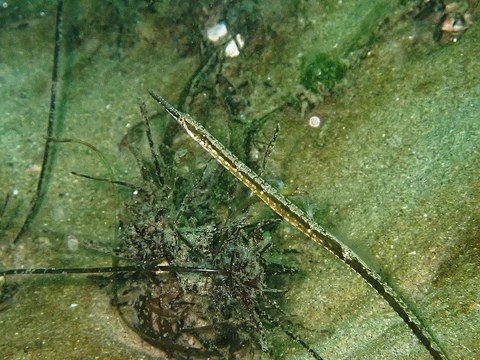
Kelp pipefish (Syngnathus californiensis)
Source-cited species reference: taxonomy from WoRMS, biology from FishBase, occurrence map from GBIF, conservation from IUCN Red List, description from Wikipedia.

(c) Donald Davesne, some rights reserved (CC BY) · CC BY 4.0
The bay pipefish (Syngnathus leptorhynchus) is a pipefish native to the eelgrass beds of the Eastern Pacific (Southern Baja California to Gulf of Alaska), where its sinuous shape and green color allow it to blend in with the waving blades of eelgrass. They have an elongated, slim body along with weak dorsal fins and pectoral fins for locomotion. This aspect of their morphology sets them up to be poor swimmers. More specifically, they have to resort to steering using their heads to orient their direction. These pipefish also have bony plates that span the length of their ten inch, thin frame. These bony plates help them stay protected from predation and support their body structurally. Bay pipefish also have a toothless, elongated mouth that allow them to suction food into their mouth. Most of their time is spent feeding on algae during the day due to the fact they lack a stomach.
- Scientific name
- Syngnathus californiensis
- Authority
- Storer, 1845
- Family
- Syngnathidae
- Order
- Syngnathiformes
- Maximum length
- 50 cm
- Habitat zone
- demersal
- Iucn red list
- Least Concern
- Gbif occurrence records
- 2,069
Taxonomic Identity & Classification
The kelp pipefish bears the formal scientific name Syngnathus californiensis, a binomial that simultaneously places it within the genus Syngnathus and flags its association with the California coast. In everyday usage, coastal observers and naturalists along the eastern Pacific simply call it the kelp pipefish, a name that hints at the kind of seaweed-rich environment it frequents. As a recognized species of pipefish, it is a distinct biological entity in its own right, not a subspecies or local variant of some other marine animal. The two-part naming convention serves a practical purpose: the common name is accessible to the general public and to those who work in the water, while the Latin binomial provides an unambiguous reference for scientists cataloguing biodiversity across the globe. Being classified as a pipefish rather than any other category of marine vertebrate signals membership in a particular evolutionary lineage with its own suite of shared characteristics. The species epithet californiensis, drawn from the region where the fish is most prominently encountered, further distinguishes it from any pipefish relatives that might inhabit other ocean basins.
Geographic Range & Distribution
The kelp pipefish occupies a defined stretch of the eastern Pacific Ocean, with its known range stretching from Bodega Bay in northern California, United States, southward to the southern tip of Baja California in Mexico. This distribution spans two national jurisdictions, meaning the species crosses an international maritime boundary as part of its natural habitat. Bodega Bay, a well-known coastal inlet on the California coast, marks the northernmost point where the fish has been documented, while the southern extremity of Baja California represents the farthest reach of its range into Mexican waters. The fact that its range is confined to this relatively narrow latitudinal band along the western coast of North America suggests a preference for the particular water temperatures, currents, and substrate conditions found in this stretch of the eastern Pacific. No records extend it into the tropical waters south of Baja California or the colder waters north of Bodega Bay. Its distribution is thus a coastal, temperate-to-subtropical corridor rather than a broad oceanic one.
Habitat & Ecological Niche
Three key descriptors define where and how the kelp pipefish lives within its range: it is a marine, subtropical, demersal fish. Marine confirms that it is a saltwater species, found exclusively in the ocean rather than in rivers, estuaries, or freshwater bodies. Subtropical narrows its thermal preference to waters that are warm but not fully tropical, consistent with the coastal zone from Bodega Bay to southern Baja California, where seasonal temperature swings are moderate. Demersal is perhaps the most ecologically revealing term of the three, indicating that the fish spends its life near or on the seafloor rather than in the open water column or at the surface. This bottom-dwelling lifestyle places it among the benthic community of its habitat, associated with the substrate and the kelp-rich coastal environments that give the species its common name. Together, these three descriptors paint a picture of a fish adapted to a specific ecological niche: a saltwater, moderately warm, bottom-associated environment along the North American Pacific coast.
Physical Dimensions & Size
Among the measurable characteristics of the kelp pipefish, its maximum length stands out as a defining physical parameter. Individuals of this species can reach up to 50 centimetres, which converts to approximately 20 inches, making it a fish of considerable size within the pipefish group. The phrasing up to is important: it establishes a ceiling rather than a typical measurement, meaning that not every specimen encountered in the wild will reach this maximum. Some individuals will be smaller, and the 50-centimetre figure represents the upper bound of the species' growth potential. In practical terms, a 50-centimetre pipefish is large enough to be a notable sight for anyone observing the demersal zone along the California or Baja California coast, and large enough to be easily distinguished from smaller marine invertebrates or juvenile fish that might share its bottom-dwelling habitat. The metric and imperial measurements are both commonly cited in reference literature, reflecting the dual measurement systems used across the two countries—United States and Mexico—within whose waters the species is found.
Gallery
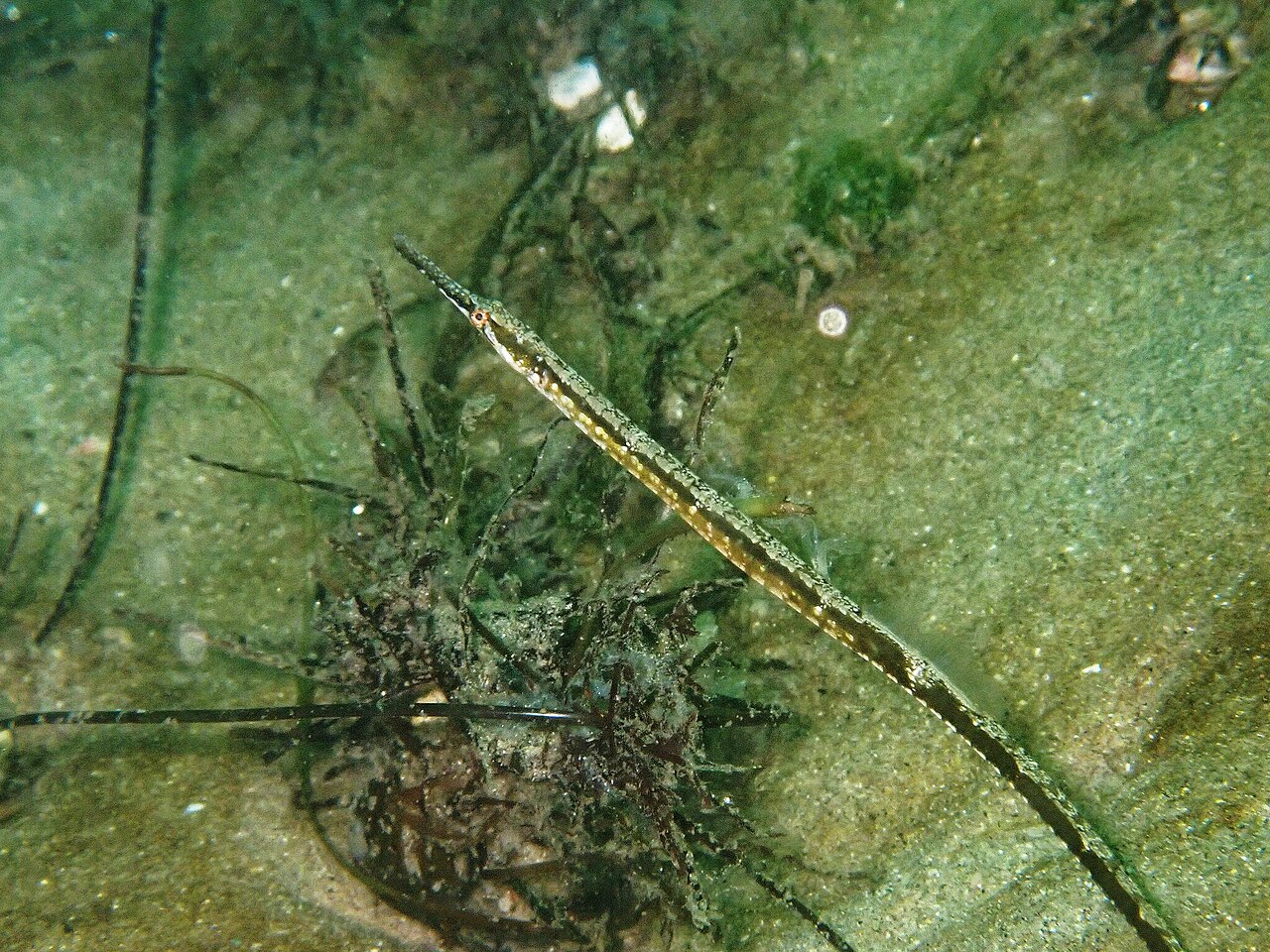
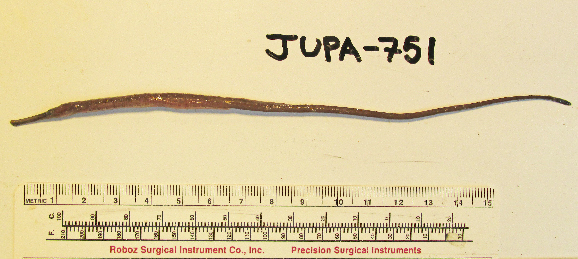
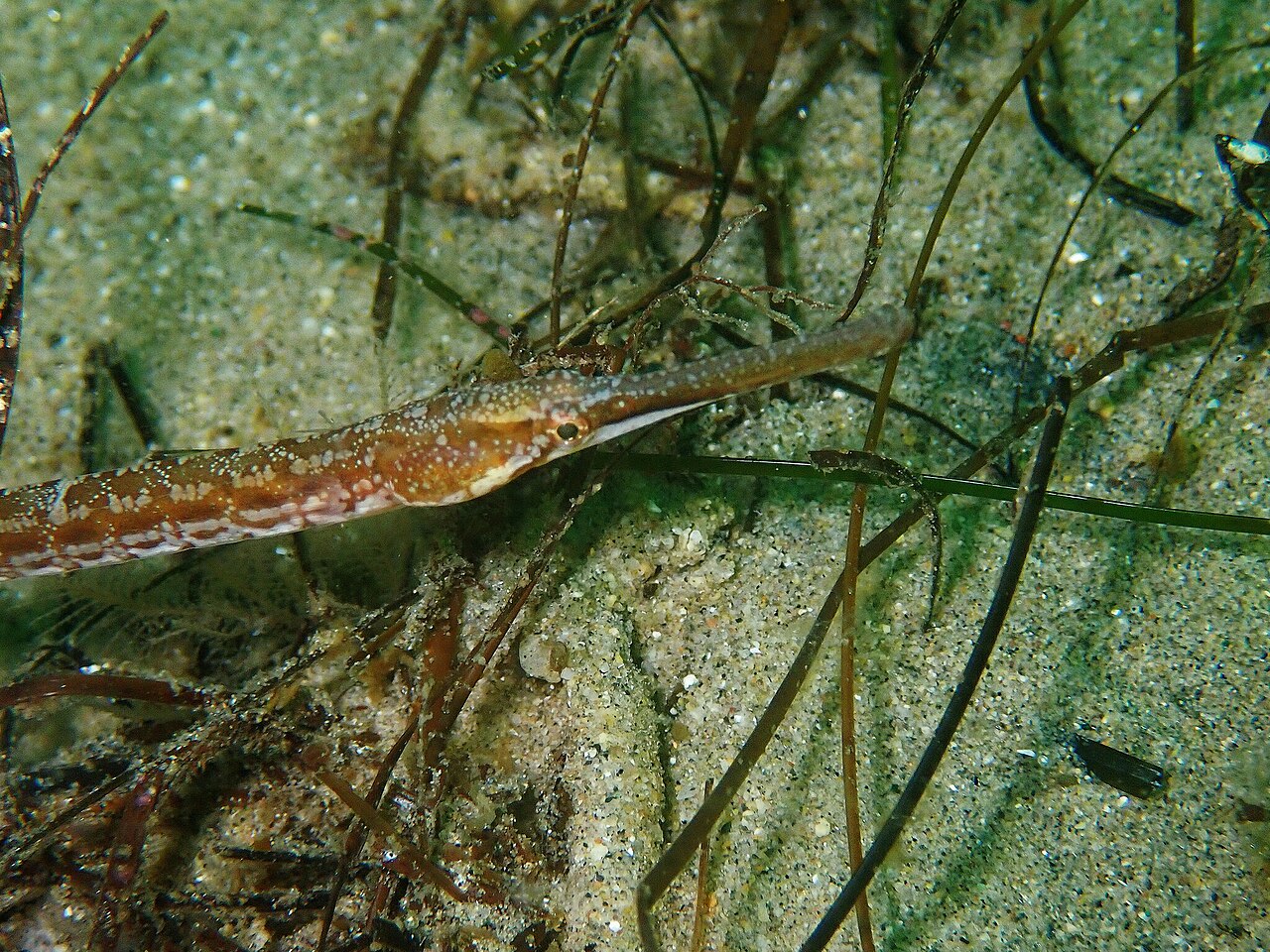
Frequently Asked Questions
What is the Kelp pipefish (Syngnathus californiensis)?
The Kelp pipefish is a marine fish classified in the family Syngnathidae and the order Syngnathiformes. It was first formally described by Storer back in 1845 and is a demersal species native to the eastern Pacific.
How large can the Kelp pipefish (Syngnathus californiensis) grow?
Individuals of this species can reach a maximum total length of 50 cm, which places it among the larger pipefishes in its genus. Its elongated, slender build is typical of Syngnathus members.
What kind of habitat does the Kelp pipefish (Syngnathus californiensis) occupy?
As a demersal fish, the Kelp pipefish spends most of its time near the seafloor rather than in the open water column. It is associated with the benthic zone along the Pacific coast of North America.
Why is the Kelp pipefish (Syngnathus californiensis) important to the marine community?
As a member of the Syngnathidae family, it contributes to the structure of nearshore food webs in its demersal habitat. Its presence also helps researchers assess the health of coastal Pacific ecosystems.
What is the Kelp pipefish (Syngnathus californiensis)'s full taxonomic placement?
It sits under the order Syngnathiformes, family Syngnathidae, genus Syngnathus, with the specific epithet californiensis. The species authority is Storer, 1845, and its taxonomy is catalogued in the WoRMS register.
Related in Kelp pipefish
Links follow this subject's own source article.
Elsewhere in Kelp pipefish
Spotted an error? Know more?
Reader corrections go straight into our review queue. Suggest an edit · How this site is sourced