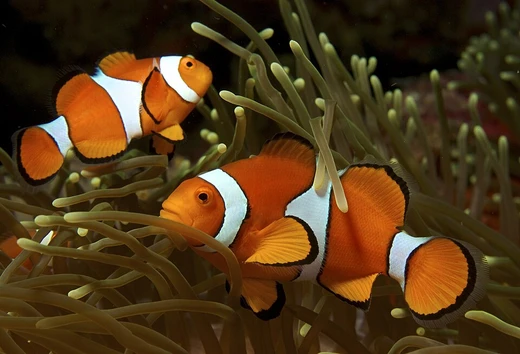
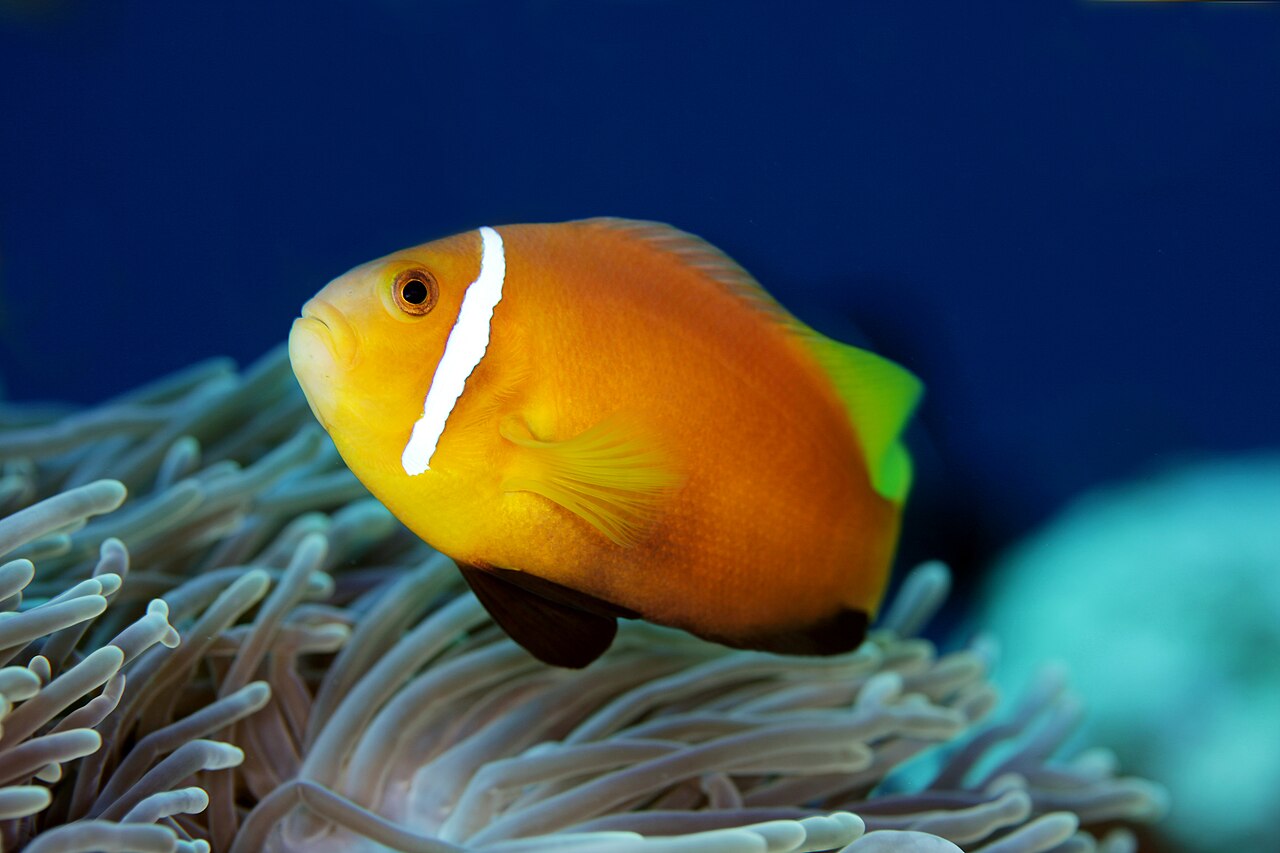
Maldive anemonefish (Amphiprion nigripes)
Source-cited species reference: taxonomy from WoRMS, biology from FishBase, occurrence map from GBIF, conservation from IUCN Red List, description from Wikipedia.

Mark Mancq · CC BY 4.0
Amphiprion nigripes (Maldive anemonefish or blackfinned anemonefish), is a marine fish belonging to the family Pomacentridae, which includes clownfishes and damselfishes.
- Scientific name
- Amphiprion nigripes
- Authority
- Regan, 1908
- Family
- Pomacentridae
- Order
- Ovalentaria incertae sedis
- Maximum length
- 11 cm
- Depth range
- 2–25 m
- Habitat zone
- reef-associated
- Iucn red list
- Least Concern
- Gbif occurrence records
- 491
Classification (WoRMS)
Full classification as recorded by WoRMS: Kingdom: Animalia · Phylum: Chordata · Class: Teleostei · Order: Ovalentaria incertae sedis · Family: Pomacentridae · Genus: Amphiprion.
Accepted name: Amphiprion nigripes · Authority: Regan, 1908 · Taxonomic status: accepted · AphiaID: 278399.
Source: World Register of Marine Species (WoRMS) — https://www.marinespecies.org/aphia.php?p=taxdetails&id=278399 (CC BY 4.0). Accessed 2026-09-23.
Biology and life history (FishBase)
Measured values published by FishBase for Amphiprion nigripes. Only fields the database actually holds for this species are shown; these are database values, not aquarium guidance.
Maximum length: 11 cm · Depth range: 2–25 m · Habitat zone: reef-associated · Body shape: fusiform / normal · Vulnerability index: 10 of 100 · Fishery importance: commercial · Aquarium trade: commercial.
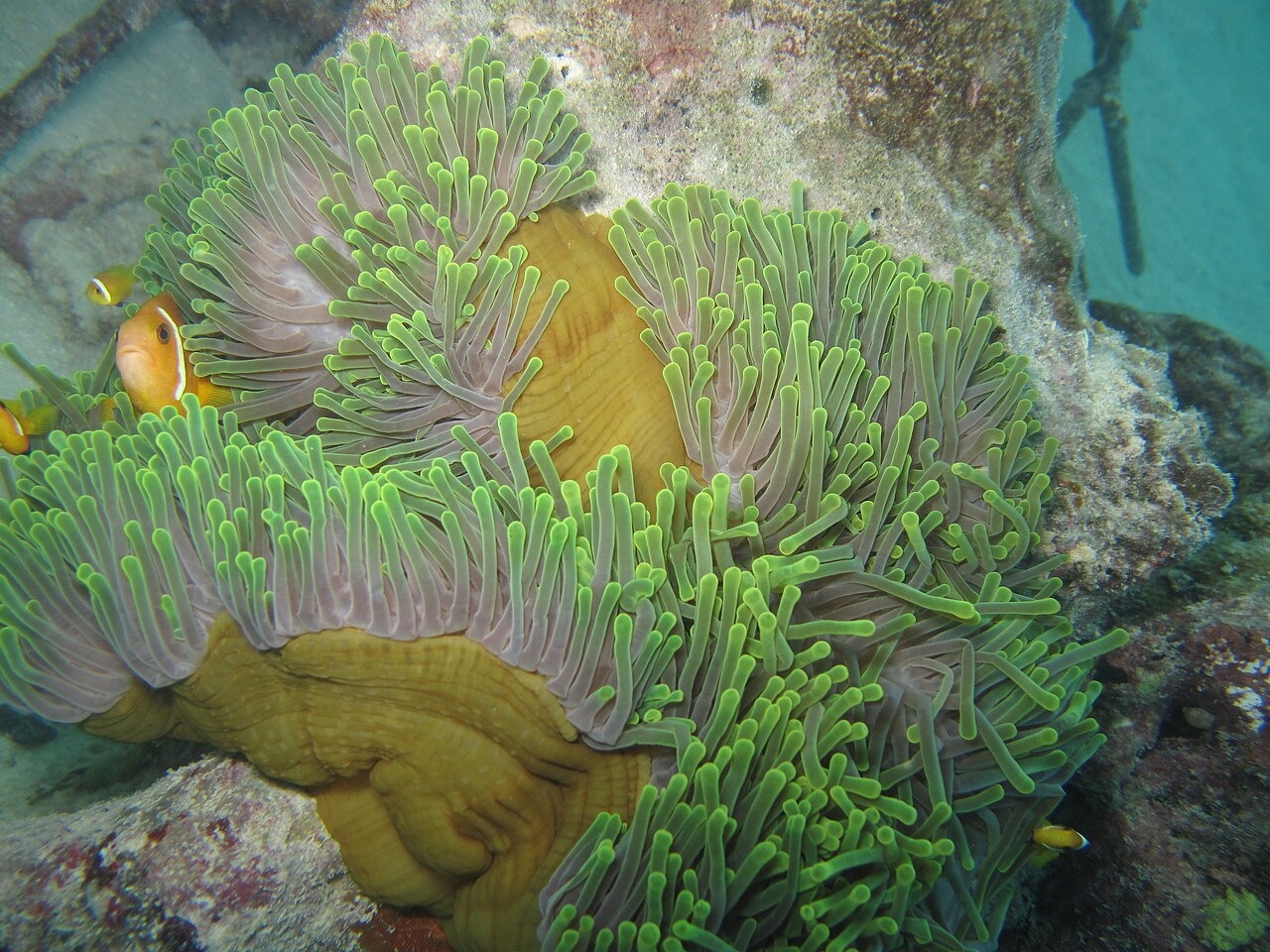
FishBase notes: Adults usually found on the reef edge. Omnivorous. Oviparous, distinct pairing during breeding (Ref. 205). Eggs are demersal and adhere to the substrate (Ref. 205). Males guard and aerate the eggs (Ref. 205). Associated with the anemone Heteractis magnifica (Ref. 5911).
Source: FishBase species summary (SpecCode 7809) — https://www.fishbase.se/summary/Amphiprion-nigripes.html (CC BY-NC 3.0 — non-commercial use only). Accessed 2026-09-23.
Distribution and occurrence records (GBIF)
491 georeferenced occurrence records for Amphiprion nigripes are published through GBIF from 7 countries or marine areas. The map above plots 38 distinct locations from a sample of 491 records, omitting 1 inland record that carry an institution's coordinates rather than a collection site; it shows where the species has been observed and reported, not a modelled range.
Most records by country or area: Maldives (442); Sri Lanka (30); India (13); Viet Nam (3); Mauritius (1); Philippines (1); Seychelles (1).
Marine regions with a valid WoRMS distribution record: Chinese Exclusive Economic Zone.
Source: GBIF Occurrence Search (taxonKey 5212055) — https://www.gbif.org/occurrence/search?taxon_key=5212055&has_coordinate=true (records CC0 / CC BY); WoRMS distribution records (MarineRegions) — https://www.marinespecies.org/aphia.php?p=taxdetails&id=278399 (CC BY 4.0); Natural Earth 110m basemap — https://www.naturalearthdata.com/ (public domain). Accessed 2026-09-23.
Conservation status (IUCN Red List)
The IUCN Red List assesses Amphiprion nigripes Regan, 1908 as Least Concern (code LC). No trend, population estimate or threat analysis is given here, because none is available from this source without the Red List API; follow the source link for the full assessment, including its date.
Source: IUCN Red List of Threatened Species (taxon 188393) — https://www.iucnredlist.org/species/188393/0; GBIF IUCN Red List category endpoint (taxonKey 5212055) — https://api.gbif.org/v1/species/5212055/iucnRedListCategory. Accessed 2026-09-23.
Description and natural history (Wikipedia)
The Maldive anemonefish is a small fish which grows up to 11 cm as a female and 8 cm as a male. It is oval-bodied and laterally compressed.
The Maldive anemonefish is found in the western Indian Ocean in the Maldive Islands, Laccadive Islands.
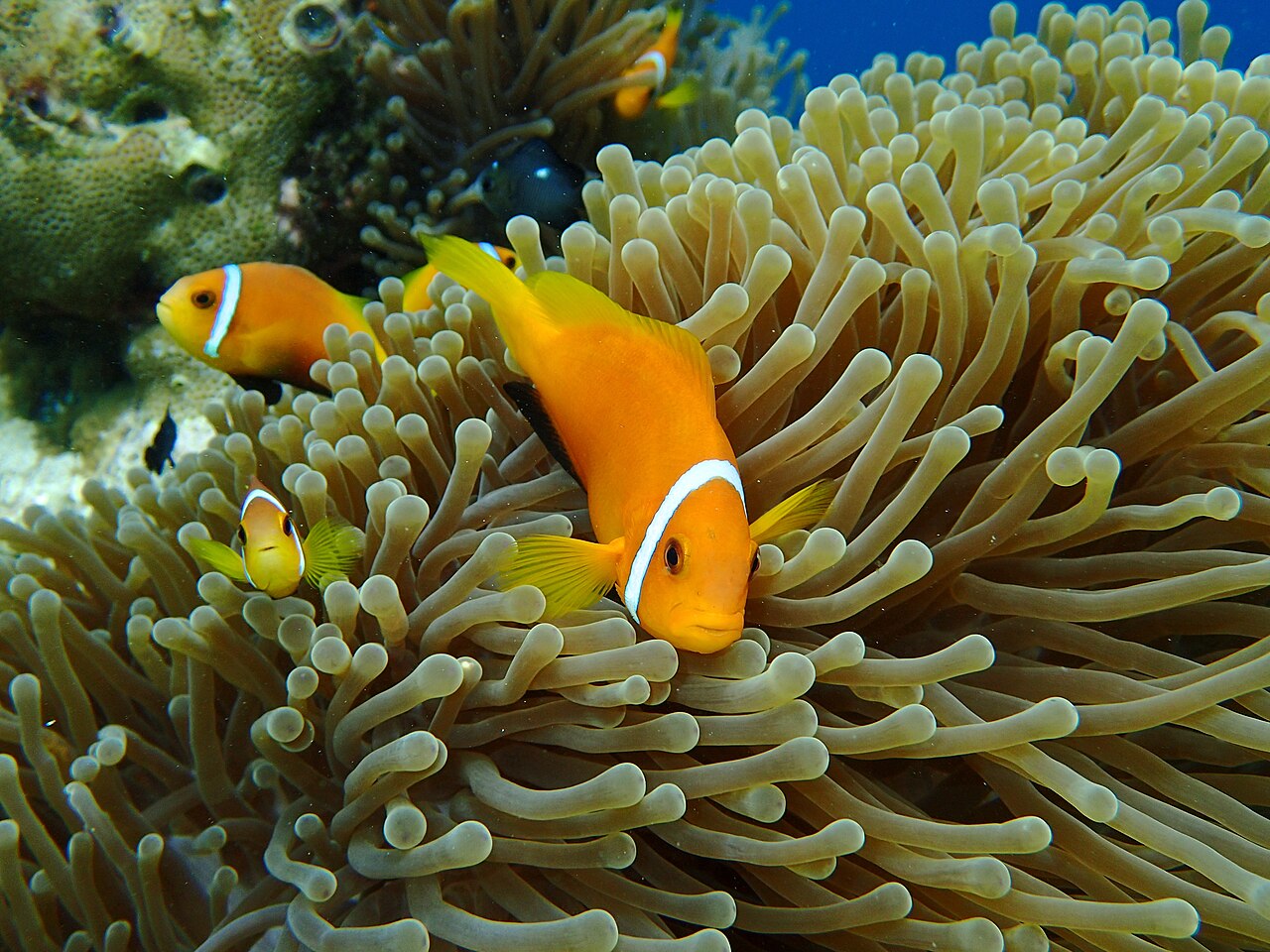
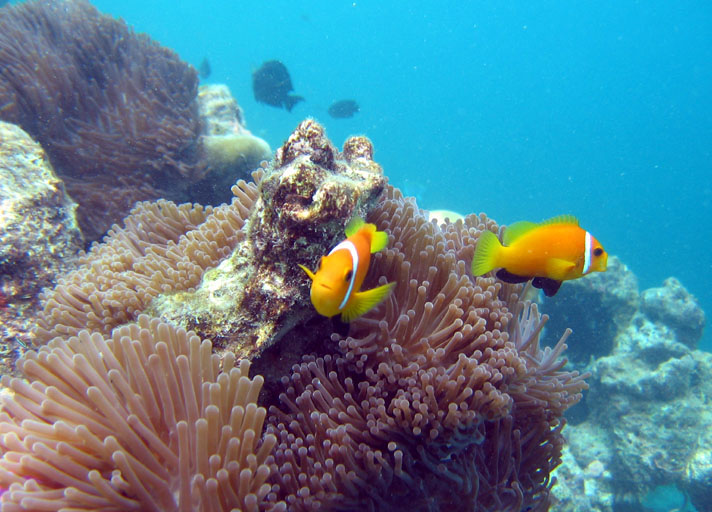
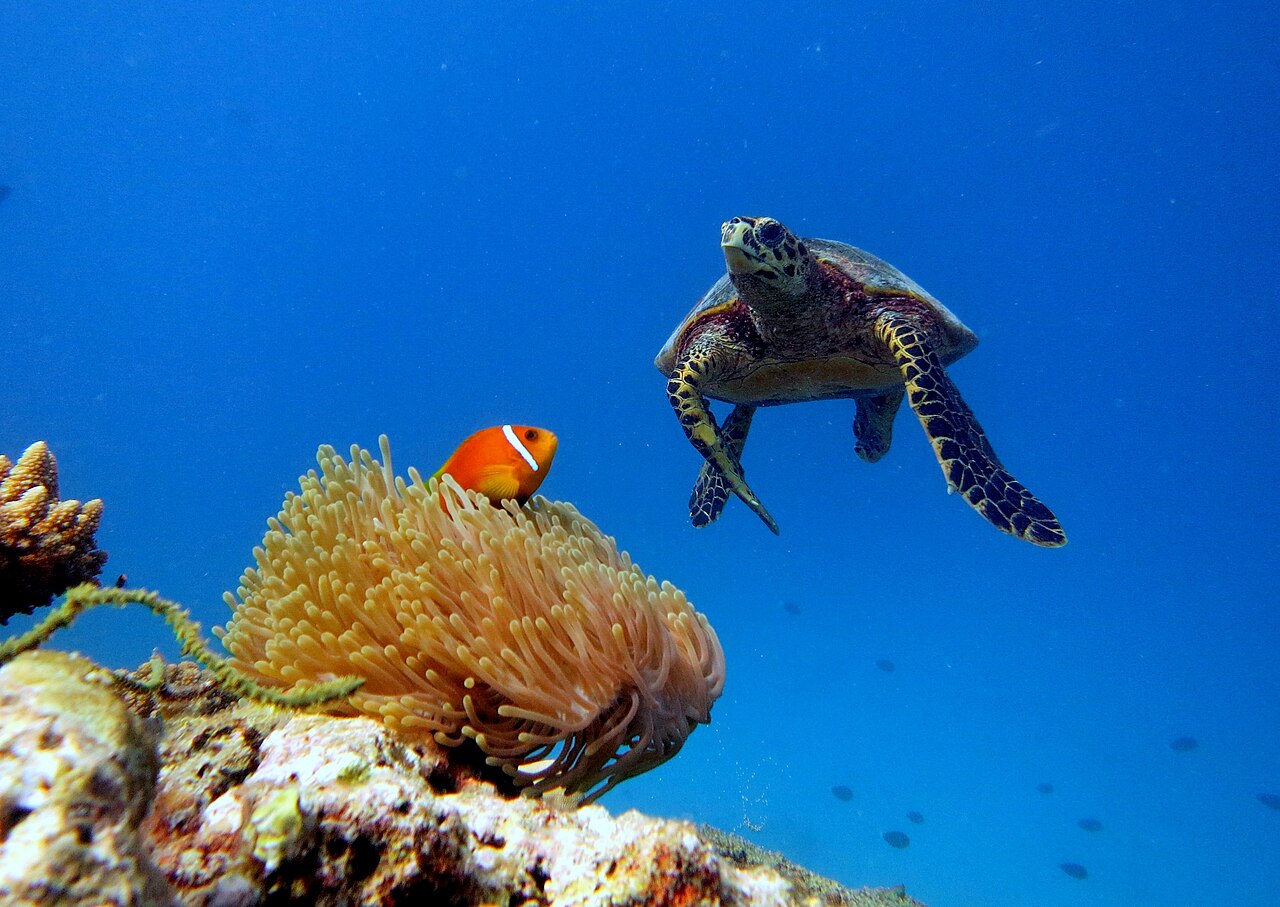
This species typically lives in small groups on outer reef slopes at depths of 2 - 25 m. It is particularly associated with the magnificent sea anemone.
This anemonefish is omnivorous, and its diet is based on zooplankton, small benthic crustaceans, and algae.
Amphiprion nigripes is active during the day. It is a protandrous hermaphrodite, which means all fish are hatched as males and later can change sex to female. The males live in harems in which an established dominance hierarchy manages the group and keeps individuals at a specific social rank.
It also aggressively defends its territory and is completely dependent on its sea anemone, which represents its "life insurance" as a safe shelter for the group and for the nest.
The associative relationship that binds the clownfish and the sea anemone is called mutualism. The fish lives within the sea anemone's tentacles and can use it as a shelter because it has developed a thin layer of mucus which covers its body as a protection against the anemone's stinging tentacles, and the presence of the clownfish can be interpreted as a lure to attract potential anemone prey close to its tentacles; the clownfish can also defend the anemone against some reef fishes which could eat the tentacles, such as butterflyfish.
In a tank, the species can eat brine shrimp, mysis shrimp, and chopped shellfish provided by a hobbyist. Individuals that are tank-raised have accepted high-protein flakes as well as granular foods. The maldive anemonefish is considered mostly peaceful in an aquarium, with some aggression when defending its host. It has successfully been raised in captivity.
Source: Wikipedia: Amphiprion nigripes — https://en.wikipedia.org/wiki/Amphiprion_nigripes (CC BY-SA 4.0). Accessed 2026-09-23.
Gallery
Frequently Asked Questions
Who is Maldive anemonefish (Amphiprion nigripes)?
The Maldive anemonefish is a small reef-dwelling fish in the Pomacentridae family (the clownfish and damselfish group), originally described by Regan in 1908. Its species epithet 'nigripes' literally means 'black-hipped,' pointing to the dark coloration on its lower fins and body.
What are Maldive anemonefish (Amphiprion nigripes)'s key traits and size?
This anemonefish tops out at roughly 11 cm in total length and is most active in the 2-to-25-meter depth band around living coral and anemone colonies. Like its close relatives, it relies on a symbiotic anemone for shelter from predators.
Where does Maldive anemonefish (Amphiprion nigripes) live?
True to its common name, the species is associated with reef habitats in and around the Maldives and the broader western Indian Ocean. It favors shallow, sunlit zones where host anemones are abundant.
How does Maldive anemonefish (Amphiprion nigripes) differ from the more famous orange clownfish?
The most eye-catching distinction is the bold black pigmentation on its pelvic and anal fin bases, which earns it the alternate nickname 'blackfinned anemonefish.' That dark lower-body pattern immediately sets it apart from the bright orange-and-white A. ocellaris most hobbyists know.
Why is Maldive anemonefish (Amphiprion nigripes) worth tracking for conservation?
Because it is tied to specific anemone hosts and a relatively narrow geographic range, any degradation of those reef patches directly threatens its local populations. Monitoring this species therefore serves as a useful indicator of overall Maldivian reef health.
Spotted an error? Know more?
Reader corrections go straight into our review queue. Suggest an edit · How this site is sourced