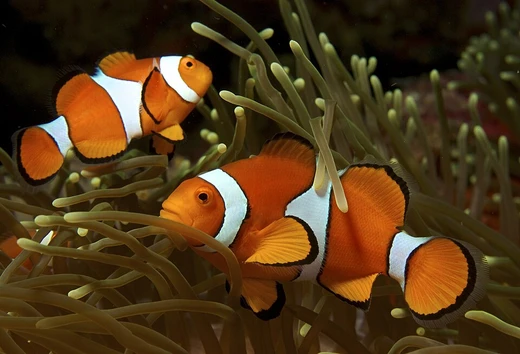
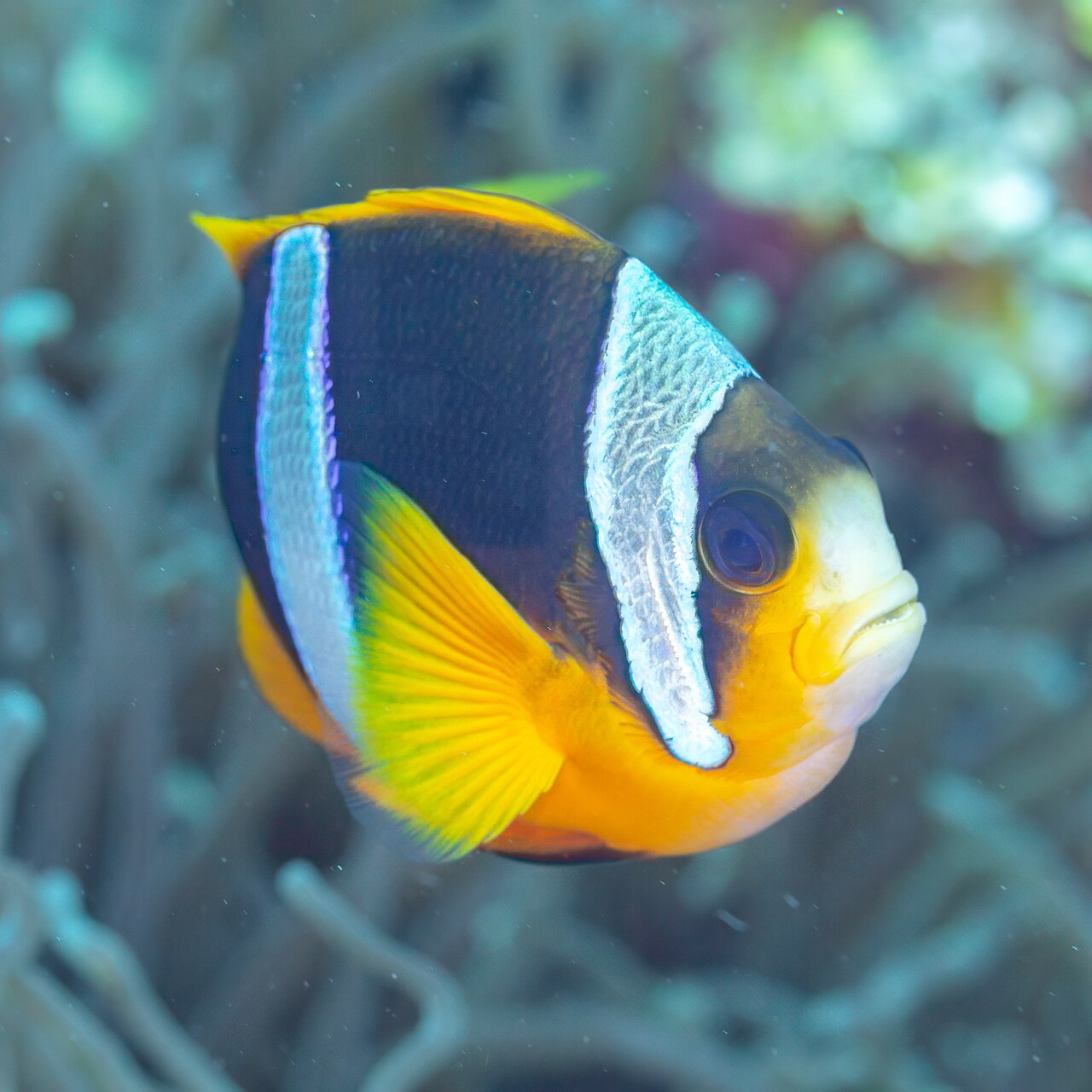
Madagascar anemonefish (Amphiprion latifasciatus)
Source-cited species reference: taxonomy from WoRMS, biology from FishBase, occurrence map from GBIF, conservation from IUCN Red List, description from Wikipedia.

Diego Delso · CC BY-SA 4.0
Amphiprion latifasciatus, the Madagascar anemonefish, is a marine fish belonging to the family Pomacentridae, the clownfishes and damselfishes.
- Scientific name
- Amphiprion latifasciatus
- Authority
- Allen, 1972
- Family
- Pomacentridae
- Order
- Ovalentaria incertae sedis
- Maximum length
- 13 cm
- Depth range
- 1–12 m
- Habitat zone
- reef-associated
- Iucn red list
- Least Concern
- Gbif occurrence records
- 106
Symbiotic Partnership with Sea Anemones
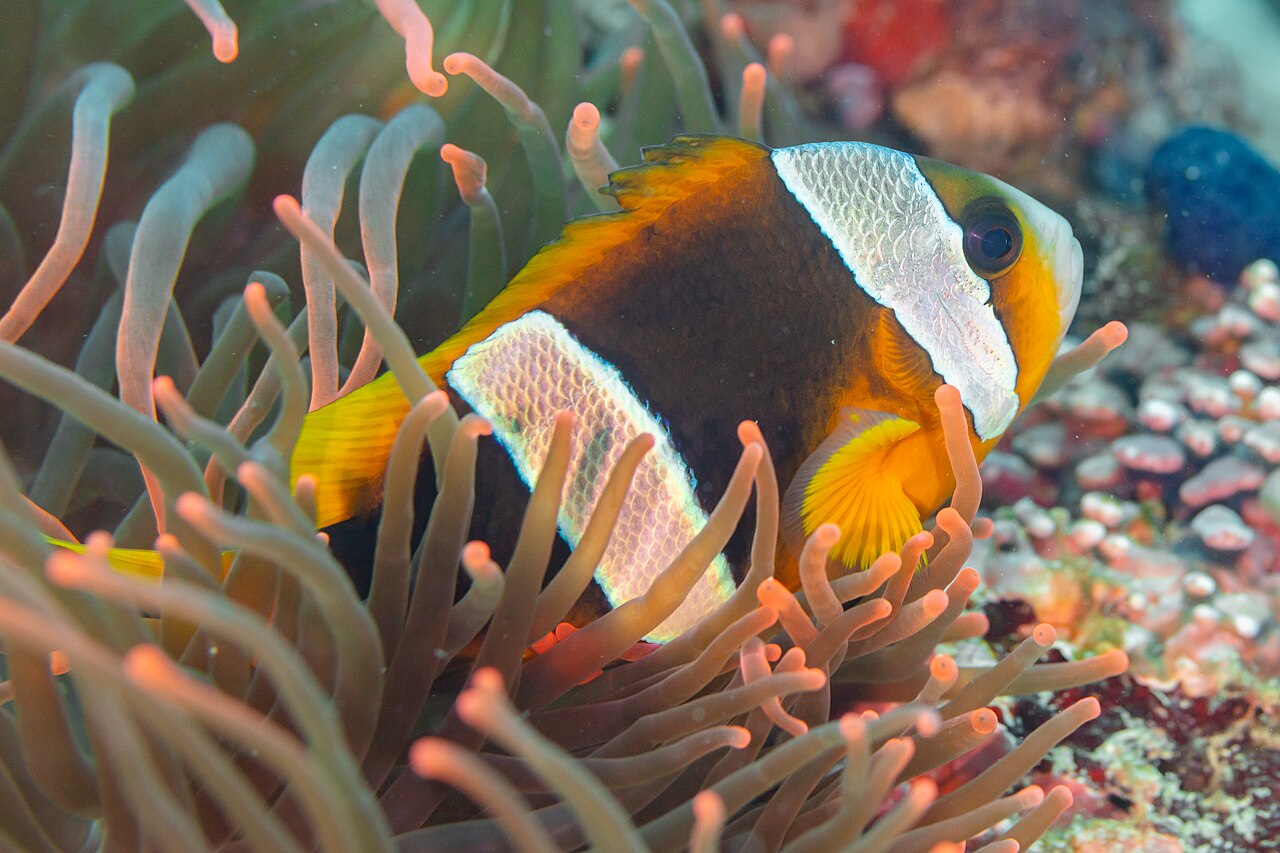
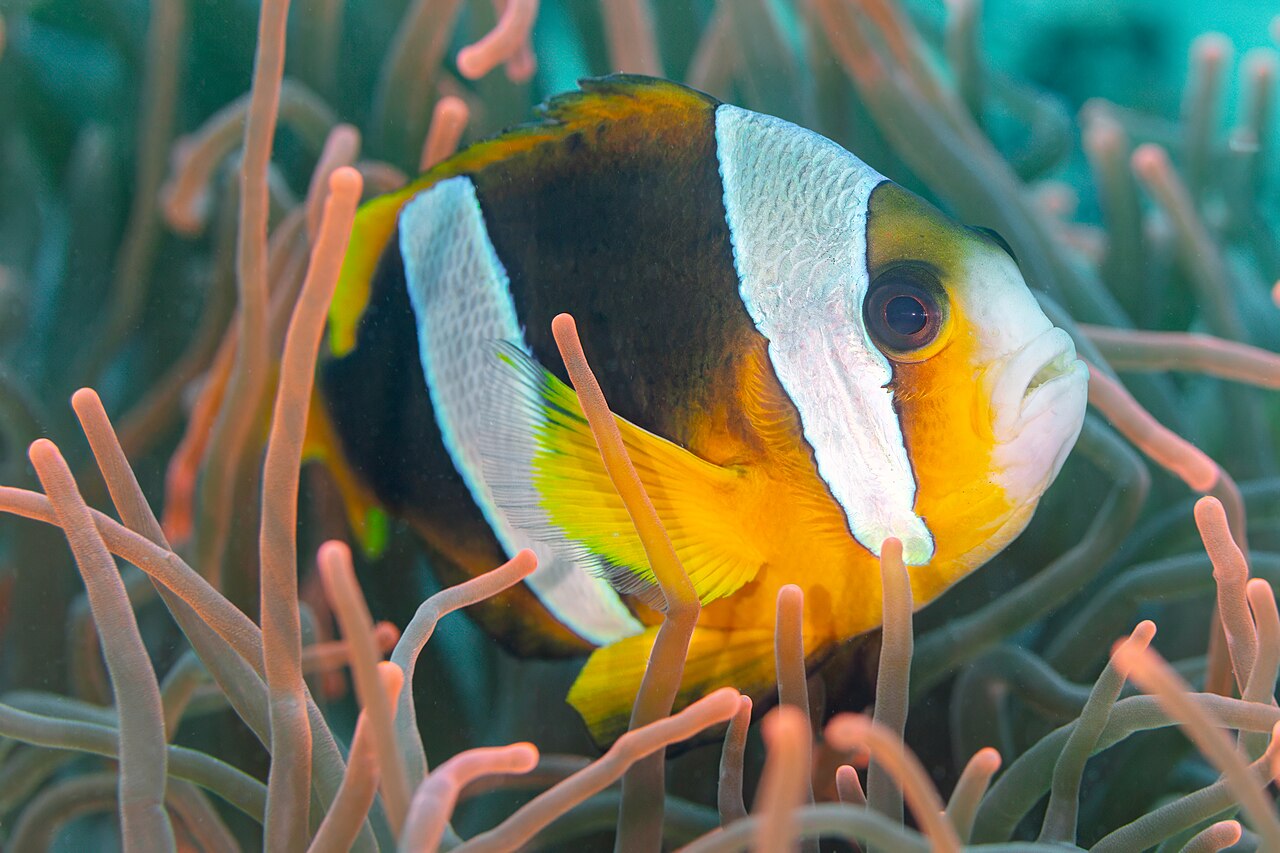
The Madagascar anemonefish, like all members of the genus Amphiprion, has built its entire ecological niche around a mutualistic bond with sea anemones. The fish depend on their anemone host for a safe refuge from predatory species in the open reef environment. In exchange, the anemonefish serve as active defenders, warding off anemone-eating fish that would otherwise strip the host of its tentacles. Beyond protection, the fish contribute to the anemone's health by fanning its tentacles with their fins and cleaning its surface, while their metabolic waste draws in beneficial microorganisms that enrich the local ecosystem. This relationship is so fundamental to the species' survival that juvenile anemonefish, after dispersing as larvae through the open ocean, must locate and settle into a suitable anemone host before they can establish themselves on the reef. The anemone is not merely a shelter but the central anchor of the fish's social group, reproductive activity, and daily survival.
Social Hierarchy and Sex Change
Madagascar anemonefish live in structured groups anchored around a single anemone, composed of a breeding female, a breeding male, and one or more non-breeding individuals. The hierarchy is strictly size-based, with the breeding female occupying the top position, followed by the breeding male, and then the non-breeders ranked from largest to smallest. What makes this social system remarkable is its fluidity: if the dominant female dies or is removed, the breeding male undergoes a sex change, transforming into a functional female and assuming her reproductive role. The remaining individuals then shift upward in the hierarchy accordingly. Reproduction itself is a coordinated effort—the female deposits her eggs on a hard substrate near the anemone, and the male fertilises them. After hatching, the young disperse into the open ocean as planktonic larvae before eventually settling back onto the reef as juveniles, where they must find a new anemone to join. This cycle of dispersal and re-settlement is essential for the genetic continuity of the population.
Evolutionary Lineage and Taxonomic Position
The anemonefish lineage split from other living damselfishes approximately 35 million years ago during the late Eocene, with the most recent common ancestor of all extant species dating to roughly 10.5 million years ago in the Early Miocene. A 2014 study traced the origin of the group to the waters surrounding the Malay Archipelago. Species diversification accelerated around 5 million years ago, driven by two major adaptive radiations—one centred on the Malay Archipelago and a later one in the western Indian Ocean. The Madagascar anemonefish, also referred to as the wide-band anemonefish, has been identified in a 2014 study as a single-species clade, meaning it represents a distinct evolutionary branch without close living relatives within the genus. Speciation across the genus has been linked to the diversity of sea anemone hosts available in different habitats, which creates ecological separation between populations. Genetic evidence also reveals extensive interbreeding between species throughout their evolutionary history, complicating the picture of clean lineage splits.
Conservation Pressures and Human Impact
The striking colour patterns and social behaviour of anemonefish have made them highly desirable in the global aquarium trade, and many individuals are still harvested directly from wild populations. This collection pressure has contributed to measurable declines in some species. The Madagascar anemonefish, as a member of this genus, faces the same vulnerability. Marine protected areas, where collecting is prohibited, consistently harbour higher anemonefish abundances, demonstrating that restricted access allows populations to recover and thrive. Beyond direct harvesting, broader environmental threats loom: global warming drives both ocean temperature increases and acidification, conditions that stress coral reef ecosystems and the anemone hosts upon which these fish depend. The genus Amphiprion was formally established in 1801 by Bloch and Schneider, and since then the taxonomy has seen ongoing revision—most recently in 2021, when phylogenetic analyses confirmed that the previously separate genus Premnas should be folded back into Amphiprion as a junior synonym. Understanding these taxonomic and ecological relationships is essential for designing effective conservation strategies for reef-dwelling species across the Indo-Pacific.
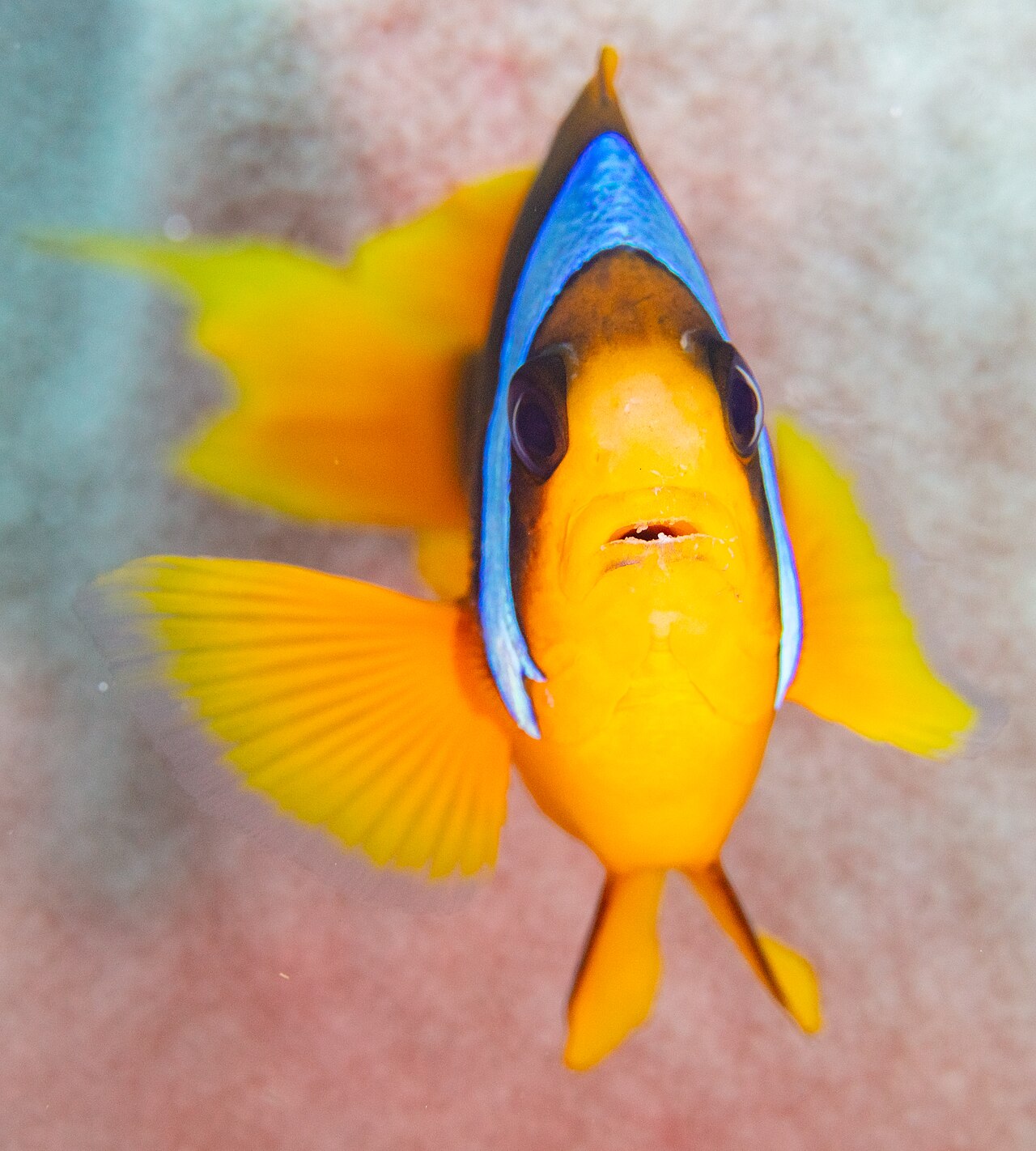
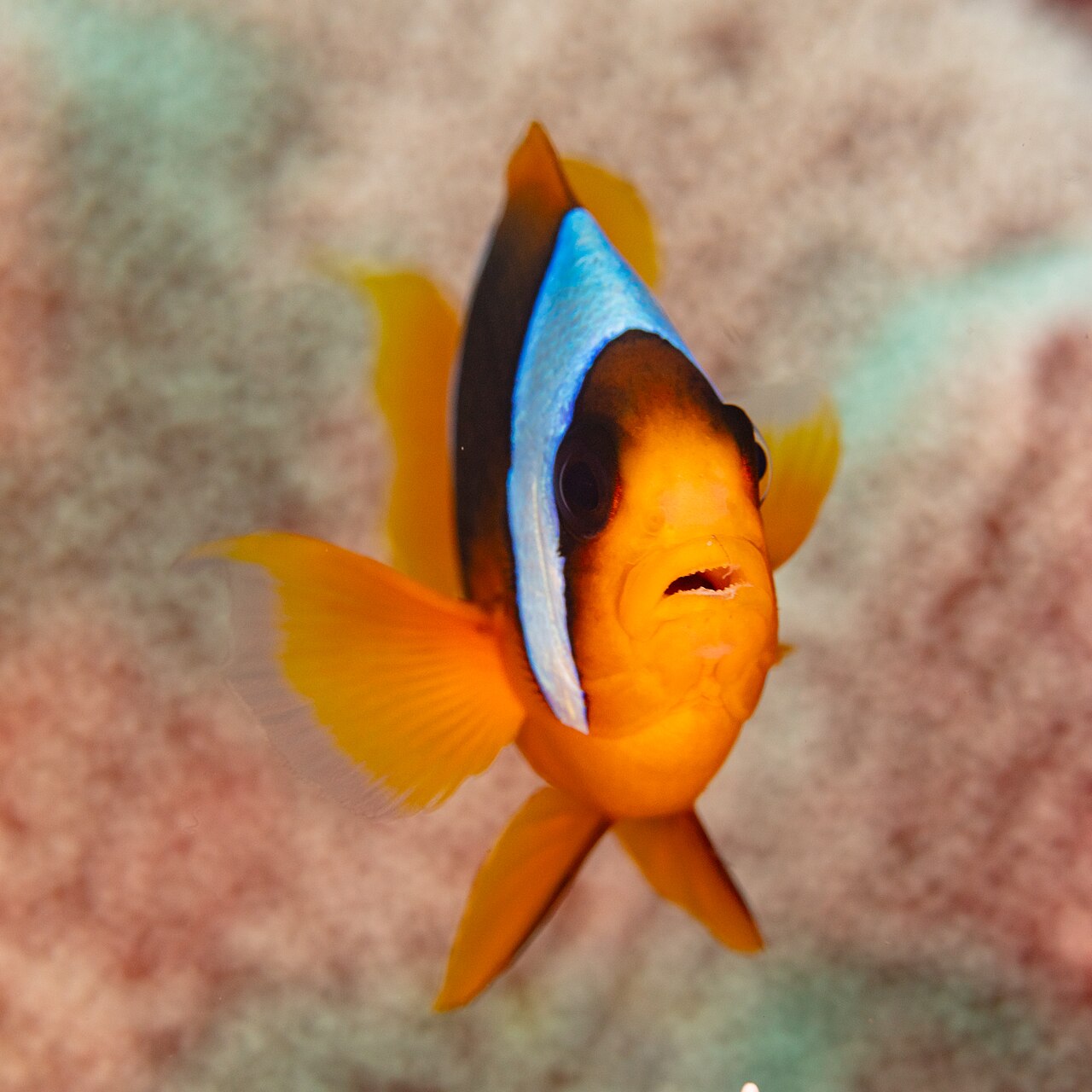
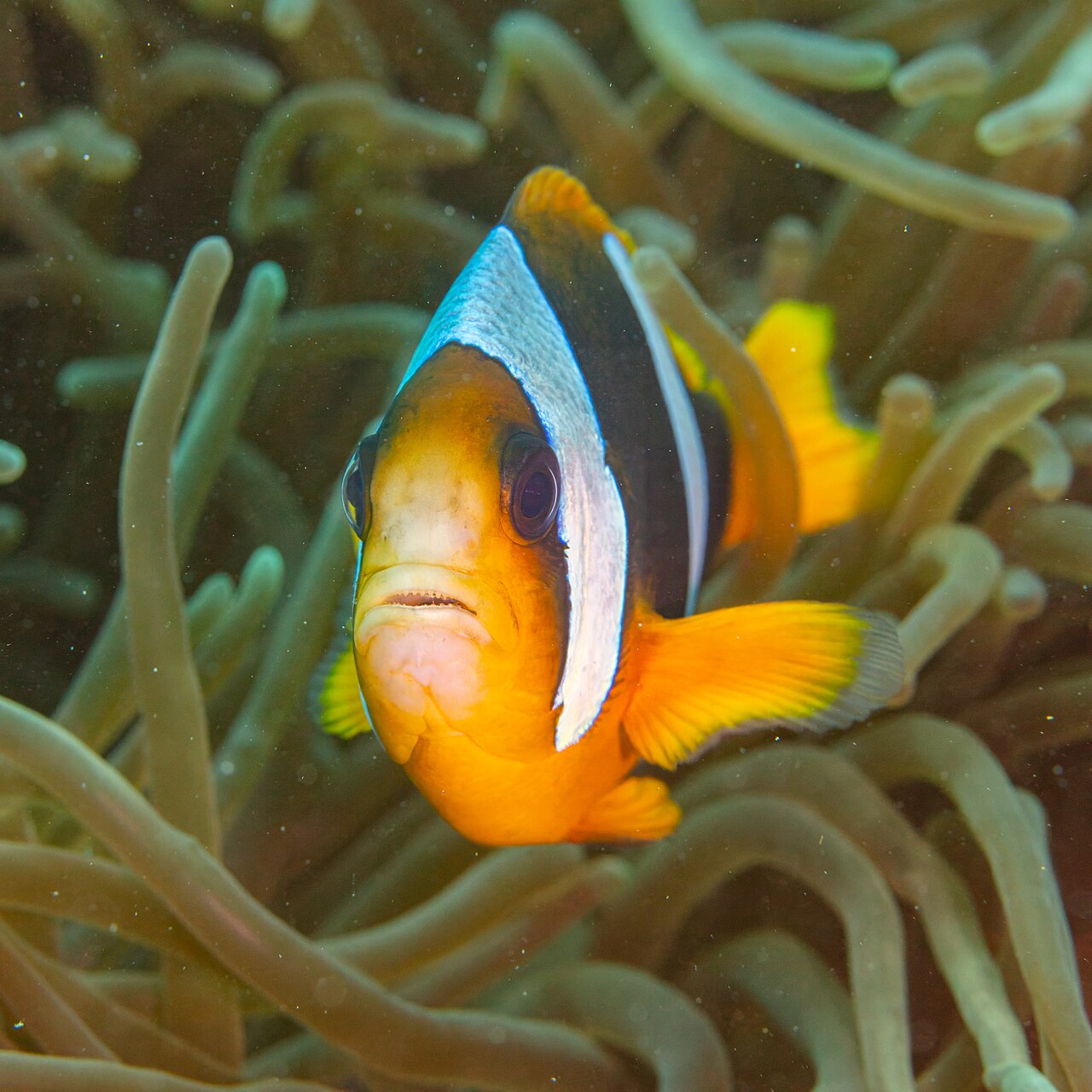
Gallery
Frequently Asked Questions
What is the Madagascar anemonefish (Amphiprion latifasciatus)?
It is a small marine clownfish first described by Allen in 1972, placed in the family Pomacentridae alongside other anemonefishes and damselfishes. Its common name reflects its association with waters around Madagascar.
How big does a Madagascar anemonefish grow?
Adults top out at roughly 13 centimeters in total length, which puts it on the smaller side among known anemonefish species.
At what depth can you find Amphiprion latifasciatus in the wild?
This species inhabits shallow reef environments, typically between 1 and 12 meters below the surface, where suitable anemone hosts are available.
Where does the Madagascar anemonefish sit in the taxonomic tree?
It belongs to the family Pomacentridae, and its order is recorded as Ovalentaria incertae sedis, a catch-all grouping that acknowledges some unresolved relationships at higher taxonomic levels. The species authority is Allen, 1972.
Why do fans and hobbyists care about Amphiprion latifasciatus?
As a regionally restricted anemonefish tied to the Malagasy region, it represents a distinct evolutionary lineage within the Pomacentridae and is of particular interest to reef-keeping enthusiasts who want species beyond the more commonly traded clownfishes.
Spotted an error? Know more?
Reader corrections go straight into our review queue. Suggest an edit · How this site is sourced