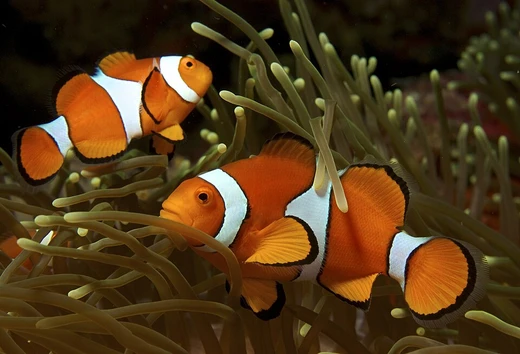
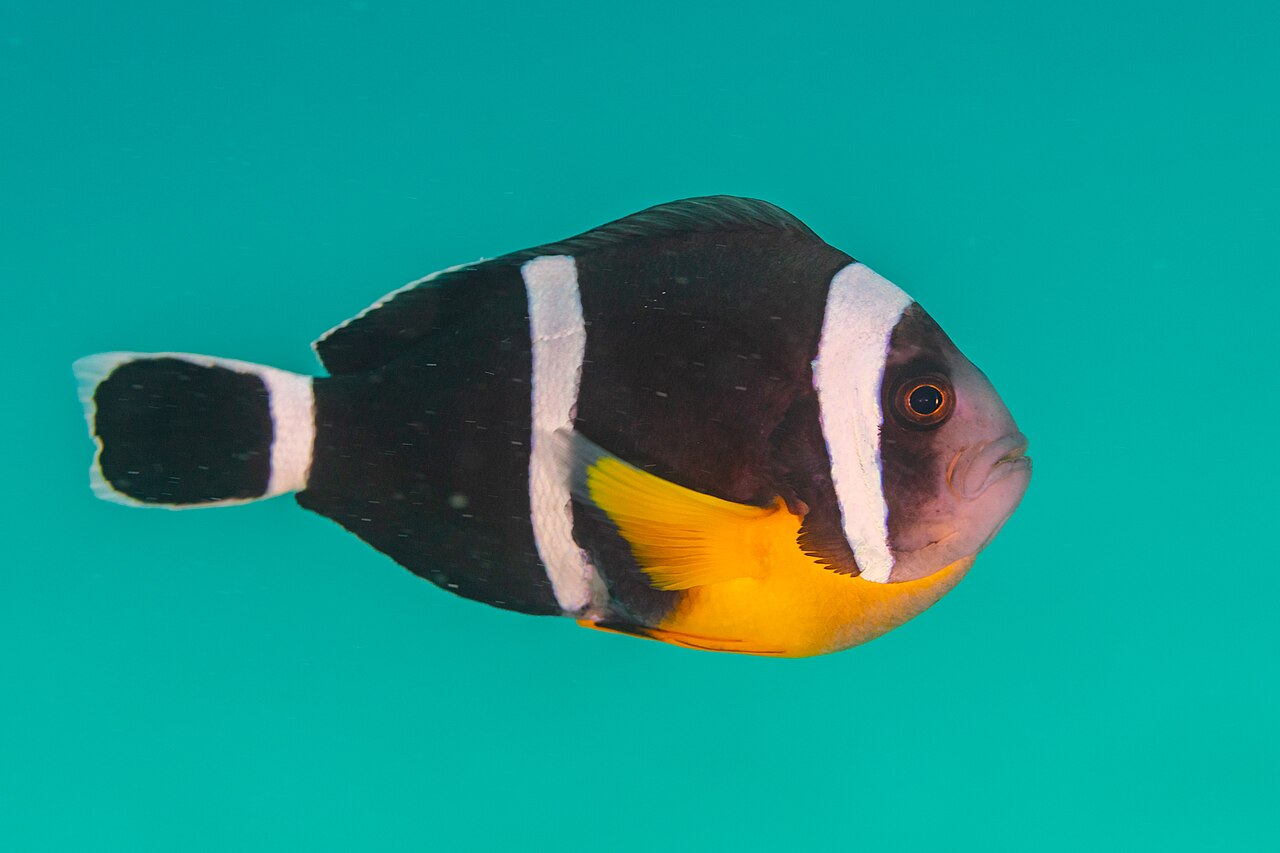
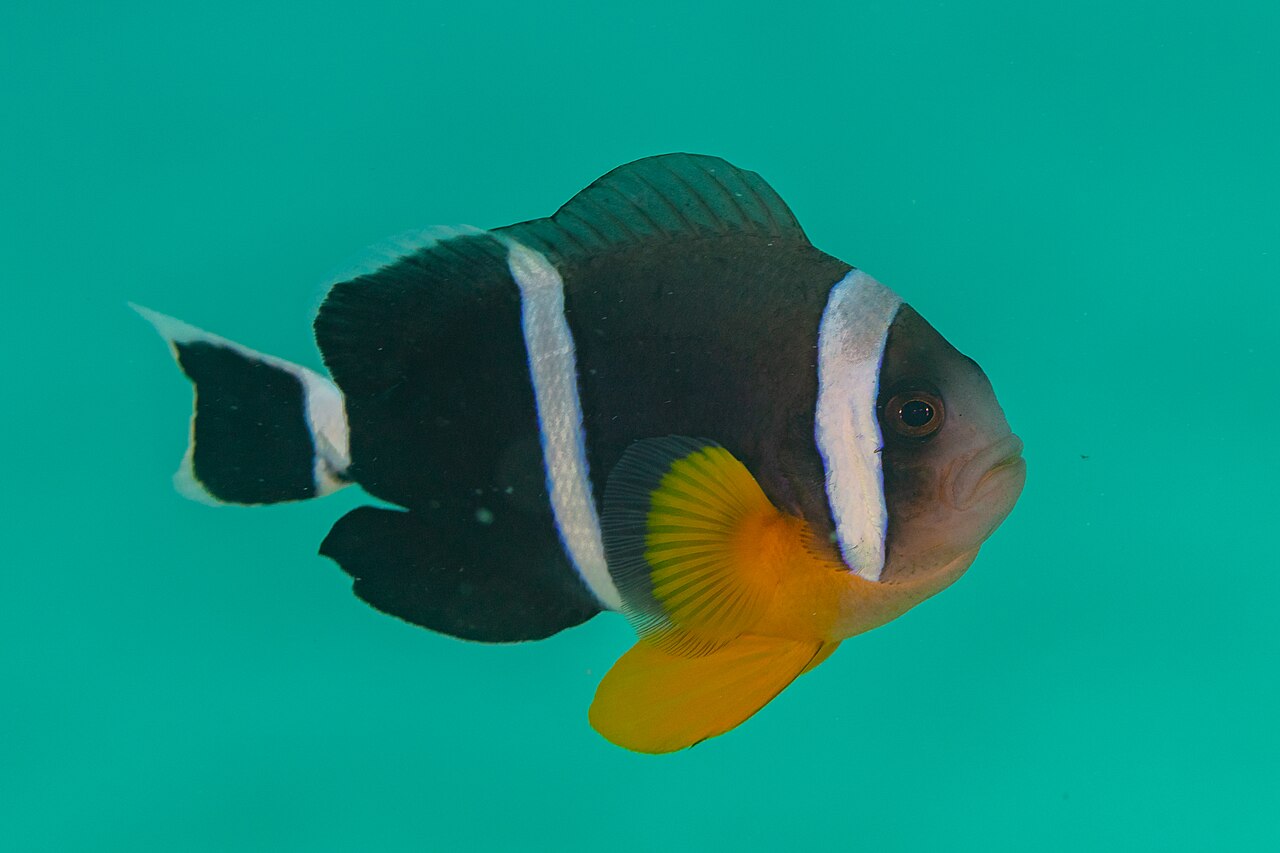
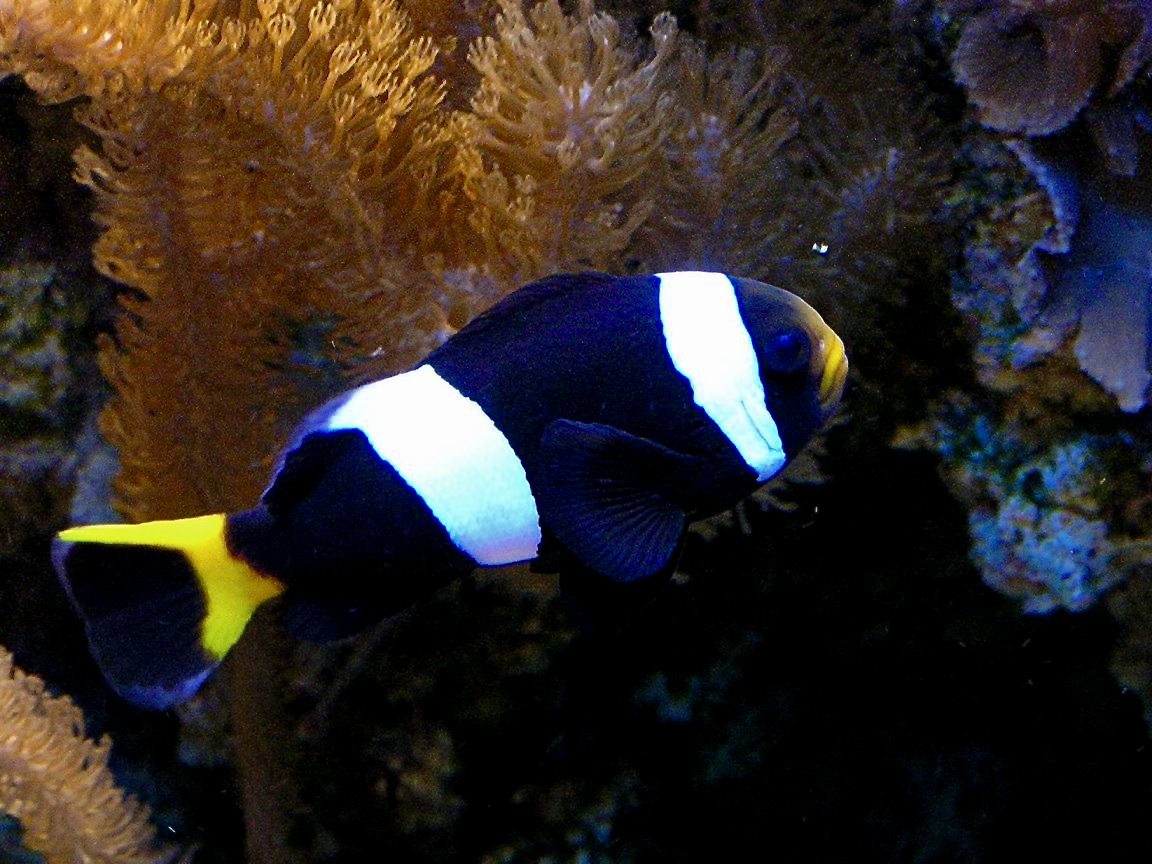
Mauritian anemonefish (Amphiprion chrysogaster)
Source-cited species reference: taxonomy from WoRMS, biology from FishBase, occurrence map from GBIF, conservation from IUCN Red List, description from Wikipedia.

Diego Delso · CC BY-SA 4.0
Amphiprion chrysogaster, the Mauritian anemonefish, is a marine fish belonging to the family Pomacentridae, the clownfishes and damselfishes. It is endemic to Mauritius and probably Réunion.
- Scientific name
- Amphiprion chrysogaster
- Authority
- Cuvier, 1830
- Family
- Pomacentridae
- Order
- Ovalentaria incertae sedis
- Maximum length
- 15 cm
- Depth range
- 2–40 m
- Habitat zone
- reef-associated
- Iucn red list
- Least Concern
- Gbif occurrence records
- 233
Symbiotic Partnership with Sea Anemones
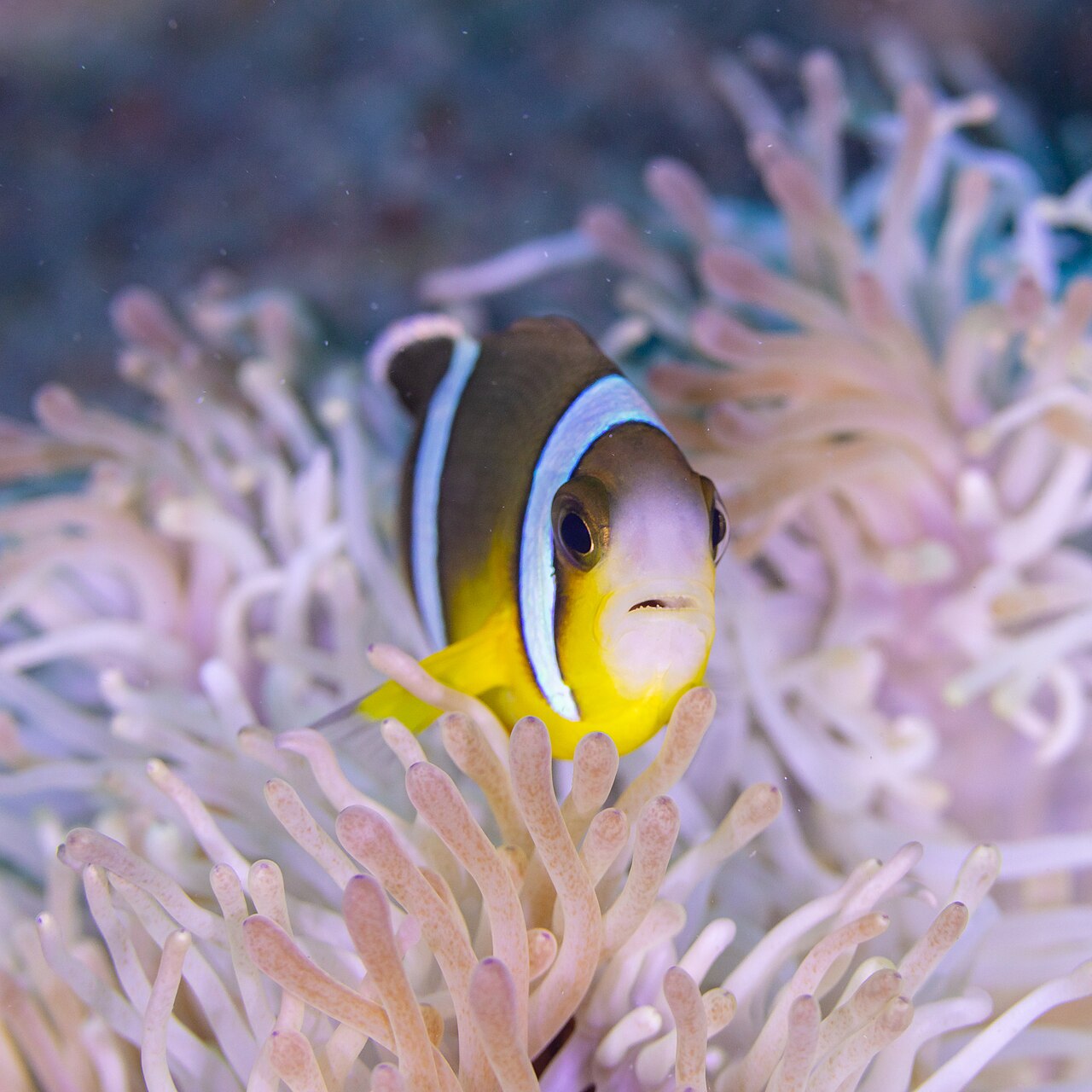
The Mauritian anemonefish, like all members of the genus Amphiprion, has built its entire ecological niche around a remarkable mutualistic bond with sea anemones. These saltwater fish, native to warm tropical waters across the Indo-Pacific, depend on their anemone hosts for shelter and protection against predators. In return, the anemonefish serves as a bodyguard, deterring anemone-eating fish from approaching. The relationship extends beyond simple defense: the fish actively clean and fan the anemone's tentacles, while their waste products attract beneficial microorganisms that contribute to the anemone's health. This partnership is so central to the species' survival that juvenile anemonefish, after dispersing as larvae in the open ocean, must eventually settle on the reef floor and locate a suitable anemone host to begin their adult lives. Without this symbiotic arrangement, the Mauritian anemonefish would lack the structural refuge that defines its habitat on coral reefs.
Social Structure & Reproductive Biology
Within a group of Mauritian anemonefish, a strict size-based dominance hierarchy governs all social interactions. The breeding female sits at the apex, followed by the breeding male, then the largest non-breeding individual, with smaller members ranking progressively lower. This structure is remarkably dynamic: should the dominant female disappear, the breeding male undergoes a sex change to assume her role, while every other member shifts upward in the hierarchy. Reproduction follows a set pattern—the female deposits her eggs on a rock near their shared anemone, and the male fertilises them. After hatching, the young disperse into the open ocean as free-swimming larvae before eventually settling on the seafloor as juveniles, where they search for an anemone to claim as their host. These fish are omnivorous, feeding primarily on plankton, and their group structure ensures that resources and breeding opportunities are allocated according to size and rank.
Taxonomic Identity & Evolutionary Roots
The genus Amphiprion was formally established in 1801 by Marcus Elieser Bloch and Johann Gottlob Theaenus Schneider, with the name deriving from Greek words meaning 'on both sides' and 'saw'—a reference to the saw-shaped edges along the operculum and under the eyes that characterise these fish. The Mauritian anemonefish belongs to the damselfish family Pomacentridae, and its lineage diverged from other living damselfishes roughly 35 million years ago during the late Eocene. The most recent common ancestor of all extant clownfish species dates to approximately 10.5 million years ago in the Early Miocene. A 2014 study traced the origin of the clownfish lineage to the waters of the Malay Archipelago, with species diversification accelerating around 5 million years ago through two major adaptive radiations—one centred on the Malay Archipelago and a later one in the western Indian Ocean. Speciation appears closely linked to the diversity of sea anemone hosts available in different habitats, driving ecological separation between emerging species.
Conservation Pressures & Population Dynamics
The distinctive colouration and social nature of anemonefish have made them highly sought after in the global aquarium trade, a demand that has driven the collection of wild specimens and contributed to measurable population declines. The Mauritian anemonefish, like its congeners, faces compounded threats from climate change, which drives ocean warming and acidification—processes that degrade the coral reef habitats these fish depend upon. Conservation efforts have shown tangible success: anemonefish populations are notably more numerous in marine protected areas where collecting is prohibited, demonstrating that targeted legal safeguards can reverse the damage caused by overharvesting. The species' reliance on specific anemone hosts for survival means that any degradation of reef ecosystems directly threatens their reproductive success and long-term viability. As the Indo-Pacific's warm waters continue to shift under the influence of global warming, the delicate balance between anemonefish and their hosts remains under increasing pressure, making habitat protection as critical as restricting the trade in wild-caught specimens.
Gallery
Frequently Asked Questions
Who is Mauritian anemonefish (Amphiprion chrysogaster)?
It is a small marine fish in the clownfish and damselfish family (Pomacentridae), first formally described by Cuvier in 1830. It is found exclusively around Mauritius and likely Réunion, making it a true endemic species of that island region.
What are Mauritian anemonefish (Amphiprion chrysogaster)'s key traits and ecological role?
This anemonefish reaches a maximum length of about 15 cm and occupies depths from roughly 2 to 40 metres, where it lives in close association with sea anemones. Like other members of its genus, it gains protection from the anemone's stinging tentacles while in turn providing cleaning services and nutrients in exchange.
Why is Mauritian anemonefish (Amphiprion chrysogaster) important?
Because it is restricted to a very small geographic range, it acts as a biological indicator of the overall health of those specific island waters. Its existence also underscores the unique evolutionary isolation that has produced a fish found nowhere else on the planet.
When and by whom was Mauritian anemonefish (Amphiprion chrysogaster) first named?
The species was formally described by the French naturalist Georges Cuvier in 1830, receiving the binomial name Amphiprion chrysogaster. That places its taxonomic history well over 190 years before modern conservation frameworks were ever established.
Spotted an error? Know more?
Reader corrections go straight into our review queue. Suggest an edit · How this site is sourced