Pristipomoides filamentosus
A deepwater snapper prized in Hawaii as opakapaka.

Jean-Lou Justine · CC BY 2.0
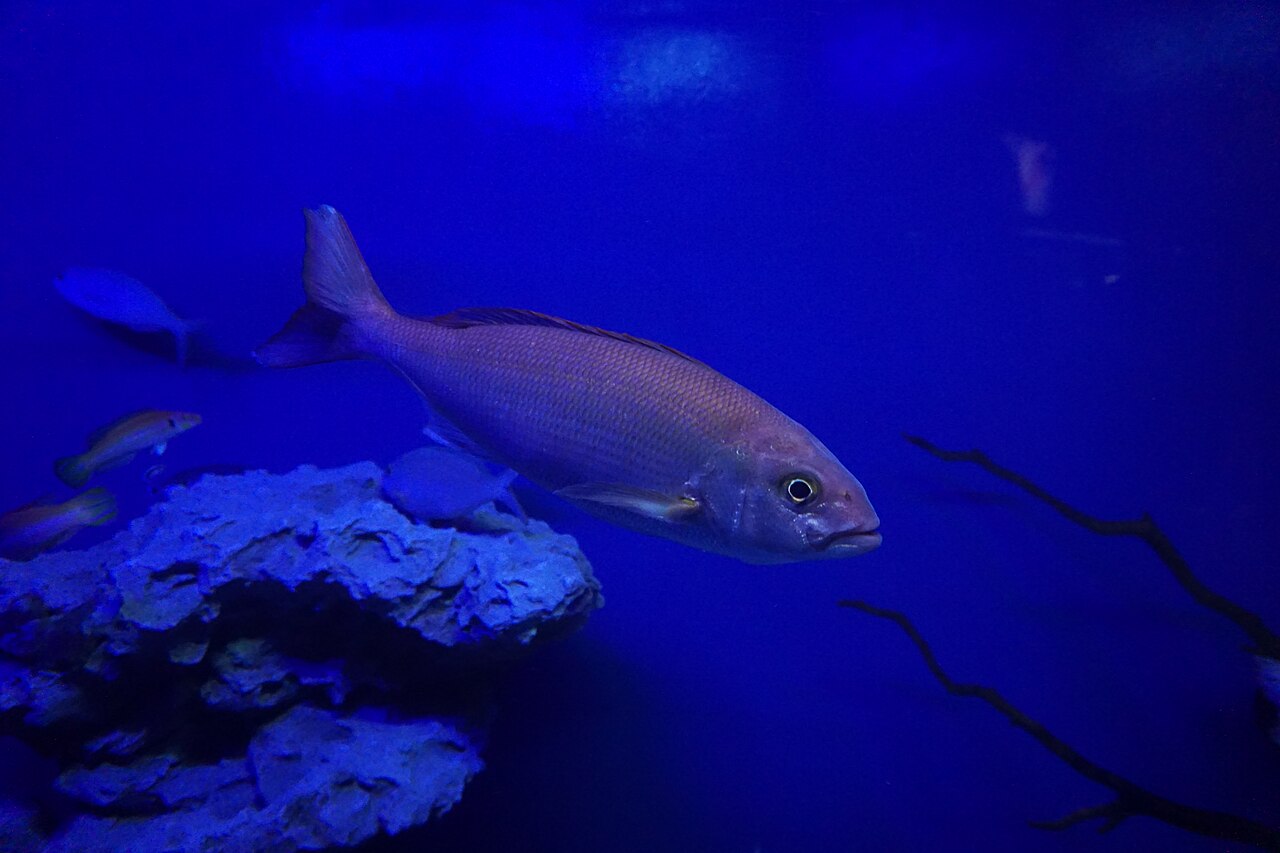
Pristipomoides filamentosus, known as the crimson jobfish, rosy snapper, or opakapaka, is a species of ray-finned fish in the family Lutjanidae. It is found in the Indian Ocean and Pacific Ocean as far east as Hawaii and Tahiti, and is very important to local commercial fisheries and sought as a game fish, being one of the Deep Seven species of Hawaiʻi.
Quick Facts
- Taxon
- Pristipomoides filamentosus
Facts from the source article.
Lore & Background
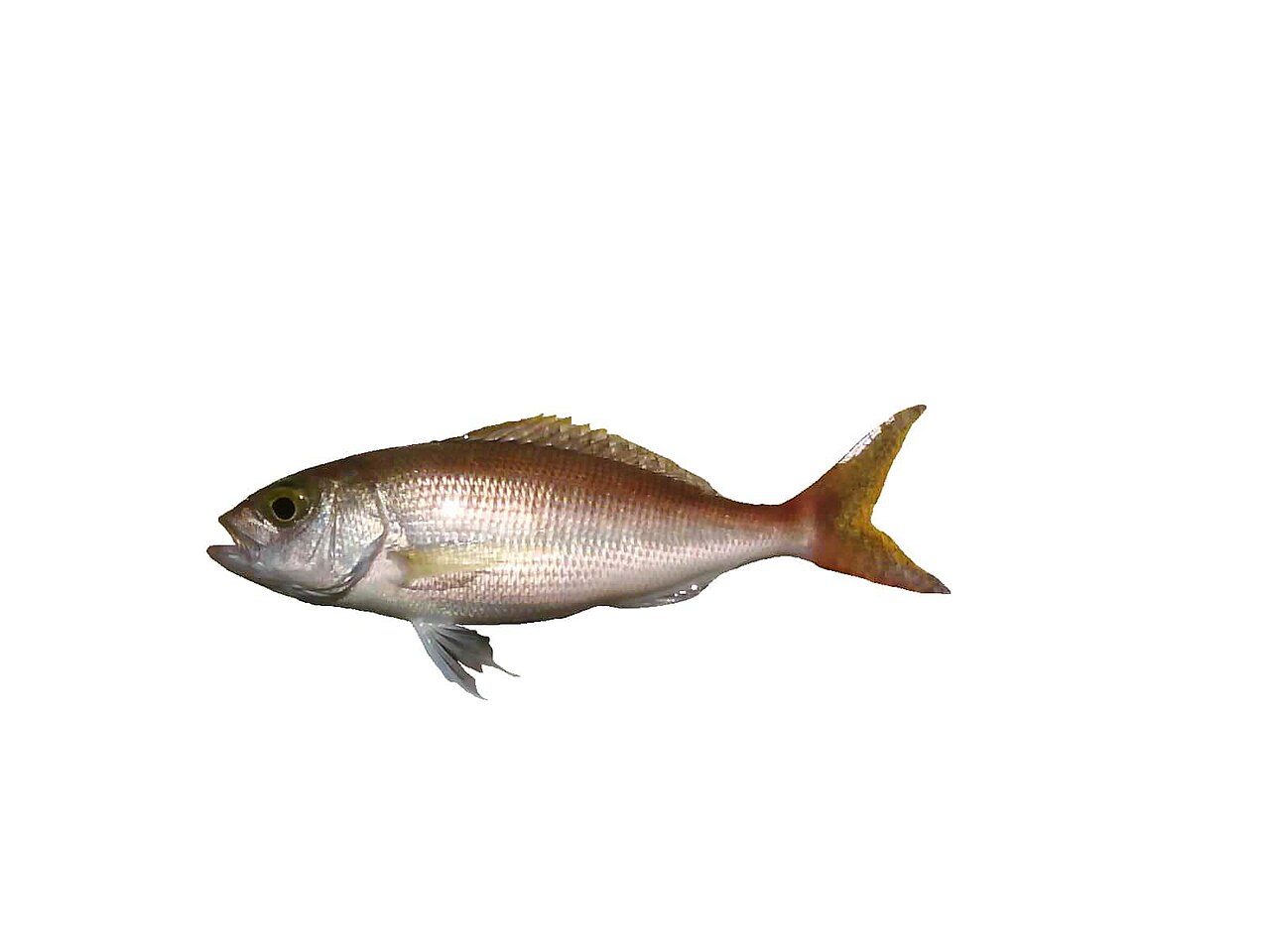
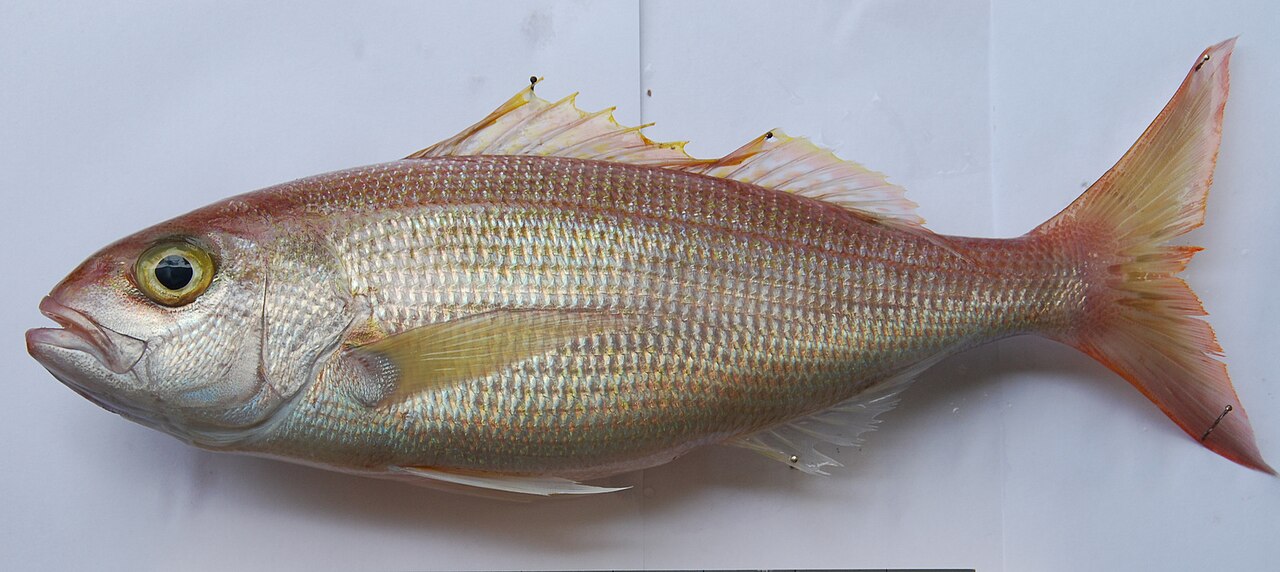
Pristipomoides filamentosus was first formally described as Serranus filamentosus in 1830 by French zoologist Achille Valenciennes, with the type locality given as Saint-Denis on Réunion. The specific name filamentosus means 'filamentous' and refers to the filament-like last soft rays in the dorsal and anal fins. The species has an elongated, robust body with a depth of roughly a third of its standard length, a flat space between the eyes, and a slightly protruding lower jaw. Its colour may be brownish to pinkish, lavender or reddish-purple, marked with slender yellow lines and blue spots on its snout and the flat space between its eyes. The dorsal and caudal fins are pale blue to lavender with reddish-orange margins. This benthopelagic species is found over rocky substrates and rocky reefs at depths between 40 and 360 m. It has a wide Indo-Pacific distribution, occurring from the Red Sea and eastern Africa across the Indian Ocean into the Pacific, as far east as Hawaii and Tahiti, north to Japan, and south to Australia. In Australia, it ranges from Leeman, Western Australia, north to Darwin, and east to the Great Barrier Reef, south at least to Seal Rocks, New South Wales, and also at Lord Howe Island. Pristipomoides filamentosus is a nocturnal feeder, migrating upward through the water column to prey on small fishes, crustaceans, ascidians, and salps. In the Seychelles, spawning occurs between October and April, peaking from February to April and again in November; in Hawaii, it takes place between March and December, peaking from May to September. It is a slow-growing, long-lived species, with the oldest recorded fish at 44 years old.
Reader's Guide
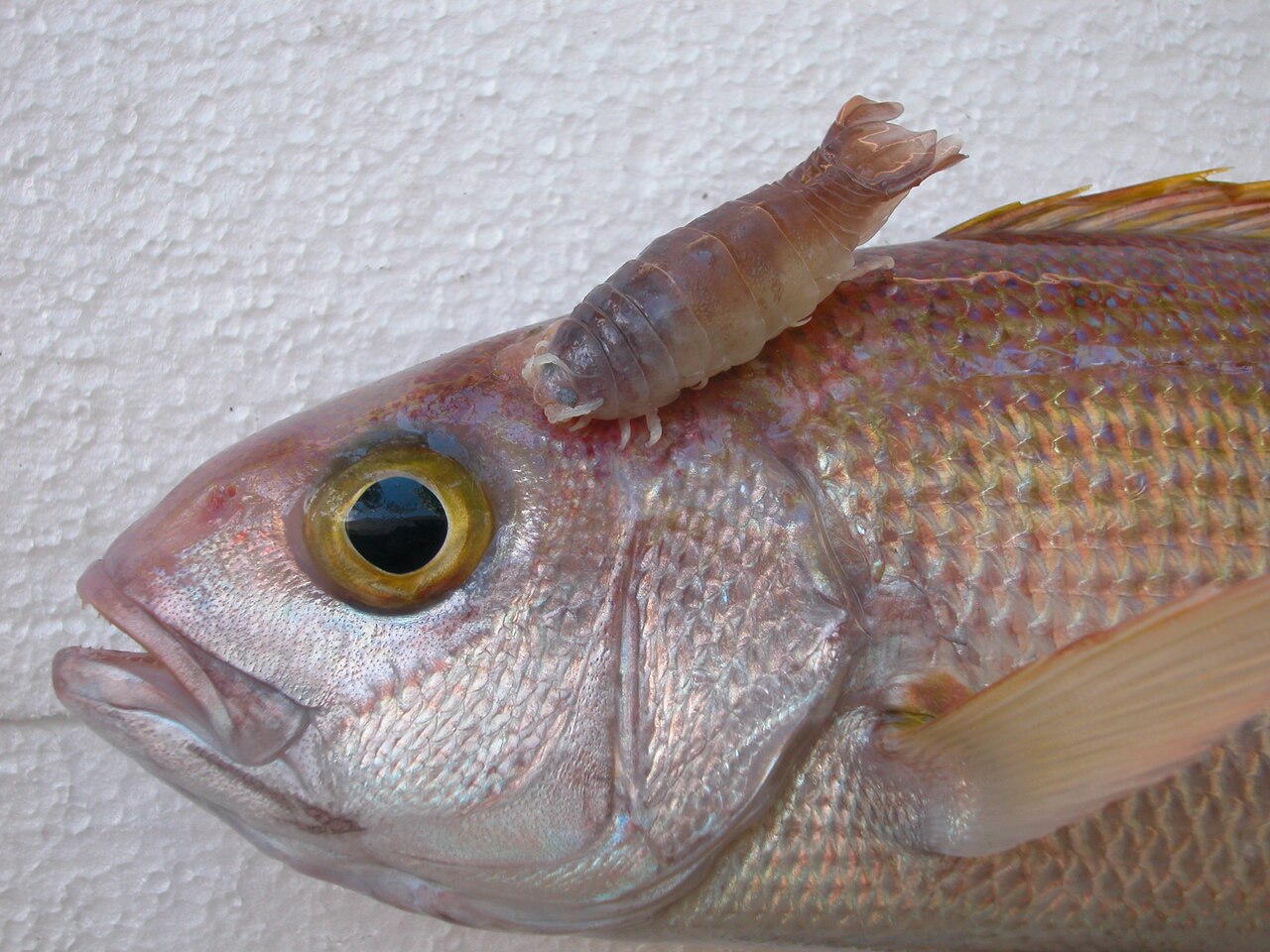
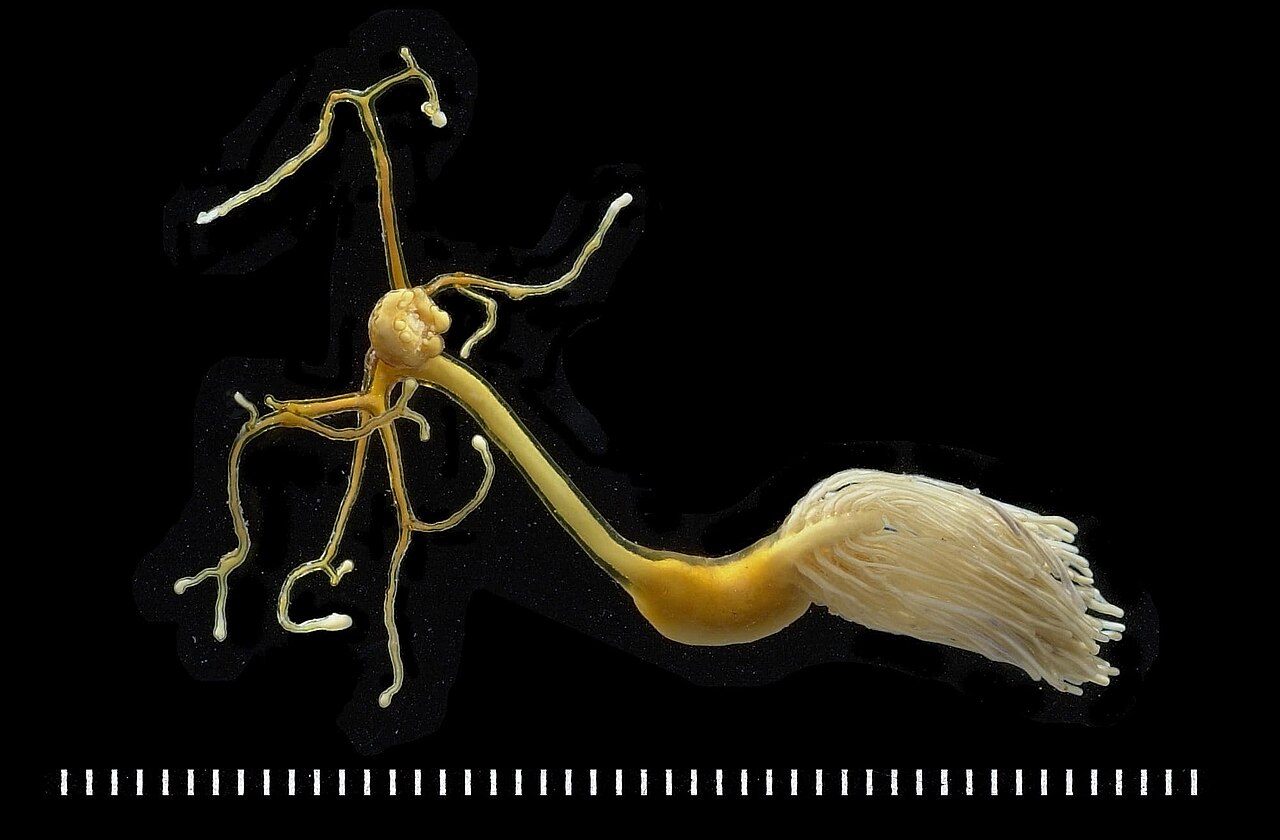
Pristipomoides filamentosus is an important species for fisheries, caught using bottom longlines and deep handlines and largely sold as fresh fish. Its flesh is considered of good quality. In Hawaii, it is known as opakapaka and is reported to be the most desirable species of snapper for eating, with moist, white flesh. It is of high commercial value in Hawaii and is the second most important quarry for the offshore handline fishery, making up 20% of the total catch of bottomfish. The peak fishing season in Hawaii runs from October to February. According to the FAO, the fish have been overexploited in the Seychelles, but the stock is recovering. Commercial capture of crimson jobfish sharply dropped to 4,400 tonnes in 2009 from 25,300 tonnes the previous year. Known parasites include the cymothoid isopod Anilocra gigantea, the pennellid copepod Lernaeolophus sultanus, and the nematodes Cucullanus bourdini and Raphidascaris (Ichthyosaurus) eteligis.
Gallery
Frequently Asked Questions
What is Pristipomoides filamentosus?
Pristipomoides filamentosus is a ray-finned fish in the Lutjanidae family, commonly called the crimson jobfish, rosy snapper, or opakapaka. It inhabits deep waters across the Indian Ocean and the Pacific, extending as far east as Hawaii and Tahiti.
What role does Pristipomoides filamentosus play in Hawaiian fisheries?
It serves as a prized deepwater snapper that anchors both commercial catches and recreational angling in Hawaiian waters. Locally it goes by the name opakapaka and is one of the iconic Deep Seven target species.
Where is Pristipomoides filamentosus found?
This species ranges throughout the Indian Ocean and the Pacific Ocean, with its easternmost extent reaching Hawaii and Tahiti. It is a deepwater dweller rather than a shallow-reef fish.
Why is Pristipomoides filamentosus important to Hawaii?
As one of the Deep Seven, it is a cornerstone of the state's commercial fishery and a highly sought-after game fish. Its deepwater habitat and robust flesh make it a top target for both industry and sport anglers.
When is the best time to catch Pristipomoides filamentosus in Hawaii?
The peak fishing season for this species in Hawaiian waters runs from October through February. Anglers and commercial operators typically target it most heavily during those winter and early-spring months.
More in Snappers and Grunts, Part 2 1-24
Spotted an error? Know more?
Reader corrections go straight into our review queue. Suggest an edit · How this site is sourced