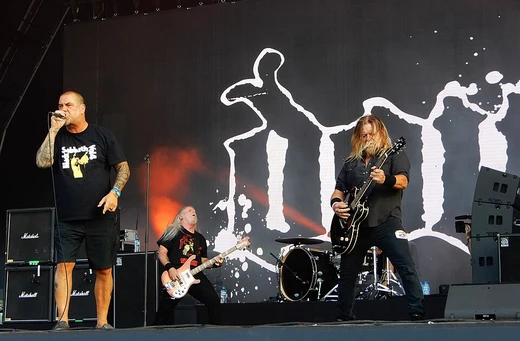
Årabrot
Norwegian sludge metal band known for experimental albums and live film scores.

Årabrot is a Norwegian sludge metal and experimental metal band formed in 2001, originally from Haugesund, with a creative base in Oslo and Haugesund and a home on the Oslo-based label Fysisk Format. The band's name derives from a garbage dump in Haugesund, possibly referring to a place where rivers or currents meet. Their music blends sludge, metal, and experimental elements, and they have received critical attention for their albums, including a Spellemannprisen win in the metal category for I Rove.
Quick Facts
- Alias
- Arabrot
- Origin
- Haugesund, Norway
- Genre
- Noise-rock, sludge metal, doom metal, post-punk
- Years Active
- 2001–present
- Label
- Fysisk Format
- Spinoffs
- Nernes Skagen
- Current Members
- Kjetil Nernes
- Past Members
- Vidar Evensen (2001-2013) / Kristian Kallevik (2001-2003) / Jon Øvstedal (2001-2010)
Facts from the source article.
Lore & Background
Årabrot was founded in 2001 in Haugesund, Norway, with a core of Kjetil Nernes (songwriter, guitar, vocals), Vidar Evensen (drums, visuals), and Jon Øvstedal (bass). Noise artist Stian Skagen later became a regular on-and-off member. The band's first three albums were released on Norway Rat Records before signing to Fysisk Format with the I Rove EP. In 2009, they were nominated for a Spellemannprisen in the rock category for The Brother Seed, produced by Steve Albini. Following that, they performed live scores for silent films such as Faust (1926), Häxan (1922), The Cabinet of Dr. Caligari (1920), and Die Nibelungen (1924) at various venues, and did commissioned work for the Henie Onstad Kunstsenter.
Reader's Guide
Årabrot's significance lies in their fusion of noise-rock with literary and philosophical themes, drawing on sources like the Bible, Dante's Inferno, existentialism, surrealism, and the works of Albert Camus, Georges Bataille, and Henry Miller. Their album Solar Anus, produced by Steve Albini, won the Spellemannprisen in the metal category and received international praise, with Drowned in Sound calling it 'a tidal wave of noise' and 'a fucking triumph.' The band's 2013 self-titled album, released after original member Vidar Evensen left, earned 8/10 ratings from NME, Rock Sound, Metal Hammer, and Terrorizer. Their side project Nernes Skagen, with Kjetil Nernes and Stian Skagen, released two albums on Fysisk Format. The band's legacy includes a reputation for unorthodox performances and a commitment to experimental noise-rock.
Did You Know?
- The band is named after a garbage dump in Haugesund, Norway.
- They performed live scores for silent films including Faust (1926) and Häxan (1922).
- Vocalist Kjetil Nernes suffered a lung collapse during a tour, not a blown lung.
- Nernes' riff arm has steel implants after being manhandled by police and a dog.
Origins & Identity
Born in the industrial port town of Haugesund in 2001, Årabrot took its name from a local garbage dump—a fitting origin story for a band that would channel raw, unfiltered sound into something deliberate and artful. The name also carries a deeper etymological resonance, possibly referencing the point where rivers or currents converge, suggesting a meeting of forces. The founding trio of Kjetil Nernes on guitar and vocals, Vidar Evensen on drums and visuals, and Jon Øvstedal on bass established a core that would endure for over a decade. Their early recordings found a home on Norway Rat Records, but it was the I Rove EP that marked their transition to the Oslo-based Fysisk Format label, where they remain. Though rooted in Haugesund, the band's creative center of gravity shifted to the quiet village of Djura, a move that underscored their preference for isolation and intensity over the glitz of the music industry. This grounding in place—both the literal dump and the metaphorical confluence of currents—gave the group a distinct Norwegian identity that would permeate every release.
Artistic Philosophy & Influences
Årabrot's songwriting draws from an almost encyclopedic range of literary and philosophical traditions, weaving macabre retellings of the Bible and Dante's Inferno alongside themes pulled from the historical avant-garde. The band openly cites the existentialism of Camus and Sartre, the surrealism of Bataille and Lautréamont, and the erotic extremities of Henry Miller and the Marquis de Sade as foundational to their lyrical world. Romantic-era writers like Coleridge, Poe, and de Quincey feed their imagery, while mystics such as Aleister Crowley and Borges, and oppositional voices like García Lorca and the Norwegian contrarian Jens Bjørneboe, round out a deeply intellectual palette. Musically, the group points to Death in June, the Melvins, Lee Hazlewood, The Birthday Party, and Swans as primary sonic touchstones. This collision of high literary ambition with abrasive, sludgy noise-rock creates a sound that is simultaneously cerebral and physically overwhelming—a deliberate contradiction the band embraces rather than resolves.
Career Trajectory & Defining Works
The band's discography traces a clear arc from raw Norwegian noise to internationally recognized art-rock. After three albums on Norway Rat Records, their partnership with Fysisk Format opened doors to high-profile producers: Billy Anderson (Melvins, Neurosis) shaped the double album REVENGE, while Steve Albini (Nirvana, Big Black, High on Fire) produced both The Brother Seed and Solar Anus. The Brother Seed earned a Spellemannprisen nomination in 2009, but it was Solar Anus that delivered the actual win in the metal category, accompanied by sweeping international praise. Drowned in Sound called it a "tidal wave of noise from few hands" and "art from the lowest of sods." The 2012 EP Mæsscr, produced by Emil Nikolaisen of Serena Maneesh, showcased their range with covers of Death in June and Lee Hazlewood. In 2013, following Vidar Evensen's departure, the band rebranded as Arabrot and released a self-titled sixth album that earned 8/10 scores across NME, Rock Sound, Metal Hammer, and Terrorizer.
Beyond the Stage & Resilience
Beyond recording, Årabrot carved out a distinctive live and collaborative identity. They performed live scores for silent films at unusual venues—Faust (1926) in Trondheim, Häxan (1922) at Øyafestivalen, The Cabinet of Dr. Caligari (1920) and Die Nibelungen (1924) at Verdensteatret in Tromsø—and completed commissioned work for the Henie Onstad Kunstsenter. Their side project Nernes Skagen, pairing Kjetil Nernes with electronics artist Stian Skagen, produced two albums on Fysisk Format: Ad Undas (2009) and Confession (2011). Norwegian director Fredrik S. Hana directed a music video for "Solaranus," premiered on The Quietus in February 2012. The band's physical endurance is legendary: Nernes reportedly blew his lung on the first show of a nine-day tour yet completed the run, and his riffing arm now contains steel implants following an incident involving police and a dog. These stories cement a band that treats suffering as raw material.
Frequently Asked Questions
Who is Årabrot?
Årabrot is a Norwegian band formed in 2001 that fuses sludge metal with experimental and avant-garde elements. They are based between Oslo and Haugesund and are signed to the Oslo label Fysisk Format.
What does the name Årabrot mean?
The name comes from a local garbage dump in Haugesund and may also reference a point where rivers or currents converge. It gives the band a distinctly Norwegian, earthy identity that matches their heavy, textured sound.
What genre does Årabrot play?
Their music sits at the intersection of sludge metal, experimental metal, and avant-garde composition, often incorporating film-score-like structures and unconventional instrumentation. They are as likely to perform a live film score as they are to play a traditional metal set.
What major award has Årabrot won?
They took home the Spellemannprisen, Norway's premier music prize, in the metal category for their album I Rove. That recognition cemented their standing as one of the country's most critically respected heavy-music acts.
Why is Årabrot important to the sludge/experimental scene?
They helped push Norwegian heavy music beyond conventional sludge by weaving in experimental textures, orchestral pacing, and cinematic ambition. Their work on Fysisk Format and their Spellemannprisen win gave the Oslo-Haugesund scene international visibility.
More in Sludge metal musical groups 1-24
Spotted an error? Know more?
Reader corrections go straight into our review queue. Suggest an edit · How this site is sourced