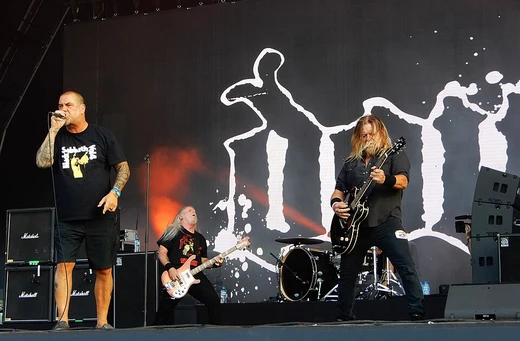
Knut (band)
Swiss mathcore/sludge band known for chaotic heaviness and Hydra Head association.

Knut (pronounced 'knoo-t' with a hard 'k', Russian for 'whip') was a Swiss mathcore/sludge metal band from Geneva, formed in 1994. They were known for combining heavily distorted guitars, odd-time signatures, discordance, repetition, and harsh vocals, and for their association with the Hydra Head Records label, which helped bring their music to a wider audience in the United States.
Quick Facts
- Background
- group_or_band
- Origin
- Geneva, Switzerland
- Genre
- Mathcore, sludge metal
- Years Active
- 1994–2012
- Label
- Hydra Head, Conspiracy, Snuff, Division, Head, Hummus
Facts from the source article.
Lore & Background
Knut started in the local underground squat scene of Geneva, releasing early seven-inch records and a CD titled Leftovers in 1997 on Snuff Records, run by Roderic Mounir and Didier Séverin. Their first full-length, Bastardiser (1998), showcased a sharper aggression with distorted guitars and odd time signatures. The band toured Europe with acts like Zeni Geva and The Young Gods, and in 2000 toured with Converge and Botch, which led to Hydra Head Records reissuing Bastardiser in the US that same year and inviting them to tour. In 2001, Knut completed an extensive US tour opening for Isis.
Reader's Guide
Knut's significance lies in their role as a Swiss band that bridged mathcore and sludge metal, gaining international recognition through the Hydra Head Records roster. Their album Challenger was noted for its extreme heaviness and chaotic dynamics, placing them alongside contemporaries like Isis and The Dillinger Escape Plan. The band's legacy is carried by vinyl reissues of their early work and the continued activity of former members in projects such as Brutalist and strom|morts. The death of co-founder Didier Séverin in 2022 marked the end of any possibility of reunion, but their music remains influential in underground heavy music circles, particularly for their blend of discordant riffs, odd time signatures, and harsh vocals.
Did You Know?
- The band's name is the Russian word for 'whip', pronounced 'knoo-t' with a hard 'k'.
- Knut's 2002 album Challenger ended up in Terrorizer Magazine's end-of-year list alongside Isis, Mastodon, and The Dillinger Escape Plan.
- Didier Séverin died on 23 March 2022, ending any hopes of the band reforming.
- In 2013, Knut briefly reconvened to record a cover of Godflesh's 'Merciless' with Franz Treichler of The Young Gods on vocals.
Roots in Geneva's Squat Scene
Knut emerged from Geneva's raw underground squat scene in 1994, taking their name from the Russian word for "whip" (pronounced "cnoot"). The Swiss mathcore and sludge metal group began by cutting a couple of seven-inch records and eventually pressed their first CD, Leftovers, in 1997 on Snuff Records, a small imprint run by Roderic Mounir and Didier Séverin. By 1998, their debut full-length Bastardiser arrived with a noticeably tighter, more aggressive edge: heavily distorted guitars locked into odd-time signatures, relentless repetition, deliberate discordance, and a vocal delivery that leaned into harshness. The band shared stages locally with acts like Zeni Geva, The Young Gods, Blockheads, Voivod, and Neurosis, embedding themselves firmly in Europe's experimental and extreme music circuits. Their early catalog—two 7-inch releases, a split with Ishma, and a split with Tantrum—documented a group still refining its identity while already pushing toward the dense, punishing sound that would come to define them.
Crossing the Atlantic and Earning Critical Acclaim
The year 1999 proved transformative. Tours alongside Converge and Botch—both on the Hydra Head label—caught the eye of label heads Aaron Turner and Mark Thompson, who swiftly reissued Bastardiser in the United States and booked Knut for further touring. In August 2001, the band undertook an extensive American trek opening for Isis, sharing bills with Thrones, Converge, Keelhaul, Pelican, Premonitions of War, Anodyne, and The Cancer Conspiracy, culminating at New York's infamous CBGB. Their 2002 album Challenger, recorded at Serge Morattel's Rec Studio in Geneva, pushed the boundaries of heaviness, dynamics, atmosphere, and controlled chaos in equal measure. The record earned a spot on Terrorizer Magazine's year-end list alongside Isis, Mastodon, The Dillinger Escape Plan, Queens of the Stone Age, and Meshuggah. Despite the growing recognition, Knut never made touring a full-time pursuit, preferring to balance their music with other commitments.
Reinvention, Lineup Flux, and the Road to Wonder
After a 2004 break, Knut returned with restless creative energy, collaborating on Alter, an experimental remix album featuring contributions from Justin Broadrick, Mick Harris, Dalek, Francisco López, and Asmus Tietchens. Their next studio effort, Terraformer, was recorded in late 2004 in Geneva and engineered by Jerome Pellegrini, a former Nostromo guitarist who had since joined Mumakil; originally intended as a demo, the sessions proved strong enough for a full release. Lineup shifts followed: Phil Hess departed before Terraformer's release, Jeremy Tavernier stepped in on guitar (having already played on most of the record), Jerome Doudet joined on bass, and Tim Robert-Charrue filled a second guitar slot. After European tours in 2006—including a UK run with Taint and a Hellfest appearance alongside Opeth, Nile, Ringworm, Capricorns, and Celtic Frost—Tavernier left to focus on Mumakil, and Christian Valleise took his place. In 2010, Knut released Wonder, their first new album in over five years, deliberately weaving melodic passages and psychedelic textures into their established heaviness. Tours followed across Europe with Keelhaul and, for the first time, into Russia.
Legacy, Loss, and the Didzfest Remembrance
Knut announced an indefinite hiatus in January 2012, but their story did not end there. In December 2013, the band briefly reunited at Rec Studio to record a cover of Godflesh's "Merciless," with Franz Treichler of The Young Gods on guest vocals; the track opened the 2014 tribute album Fathers Of Our Flesh. Vinyl reissues kept the catalog alive: Head Records remastered Bastardiser in 2019 with original Snuff Records artwork and an essay on the sessions, Hummus Records pressed Leftovers to vinyl for the first time in 2020, and Terraformer followed in April 2021, all remastered by Lad Agabekov of Nostromo. Former members pursued new paths—Roderic Mounir, Tim Robert-Charrue, Christian Valleise, and Adriano Perlini formed the metallic noise project Brutalist (2014–2018), while Didier Séverin explored electronic drone with his strom|morts trio. Séverin's death on 23 March 2022 extinguished any realistic hope of a reunion. On 24 March 2023, friends staged Didzfest at L'Usine, Geneva's principal underground venue, featuring Nostromo, Impure Wilhelmina, HEX, TERM, strom|morts as a duo, and a short instrumental set by former Knut members alongside Jimbob Isaac and Panos Agoros.
Frequently Asked Questions
Who is Knut (band)?
Knut is a mathcore and sludge metal group that formed in Geneva, Switzerland, in 1994. The band's name is a Russian word meaning 'whip,' pronounced with a hard 'k.' They built a reputation for aggressive, chaotic heaviness and a close association with Hydra Head Records.
What does Knut (band) sound like?
Their music relies on heavily distorted guitars, odd time signatures, dense repetition, and harsh vocals, blending the complexity of mathcore with the weight of sludge metal. The overall effect is often described as discordant and relentlessly intense.
What are Knut (band)'s most notable albums?
Standout releases include Bastardiser (1998), Challenger (2002), Terraformer (2005), and Wonder (2010). These records were issued through a rotation of labels such as Hydra Head, Snuff Records, and Conspiracy Records.
Why is Knut (band) important in the sludge metal scene?
Their Hydra Head Records partnership helped push their sound into the broader American post-metal and sludge community during the mid-2000s. They also shared bills with major acts like Isis, Converge, and Keelhaul, solidifying their place in the European and North American extreme-metal circuit.
What happened to Knut (band)?
After nearly two decades of touring and recording, the group entered an indefinite hiatus in 2012, though they briefly reconvened in 2013. Their active run spanned from 1994 through that period, with extensive European and U.S. touring along the way.
More in Sludge metal musical groups 1-24
Spotted an error? Know more?
Reader corrections go straight into our review queue. Suggest an edit · How this site is sourced