
Prism (optics)
Transparent element that refracts, reflects, or polarizes light.

Polarbear24 · CC BY-SA 3.0
An optical prism is a clear, solid piece with flat, polished faces that bends light as it passes through. To qualify as a prism, at least one of these faces must be set at an angle—if all faces are parallel, the object is simply a window, not a prism. The classic example is the triangular prism, which has a triangular base and rectangular sides. However, not every optical prism is a geometric prism, and not every geometric prism functions as an optical one. These devices can be crafted from any material that is transparent to the specific wavelengths they are meant to handle; common choices include glass, acrylic, and fluorite.
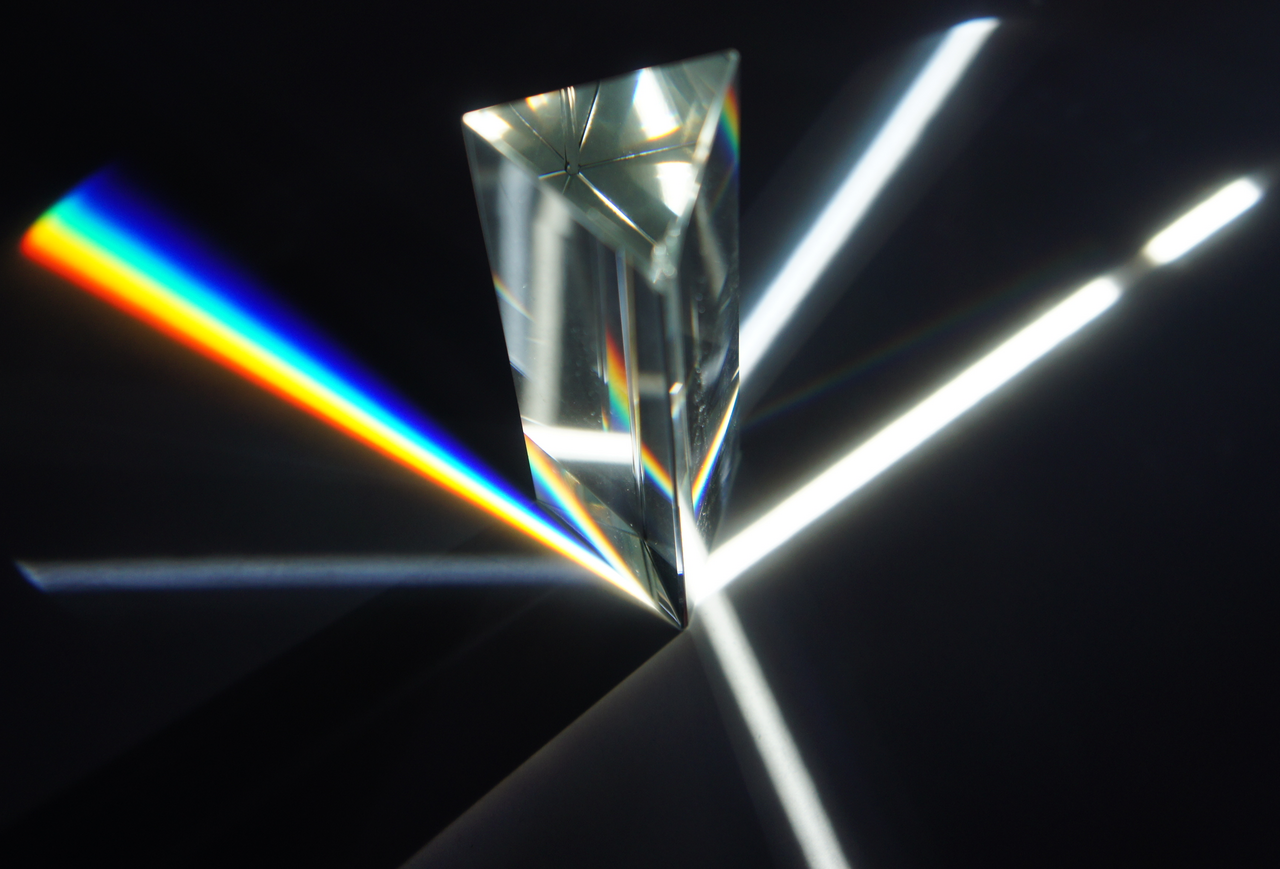
A dispersive prism separates white light into its rainbow of constituent colors, creating a spectrum. This happens because the material’s refractive index changes with wavelength: blue light slows down more than red light and thus bends more sharply. There are many varieties, such as the Abbe, Amici, Féry, and Pellin–Broca prisms, as well as compound types like the grism, which combines a prism with a diffraction grating. While spectral dispersion is the most famous use of prisms, it is not the most common one in practice.
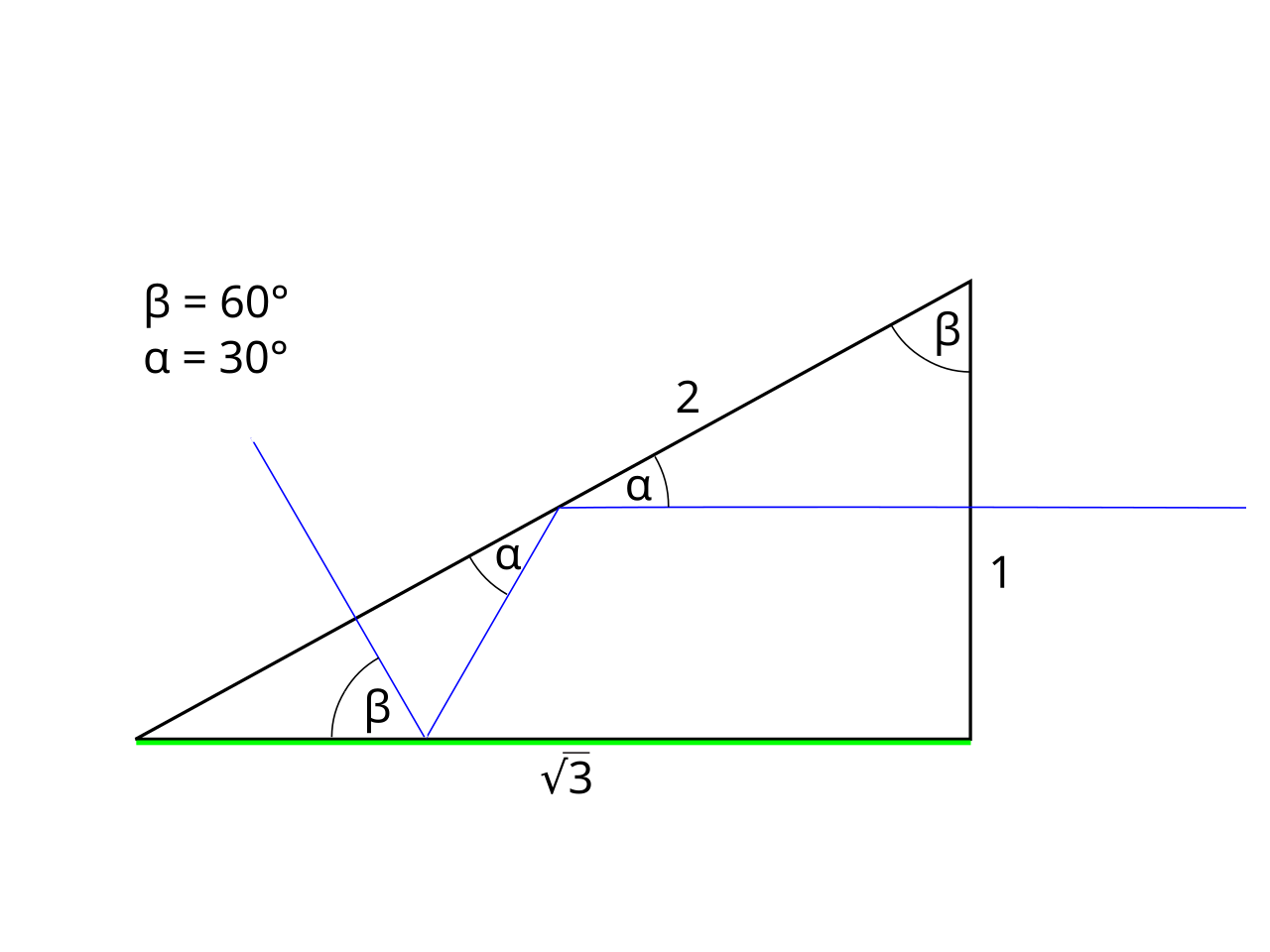
Reflective prisms redirect light to flip, invert, rotate, shift, or deviate a beam. They are essential in binoculars and single-lens reflex cameras, where they correct the image orientation—without them, the view would appear upside down. These prisms rely on total internal reflection to achieve nearly perfect reflection when light strikes their facets at a sufficiently steep angle. Made from optical glass and often coated with anti-reflective layers on input and output faces, they lose far less light than metallic mirrors. Depending on the number of reflections, the image may be mirrored (odd number) or upright (even number). Examples include the triangular prism reflector, roof pentaprism, Dove prism, corner-cube retroreflector, Porro prism, Porro–Abbe prism, Perger prism, Abbe–Koenig prism, Bauernfeind prism, Amici roof prism, pentaprism, Schmidt–Pechan prism, and Uppendahl prism.
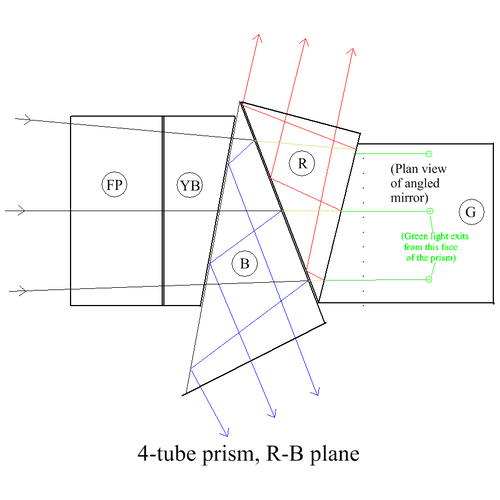
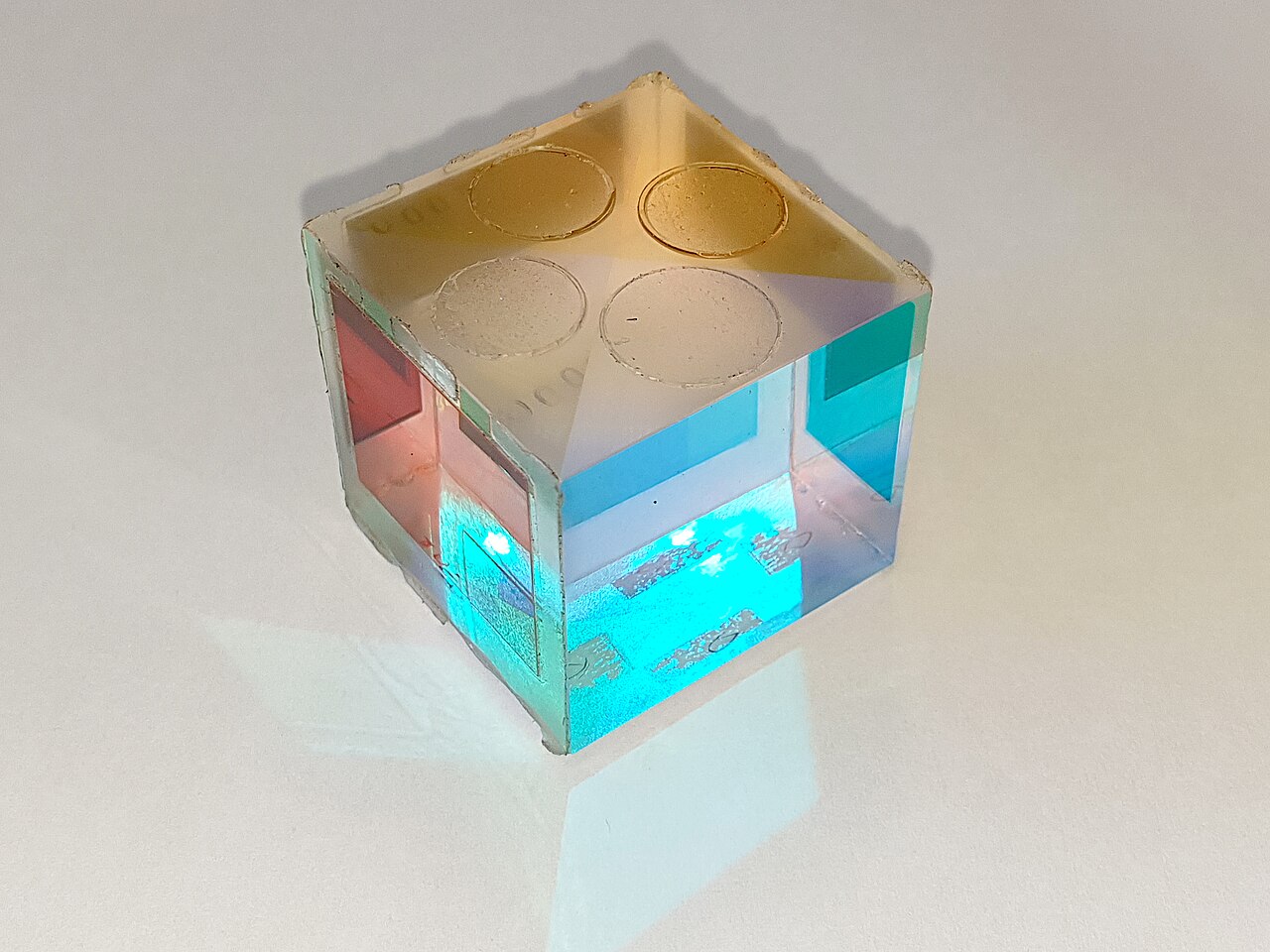
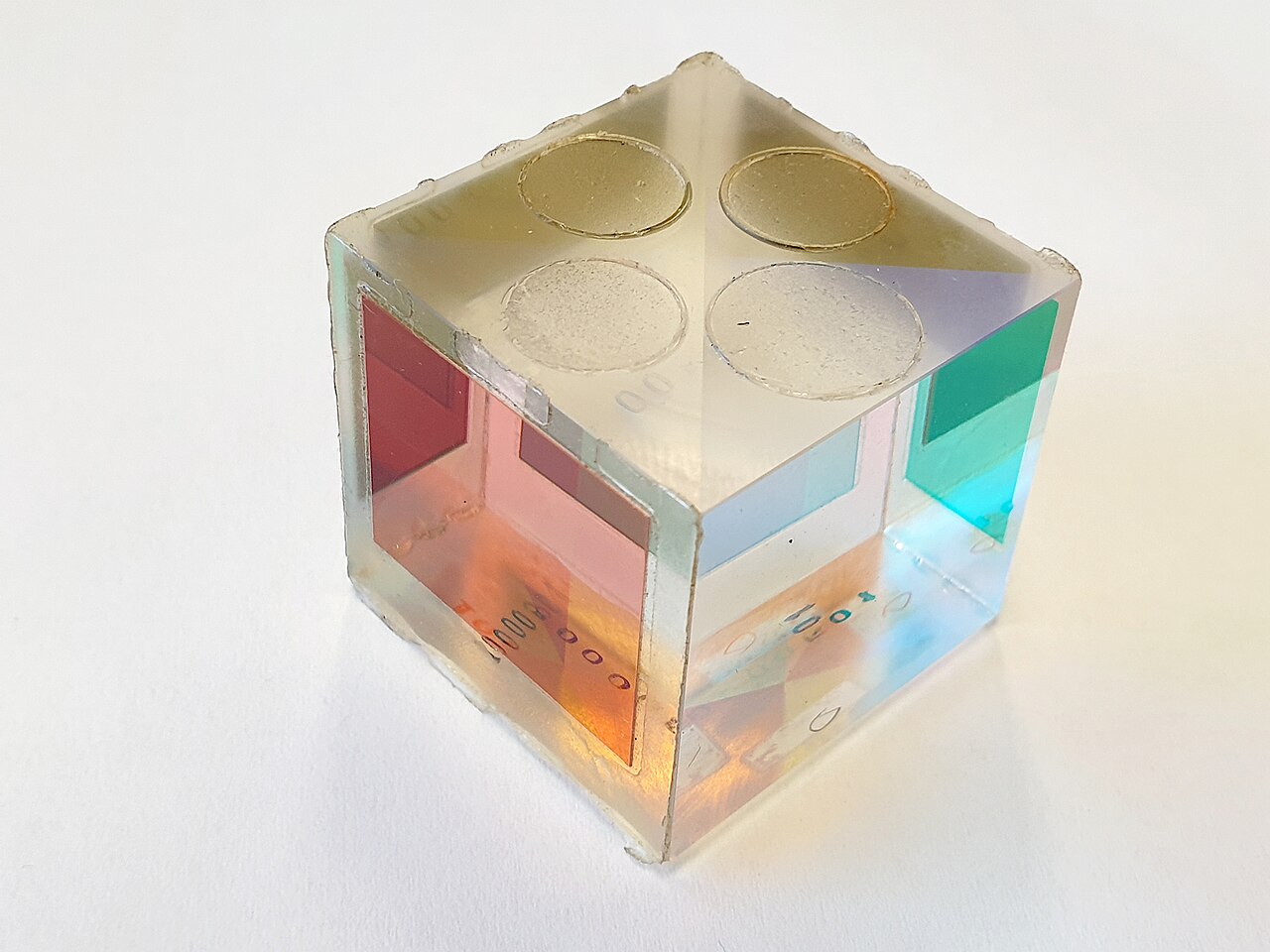
Beam-splitting prisms use thin-film optical layers deposited on the hypotenuse of a right-angled prism, which is then cemented to another prism to form a cube. The thin layer determines the overall optical performance. Compared to a standard glass substrate, the cube protects the thin film on both sides, offers better mechanical stability, and eliminates etalon effects, back-side reflection, and slight beam deflection. Variants include dichroic color filters (forming a dichroic prism), polarizing cube beamsplitters (cheaper but with lower extinction ratios than birefringent types), partially-metallized mirrors (non-polarizing), and air-gap designs where two triangular prisms are placed very close together. In the air-gap case, frustrated total internal reflection allows part of the radiation to couple into the second prism, with transmitted power dropping exponentially as the gap widens. The Fresnel biprism consists of two prisms joined at their bases, forming a wide vertex angle near 180°, and is used in common-path interferometry.
Polarizing prisms exploit birefringence to split a light beam into components with different polarizations. In the visible and ultraviolet ranges, they have very low losses and extinction ratios typically exceeding 100,000 to 1, outperforming other polarizer types. Some use total internal reflection to separate one polarization, as in the Nicol, Glan–Foucault, Glan–Taylor, and Glan–Thompson prisms. Others deviate one polarization by refraction alone, such as the Rochon and Sénarmont prisms. The Wollaston prism deviates both polarizations by refraction, while the Nomarski prism—a variant—displaces them so they emerge converging toward each other, which is important for differential interference contrast microscopy. Finally, polarization beam displacers, typically made from thick anisotropic crystals with plan-parallel faces, keep both polarizations parallel but spatially separate them.
- field
- Optics
- known_for
- Refracting light, dispersing white light into spectral colors, reflecting and polarizing light
- materials
- Glass, acrylic, fluorite, birefringent crystals (e.g., calcite, quartz, α-BBO, MgF2, YVO4, TiO2)
Lore & Background
Optical prisms are defined by having at least one angled surface; elements with only two parallel surfaces are windows. The triangular prism is the most familiar type, but not all optical prisms are geometric prisms, and not all geometric prisms count as optical prisms. Dispersive prisms break white light into constituent spectral colors because the refractive index depends on wavelength—blue light is slowed more than red light and bent more. Reflective prisms use total internal reflection to flip, invert, rotate, deviate, or displace light beams, often used to erect images in binoculars or single-lens reflex cameras. Beam-splitting prisms use thin-film layers or air gaps to split light, while polarizing prisms use birefringence to separate polarization components with very low losses and extinction ratios exceeding 10^5:1.
Reader's Guide
Optical prisms are fundamental tools in optics, serving roles from dispersing light into spectra to reflecting and polarizing beams. Their significance lies in their versatility: dispersive prisms reveal the spectral composition of light, reflective prisms correct image orientation in optical instruments, and polarizing prisms enable precise control of light polarization. Prisms are also used in advanced applications such as coupling light to surface plasmons and in laser active media. The choice of material—glass, acrylic, fluorite, or birefringent crystals—depends on the wavelength range and desired optical properties. Despite spectral dispersion being the best-known property, it is not the most frequent practical use. Prisms made of isotropic materials can alter polarization in unwanted ways, but careful design can mitigate this. Their legacy endures in everything from simple classroom demonstrations to complex scientific instruments.
Did You Know?
- At least one surface of an optical prism must be angled; elements with only two parallel surfaces are windows, not prisms.
- Blue light is slowed more than red light in a dispersive prism and is therefore bent more.
- Reflective prisms use total internal reflection to achieve near-perfect reflection, with lower light loss than metallic mirrors.
- Polarizing prisms can achieve extinction ratios exceeding 10^5:1, superior to other types of polarizers.
Pioneering Observations: Newton and the Birth of Multi-Prism Optics
Long before the mathematics of wave optics matured, Isaac Newton laid the conceptual groundwork for understanding how light interacts with arrays of prisms. In his landmark treatise Opticks, Newton provided what remains the earliest recorded description of multiple-prism arrays and the phenomenon of multiple-prism dispersion. His observations went beyond merely noting that a single prism separates white light into its constituent wavelengths; he recognized that stacking or arranging several prisms produced compounded dispersion effects that could be systematically studied. Equally significant, Newton introduced the idea of employing prisms as beam expanders—a practical application that linked fundamental optics to engineering. This dual contribution, theoretical and applied, established a framework that would occupy researchers for nearly two centuries. The fact that his descriptions predated a full mathematical treatment by over a hundred years underscores how empirical insight can precede formal theory, and how Newton's qualitative language in Opticks set the stage for the quantitative work that would eventually follow.
From Pair Expanders to Modern Theory: Brewster to Born and Wolf
Newton's qualitative insights required more than a century to be refined into precise mathematical language. In 1813, David Brewster advanced the practical side of prism optics by introducing prism pair expanders, a configuration that extended the beam-expanding concept Newton had first proposed. Brewster's work demonstrated that pairing two prisms in a specific arrangement could magnify a beam in a controlled manner, moving the idea from theoretical curiosity to laboratory tool. The next major leap came in 1959, when Max Born and Emil Wolf published a modern mathematical description of single-prism dispersion. Their formulation translated the physical behavior of light passing through one prism into a rigorous analytical framework, giving researchers a reliable equation set for predicting how wavelength, angle, and refractive index interact at a single interface. Together, Brewster's engineering contribution and Born and Wolf's analytical rigor bridged the gap between Newton's empirical observations and the fully generalized multi-prism theories that would emerge in the following decades.
The Generalized Dispersion Framework: Duarte and Piper
In 1982, F. J. Duarte and Piper delivered what became the definitive design tool for engineers working with multiple-prism grating laser oscillators. Their generalized multiple-prism dispersion theory expressed the total angular dispersion of a prism array as a function of four key parameters: the angle of incidence, the geometric configuration of each prism, the refractive index of the prism material, and the total number of prisms in the chain. This was a significant advance over the single-prism treatment of Born and Wolf, because it captured how dispersion accumulates recursively as light passes through successive elements. The formulation was explicitly conceived as a practical design aid, allowing laser engineers to calculate how a given arrangement of prisms would spread or compress the spectral output of a grating-based oscillator. By treating the entire array as a unified system rather than a collection of isolated components, Duarte and Piper's equations gave designers the ability to optimize multi-prism configurations for specific wavelength-tuning requirements, a capability that had been absent since the field's earliest days.
Anatomy of the Equations: How Dispersion Scales Across Prisms
The mathematical structure of the Duarte-Piper equations reveals a recursive architecture that mirrors the physical path of light through a prism chain. At each stage m, the rate at which the output angle changes with wavelength depends on two contributions: a direct term proportional to the wavelength derivative of the refractive index at that prism, and an inherited term that carries forward the dispersion accumulated by all preceding prisms. Two geometric coupling factors, each defined as a ratio of cosines of the internal and external ray angles, scale the inherited contribution and encode how the prism's orientation modulates the transfer of dispersion from one element to the next. The equations can be written equivalently using partial-derivative notation or a compact gradient operator with respect to wavelength, offering flexibility for different analytical contexts. The presence of a plus-or-minus sign reflects the two possible orientations a prism can take in the array, giving designers a binary choice at each stage that either reinforces or partially cancels the dispersion contributed by the previous element. This recursive, sign-dependent structure is what makes multi-prism arrays so powerful for fine spectral control.
Gallery
Frequently Asked Questions
Who is Prism (optics)?
A prism is a transparent optical element featuring at least one angled, polished face that bends light as it passes through. The classic shape is the triangular prism, with a triangular cross-section and rectangular sides. Its angled geometry distinguishes it from a plain window, which has only two parallel surfaces and does not refract the beam.
What are Prism (optics)'s powers/role?
It refracts light, disperses white light into its spectral colors, redirects beams via internal reflection, and separates light by polarization. It can also couple incident light into surface plasmons for sensing applications. In short, it is a passive tool for steering, splitting, and analyzing a light beam.
How does Prism (optics)'s story end?
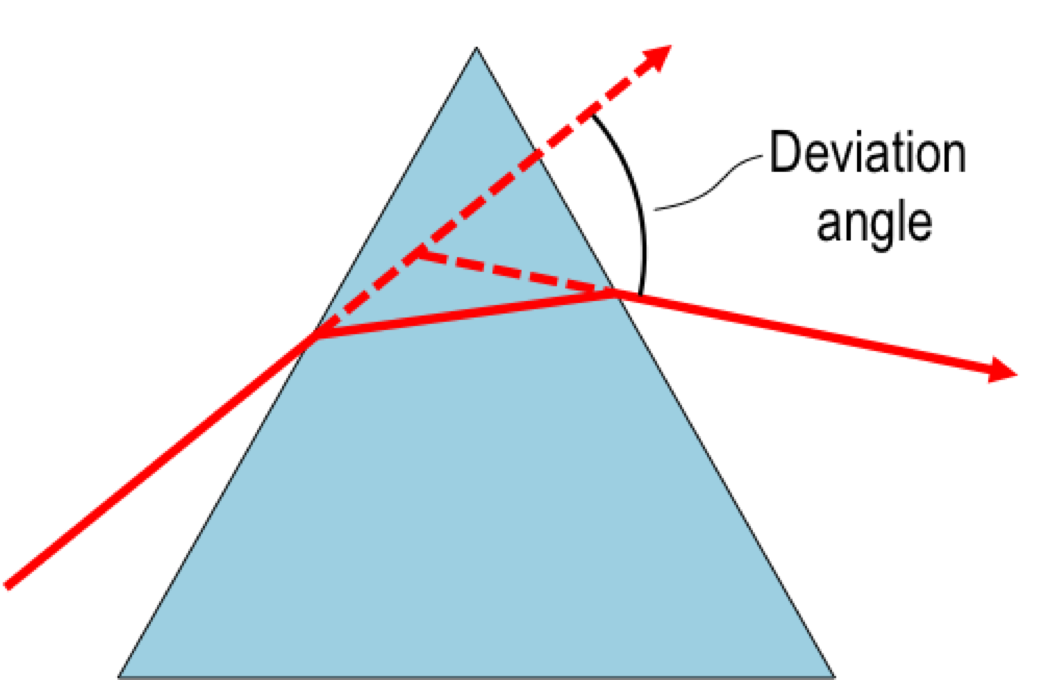
Light that enters one face exits the other deflected by an angle set by the prism's geometry and the material's refractive index. In a dispersion setup the emergent beam fans out into a rainbow of wavelengths rather than staying a single white ray. The exact exit direction and color spread depend on the wavelength-dependent bending the prism imposed during transit.
Why is Prism (optics) important?
It underpins spectroscopy, beam steering, and polarization analysis across physics, engineering, and astronomy. Techniques for reading the chemical fingerprint of a star or verifying material purity rely on the prism's predictable wavelength-dependent refraction. Its simple, passive geometry makes it a go-to component in countless laboratory and field instruments.
What materials is Prism (optics) made of?
Any substance transparent to the target wavelengths will work, with optical glass, acrylic, and fluorite being the most common choices. For polarization or birefringence tasks, crystals such as calcite, quartz, α-BBO, MgF₂, YVO₄, and TiO₂ are selected. The final material is dictated by the wavelength range and the specific optical effect the designer needs.
More in Science & Measurement 1-16
Spotted an error? Know more?
This is a living reference — every entry is fact-audited, and reader corrections feed straight into our audit queue. Suggest an edit · See this site's audit record