
The Adventures of Captain Hatteras
An 1866 novel about an obsessive British expedition to the North Pole.

Riou and Montaut · Public domain
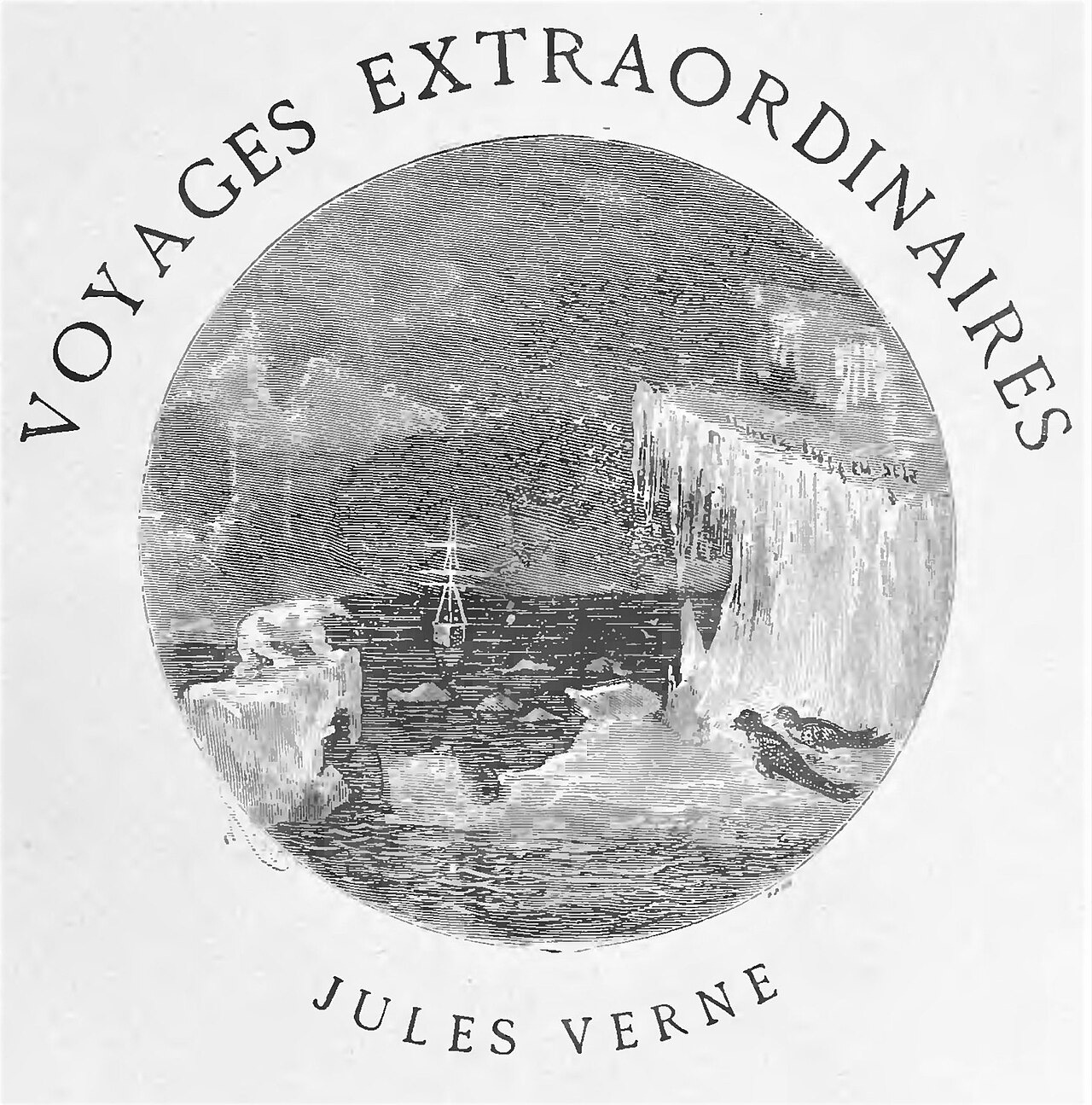
The Adventures of Captain Hatteras (French: Voyages et Aventures du capitaine Hatteras) is an 1866 adventure novel by Jules Verne in two parts: The English at the North Pole and The Desert of Ice. It was the second book of the Voyages extraordinaires series, following Five Weeks in a Balloon (1863), and its protagonist shares many similarities with the English naval explorer Sir John Franklin.
Quick Facts
- Title Orig
- Voyages et aventures du capitaine Hatteras
- Author
- Jules Verne
- Illustrator
- Édouard Riou and / Henri de Montaut
- Country
- France
- Language
- French
- Series
- The Extraordinary Voyages #2
- Genre
- Adventure novel, science fiction
- Publisher
- Pierre-Jules Hetzel
- Release Date
- 1866 / (1864-1865 as a serial)
- English Release Date
- 1874
- Media Type
- Print (Hardback)
- Preceded By
- Five Weeks in a Balloon
Facts from the source article.
Lore & Background
The novel, set in 1861, describes the adventures of a British expedition led by Captain John Hatteras to the North Pole. Hatteras is convinced that the sea around the pole is not frozen, and his obsession drives him onward despite a mutiny that destroys his ship. With a few men, he continues and discovers the remains of a previous U.S. expedition on the shore of an island called New America. Doctor Clawbonny’s ingenuity helps the group survive the winter: he makes fire with an ice lens, bullets from frozen mercury, and repels polar bears with remotely controlled black powder explosions.
When winter ends, the travelers build a boat from the wreck and head toward the pole, where they discover an active volcanic island named after Hatteras. The exact location of the pole lies in the volcano’s crater. In the original ending, Hatteras perishes there; editor Jules Hetzel required a rewrite in which Hatteras survives but is driven insane. He returns to England, is placed in an asylum, and spends his remaining days walking the streets with his dog Duke, forever marching northward.
Reader's Guide
The Adventures of Captain Hatteras holds significance as the first book in Jules Verne’s Voyages extraordinaires series, though three earlier novels were later added retroactively. Its depiction of Arctic geography, based on scientific knowledge of 1866, foreshadowed later discoveries: the fictional New America occupies locations where Robert Peary and Frederick Cook later claimed to have sighted land. The novel also reflects contemporary territorial tensions, as a deleted chapter had Hatteras and an American explorer dueling over claiming the land for their respective countries. The work influenced later adaptations, including a 1912 film by Georges Méliès. Multiple English translations appeared in the 19th century, with a modern translation by William Butcher published in 2005. The novel remains a notable example of Verne’s blend of adventure, science, and exploration themes.
Did You Know?
- The novel was first serialized in 1864 in the French magazine Magasin d'éducation et de récréation.
- The character of Captain Hatteras shows many similarities with the English naval explorer Sir John Franklin.
- Verne's editor Jules Hetzel required a rewrite so that Hatteras survives but is driven insane, instead of perishing in the volcano.
- In 1912, Georges Méliès made a film based on the story entitled The Conquest of the Pole.
- The Adventures of Captain Hatteras is the second book in the Voyages extraordinaires series, not the first.
Publication History & Place in the Voyages Extraordinaires
The Adventures of Captain Hatteras, written by Jules Verne and subtitled in French as Voyages et Aventures du capitaine Hatteras, first appeared in 1864 as a serialized installment in the French educational magazine Magasin d'éducation et de récréation. The work was split into two distinct parts: The English at the North Pole and The Desert of Ice. When Verne's publisher Jules Hetzel assembled the definitive 1866 edition, the novel was folded into the landmark Voyages extraordinaires collection, commonly known as The Extraordinary Voyages. An unusual quirk of the series numbering is that this book, despite being the very first title in the collection, was assigned the number two slot. This was because three earlier Verne novels—Five Weeks in a Balloon, Journey to the Centre of the Earth, and From the Earth to the Moon, all published between 1863 and 1865—were retroactively inserted into the series to precede it. The result was a slightly irregular ordering that has persisted in most subsequent editions of the collection.
The Obsessive Quest and a Mute Ending
Set in 1861, the novel follows Captain John Hatteras, a British naval officer consumed by the conviction that the waters surrounding the North Pole remain unfrozen. His single-minded determination to reach that point, regardless of cost, drives the entire narrative. A crew mutiny destroys the expedition's vessel, yet Hatteras presses on with a handful of loyal men. They winter on an Arctic island, surviving through the extraordinary resourcefulness of Doctor Clawbonny, who generates fire with an ice lens, fashions ammunition from frozen mercury, and repels polar bear attacks using remotely detonated charges of black powder. When the ice clears, the survivors construct a boat from a wrecked ship and push toward the pole, where they find an active volcano on a small island. The exact geographic pole, Hatteras discovers, sits in the volcano's crater. He leaps in. In the original draft he dies there, but publisher Hetzel demanded a revision: Hatteras survives, yet the experience shatters his mind. He is confined to an English asylum, never speaks another word, and spends his remaining days walking the streets with his dog Duke, forever marching northward.
New America and the Real Arctic Frontier
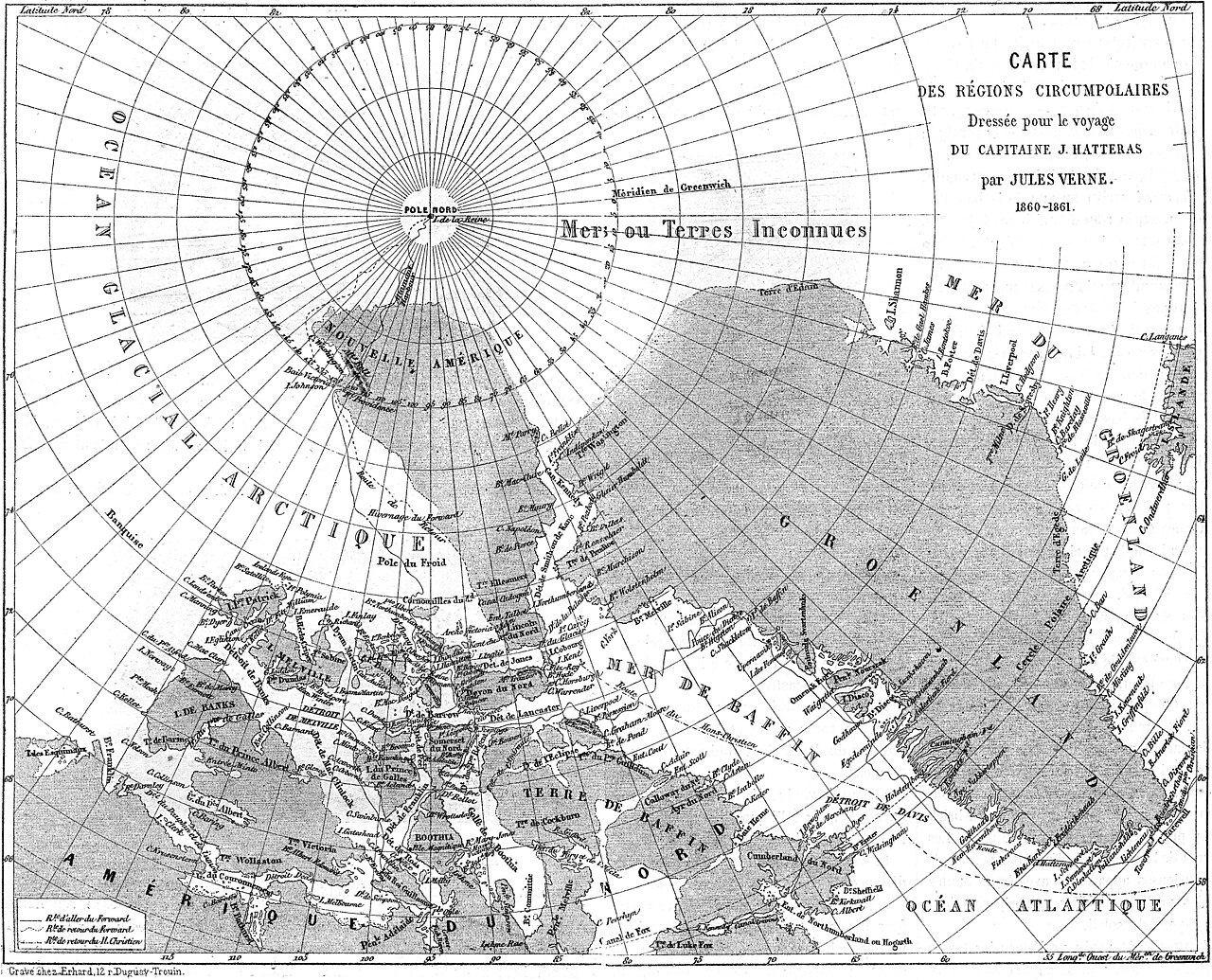
New America, the vast Arctic island that anchors the novel's middle chapters, is depicted as a northward extension of Ellesmere Island. Its coastline is populated with named features—Victoria Bay, Cape Washington, Johnson Island, Bell Mountain, Fort Providence, and Altamont Harbour at its northernmost tip. Verne's geography was rooted in the scientific understanding of the 1860s, yet it eerily anticipated later explorations. Ellesmere had been re-identified by Edward Inglefield in 1852 and further surveyed by Isaac Israel Hayes in 1860–61. Decades after the novel's publication, Robert Peary reported sighting Crocker Land near 83° N in 1906, and Frederick Cook claimed Bradley Land at 85° N in 1909—both in the general region Verne had already mapped. Cook's chosen route may well have been inspired by his reading of the book. The island takes its name from Captain Altamont, the American who first sets foot on it, and a deleted chapter titled John Bull and Jonathan once had Hatteras and Altamont dueling over the right to claim the territory for their respective nations.
Translations, Adaptations, and the Franklin Shadow
Captain Hatteras's character bears a striking resemblance to Sir John Franklin, the English naval explorer whose ill-fated Arctic expedition became legendary, and this parallel likely informed Verne's creation of a British captain whose obsession with the pole mirrors real-life polar ambition. The novel's afterlife in English-speaking readership has been shaped by a succession of nineteenth-century translations—Routledge in 1874, Ward Lock in 1876, James R. Osgood in 1876, and Goubaud in 1877—each compressing or truncating Verne's text to different degrees, with the Osgood version generally regarded as the most faithful. Because these editions are now out of copyright, the text circulates freely through Project Gutenberg, archive.org, and Standard Ebooks, and a LibriVox audiobook makes it accessible in spoken form. A modern, full-length translation by William Butcher appeared from Oxford University Press in 2005. On screen, the story found an early cinematic life when Georges Méliès directed The Conquest of the Pole in 1912, bringing Hatteras's frozen odyssey to audiences in a medium that was itself still in its infancy.
Gallery

Frequently Asked Questions
What is The Adventures of Captain Hatteras?
It is a two-part 1866 adventure novel by Jules Verne, divided into The English at the North Pole and The Desert of Ice. The story follows a fanatical British naval officer who leads an expedition with the singular goal of reaching the geographic North Pole.
Who is Captain Hatteras and what motivates him?
Hatteras is an obsessive British naval explorer whose entire identity revolves around planting his flag at the North Pole. His character closely mirrors the real-life Sir John Franklin, and his unyielding, almost monomaniacal determination drives every decision in the plot.
What is the setting and central conflict of the novel?
The story unfolds in 1861 as a British expedition pushes through the Arctic Ocean toward the pole. The crew becomes trapped on a seemingly endless frozen desert of ice, and their struggle to survive the isolation and cold forms the core tension of the narrative.
How does the story of Captain Hatteras end?
The expedition ultimately reaches the North Pole, fulfilling Hatteras's lifelong obsession. However, the achievement comes after months of grueling hardship and isolation on the frozen expanse, underscoring the personal cost of his single-minded pursuit.
Where does The Adventures of Captain Hatteras fit in Jules Verne's bibliography?
It is the second volume of Verne's landmark Voyages extraordinaires series, published in 1866 after Five Weeks in a Balloon. The novel highlights Verne's early fascination with polar exploration and obsessive protagonists, themes he would later echo in works such as The Mysterious Island.
More in Science fiction novels adapted into films 1-24
Spotted an error? Know more?
Reader corrections go straight into our review queue. Suggest an edit · How this site is sourced