
Angels & Demons
A 2000 thriller introducing Robert Langdon and ambigrams.

Susan Sermoneta · CC BY 2.0
Angels & Demons is a 2000 best-selling mystery-thriller novel written by American author Dan Brown. It introduces the character Robert Langdon, who recurs as the protagonist of Brown's subsequent novels. The novel shares stylistic literary elements with its sequels, such as conspiracies of secret societies, a single-day time frame, and the Catholic Church, and heavily references ancient history, architecture, and symbology.
- Publisher
- Pocket Books (US) and Corgi Books (UK)
Lore & Background
The novel begins with the murder of CERN physicist Leonardo Vetra, whose chest is branded with an ambigram of 'Illuminati.' CERN director Maximilian Kohler calls Vetra's adopted daughter Vittoria and Harvard symbology professor Robert Langdon. They discover a canister of antimatter stolen from Vetra's lab, set to explode in 24 hours. Langdon and Vittoria go to Vatican City, where four cardinal candidates for pope have been kidnapped by the Hassassin, acting under orders of 'Janus,' the Illuminati leader.
Langdon and Vittoria follow clues along the 'Path of Illumination' to four Altars to Science, but find the first two cardinals dead. They confront the assassin at the third altar but fail to save the cardinal; the assassin kidnaps Vittoria. Langdon fails to save the fourth cardinal but confronts the Hassassin at Castel Sant'Angelo, freeing Vittoria and causing the assassin's death. Meanwhile, Kohler confronts Camerlengo Carlo Ventresca, and is shot by Swiss Guards. Before dying, Kohler gives Langdon a mini video camera recording his confrontation with Ventresca.
Ventresca retrieves the antimatter canister from St. Peter's tomb and takes it by helicopter. Langdon follows, and after Ventresca jumps with the only parachute, Langdon survives by using a tarp as a parachute, landing in the Tiber. The video reveals Ventresca is Janus: he poisoned the pope, recruited the Hassassin, and staged the attacks to rally the Church against science. Cardinal Mortati reveals Ventresca is the late pope's biological son. Ventresca sets himself on fire on the balcony. Mortati is elected pope, and Langdon and Vittoria reunite.
Reader's Guide
Angels & Demons is significant for introducing the character Robert Langdon, who became the protagonist of Dan Brown's subsequent novels, including The Da Vinci Code. The book brought the art of ambigrams to public attention through its use of ambigrams created by typographer John Langdon, including designs for 'Angels & Demons,' 'Illuminati,' and the four elements. The novel's plot, involving secret societies, the Catholic Church, and a race against time, established a formula that Brown would reuse. The book also sparked discussion about its inaccuracies, particularly regarding antimatter production and Catholic Church procedures. CERN published a FAQ page stating antimatter cannot be used as an energy source because creating it takes more energy than it produces. The novel's first edition contained numerous location and language errors, some corrected in later editions. A film adaptation was released on May 15, 2009, and a History Channel documentary, Angels & Demons Decoded, premiered on May 10, 2009, exploring the novel's bases and inaccuracies.
Did You Know?
- The novel's first edition contained numerous inaccuracies of location in Rome and incorrect uses of Italian language.
- The position of Devil's Advocate, indicated in the novel to have a role in papal selection, was actually used for canonization and was abolished by Pope John Paul II in 1983.
A New Protagonist for the Thriller Genre
Angels & Demons, published in 2000 by Pocket Books and later by Corgi Books, stands as a best-selling mystery-thriller that fundamentally reshaped the landscape of popular fiction. Written by American author Dan Brown, the novel made its most enduring contribution by introducing Robert Langdon, a Harvard professor specializing in symbology and religious history, who would go on to anchor a series of subsequent novels. Stylistically, the book established a template that its sequels would continue to follow: conspiracies woven around secret societies, a compressed single-day narrative frame, and a deep engagement with the Catholic Church. Beyond these structural choices, Brown saturates the text with references to ancient history, architecture, and symbology, creating a reading experience that blends academic curiosity with page-turning suspense. The combination of these elements gave the novel a distinctive voice within the thriller genre and set the expectations for everything that followed in Brown's career.
Ambigrams and the Art of John Langdon
One of the novel's most distinctive features is its integration of ambigrams—words and symbols designed to be read the same way from multiple orientations. These designs were created by real-life typographer John Langdon, whose name is a clear nod to the book's protagonist. The novel features ambigrams for the words "Angels & Demons" and "Illuminati," and the title itself appears as an ambigram on the hardcover jacket and the inside cover of paperback editions. Additionally, the text includes ambigrams of the four classical elements: Earth, Air, Fire, and Water. These four element designs are arranged in the shape of a diamond, forming what the narrative calls the "Illuminati Diamond." The sheer popularity of the book served to bring the niche art of ambigram design to a massive public audience, giving John Langdon's work a visibility it might never have achieved otherwise. This fusion of typographic art with thriller narrative made the book's visual identity as memorable as its plot.
A Ticking-Clock Conspiracy in Rome
The plot of Angels & Demons unfolds within a single, breathless day, driven by the theft of a canister of antimatter from CERN's laboratories. The canister will detonate in twenty-four hours once its battery depletes, creating an unrelenting deadline that propels every scene forward. Harvard symbology professor Robert Langdon and Vittoria Vetra, the adopted daughter of the murdered physicist Father Leonardo Vetra, race through Rome's churches and piazzas to track down four kidnapped cardinals—the Preferiti, the leading candidates for the papacy—before they are ritually killed at the four Altars to Science. The assassins operate under the orders of "Janus," the supposed leader of the Illuminati, an ancient anti-religious sect long thought extinct. Langdon and Vittoria follow a trail of clues through Santa Maria del Popolo, St. Peter's Square, Santa Maria della Vittoria, and the Fontana dei Quattro Fiumi, arriving too late to save each cardinal. The narrative's tension culminates in a confrontation at the Castel Sant'Angelo and a desperate helicopter escape over the Tiber River, where Langdon survives by jumping with a makeshift parachute.
The Twist and the Film Legacy
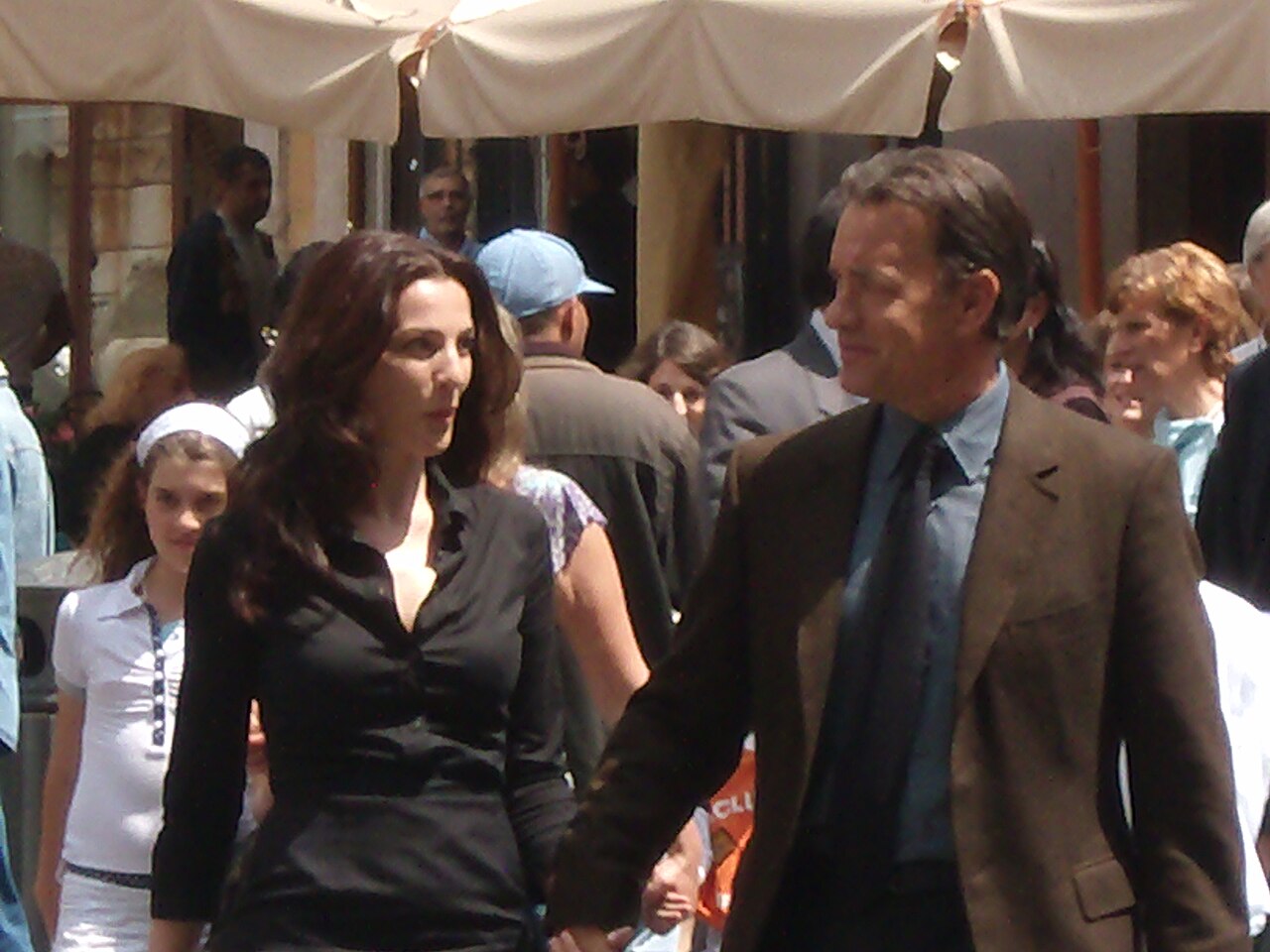
The novel's most striking narrative device is its final reveal: the true identity of Janus is not the CERN director Maximilian Kohler, as the characters suspect, but Camerlengo Carlo Ventresca, the late pope's closest aide. A secretly recorded video, handed to Langdon by the dying Kohler, exposes Ventresca's confession that he poisoned the pope after learning the pontiff had fathered a child and opposed bridging science with faith. Under the Illuminati banner, Ventresca orchestrated the murders and the antimatter threat as a false-flag operation designed to rally the Church against scientific advancement and position himself for the papacy. His ultimate fate—soaking himself in oil and igniting on the papal apartment balcony before a stunned crowd—cements the novel's blend of religious spectacle and thriller payoff. The story's cultural reach extended well beyond the printed page when a film adaptation hit theaters on May 15, 2009, introducing the Langdon universe to a global audience and cementing the book's place in popular culture.
Gallery

Frequently Asked Questions
Who wrote Angels & Demons?
Angels & Demons is a 2000 mystery-thriller novel by American author Dan Brown. It was released through Pocket Books in the United States and Corgi Books in the United Kingdom.
Who is the protagonist of Angels & Demons?
The story follows Robert Langdon, a symbologist who races to solve a series of murders linked to a secret society. This character goes on to star in Brown's later novels as well.
What is Angels & Demons about?
The novel centers on a race to uncover a hidden Illuminati conspiracy before a bomb can be detonated at the Vatican. It weaves together themes of ancient history, architecture, and Catholic symbology within a single-day timeframe.
Is Angels & Demons part of a larger series?
Yes, it serves as the introduction to Dan Brown's Robert Langdon series, though it can be read as a standalone. Later books share similar elements like secret-society conspiracies and a compressed, single-day plot structure.
What makes Angels & Demons notable in the thriller genre?
The book is widely recognized for popularizing the concept of ambigrams—symbols that read the same when rotated—within a mainstream narrative. It also helped bring academic fields like symbology and religious architecture into popular fiction.
More in Science fiction novels adapted into films 1-24
Spotted an error? Know more?
Reader corrections go straight into our review queue. Suggest an edit · How this site is sourced