The Elder Scrolls III: Morrowind
An open-world fantasy RPG set on the island of Vvardenfell.

Bee-and-Barb · CC BY-SA 4.0
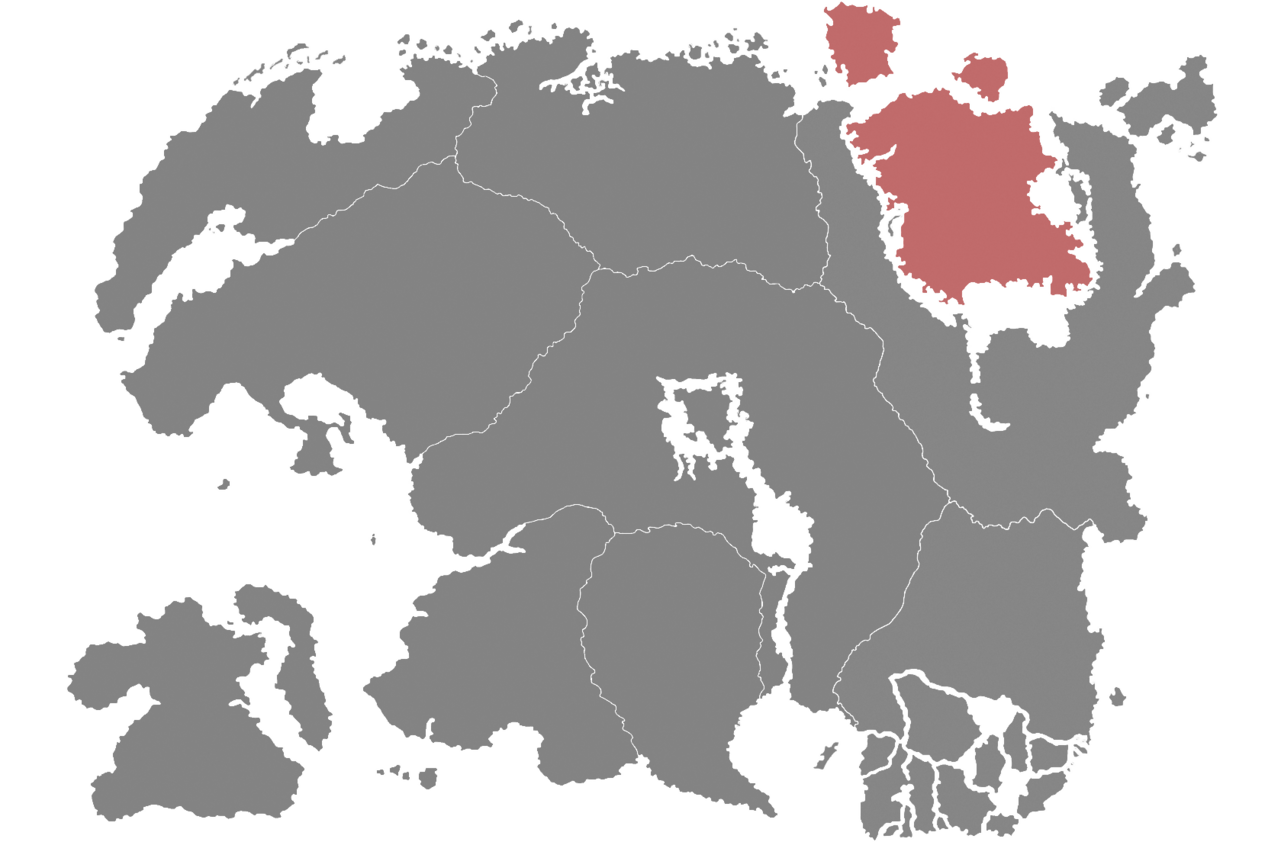
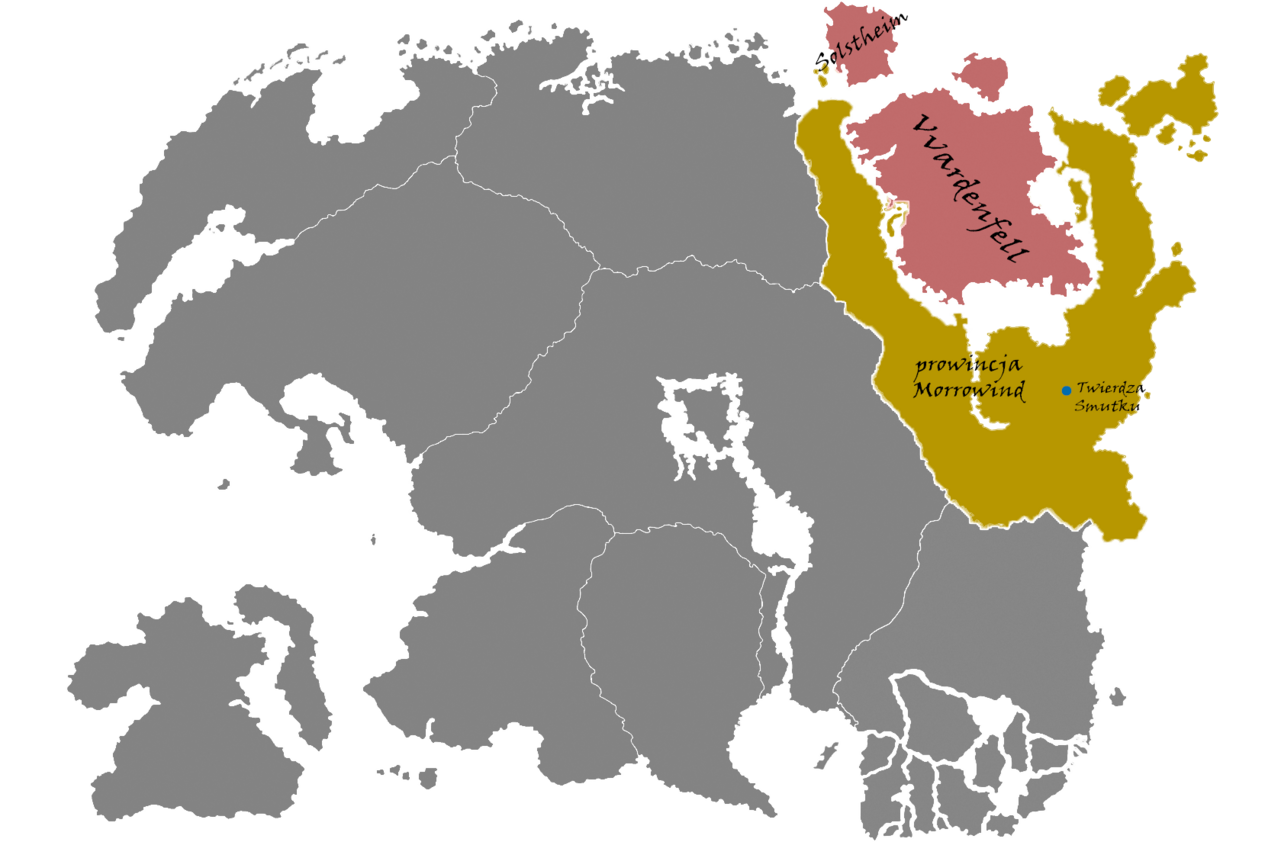
The Elder Scrolls III: Morrowind, an action role-playing game from Bethesda Game Studios and Bethesda Softworks, arrived in 2002 as the third main entry in The Elder Scrolls series, succeeding 1996's *Daggerfall*. It launched on Microsoft Windows and Xbox. The story unfolds on Vvardenfell, an island within the Dunmer (Dark Elf) province of Morrowind on the continent of Tamriel. Its central narrative revolves around the demigod Dagoth Ur, who dwells inside the volcanic Red Mountain and aims to seize power, freeing Morrowind from Imperial control.
While primarily a fantasy title, drawing on Western medieval and fantasy tropes from *Dungeons & Dragons* and earlier role-playing games, *Morrowind* also incorporates steampunk elements and significant inspiration from Middle Eastern and South Asian cultures. The game was built around an open-ended, freeform style, placing less emphasis on the main plot than its predecessors. This design choice received mixed reactions, though reviewers consistently praised the game’s expansive and detailed world.
*Morrowind* was both a critical and commercial hit, earning several Game of the Year awards and selling over four million copies globally by 2005. It has since been regarded as one of the finest video games ever created. Two expansion packs, *Tribunal* and *Bloodmoon*, were later bundled into *Morrowind: Game of the Year Edition*, released in October 2003. The next installment, *The Elder Scrolls IV: Oblivion*, followed in 2006.
**Gameplay**
**Character creation** The game starts with the player’s character, a prisoner, arriving in Morrowind by boat to receive a pardon. A tutorial guides the player through character creation as the prisoner is released. The player answers questions from a fellow prisoner, an officer, and a bureaucrat while being registered as a free citizen, selecting the character’s name, race, gender, class, and birthsign. These choices affect starting attributes, skills, and abilities. The class can be chosen from a list, generated through questions, or custom-built by the player.
**Skill system** A character’s skill proficiency increases through practice, training, and study. Practice involves performing specific actions tied to a skill—for example, striking enemies with a weapon raises weapon skills, while being hit while wearing armor improves armor skills.
Quick Facts
- Title
- The Elder Scrolls III: Morrowind
- Developer
- Bethesda Game Studios
- Publisher
- Bethesda Softworks
- Director
- Todd Howard
- Designer
- Ken Rolston
- Programmer
- Craig Walton
- Artist
- Matthew Carofano
- Writer
- Douglas Goodall · Mark Nelson · Ken Rolston
- Composer
- Jeremy Soule
- Series
- The Elder Scrolls
- Engine
- NetImmerse
- Platforms
- Windows · Xbox
Facts from the source article.
Lore & Background
The main story of Morrowind takes place on Vvardenfell, an island in the Dunmer (Dark Elf) province of Morrowind, part of the continent of Tamriel. The central quests concern the demigod Dagoth Ur, housed within the volcanic Red Mountain, who seeks to gain power and break Morrowind free from Imperial reign. The plot revolves around the Tribunal, a triumvirate of god-like beings ruling over Morrowind, and their struggle against Dagoth Ur and his Sixth House, a cult stretching out from Red Mountain. Dagoth Ur has used the Heart of Lorkhan to make himself immortal and seeks to drive the Imperial Legion from Morrowind using spies and Akulakhan, an enormous mechanical golem powered by the Heart of Lorkhan. The player character begins in Seyda Neen, freed by Emperor Uriel Septim VII, and is tasked with meeting certain contacts.
Though primarily a fantasy game with elements inspired by Dungeons & Dragons and Western medieval fantasy, Morrowind also features steampunk elements and drew much inspiration from Middle Eastern and South Asian cultures. The game was designed with an open-ended, freeform style of gameplay, with less emphasis on the main plot than its predecessors. This choice received mixed reactions while maintaining reviewers' appreciation for the expansive, detailed game world. The game spawned two expansion packs: Tribunal and Bloodmoon, both repackaged into Morrowind: Game of the Year Edition in October 2003.
Reader's Guide
Morrowind's significance lies in its free-form design, which lead designer Ken Rolston identified as a core, untouchable element of The Elder Scrolls series. The game allows players to roam, steal, quest, and explore without necessarily following the main quest. According to Rolston, the central plot serves as a chance to introduce the player to conflicting factions and background themes rather than being the primary focus. The game provides detailed quests for various factions including guilds, religious organizations, and aristocratic houses, in addition to side-quests found by exploration. The main plot itself may be undertaken in many ways, with seven high-level tasks that must be completed but whose constituent sub-tasks can be accomplished in any order. Some have argued that these changes put Morrowind closer in spirit to the original Dungeons & Dragons tabletop game, where players take a more creative role. The sheer number of quest possibilities, combined with what Rolston identified as a lack of 'narrative urgency', left many critics dissatisfied with the main plot. Rolston later stated that the main quest might have been presented with greater force without losing the free-form design. Morrowind was followed by The Elder Scrolls IV: Oblivion in 2006.
Did You Know?
- Morrowind sold over four million copies worldwide by 2005.
- The game's central plot involves the demigod Dagoth Ur, who uses the Heart of Lorkhan to make himself immortal.
Roots in the Mainframe Era
The Western role-playing tradition that The Elder Scrolls series inherits stretches back to the mid-1970s, when university students on mainframe systems like PDP-10, PLATO, and Unix-based machines crafted the first text-based RPGs. Titles such as m199h, Dungeon, pedit5, and dnd drew their inspiration from pen-and-paper systems like Dungeons & Dragons and the literary world of Tolkien's Lord of the Rings. The PLATO system, with its speed, fast graphics, and nationwide network of terminals, became a crucible for early graphical RPGs including orthanc, avathar, oubliette, and moria. These experiments were followed by landmark titles on home platforms—Akalabeth, Wizardry, Sword of Fargoal—while Rogue (1980) spawned an entire roguelike subgenre. The Elder Scrolls series, including Morrowind, stands as a direct descendant of this long evolutionary chain, carrying forward the genre's core identity from those earliest university terminals to modern commercial production.
Design Experimentation and Player Agency
Throughout the history of Western RPGs, developers have continuously pushed the boundaries of how players interact with game worlds. The genre has seen experimentation across multiple axes: graphical perspectives shifting between axonometric and first-person projections, time-keeping systems oscillating between real-time and turn-based structures, and party compositions ranging from single-character adventures to multi-character groups. Subgenres have branched out into action role-playing, roguelikes, and tactical role-playing, each emphasizing different mechanical priorities. The Elder Scrolls series, including Morrowind, represents the modern culmination of this ongoing design dialogue. By the time Bethesda Softworks produced these titles, the genre had already weathered its Golden Age of the mid-to-late 1980s, a subsequent downturn in the mid-1990s as developers struggled with shifting fashion, hardware evolution, and rising production costs, and a later renaissance driven by longer development cycles that set new standards of production quality. The series embodies the genre's capacity to absorb and recombine decades of mechanical innovation into a coherent modern experience.
The Console and Multi-Platform Renaissance
For much of its history, the Western RPG was closely tied to personal computing. Early titles ran on university mainframes, then migrated to home systems like the Apple II and TRS-80, and later to PC platforms. Independently developed RPGs still frequently appear as PC exclusives today. However, the modern era has seen a significant shift in distribution and accessibility. Bethesda Softworks' The Elder Scrolls series, including Morrowind, has been produced for console systems and has received multi-platform releases, bringing the genre to a much broader audience than the mainframe and early home-computer era ever could. This multi-platform approach stands in contrast to the PC-exclusive indie titles that continue to populate the genre. The series thus occupies a unique position: it carries the narrative and mechanical DNA of the genre's PC-centric origins while embracing the wider reach of console hardware. This dual identity reflects the broader pattern in which CRPGs, once a niche pursuit on university terminals and hobbyist home systems, have become a mainstream pillar of modern gaming across multiple platforms.
From Minimal Plots to Moral Worlds
The earliest computer RPGs of the 1970s and early 1980s paid little attention to story. Games like Akalabeth focused primarily on basic combat mechanics, and even popular dungeon crawlers like Rogue represented their worlds through simple ASCII characters—a '@' for the player, a 'Z' for a zombie—rather than rich narrative. A turning point came with Ultima III: Exodus (1983), whose written narrative conveyed a larger story than the minimal plots common at the time, and with Ultima IV: Quest of the Avatar (1985), which introduced a system of chivalry and moral conduct. In that game, the player's actions carried ethical weight; virtues like compassion, justice, humility, and honor were tested periodically, sometimes in obvious ways and sometimes unseen. This was a radical departure from games that simply lauded the player as a hero regardless of behavior. The Elder Scrolls series, including Morrowind, inherits this tradition of narrative ambition. It stands in a direct line from those early experiments with story and moral consequence, carrying forward the genre's commitment to worlds where player choices and narrative depth matter beyond mere combat mechanics.
Gallery


Frequently Asked Questions
Who developed and published The Elder Scrolls III: Morrowind?
Bethesda Game Studios built the game while Bethesda Softworks handled publishing. It launched in 2002 as the third numbered entry in The Elder Scrolls line, following the 1996 release of Daggerfall.
What platforms was Morrowind originally released on?
The 2002 launch covered two systems: Microsoft Windows PCs and the original Xbox console.
Where is the action in Morrowind set?
Players explore Vvardenfell, a volcanic island that forms part of the Dunmer (Dark Elf) province of Morrowind on the continent of Tamriel.
Who is the final boss in Morrowind?
The story's antagonist is Dagoth Ur, a demigod who has taken up residence deep inside the volcanic Red Mountain. His ultimate aim is to amass enough power to break Morrowind free of Imperial dominion.
Why do fans still talk about Morrowind today?
As a 2002 open-world fantasy RPG, it cemented the sandbox, player-driven design that became a hallmark of Bethesda's later titles. Its fully explorable island of Vvardenfell and freedom to approach quests in any order set a template that many subsequent RPGs have tried to match.
More in Role-Playing Games of the 2000s, Part 2 1-23
Spotted an error? Know more?
Reader corrections go straight into our review queue. Suggest an edit · How this site is sourced