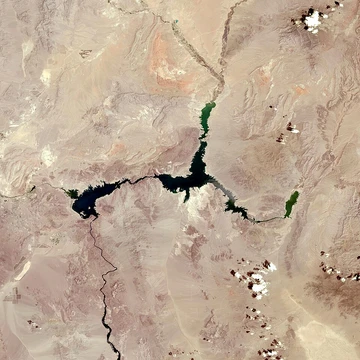
Trinity Lake
A large California reservoir in the Trinity Alps.
Last updated

via Wikipedia: Trinity Lake · see source
Trinity Lake, previously called Clair Engle Lake, is a reservoir on the Trinity River formed by the Trinity Dam and located in Trinity County, California, United States. The dam was built by the U.S. Bureau of Reclamation. The lake's capacity is 2,447,650, making it one of the largest reservoirs in California.
The lake's surface is at 2370 ft above MSL. Trinity Lake captures and stores water for the Central Valley Project, which provides the Central Valley with water for irrigation and produces hydroelectric power. This lake is known for its many small arms, glassy inlets, and good water-skiing conditions.
History
The discovery of gold in 1848 prompted hundreds of miners to move into the area. In 1958, a plan to divert water from Trinity River to California’s Central Valley led to the construction of Trinity Dam and the creation of Trinity Lake. This project was also designed to provide hydroelectric power to the local area.
The Trinity River Division of the Central Valley Project came to fruition in 1961 with the completion of Trinity Dam. The lake was renamed Clair Engle Lake from 1964 to 1997 until its original name was revived. The lake was completely filled with water from the Trinity River by 1963 and is the third largest lake in California with 145 miles of shoreline.
Geology
Trinity Lake sits northwest of Redding, just off Highway 299, not far from the old Gold Rush town of Weaverville. The surrounding alpine landscape is part of the Trinity Alps, which took shape during the late Jurassic Period.
Volcanic activity created ultramafic and granitic plutons—igneous rock formed when super-heated magma cooled underground—while tectonic forces from the breakup of Pangaea and later glaciation during ice ages sculpted the terrain. The last remaining glaciers cling to Thompson’s Peak, which rises above 9,000 feet. The lake itself was once a series of deep valleys within these mountains.
Recreation
Trinity Lake is less used by vacationers than the lower Lake Shasta due in part to the lengthy winding road up from the valley floor. Typical drive time from Redding (Interstate 5) to the lake is about 90 minutes along a winding mountain road. This makes it a destination spot for fishing and water sports. Popular fishing includes that of smallmouth and largemouth bass, catfish, kokanee, rainbow and brown trout.
Fish remain ample, despite the negative impact that the dams have had on spawning ground in part due to the Trinity River Fish Hatchery, located just below Lewiston Dam. The California Office of Environmental Health Hazard Assessment (OEHHA) has developed a safe eating advisory for fish caught in Trinity Lake based on levels of mercury or PCBs found in local species. House boating, speed boating, and waterskiing are also popular lake activities. Surrounding the lake, visitors enjoy hiking and camping in the pristine wilderness of the Trinity Alps and the Shasta-Trinity National Forest.
Wildlife
There has been a dramatic decline in various fish species in the river since the dams were built and the lake created. Spawning steelhead, Chinook and Coho Salmon populations have all been affected by their loss of spawning ground. However, wildlife populations surrounding the lake remain strong.
Black bears are common, so proper precautions must be taken to secure campsites, throw away garbage and store food safely. Additional wildlife includes bobcats, mountain lions and many different bird species. The lake contains land-locked populations of kokanee salmon and king salmon, along with more typical California lake species such as largemouth and smallmouth bass, rainbow trout and catfish.
More in Reservoirs and Dams in National Park Service Areas
Sources
Compiled from Wikipedia and the sources listed below. Text from Wikipedia is available under CC BY-SA 4.0; this entry is adapted from it.
- Wikipedia: Trinity Lake (CC BY-SA 4.0).
Spotted an error? Know more?
Reader corrections go straight into our review queue. Suggest an edit · How this site is sourced