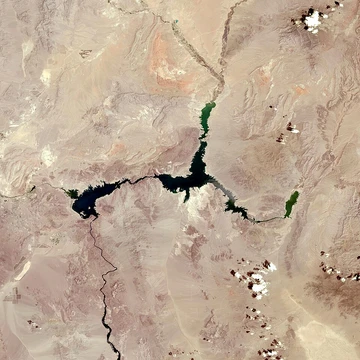
Franklin D. Roosevelt Lake
Reservoir on the Columbia River behind Grand Coulee Dam.
Last updated
Franklin D. Roosevelt Lake, also known as Lake Roosevelt, is a reservoir created in 1941 by impounding the Columbia River behind Grand Coulee Dam in Washington state. Covering 125 square miles and stretching roughly 150 miles from the Canada–US border to the dam, it is the largest lake and reservoir in Washington by surface area. The reservoir lies within parts of five counties and is the home of the Lake Roosevelt National Recreation Area.
Etymology
The Bureau of Reclamation originally called the impoundment the Columbia Reservoir. Local newspapers, including the Colville Examiner, used the unofficial names "Columbia Lake" and "Empire Lake"; the latter was chosen in a 1941 contest by the Spokane Daily Chronicle and forwarded to the Department of the Interior. Entries with "Columbia" were not considered because federal officials had already rejected that name. On April 17, 1945, five days after President Roosevelt's death, Secretary of the Interior Harold L. Ickes renamed the reservoir Franklin D. Roosevelt Lake, citing Roosevelt's role in championing the dam and its enabling legislation.
Administration
The lake and lands are managed under the Lake Roosevelt Cooperative Management Agreement of April 5, 1990, which succeeded an original 1946 agreement. This agreement states that its management and regulations shall not interfere with the Columbia Basin Project's purposes of flood control, navigation, streamflow regulation, water storage and delivery for reclamation, power generation, and other beneficial uses, nor alter any obligations of the parties.
The National Park Service manages Lake Roosevelt National Recreation Area, maintaining visitor centers, boat-in campsites, shoreline camping, and conducting marine patrols for Coast Guard safety rules. The Bureau of Reclamation has two management zones: one directly behind the dam along the log boom line from the west bank to mid-channel, then at the Grant and Okanogan county line going uplake and cutting to the east shoreline; the other at China Bar on the east side, where Reclamation operates a log collection facility to capture debris before it enters the lake.
The Bureau of Indian Affairs indirectly manages parts of the lake along the Colville Indian Reservation and Spokane Reservation. Washington Department of Natural Resources lands abut the recreation area, but the state's Discover Pass does not cover NPS boat launches or tribal lands and waters.
Pollution litigation
The lake is downstream from British Columbia's Trail Smelter and has been subject to environmental litigation. Cominco deposited slag containing mercury, lead, and zinc from its plant into the Columbia River, which flowed into Lake Roosevelt. The Colville Confederated Tribes took action against Cominco, citing health concerns for tribe members who used beaches and campsites and ate fish from the river for subsistence, cultural, and spiritual reasons.
The 2004 lawsuit demanded Cominco comply with an EPA order to fund pollution studies of the Trail operation. In 2003, Cominco agreed to invest $13 million for health and ecology studies of the lake and fund cleanup, but the tribes countered that the offer did not meet the quality of studies and cleanup guarantees required under EPA rules. The lawsuit increased tensions between Canada and the U.S. over transborder environmental laws; Cominco argued it was being unfairly targeted and that it was not the only company responsible.
Cominco stopped depositing smelting byproducts into the Columbia River in 1994 and by 2004 had spent about $1 billion modernizing the Trail plant and reducing emissions.
More in Reservoirs and Dams in National Park Service Areas
Sources
Compiled from Wikipedia and the sources listed below. Text from Wikipedia is available under CC BY-SA 4.0; this entry is adapted from it.
- Wikipedia: Franklin D. Roosevelt Lake (CC BY-SA 4.0).
Spotted an error? Know more?
Reader corrections go straight into our review queue. Suggest an edit · How this site is sourced