Hertfordshire
Historic county north of London, home to Roman ruins and film studios.
Last updated
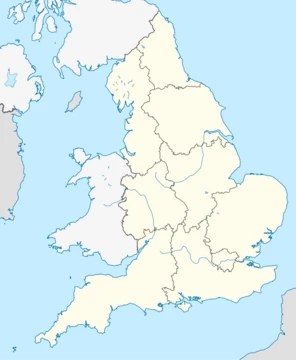
Hertfordshire is a ceremonial county in the East of England, often abbreviated Herts. It borders Bedfordshire, Cambridgeshire, Essex, Greater London, and Buckinghamshire, with Watford as its largest settlement.
Lore & Background
Hertfordshire shows evidence of human life from the Mesolithic period, with farming in the Neolithic and permanent habitation by the Bronze Age. Saint Alban, a Romano-British soldier, was beheaded on Holywell Hill, and his cross is reflected in the county's flag and coat of arms.
After the Romans left in the early 5th century, Anglo-Saxons invaded, and by the 6th century most of the modern county was part of the Kingdom of Essex, later losing territory to Mercia. The region became an English shire in the 10th century on the merger of West Saxon and Mercian kingdoms. The county suffered renewed Norse raids in the late 10th to early 11th centuries under Swein Forkbeard and Cnut the Great.
A Four-Century Sheriffdom Shared with Essex
This was not an isolated arrangement; across England in the post-Conquest era, numerous county pairs or groups shared a sheriff for varying stretches of time, some lasting centuries. The Essex–Hertfordshire pairing sat among these long-standing administrative unions, reflecting a period when local governance was far more consolidated than modern readers might expect. For Hertfordshire, those four centuries of shared judicial and administrative oversight with its eastern neighbour shaped a regional identity that outlasted the specific institutional mechanism that created it.
Reader's Guide
Hertfordshire's significance lies in its layered history and modern innovations. It contains Roman remains at Verulamium, medieval and Tudor buildings that surpass London in volume, and sites linked to the drafting of Magna Carta at St Albans Abbey.
The county was a stage for two battles in the Wars of the Roses and later a retreat for Tudor and Stuart royalty, with Hatfield House visited by Queen Elizabeth I and the New River built under James I to supply London with water. Its economy shifted to services, and it became a hub for film and television production, including Leavesden Film Studios (Harry Potter series, GoldenEye) and Elstree/Borehamwood studios (Star Wars, EastEnders). Its geography includes the Chilterns, the rivers Lea and Colne, and much of the Metropolitan green belt.
Did You Know?
- The first shooting-down of a zeppelin over Great Britain during WW1 happened in Cuffley, Hertfordshire.
- The Domesday Book recorded Hertfordshire as having nine hundreds, including Dacorum from 'Danis Corum' meaning Danish rule.
Also in the Codexery
More in Regions Of England
Sources
Compiled from Wikipedia and the sources listed below. Text from Wikipedia is available under CC BY-SA 4.0; this entry is adapted from it.
- Wikipedia: Hertfordshire (CC BY-SA 4.0).
Spotted an error? Know more?
Reader corrections go straight into our review queue. Suggest an edit · How this site is sourced