Maccabean Revolt
Jewish rebellion against Seleucid rule and Hellenization.

Effib · CC BY-SA 4.0
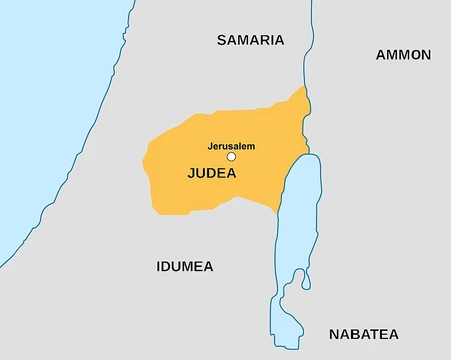
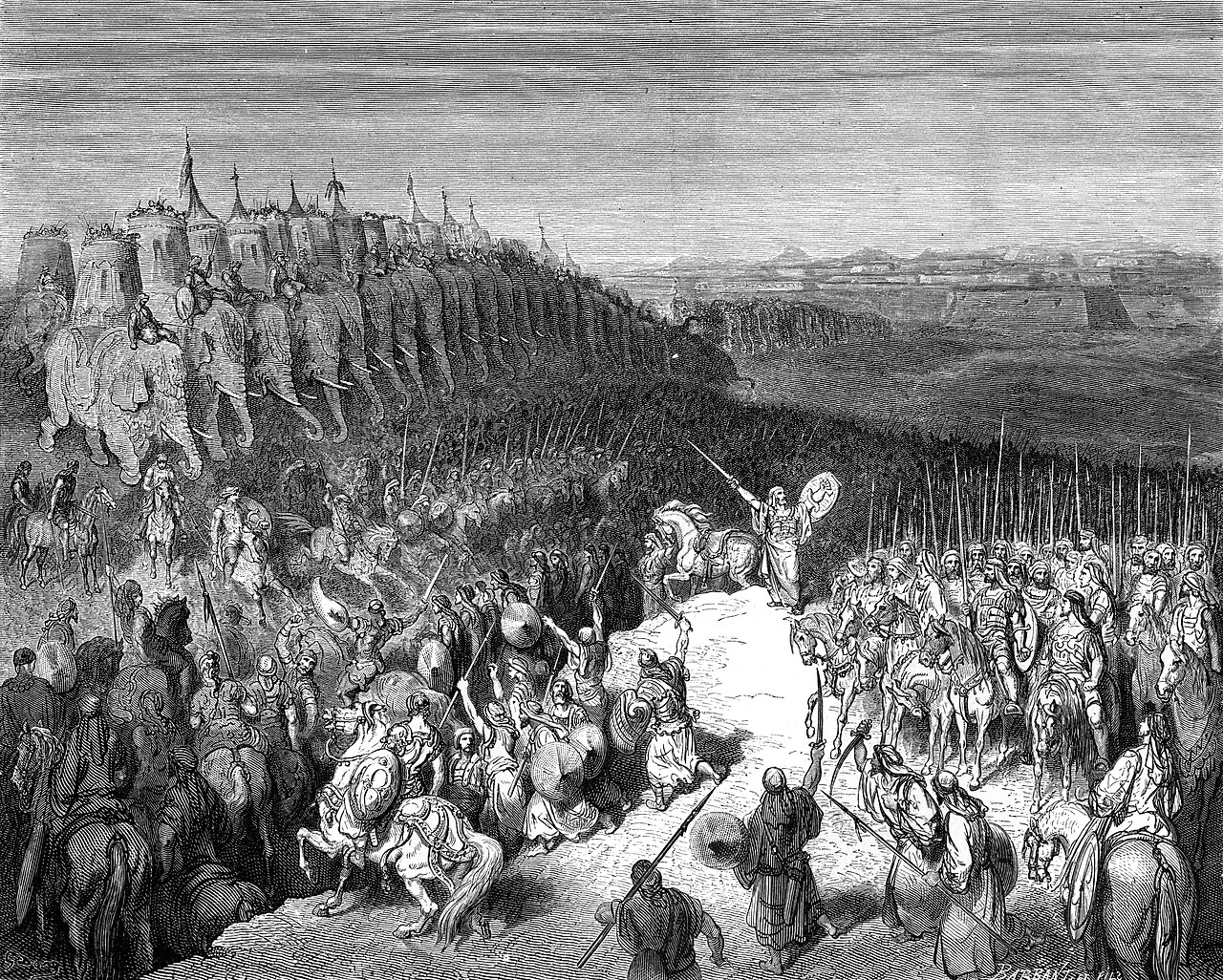
The Maccabean Revolt, also known as the Hasmonean revolt, was a Jewish rebellion led by the Maccabees against the Seleucid Empire and against Hellenistic influence on Jewish life. The main phase lasted from 167 to 160 BCE, ending with Seleucids in control of Judea, but conflict continued until around 142 BCE, when the Maccabees eventually attained full independence under Simon Thassi. The revolt was triggered by Seleucid King Antiochus IV Epiphanes, who launched a campaign of repression against the Jewish religion in 167 BCE, banning Jewish practices, placing Jerusalem under direct Seleucid control, and making the Second Temple the site of a syncretic Pagan-Jewish cult.
Quick Facts
- Conflict
- Maccabean Revolt
- Date
- 167–141BCE
- Location
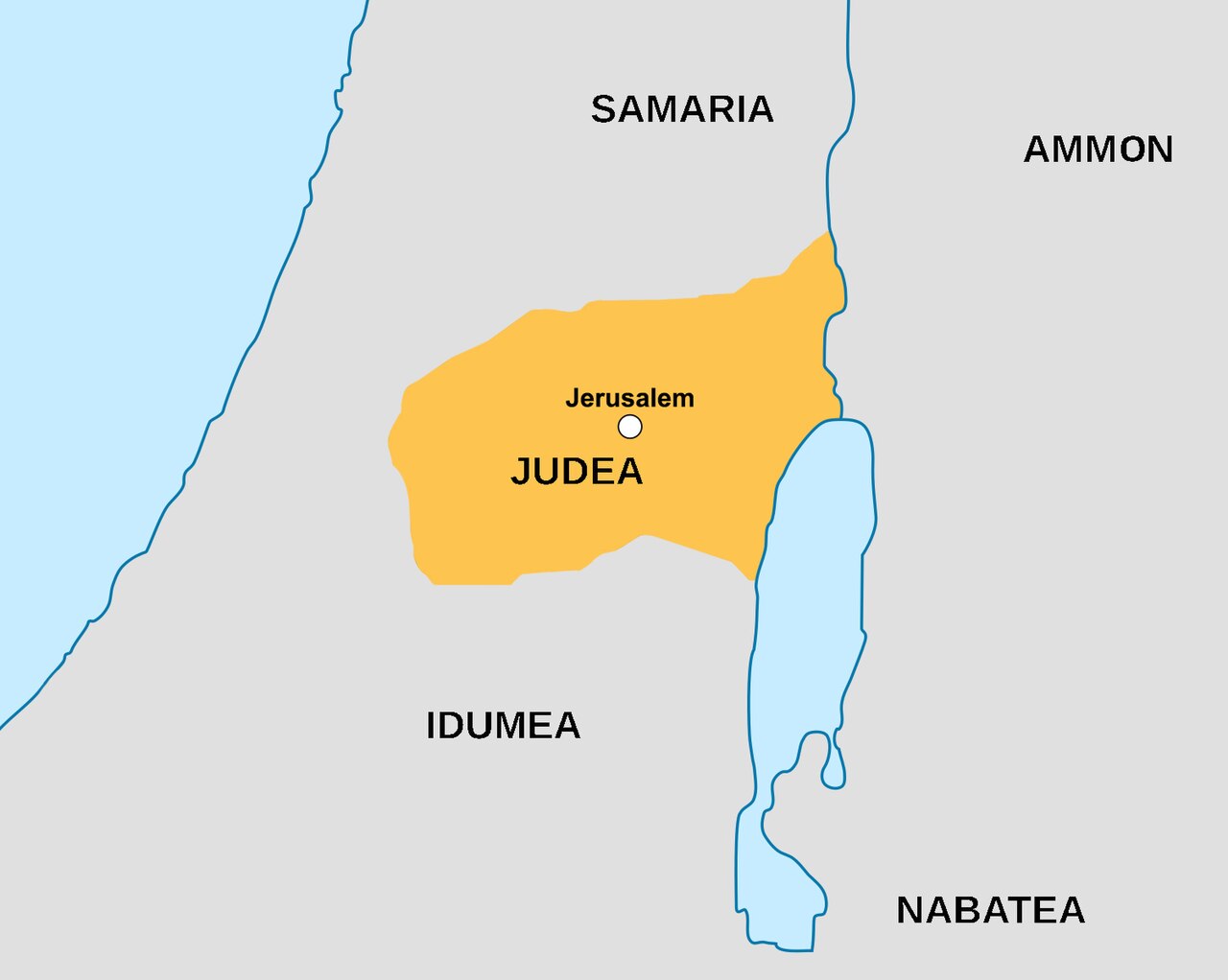
- Judea, part of Coele-Syria in the Seleucid Empire
Facts from the source article.
Lore & Background
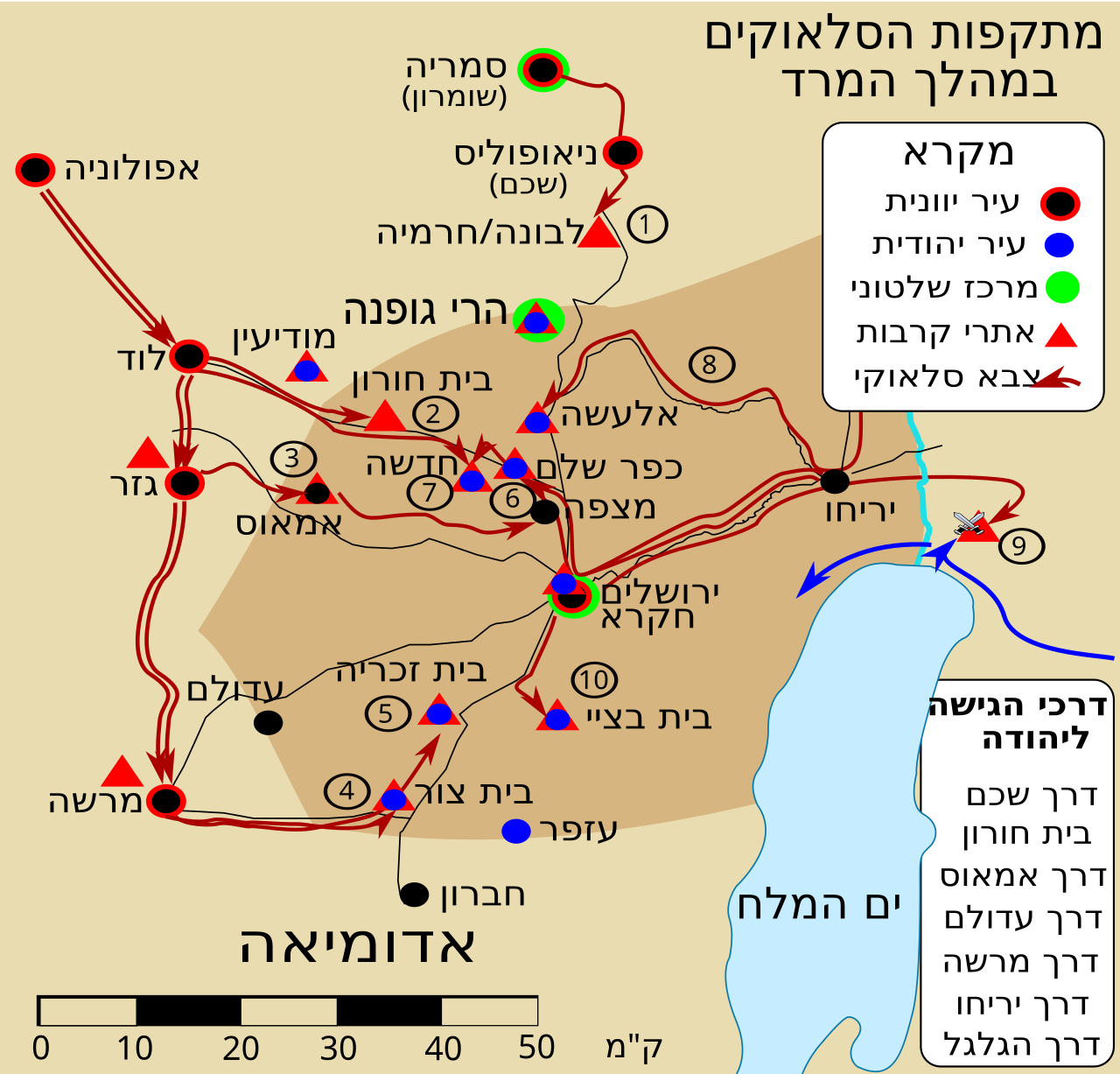
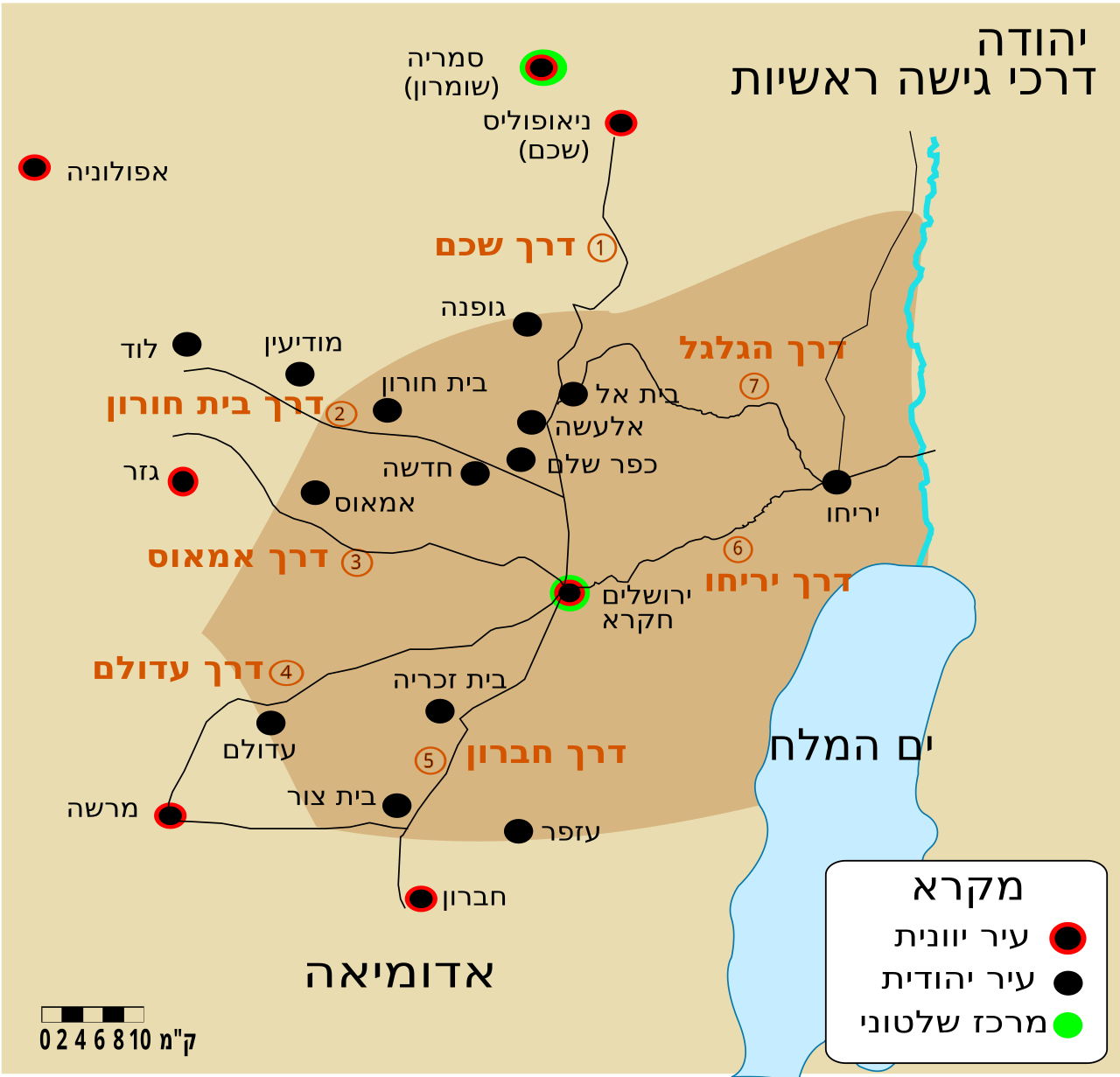
The rebellion began as a guerrilla movement in the Judean countryside, led by Judas Maccabeus and his family after his father Mattathias sparked the uprising in 167 BCE by refusing to worship Greek gods and killing a Jewish collaborator and a Greek officer. The Maccabees raided towns, terrorized Greek officials, and eventually developed a proper army capable of attacking fortified Seleucid cities. In 164 BCE, they captured Jerusalem, cleansing and rededicating the Temple on 25 Kislev, which became the source of Hanukkah. Judas Maccabeus died in 160 BCE at the Battle of Elasa, but remnants under his brother Jonathan Apphus continued resistance from the countryside.
Reader's Guide
The Maccabean Revolt is significant as a pivotal event in Jewish history, marking a successful struggle for religious freedom and political independence from Hellenistic rule. The revolt established the Hasmonean dynasty, which governed an independent Jewish state for about a century. The cleansing of the Temple and the rededication of the altar gave rise to the festival of Hanukkah, a major Jewish holiday. The revolt also highlighted tensions between Hellenization and traditional Jewish practices, a conflict that shaped Jewish identity. The eventual independence was secured partly through an alliance with the Roman Republic. The story of the revolt is chronicled in the books of 1 Maccabees and 2 Maccabees, which remain important historical and religious texts.
Did You Know?
- The revolt was sparked by Mattathias, a rural Jewish priest from Modein, who killed a Jew and a Greek officer for enforcing idol worship.
- The Maccabees captured Jerusalem in 164 BCE and rededicated the Temple on 25 Kislev, the origin of Hanukkah.
- The Seleucids eventually relented and unbanned Judaism, but the Maccabees continued fighting for full independence, which was finally achieved in 142 BCE under Simon Thassi.
The Political Crisis That Ignited the Revolt
The Maccabean Revolt did not emerge from a vacuum of religious persecution. Its roots lay in a bitter internal struggle over the Jewish high priesthood. When Antiochus IV Epiphanes ascended the Seleucid throne in 175 BCE, he initially maintained the traditional policy of allowing Jews to govern their own religious affairs. However, he replaced High Priest Onias III with Jason, who paid a substantial bribe and secured permission to transform Jerusalem into a self-governing polis. Three years later, Menelaus outbid Jason with an even larger sum, and rumors spread that he had sold sacred temple artifacts to fund his purchase. What began as a political dispute over corruption and sacrilege escalated when, during the Sixth Syrian War, Antiochus IV allegedly entered the Second Temple in violation of Jewish law and plundered its treasury of 1,800 talents. When Jason, hearing a false rumor of Antiochus's death, attempted a coup in Jerusalem, the king misread the factional infighting as a full-scale rebellion against his authority. That misinterpretation set in motion the repression that would trigger the revolt.
From Guerrillas to Liberators
The Maccabean uprising began not as a conventional military campaign but as a scattered guerrilla movement operating in the Judean countryside. Led by Judas Maccabeus and his family, the rebels initially struck at isolated Greek officials and raided small towns well beyond the reach of direct Seleucid military control. Over time, however, this ragged band of fighters evolved into a disciplined army capable of besieging and storming fortified Seleucid garrisons. The turning point came in 164 BCE, when the Maccabees seized Jerusalem itself, a victory of enormous symbolic and strategic weight. In the aftermath, they undertook the cleansing of the Second Temple, which Antiochus IV had converted into a site of syncretic Pagan-Jewish worship, and rededicated the altar on the 25th of Kislev. That act of purification and renewal became the foundation of Hanukkah, a festival still observed today. The Seleucids, faced with a rebellion they had not anticipated, eventually relented and lifted their ban on Jewish religious practice. Yet the Maccabees, driven by a more radical vision of full independence rather than mere tolerance under foreign rule, refused to stand down.
The Long War for Sovereignty
The death of Judas Maccabeus at the Battle of Elasa in 160 BCE did not end the conflict; it merely reshaped it. The Seleucid general Bacchides exploited the loss to reassert direct Greek control over parts of Judea, and for a period the Maccabees were pushed back into the countryside. There, Judas's brother Jonathan Apphus kept the flame of resistance alive, waging a prolonged struggle against both Seleucid forces and the Hellenized Jewish factions who had aligned with Greek authority. The war ground on until 134 BCE, a span of more than three decades of intermittent fighting. The Maccabees' ultimate breakthrough came not through a single decisive battle but through the internal fractures of the Seleucid Empire itself. Rivalry among Seleucid claimants and crises elsewhere in the empire stretched their military resources thin. In 141 BCE, Simon Thassi seized the opportunity to drive the Greek garrison out of the citadel in Jerusalem, a stronghold that had long served as a symbol of foreign domination. A diplomatic alliance with the Roman Republic then helped lock in their sovereignty. Simon went on to found the Hasmonean dynasty, an independent Jewish state that would govern for generations.
The Hellenistic World and Jewish Identity
The Maccabean Revolt must be understood against a backdrop of centuries of gradual cultural exchange rather than sudden imposition. After Alexander the Great conquered the Levant in the 330s BCE, his empire fractured into successor states, and Judea passed from Ptolemaic Egypt to the Seleucid Empire between 235 and 198 BCE. Under both Greek dynasties, the general policy was one of non-interference: Jewish communities managed their own religious and civil affairs without overt Hellenizing pressure. Yet cultural change still occurred, largely driven by Jews themselves. Upper-class families and communities embedded in Greek trade networks adopted Koine Greek; philosophical ideas filtered into the region; and a Greek translation of the Hebrew scriptures, the Septuagint, was produced in the third century BCE. Many Jews carried dual names, pairing a Greek name with a Hebrew one. Even so, Aramaic remained the everyday tongue for much of the population. Greek writers of the period tended to describe Judaism favorably, and no explicit program of forced cultural assimilation was imposed from above. This context makes Antiochus IV's later campaign of repression all the more extraordinary: it was a dramatic rupture with the established norm of tolerance, not a continuation of it.
Gallery
Frequently Asked Questions
What was the Maccabean Revolt?
The Maccabean Revolt was a Jewish armed uprising directed against Seleucid imperial authority and the forced imposition of Hellenistic culture on Jewish life. It is also widely referred to as the Hasmonean Revolt, after the family that led the resistance.
Who led the Maccabean Revolt?
The rebellion was initiated by Mattathias and carried forward by his sons, with Judah Maccabee serving as the principal military commander. Leadership eventually passed through other Maccabean brothers before Simon Thassi secured full political independence for the Jewish people.
What triggered the Maccabean Revolt?
Seleucid King Antiochus IV Epiphanes launched a sweeping crackdown on Jewish religious practices in 167 BCE, outlawing traditional worship and placing Jerusalem under direct imperial administration. This systematic repression of Jewish identity and faith is what sparked the armed resistance.
When did the Maccabean Revolt end?
The primary military phase concluded around 160 BCE, although the Seleucids still maintained overall control of Judea at that point. Full sovereignty for the Jewish community was not achieved until approximately 142 BCE under the leadership of Simon Thassi.
Why is the Maccabean Revolt important?
It proved that a small, faith-driven community could defeat a major Hellenistic empire and establish its own independent state. The revolt also gave rise to the Hanukkah tradition and produced the Hasmonean dynasty, which governed Judea for nearly a century.
More in Rebellions against empires 1-19
Spotted an error? Know more?
Reader corrections go straight into our review queue. Suggest an edit · How this site is sourced