1959 Viqueque rebellion
One of the post-World War II anti-colonial rebellions in East Timor.

J. Patrick Fischer · CC BY 3.0
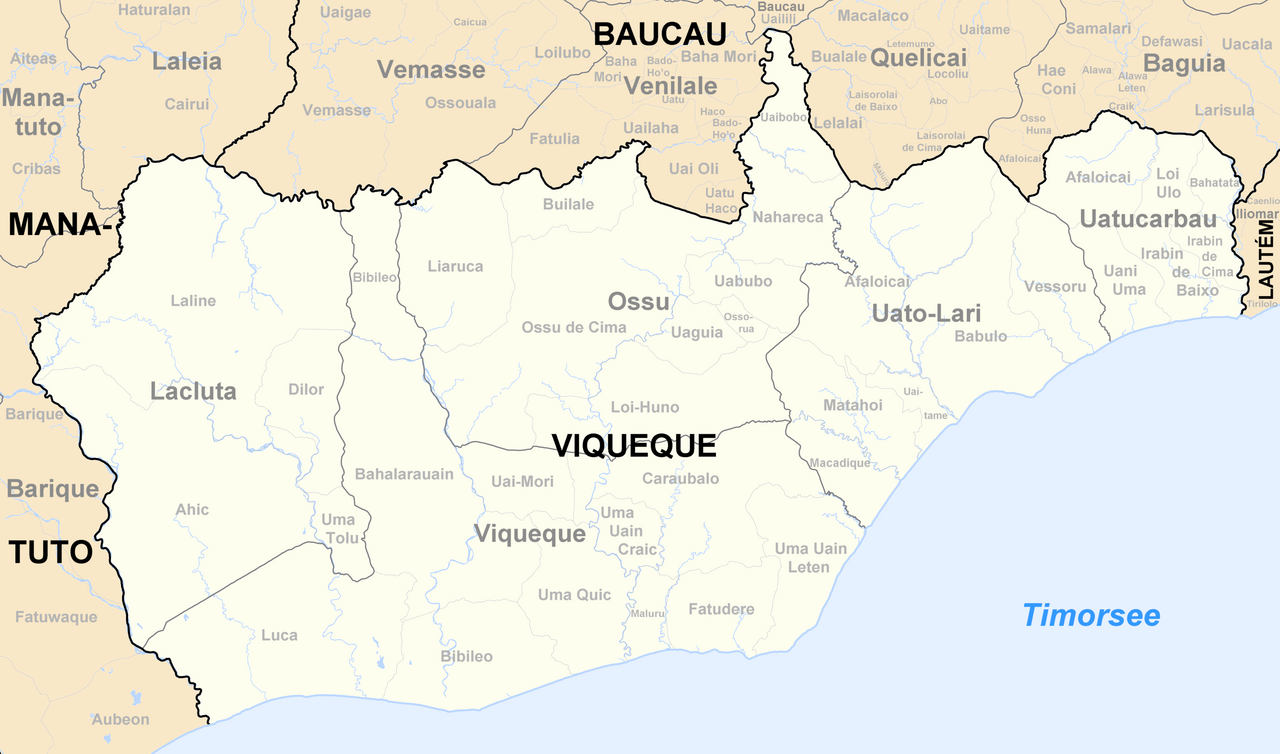
The 1959 Viqueque rebellion was an uprising against Portuguese rule in the southeastern part of East Timor, concentrated in the remote regions of Uatolari and Uatocarbau. It is significant in East Timorese history as one of the post-World War II rebellions, alongside a 1961 uprising in the same region. Recent research has highlighted the agency of the East Timorese participants, moving away from earlier speculations that focused on external factors like the role of Indonesia.
Quick Facts
- Conflict
- 1959 Viqueque rebellion
- Part Of
- the Cold War and the decolonization of Asia
- Date
- June 7–14, 1959
- Location
- Viqueque, Portuguese Timor
- Result
- Portuguese victory
Facts from the source article.
Lore & Background
The rebellion was preceded by a conspiracy in Dili, led by Luis 'Xina' da Costa Rego, a young Chinese-Timorese driver, who convinced Antonio da Costa Soares (Antonio Metan), a descendant of the liurai Afaloicai, that a colony-wide plot existed to hold Portuguese government members hostage. The Viqueque plot was championed by Gerson Pello, one of 14 Indonesian exiles from the Permesta movement who had been granted asylum in East Timor. Pello promised vague Indonesian support, influencing Luis Xina's plan.
In late May 1959, the Dili plot was uncovered by the Portuguese, who arrested Luis Xina and others on 1 June 1959. Several family members of Antonio da Costa Soares were arrested and killed by being dumped in the Bebui river. The Portuguese police commander, Sergeant Manuel da Câmara, made dozens of arrests based on little more than names mentioned during interrogations, using force to extract confessions. Those arrested included educated workers, illiterate farmers, and even Francisco Araujo, a distinguished member of the Council of Government.
On 6 June 1959, Administrator Artur Ramos in Viqueque was alerted to arrest Antonio Metan. After being captured by indigenous police (cipaios), Antonio Metan used an excuse to buy time, alerting Gerson Pello and the other conspirators, which led to the outbreak of the rebellion.
Reader's Guide
The 1959 Viqueque rebellion is a key event in East Timorese history as the only anti-colonial uprising after World War II. For decades, lack of information led to assumptions that external factors, particularly Indonesia, were the primary cause. However, recent research has illuminated the internal dynamics and the agency of East Timorese participants. The rebellion emerged from a conspiracy involving civil servants, a descendant of a local chief, and Indonesian exiles, but the Portuguese crackdown was swift and brutal, with arrests based on flimsy evidence and forced confessions. The rebellion's failure did not diminish its significance; it demonstrated continued resistance to Portuguese colonial rule, which had been reasserted after the war. The event also highlights the complex interplay between local grievances, the legacy of Japanese occupation, and the broader context of decolonization in Southeast Asia, where East Timor remained under authoritarian Portuguese control while other colonies moved toward independence.
Did You Know?
- It was one of the rebellions in East Timor that erupted after World War II, alongside a 1961 uprising.
- The Portuguese police commander made arrests based on little more than a name mentioned during interrogations.
- One of the arrested conspirators was Francisco Araujo, a distinguished member of the Council of Government.
A Singular Uprising in a Long Silence
The 1959 Viqueque rebellion occupies a singular place in East Timorese history: it was the only armed uprising against colonial authority to erupt after the Second World War. Concentrated in the remote southeastern districts of Uatolari and Uatocarbau, it was a direct challenge to Portuguese rule, a dominion stretching back to the sixteenth century. For decades, the event remained shrouded in ambiguity. Because of a persistent lack of documentation and scholarly attention, much of the popular narrative leaned heavily on external explanations, particularly speculation about Indonesian interference or instigation. It was only in roughly the last ten years that a wave of new research began to peel back that veil. Those studies have done something important: they have shifted the spotlight onto the East Timorese themselves, foregrounding their own motivations, their own agency, and their own reasons for taking up arms. The rebellion is no longer read simply as a footnote in someone else's geopolitical story but as a distinctly Timorese act of resistance.
The Wounds of Occupation
The Japanese occupation of East Timor during World War II left scars that would shape the next decade of colonial life. Portugal had declared neutrality, and its governor insisted the island remain out of the conflict, yet four hundred Dutch and Australian soldiers were dispatched to the territory over his protests. The Japanese landed at Dili on 19 February 1942, and after fierce fighting, they seized the entire island. The human toll was staggering: more than sixty thousand Timorese perished, roughly thirteen percent of the population. The occupation brought forced labor, the ruthless seizure of entire harvests, and widespread famine and disease. Allied bombing and the ravages of occupying forces left Dili and surrounding villages in ruins. One assessment held that no other Southeast Asian territory endured a harsher Japanese occupation. When the war ended in 1945 and the Japanese withdrew, they left behind a shattered economy, destroyed infrastructure, and a population still reeling from hunger and loss.
A Province in Name, a Colony in Practice
In the years between 1945 and 1959, the Portuguese did little to ease the grip of colonial authority. Unlike other Southeast Asian territories where the Japanese occupation had catalyzed nationalist movements, East Timor saw no comparable awakening. Instead, Lisbon reasserted its control, reintroducing an authoritarian governance structure that mirrored the regime in power in Portugal since 1930. In 1950, the administration rebranded all Portuguese territories, including East Timor, from colonies to overseas provinces, a cosmetic shift meant to project a more favorable international image. The repressive reality remained unchanged. The governor retained ultimate authority, and beneath him the traditional liurai hierarchy continued to mediate local power. Economically, the situation was grim. Portugal itself was weakened by the European war, excluded from the American Marshall Plan, and faced reluctance from Western partners to engage with a fascist state. With no external aid and a Timorese population too impoverished to tax meaningfully, the governor resorted to forced labor organized through the liurai to rebuild roads, bridges, and buildings. Most allocated funds went to reconstructing Dili, while the interior and agriculture received only a fraction. Development proceeded at what could only be called a snail's pace.
The Convergence of Discontent
The seeds of the 1959 uprising were sown by a convergence of grievances in the Viqueque area. On 27 March 1958, fourteen Indonesian men from the Permesta rebel movement, defeated by the Indonesian central government, fled from Kupang in West Timor and landed in the East Timor enclave of Oecussi. The Portuguese granted them political asylum and relocated them to the Baucau area with a daily subsidy. Four months later, four of these men were posted to Viqueque, where they befriended Jose Manuel Duarte, a mestizo Timorese civil servant in the Weather Service, and Amaro Loyola Jordao de Araujo, a retired Timorese Treasury employee. Concurrently, Luis 'Xina' da Costa Rego, a young Chinese-Timorese driver for the Agriculture Department based in Dili, was building a conspiracy among civil servants against the colonial administration. He succeeded in bringing Antonio da Costa Soares, known as 'Antonio Metan,' into the fold, a man descended from the liurai Afaloicai, a kingdom at the foothills of Mount Matebian along the Baucau-Viqueque border. These disparate threads, foreign refugees, local civil servants, and a figure of royal lineage, began braiding together into a movement.
Gallery
Frequently Asked Questions
What was the 1959 Viqueque rebellion?
It was an armed uprising by East Timorese communities against Portuguese colonial authority in 1959. The revolt was centered in the remote southeastern districts of Uatolari and Uatocarbau.
Where did the 1959 Viqueque rebellion take place?
The fighting was concentrated in the southeastern part of East Timor, specifically in the remote areas of Uatolari and Uatocarbau.
Who was the 1959 Viqueque rebellion directed against?
The uprising targeted Portuguese colonial rule over East Timor. It is classified among the post-World War II anti-colonial rebellions in the territory.
Why is the 1959 Viqueque rebellion important in East Timorese history?
It stands as one of the key post-war challenges to Portuguese sovereignty in the region, often discussed alongside the 1961 uprising in the same area. Together they illustrate sustained local resistance to colonial control.
How has scholarly understanding of the 1959 Viqueque rebellion changed?
Earlier accounts tended to emphasize external influences, particularly speculation about Indonesian involvement. More recent research has shifted focus to the agency and motivations of the East Timorese participants themselves.
More in Rebellions against empires 1-19
Spotted an error? Know more?
Reader corrections go straight into our review queue. Suggest an edit · How this site is sourced