1876 Ottoman coup d'état
Bloodless coup that began the First Constitutional Era.

Abdullah frères · Public domain
The 1876 Ottoman coup d'état was a bloodless military takeover in Istanbul on 30 May 1876 that dethroned Sultan Abdulaziz and installed Murad V as sultan. It ushered in a period of constitutional rule dominated by a committee chaired by Midhat Pasha, known as the First Constitutional Era, which lasted from December 1876 to February 1878.
Quick Facts
- Conflict
- 1876 Ottoman coup d'état
- Part Of
- the Decline and modernization of the Ottoman Empire
- Date
- 30 May 1876
- Location
- Ottoman Empire
- Result
- Coup successful / Overthrow of Sultan Abdul Aziz / Murad ascended the throne
Facts from the source article.
Lore & Background
The coup was preceded by worsening economic conditions and widespread uprisings in Ottoman territories, including Serbia, Bulgaria, and Bosnia-Herzegovina. The suppression of the April Uprising by Ottoman forces, involving massacres of Bulgarians, caused a negative European reaction. Student protests in Istanbul on 9 and 17 May 1876 led to the dismissal of Grand Vizier Mahmut Nedim Pasha and the appointment of new officials. On 29 May, Midhat Pasha, Hüseyin Avni Pasha, Süleyman Pasha, and Mehmed Rüşdi Pasha obtained a fatwa from Sheikh-ul-Islam Hayrullah for the sultan's removal. The next day, military academy students and soldiers surrounded Dolmabahçe Palace; Abdulaziz was removed by boat and Murad V declared sultan. The deposed Abdulaziz was found dead on 4 June with slit wrists. On 11 June, one of his wives, Neşerek Kadın Efendi, died. Her brother, Hasan the Circassian, killed War Minister Avni Pasha and Foreign Minister Raşid Pasha on 15 June before being subdued. Sultan Murad V's mental health deteriorated, and he was dethroned on 31 August, replaced by Abdul Hamid II.
Reader's Guide
The 1876 coup marked a brief experiment with constitutionalism in the Ottoman Empire. The First Constitutional Era, led by Midhat Pasha's committee, lasted only two years, ending after the 1877–1878 Russo-Turkish War. Sultan Abdul Hamid II prorogued the constitution and parliament, consolidating autocratic rule. The conspirators of the coup were later purged, jailed, exiled, or assassinated in the Yıldız Trials. The coup's significance lies in its attempt to reform the empire through a constitutional framework, though it ultimately failed to establish lasting parliamentary governance. The event also triggered a cycle of violence, including the murder of key officials and the deposition of two sultans within months.
Did You Know?
- The coup was bloodless and occurred on 30 May 1876.
- Deposed Sultan Abdulaziz was found dead on 4 June with his wrists slit.
- Sultan Murad V was dethroned on 31 August 1876 due to worsening mental health.
The Crumbling Empire and Popular Outrage
By 1875, the Ottoman Empire faced a perfect storm of internal and external pressures. Economic conditions deteriorated sharply, and uprisings erupted simultaneously across Serbia, the Aegean Islands, Egypt, Montenegro, Romania, and Bosnia-Herzegovina. The situation grew particularly volatile in Bulgaria, where the Panagurishte revolts of April 1876 spread across the Sredna Gora region. Approximately 1,000 Muslim residents were killed by rebellious Bulgarians, triggering reciprocal massacres involving Circassians and Abazas—Caucasian Muslims displaced by the Russian Empire and resettled in the area. European powers interpreted these events as one-sided violence against Bulgarians, generating intense diplomatic hostility toward the Ottoman state. This foreign pressure bred deep unease among Istanbul's own populace. On 9 May 1876, students in the Fatih district took to the streets, and within hours their ranks swelled to 5,000. The government responded by dismissing Grand Vizier Mahmut Nedim Pasha and replacing the Sheikh-ul-Islam, yet protests resumed on 17 May in both Fatih and Beyazıt squares, signaling that the regime's grip was rapidly loosening.
The Mechanics of a Bloodless Seizure
The coup of 30 May 1876 was the product of meticulous coordination among military and political figures. On 29 May, the eve of the action, the head of the Young Ottoman secret society, Midhat Pasha, along with serasker Hüseyin Avni Pasha, War School Minister Süleyman Pasha, and Council of Military Chief Ahmed Pasha, secured a fatwa from the newly appointed Sheikh-ul-Islam Hayrullah Efendi authorizing the Sultan's removal. With this religious sanction in hand, the stage was set. At dawn on 30 May, Military Academy students moved into position under Süleyman Pasha's command, while garrisons at Taşkışla and Gümüşsuyu barracks followed the orders of Istanbul army commander Refik Pasha. Madrasah students joined the armed forces in the operation. The combined force surrounded Dolmabahçe Palace. Sultan Abdulaziz was removed from the palace by boat, and Murad V was declared the new Ottoman sultan. The entire operation was completed without a single shot fired, making it a genuinely bloodless change of power.
A Cascade of Tragedy
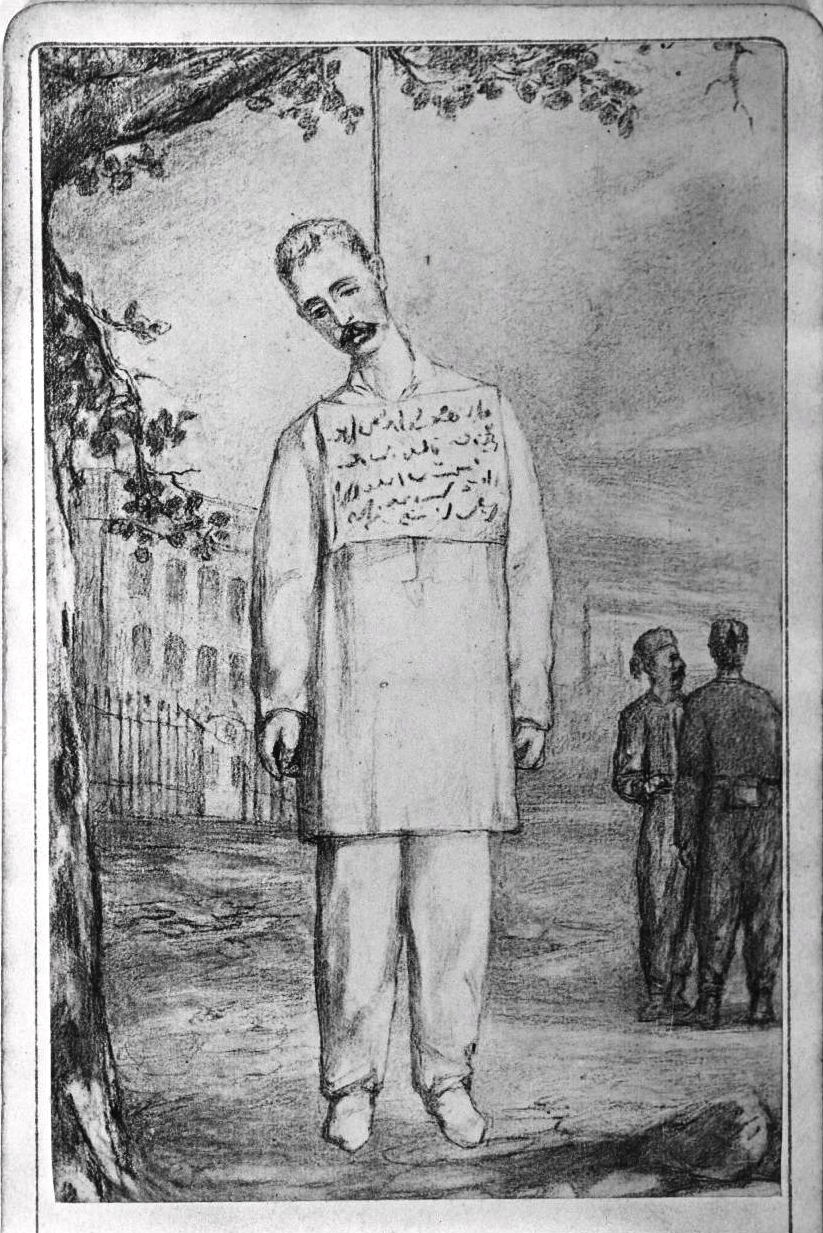
The dethronement of Abdulaziz unleashed a chain of violent and tragic events that would consume the new regime within months. The deposed sultan was confined to Feriye Palace, where he was discovered dead on 4 June with his wrists slit. Eleven days later, on 11 June, Neşerek Kadın Efendi, one of Abdulaziz's wives, also died. On 15 June, Neşerek's brother, Hasan the Circassian, who blamed state officials for the sultan's overthrow, stormed Midhat Pasha's mansion. In a murderous rampage, he killed War Minister Avni Pasha and Foreign Minister Mehmed Raşid Pasha before five more people were slain in the chaos until he was subdued. The psychological toll on the new sultan was devastating. Murad V, already suffering from depression, deteriorated further in the aftermath. By 31 August, a fatwa was obtained from the Sheikh-ul-Islam, and Murad V was himself dethroned, replaced by Abdul Hamid II. What had begun as a bloodless coup had spiraled into a series of deaths, madness, and a second removal from the throne.
Constitutional Hopes and Autocratic Reversal
In the wake of the coup, the Ottoman Empire entered what would be called the First Constitutional Era, a two-year period dominated by a constitutional committee chaired by Midhat Pasha. This represented a significant shift toward participatory governance in an empire long ruled by sultanic decree. However, the experiment proved fragile. The 1877-1878 Russo-Turkish War shattered the constitutional framework, and Sultan Abdul Hamid II exploited the crisis to consolidate autocratic power. He outmaneuvered the constitutionalists by proroguing both the constitution and the parliament, effectively ending the First Constitutional Era. The architects and participants of the 1876 coup did not escape retribution. In the Yıldız Trials, the conspirators were systematically purged, jailed, exiled, or assassinated as Abdul Hamid II cemented his absolute rule. The brief constitutional interlude thus became a cautionary chapter, demonstrating how quickly liberal reforms could be reversed when military and political pressures converged.
Gallery
Frequently Asked Questions
Who is 1876 Ottoman coup d'état?
It was a bloodless military takeover carried out in Istanbul on 30 May 1876 that removed Sultan Abdulaziz from the throne and placed Murad V in his stead. The event is remembered as the opening act of the Ottoman Empire's First Constitutional Era.
What are 1876 Ottoman coup d'état's powers/role?
Its primary role was to dethrone an autocratic ruler and open the door to constitutional governance under a committee led by Midhat Pasha. It shifted real political power from the sultan's personal authority toward a collective body of reform-minded statesmen.
Why is 1876 Ottoman coup d'état important?
It marked the first time the Ottoman sultanate was challenged through a coordinated military coup rather than palace intrigue, setting a precedent for later political upheavals. It also introduced the empire's first written constitution, a milestone in its long trajectory toward modernization.
Who led the 1876 Ottoman coup d'état?
The operation was orchestrated by a coalition of senior military and political figures, most notably Midhat Pasha, Hüseyin Avni Pasha, Süleyman Pasha, and Mehmed Rüşdi Pasha. Their coordinated action in Istanbul ensured the transition of power proceeded without a single shot being fired.
More in Rebellions against empires 1-19
Spotted an error? Know more?
Reader corrections go straight into our review queue. Suggest an edit · How this site is sourced