Liberal rebellions of 1842
Poorly coordinated uprisings against centralization in Brazil.

Pedro II do Brasil · Public domain
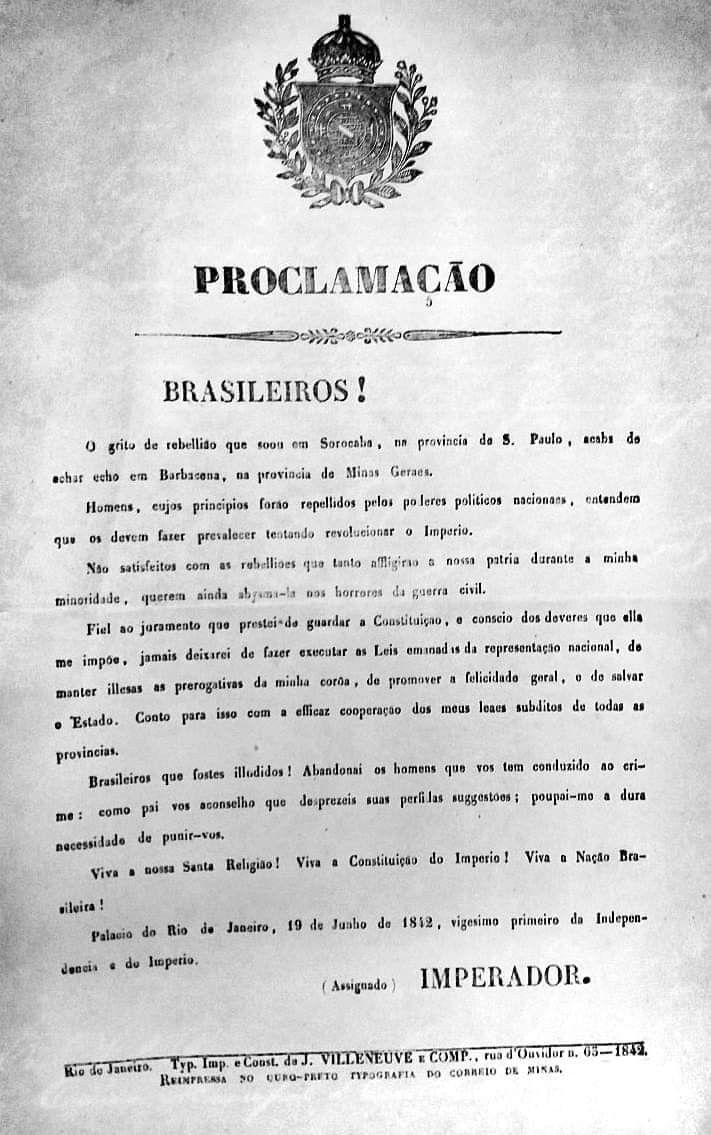
The Liberal Rebellions of 1842 were a series of armed uprisings in the Brazilian provinces of Minas Gerais and São Paulo. They occurred in response to actions by Emperor Dom Pedro II to centralize power and limit provincial authority, reversing the decentralization of the regency period. The rebellions were poorly coordinated and were suppressed by the central government with little lasting effect, marking the end of a series of province-level rebellions that had threatened the Empire of Brazil's stability.
Quick Facts
- Conflict
- Liberal Rebellions of 1842
- Date
- May 1842 – August 1842
- Location
- Minas Gerais and São Paulo
- Result
- Central government victory
Facts from the source article.
Lore & Background
The Liberal Rebellions of 1842 arose from a shift from liberal to conservative rule after Dom Pedro II assumed the throne in 1840. The regency had decentralized power to prevent secession, but Pedro II enacted laws that reversed this, centralizing control of the police and justice system. He appointed loyalists as political agents, chiefs of police, and judges in the provinces, and dissolved the Chamber of Deputies, which was dominated by liberals. These actions provoked liberal elites in Minas Gerais, São Paulo, and Rio de Janeiro to appoint new provincial presidents and begin military resistance, convinced that armed force would secure their demands.
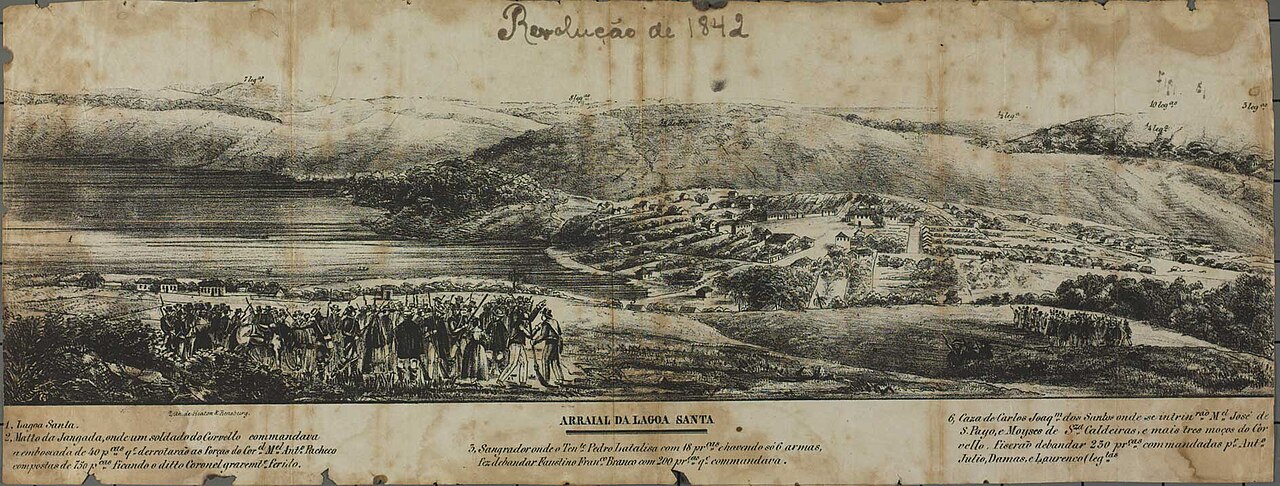
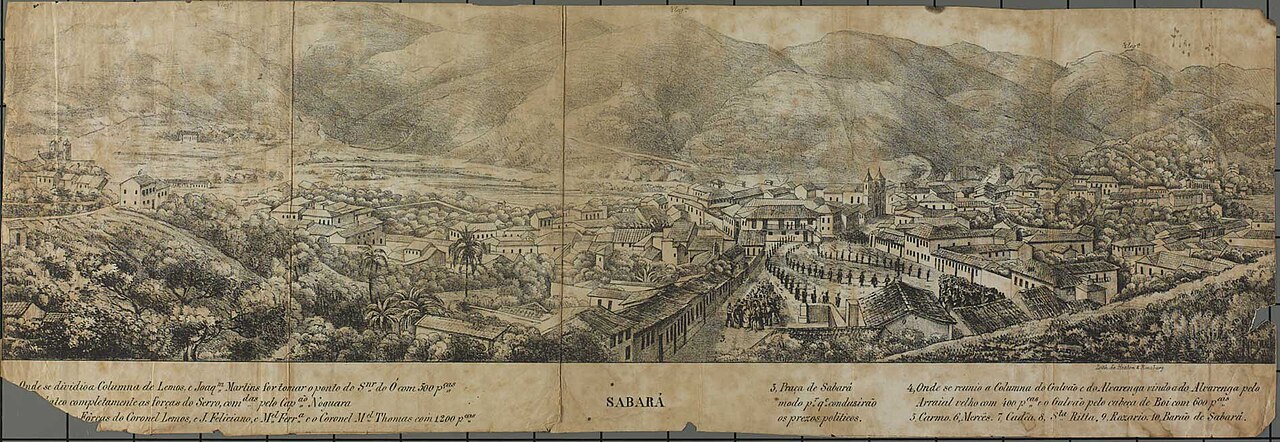
The revolt in São Paulo began on May 17, 1842, in Sorocaba, a town linked to the horse and mule trade with Rio Grande do Sul, which had been banned due to rebel activity. Rafael Tobias de Aguiar, a wealthy merchant, led the rebellion, establishing a Liberating Column of about 1,500 men and declaring Sorocaba the provisional capital. The rebel capital fell on June 20 to forces commanded by Luís Alves de Lima e Silva (later Duke of Caxias), who had been put in charge by Dom Pedro II. The revolt in Minas Gerais broke out on June 10 in Barbacena, with José Feliciano Pinto Coelho da Cunha named interim president. After initial rebel victories, Lima e Silva employed the same strategy used in São Paulo, taking the capital and defeating the insurgents.
Reader's Guide
The Liberal Rebellions of 1842 represent a key moment in the consolidation of the Brazilian Empire under Dom Pedro II. They illustrate the tension between central authority and provincial autonomy that characterized the post-regency period. The rebellions were a direct response to the emperor's centralizing laws and his dissolution of the liberal-dominated Chamber of Deputies, which stripped provincial elites of influence. Though the uprisings were poorly coordinated and quickly suppressed, they marked the end of a series of province-level rebellions that had threatened the empire's stability. The defeat of the rebels led to the deportation of their leaders and the conscription of followers into the imperial army. The commander Luís Alves de Lima e Silva, who had previously quelled a rebellion in Maranhão, argued that victory over other Brazilians was not worth celebrating. The rebellions underscored the effectiveness of the central government's military response and the limits of liberal opposition in the face of a determined emperor.
Did You Know?
- Rafael Tobias de Aguiar, one of the wealthiest merchants in Brazil, led the São Paulo revolt and was sworn to 'defend the Emperor and the Constitution until the last drop of his blood.'
- The rebel capital of Sorocaba fell on June 20, 1842, to forces commanded by Luís Alves de Lima e Silva.
The Road from Regency to Centralization
The Liberal Rebellions of 1842 emerged from a decade of political turbulence that had left the Empire of Brazil on the brink of fragmentation. When Emperor Pedro I abdicated—driven by a deteriorating relationship with the assembly, a failed war against Argentina, and a deepening constitutional crisis—his five-year-old son was left to inherit a fractious realm. The regency that followed, desperate to prevent the provinces from simply seceding, granted them sweeping new powers. Rather than stabilizing the nation, this decentralization emboldened provincial elites to challenge imperial authority outright. Fearing the empire's collapse, the regents transferred power to the fourteen-year-old Pedro II, who immediately set about reversing the regency's concessions. He enacted legislation that pulled control of the police and the justice system back into the central government's hands, and he filled provincial posts with loyalists. The young emperor also gained the ability to dissolve the Chamber of Deputies and to appoint or dismiss cabinet ministers at will. For liberal elites in the wealthier provinces, this abrupt swing from liberal regency rule to conservative autocracy felt less like governance and more like the erasure of everything they had fought to secure.
The Political Spark
By the time Pedro II took the throne in 1840, unrest in Maranhão and Rio Grande do Sul had not yet been fully quelled, and the young emperor's majority had been declared prematurely under the push of Francisco de Lima's Liberal Party. Yet within a year, a conservative-dominated Ministry moved to tighten central control, reflecting elite anxieties about unrestrained social liberty and the economic vulnerability of the larger states. In May 1842, liberals briefly seized the upper hand in the House, but the emperor, acting on advice from a Council of State dominated by reactionaries, annulled the election—alleging widespread liberal fraud—and dissolved the Chamber entirely. He also replaced key provincial figures, dismissing Tobias de Aguiar and installing José da Costa Carvalho in São Paulo. Liberal elites in Minas Gerais and São Paulo had banked on their parliamentary supporters to shape the new government, but they had fatally misread Pedro II's willingness to simply dissolve the body that gave them leverage. With their institutional channel shut down, they turned to spontaneous armed resistance, convinced that displaying military force alone would compel the emperor to restore their demands. The rebellion that followed was less a planned campaign than a desperate, improvised eruption.
São Paulo's Economic and Political Uprising
The São Paulo revolt, which erupted on May 17, 1842, carried a distinctly local economic dimension that set it apart from a purely political protest. The central government had recently prohibited the trade of horses and mules with the southern province of Rio Grande do Sul, citing rebel activity there. For São Paulo, where the breeding and trading of these animals was a vital economic activity, the ban struck at the livelihoods of the province's commercial class. The rebellion therefore broke out in Sorocaba, a town deeply tied to that trade, rather than in the provincial capital. The uprising was also fueled by new laws that restructured the criminal code and by the forced adjournment of the House of Deputies. At the helm of the resistance stood Rafael Tobias de Aguiar, one of the wealthiest merchants in Brazil and a prominent nativist political figure. He swore a dramatic oath to defend both the Emperor and the Constitution until the last drop of his blood, then moved swiftly to name military commanders and dispatch emissaries to rally support. Liberal elites across São Paulo, Minas Gerais, and Rio de Janeiro appointed rival provincial presidents and organized armed resistance, though the movement remained loosely structured and lacked a unified strategic vision.
A Fractured End to Provincial Unrest
Despite the dramatic rhetoric and the mobilization of armed forces in Minas Gerais and São Paulo, the Liberal Rebellions of 1842 were, in practical terms, a poorly coordinated affair. The uprisings lacked a unified command structure, a shared strategic plan, and meaningful communication between the two provinces. The central government, now firmly in the hands of conservative loyalists who controlled the police, the courts, and the provincial governorships, moved to suppress the revolts with relative ease. The rebellions were put down without inflicting lasting damage on the imperial state. Yet their significance extended well beyond their immediate military failure. Together with the ongoing conflicts in Rio Grande do Sul, the 1842 uprisings represented the final chapter in a long series of province-level rebellions that had, since the regency years, repeatedly threatened the very stability of the Empire of Brazil. By 1842, the pattern of provincial elites challenging imperial authority through armed revolt was effectively broken. The central government had demonstrated that it could absorb liberal opposition, dissolve their institutions, and reassert control without the empire fracturing. The era of provincial defiance that had nearly torn the young nation apart was, for the time being, over.
Gallery
Frequently Asked Questions
What were the Liberal Rebellions of 1842?
They were a cluster of armed uprisings that broke out in two Brazilian provinces as a direct pushback against the emperor's effort to consolidate authority at the national level. The revolts were loosely organized, lacking a unified command or shared strategic plan.
Where did the Liberal Rebellions of 1842 take place?
The fighting was concentrated in the provinces of Minas Gerais and São Paulo, both of which had grown accustomed to a degree of self-governance during the earlier regency era.
What triggered the Liberal Rebellions of 1842?
Emperor Dom Pedro II's decision to reverse the decentralized governance structure inherited from the regency period and pull political power back to the imperial capital was the primary spark. Provinces that had enjoyed local autonomy saw this centralization drive as a direct threat to their political freedoms.
How did the Liberal Rebellions of 1842 end?
The central government's military forces overwhelmed the poorly coordinated provincial insurgents, quelling the uprisings without any meaningful concessions to the rebels. The episode effectively closed out a long stretch of province-level revolts that had periodically tested the Empire of Brazil's stability.
Why are the Liberal Rebellions of 1842 significant in the broader canon?
They represent the final chapter in a recurring pattern of provincial resistance that had challenged the young empire's cohesion since its founding. Their swift suppression signaled that the decentralization tendencies of the regency era would not be revived, cementing a more centralized imperial authority going forward.
More in Rebellions against empires 1-19
Spotted an error? Know more?
Reader corrections go straight into our review queue. Suggest an edit · How this site is sourced