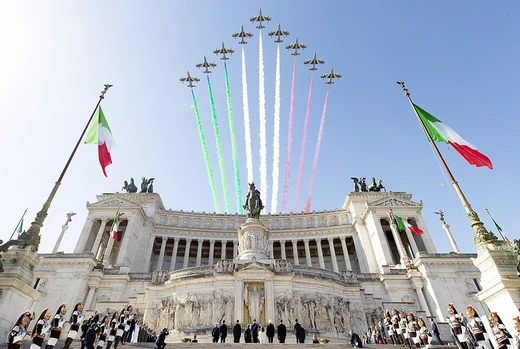
New Year's Eve
The last day of the Gregorian year, celebrated worldwide with fireworks, feasts, and festivities.
Last updated

Syced · CC0
New Year's Eve, observed on 31 December in the Gregorian calendar, is marked by a wide array of traditions that span the globe. The timing of the new year's arrival is determined by local time zones, with the first places to welcome the new year being those west of the International Date Line, such as the Line Islands, Samoa, and Tonga.
Conversely, locations like American Samoa, Baker Island, and Howland Island are among the last to reach midnight. Celebrations typically involve dancing, eating, drinking, and the watching or lighting of fireworks, with many Christians attending watchnight services. Festivities often extend past midnight into New Year's Day.
Europe
Across Africa, observances vary significantly. In Algeria, families and friends gather, with major cities featuring fireworks at the Martyrs' Memorial, while some citizens travel to Tunis or Paris. The president's televised greeting is broadcast, followed by an entertainment show on the state network. In Egypt, fireworks and evening parties with loved ones are common.
Africa
Ghanaians often attend church or visit nightclubs and streets, with fireworks displays in cities like Accra and Tema. Moroccan celebrations involve family, friends, cake, dancing, and laughter. Nigerians frequently attend church or go to nightclubs and community parties; in Lagos, a year-end festival called Lagos Countdown (later One Lagos Fiesta) began in 2012. In Rwanda, church services start at 6pm for Catholics and 10pm for Protestants, with the president's live address at midnight and recent fireworks at locations like the Kigali Convention Centre.
South Africans vote on a music countdown, with the top song played nationwide at midnight, alongside fireworks, drinking, and braais. In South Sudan, church services in Juba begin at 9pm, concluding with the carol "Hark! The Herald Angels Sing" at midnight. Tunisians often dine in restaurants or at home, with roast chicken as a common dish, and exchange gifts; a popular Tunisian film is broadcast annually, ending just before the new year.
In Asia, Azerbaijan celebrates 31 December as International Solidarity Day of Azerbaijanis, commemorating events from 1989. At midnight, the national anthem is played on television after the president's message.
Lore & Background
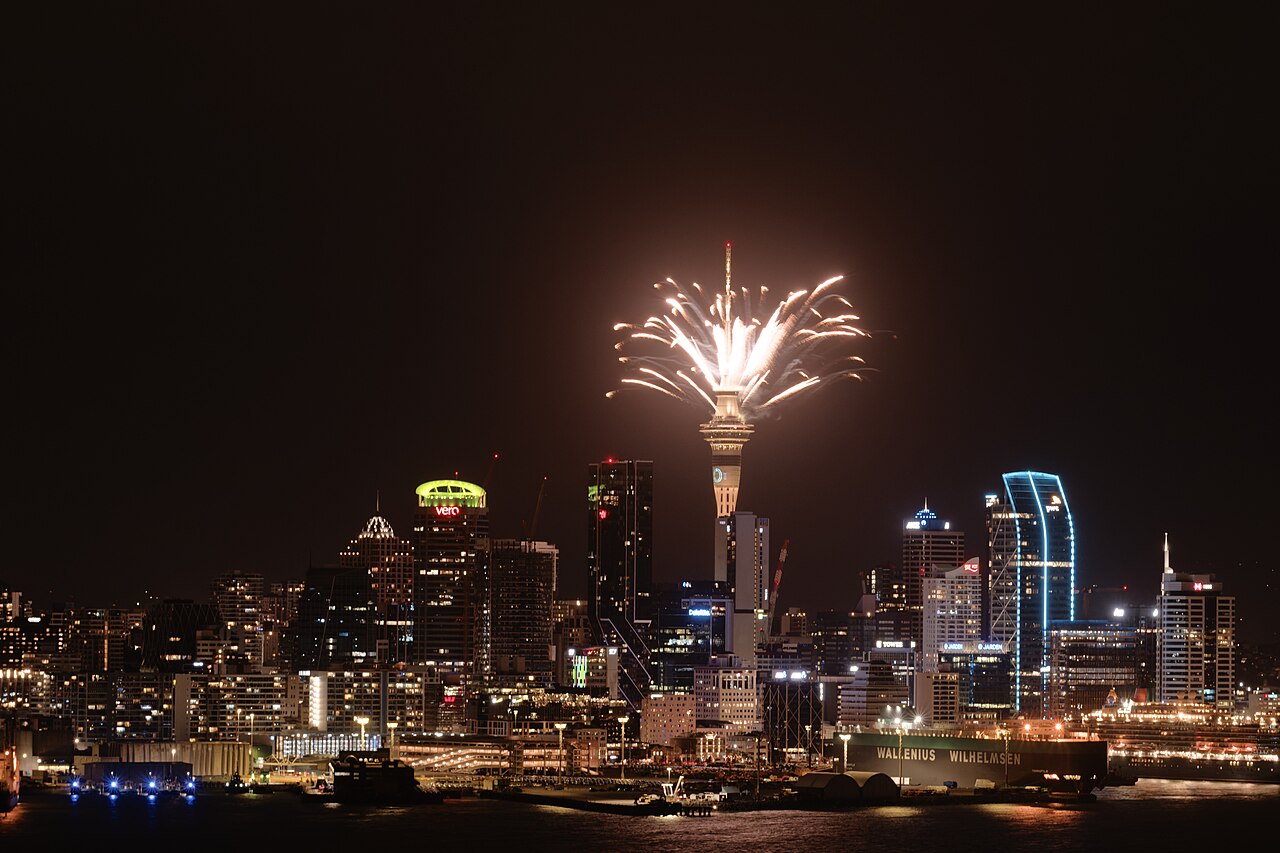
The arrival of the New Year is determined by local time zones, with the earliest celebrations occurring west of the International Date Line. The first places to welcome the New Year include the Line Islands (part of Kiribati), Samoa, and Tonga in the Pacific Ocean. In contrast, American Samoa, Baker Island, and Howland Island (part of the United States Minor Outlying Islands) are among the last to observe the transition. New Year's Eve in the Gregorian calendar refers to the evening—or commonly the entire day—of 31 December.
In many countries, the occasion is marked by dancing, eating, drinking, and watching or lighting fireworks. Many Christians attend a watchnight service. Celebrations generally continue into New Year's Day, 1 January, past midnight. Regional traditions vary widely.
In Algeria, fireworks are displayed at midnight in major cities, with the Martyrs' Memorial serving as a central attraction. In Egypt, fireworks and evening parties with friends and family are common. Ghanaians often attend church, while others gather in nightclubs, pubs, or streets, with fireworks displays in cities like Accra and Tema.
In Morocco, families and friends gather to eat cake, dance, and laugh. Nigerians frequently celebrate by going to church or attending parties organized by individuals, communities, and organizations; in Lagos, a year-end festival known as Lagos Countdown (later One Lagos Fiesta) began in 2012. In Rwanda, church services start at 6pm for Roman Catholics and 10pm for Protestants, with the president delivering a live broadcast address at midnight; fireworks are displayed at venues such as the Kigali Convention Centre. South Africans vote on a top ten music countdown before 31 December, and when the number one song is reached, it plays on all radio stations; fireworks and braais are common.
In South Sudan, church services begin at 9pm, and at midnight the carol "Hark! The Herald Angels Sing" is sung. Tunisians often spend the evening in restaurants or hotels, exchanging gifts and flowers, or celebrating at home with family; roast chicken is a typical main dish, and a popular Tunisian film is broadcast annually, ending just before midnight. In Azerbaijan, 31 December is also International Solidarity Day of Azerbaijanis, and at midnight the national anthem is played on TV after the president's message.
The Shifting Status of Chinese New Year's Eve
From roughly 2000 until the 2008 reform, the Spring Festival public holiday actually commenced on New Year's Day itself, leaving the eve to be treated as an ordinary working day. A policy shift in 2008 pulled the holiday start back by one day, so that the eve became the first day of the break. That arrangement lasted until 2013. Then, in 2014, the government reversed course once more, designating New Year's Eve as a regular working day.
The decision ignited fierce backlash online, with netizens and academics mounting hostile criticism of what they perceived as a betrayal of family tradition. By 2015, the government effectively walked the policy back: the eve is now typically swapped with a nearby weekend, ensuring that most workers do not have to clock in on the night before the lunar new year. The episode illustrates how a single calendar day can become a flashpoint for debates over tradition, labor, and state authority.
The Weekend-Shifting Machinery
China's holiday system operates on a principle that confounds many outsiders: weekends are not fixed. Instead, the government routinely swaps Saturdays and Sundays with adjacent weekdays to manufacture longer continuous breaks. For the Spring Festival and National Day, nearby weekend days are pulled forward or pushed back to create a seven-day golden week, though the trade-off is that workers may face six or seven consecutive days of labor either before or after the holiday. If the holiday falls on a Wednesday, no shifting occurs and the break remains a single day, a deliberate choice made after 2014 to avoid seven-day work streaks.
On Tuesdays or Thursdays, weekend days are shifted to produce a three-day break. When the holiday lands on a weekend, it simply transfers to Monday. The entire schedule is announced roughly a month before the year begins by the General Office of the State Council, yet it can still be adjusted mid-year, making China's holiday calendar one of the least predictable among developing nations.
From Qin Dynasties to Communist Calendars
The story of Chinese festivals stretches back to the Qin dynasty, roughly 221 to 206 BC, when communal celebrations first took recognizable form. By the Tang dynasty (618–907 AD), the character of these observances had shifted markedly: the earlier emphasis on ritual sacrifice and mystical ceremony gave way to a greater focus on entertainment and communal enjoyment. That trajectory of evolving celebration eventually collided with modern political history.
Between the 1920s and the 1970s, Chinese citizens navigated a dual calendar—traditional festivals alongside a parallel set of official holidays that commemorated the achievements of the communist regime. The two systems coexisted for decades, creating a layered holiday landscape. This move signaled a partial return to cultural roots, acknowledging that the purely political holiday framework of the preceding era no longer resonated with a rapidly modernizing population.
The Regulatory Labyrinth
Behind the seemingly simple question of when citizens get off work lies an intricate web of administrative regulation. The current statutory annual holiday standard stands at thirteen days, distributed across seven official public holidays that apply to the entire population. Ethnic minorities add another layer, with provincial, prefectural, and even county-level governments designating their own traditional holidays. Autonomous prefectures may celebrate their founding dates with a day off for all local workers.
Reader's Guide
New Year's Eve, observed on 31 December in the Gregorian calendar, is marked by a wide array of customs and social behaviors. The evening—or often the entire day—is characterized by dancing, eating, drinking, and the watching or lighting of fireworks.
Many Christians attend a watchnight service. Celebrations typically continue past midnight into New Year's Day, 1 January. The timing of the new year is determined by local time zones; the first places to welcome it are west of the International Date Line, including the Line Islands (part of Kiribati), Samoa, and Tonga, while American Samoa, Baker Island, and Howland Island are among the last.
Regional practices vary significantly. In Algeria, families and friends gather, with fireworks in major cities and the Martyrs' Memorial as a focal point; the president’s message is read on television, and the EPTV network airs an entertainment show. Egyptians celebrate with fireworks and evening parties. Ghanaians often attend church or go to nightclubs and streets, with fireworks in cities like Accra and Tema.
Moroccans gather with family and friends to eat cake, dance, and laugh. Nigerians frequently attend church or parties, and in Lagos, a year-end festival called Lagos Countdown (later One Lagos Fiesta) began in 2012 to boost tourism. Rwandans attend church services starting at 6pm for Catholics or 10pm for Protestants; at midnight, the president delivers a live broadcast, and fireworks have been introduced at venues like the Kigali Convention Centre. In South Africa, a top ten music countdown is voted on before 31 December, and when the number one song is reached, it plays on all national radio stations; fireworks and braais are common.
South Sudanese attend church services beginning at 9pm, singing "Hark! The Herald Angels Sing" at midnight. Tunisians often dine in restaurants or at home, with roast chicken as a main dish, and exchange gifts and flowers; a popular Tunisian film is broadcast annually, ending just before midnight. In Azerbaijan, 31 December is also International Solidarity Day of Azerbaijanis, commemorating the 1989 dismantling of the Soviet–Iranian border and the first World Congress of Azerbaijanis; at midnight, the national anthem is played on television after the president’s message.
Did You Know?
- In Hong Kong, from 1993 to 2014, the Times Square shopping centre hosted a countdown event featuring the lowering of an apple.
More in Public Holidays & Observances
Related in Public Holidays & Observances
Links follow this subject's own source article.
Sources
Compiled from Wikipedia and the sources listed below. Text from Wikipedia is available under CC BY-SA 4.0; this entry is adapted from it.
- Wikipedia: New Year's Eve (CC BY-SA 4.0).
Spotted an error? Know more?
Reader corrections go straight into our review queue. Suggest an edit · How this site is sourced