Manuel I of Portugal
King of Portugal during the height of its maritime expansion.
Manuel I, known as the Fortunate, was King of Portugal from 1495 to 1521. His reign saw the Portuguese discovery of the sea route to India and the establishment of a vast trade empire across Africa and Asia. He was a major patron of the Portuguese Renaissance and the wealthiest monarch in Europe.
Quick Facts
- Coronation
- 27 October 1495
- Cor type
- Enthronement
- Predecessor
- John II
- Successor
- John III
- Born
- 31 May 1469
- Birthplace
- Alcochete, Portugal
- Died
- 13 December 1521
- Place of death
- Lisbon, Portugal
Facts from the source article.
Did You Know?
- Manuel I was awarded the Golden Rose by Pope Julius II in 1506 and by Pope Leo X in 1514.
- He was the first individual to receive more than one Golden Rose after Emperor Sigismund von Luxembourg.
- The Manueline style, considered Portugal's national architecture, is named for him.
Early life
Manuel was born in Alcochete on 31 May 1469, the ninth child of Ferdinand, Duke of Viseu and Beatriz of Portugal. During his youth, the Duke of Braganza was executed for treason in 1483, and his brother Diogo, Duke of Viseu, was stabbed to death by the king in 1484 for conspiracy. After the death of Prince Afonso and failed legitimisation of an illegitimate son, John II named Manuel heir. He succeeded John in 1495.
Reign
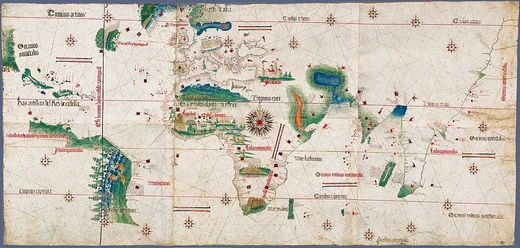
Manuel supported Portuguese exploration and commerce. In 1498 Vasco da Gama discovered a maritime route to India. In 1500 Pedro Álvares Cabral reached Brazil. In 1501 Gaspar and Miguel Corte-Real voyaged to Labrador. In 1503 the first feitoria in Brazil was built by Fernão de Loronha, and Afonso de Albuquerque constructed a fort in Cochin. In 1505 Francisco de Almeida, first viceroy of India, built forts at Kilwa, Sofala, Angediva, and Cannanore. In 1506 Diogo de Azambuja captured Essaouira in Morocco. In 1507 Tristão da Cunha took Socotra and Afonso de Albuquerque took Oman. In 1508 Safi in Morocco was captured by Diogo de Azambuja. In 1510 Goa in India was taken by Afonso de Albuquerque. In 1511 Malacca in Malaysia was captured by Albuquerque, part of a plan to thwart Muslim trade by controlling Aden, Alexandria, Ormuz, and Malacca. In 1513 Azamor in Morocco was taken by Dom Jaime, Duke of Braganza. In 1515 Ormus in the Persian Gulf was captured by Albuquerque. These conquests made Portugal wealthy and funded Manueline buildings and court artists. Pope Leo X received a Portuguese embassy. Manuel styled himself King of Portugal and the Algarves, on this side and beyond the Sea in Africa, Lord of Guinea and the Lord of Conquest, Navigation and Commerce in Ethiopia, Arabia, Persia and India.
Family
Manuel's first wife, Isabella, died in childbirth. Their son Miguel da Paz, heir to Castile, Portugal, and Aragon, died in 1500 at age two. Manuel then married Maria of Aragon, Isabella's younger sister; two of their sons became kings of Portugal. Maria died in 1517. After her death, Manuel married her niece, Eleanor of Austria.
Death
In December 1521, as plague struck Lisbon, Manuel I stayed at Ribeira Palace. He fell ill with a high fever on 4 December and died nine days later at age 52, with his son John III taking the throne. His body, in a coffin draped in black velvet, was moved to Restelo Church for a temporary burial. In 1551, his remains and those of his second wife, Maria of Aragon, were relocated to Jerónimos Monastery.
More in Portuguese Exploration in the Age of Discovery
Spotted an error? Know more?
Reader corrections go straight into our review queue. Suggest an edit · How this site is sourced