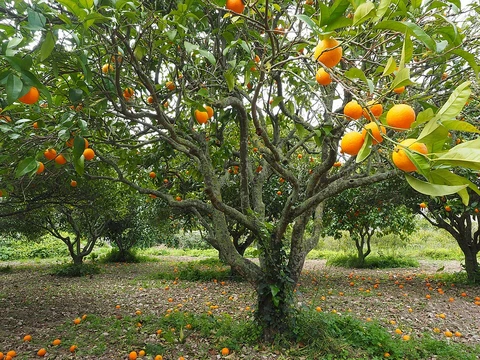
Theaceae
The tea family: shrubs and trees with showy flowers, including the source of tea and ornamental camellias.
Last updated
The number of genera in the family ranges from seven to 40, depending on the classification method used.[1] The tea family, Theaceae, consists of woody plants like shrubs and trees, which include both the commercially valuable tea plant and camellias grown for decoration.[1] The majority of Theaceae species originate from China and East Asia, although a smaller number occur in other regions.[1]
Scientific classification
- CladeTracheophytes
- CladeAngiosperms
- CladeEudicots
- CladeAsterids
- OrderEricales
- FamilyTheaceae
Named by Mirb. (1816)
Sources: Wikipedia taxobox: Theaceae (CC BY-SA 4.0)
Quick Facts
- Known for
- Includes the tea plant (Camellia sinensis) and ornamental camellias
- Native region
- China and East Asia, also Southeast Asia, Malesia, tropical South America, and the Southeast United States
- Number of genera
- 7 to 40, depending on circumscription; eight currently accepted
Facts from the source article.
Biology and range
Plants in Theaceae have simple, alternate, serrated leaves that are usually glossy.[2] Theaceae plants are multistaminate, usually with 20 to over 100 stamens, and produce pseudopollen from connective cells.[3] Caffeine and its precursors are only found in Camellia section Thea and are not present in other Theaceae.[4] Within Theaceae, Stewartia and Franklinia lose their leaves annually, whereas the remaining genera keep their foliage year-round.[2]
Theaceae blooms are generally sizable, visually striking, and colored pink or white, frequently accompanied by a noticeable fragrance.[2] Franklinia, Gordonia, and Stewartia are three genera with representatives in the southeastern United States; Franklinia occurs nowhere else naturally.[5] Aluminum and fluoride are known to be accumulated by plants belonging to Theaceae.[4]
What the specialist sources record
The GBIF Backbone Taxonomy accepts Theaceae as a family in the order Ericales, and the database holds 108,117 occurrence records for this taxon.[6] A 2017 study by Chartier et al. found that Theaceae occupied a distinct area of morphospace compared to other ericalean clades.[7]
References
- Wikipedia, "Theaceae" (CC BY-SA 4.0), which cites: Royal Botanic Gardens, Kew. Vascular Plant Families and Genera:; Watson, L., & Dallwitz, M. J. (1992 onwards). The families of flowering plants. Theaceae; Angiosperm Phylogeny Group III, "An update of the Angiosperm Phylogeny Group classification for the orders and families of flowering plants: APG III", Botanical Journal of the Linnean Society, 2009, p. 105–121 (original not read by us) en.wikipedia.org
- Wikipedia, "Theaceae" (CC BY-SA 4.0), which cites: Stevens, "Flowering Plants.", Springer, 2004; Luna, "Phylogenetic relationships of the genera of Theaceae based on morphology", Cladistics, 2004, p. 223–270 (original not read by us) en.wikipedia.org
- Wikipedia, "Theaceae" (CC BY-SA 4.0), which cites: Watson, L., & Dallwitz, M. J. (1992 onwards). The families of flowering plants. Theaceae; Stevens, "Flowering Plants.", Springer, 2004 (original not read by us) en.wikipedia.org
- Wikipedia, "Theaceae" (CC BY-SA 4.0), which cites: Watson, L., & Dallwitz, M. J. (1992 onwards). The families of flowering plants. Theaceae (original not read by us) en.wikipedia.org
- Wikipedia, "Theaceae" (CC BY-SA 4.0), which cites: Flora of China "Theaceae (draft)" (original not read by us) en.wikipedia.org
- GBIF Backbone Taxonomy and occurrence index, Theaceae (taxon key 3189597). CC BY 4.0 (backbone); counts are facts. gbif.org
- Stevens, "Angiosperm Phylogeny Website". facts only, no text reused. mobot.org
Each numbered sentence above was checked against the source it cites before publication. Sentences citing Wikipedia adapt text from the English Wikipedia article Theaceae (contributors), used under CC BY-SA 4.0; this entry is available under the same licence. Other sources were used for facts only; no text or images are copied from them.
More in Plants & Crops
Sources
Compiled from Wikipedia and the sources listed below. Text from Wikipedia is available under CC BY-SA 4.0; this entry is adapted from it.
- Wikipedia: Theaceae (CC BY-SA 4.0).
- Word definitions: the Codexery glossary, each quoted from its Wikipedia article.
Spotted an error? Know more?
Reader corrections go straight into our review queue. Suggest an edit · How this site is sourced