Typha
A genus of wetland plants with diverse edible and industrial uses.

Wikimedia Commons · Public domain
Typha is a genus of around 30 species of flowering plants in the Typhaceae family. Depending on where you are, it goes by many common names: bulrush or reedmace in British English, cattail or punks in American English, cumbungi or bulrush in Australia, bulrush or cattail in Canada, and raupō, bullrush, cattail, or reed in New Zealand. These plants are mostly found across the Northern Hemisphere, thriving in various wetland habitats. While they can soak up toxins in polluted areas, many parts of the plant are safe to eat, especially the starchy rhizomes.
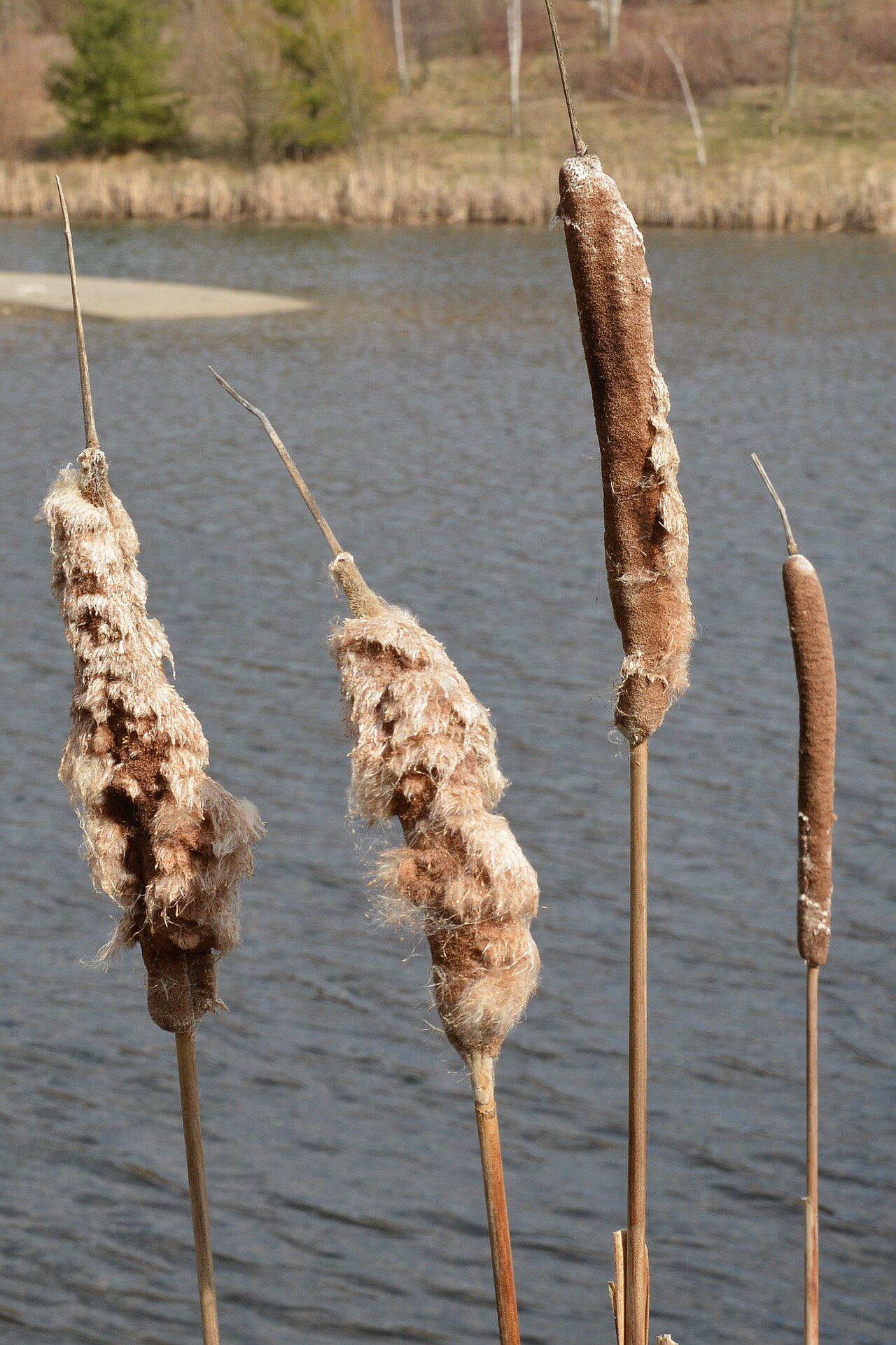
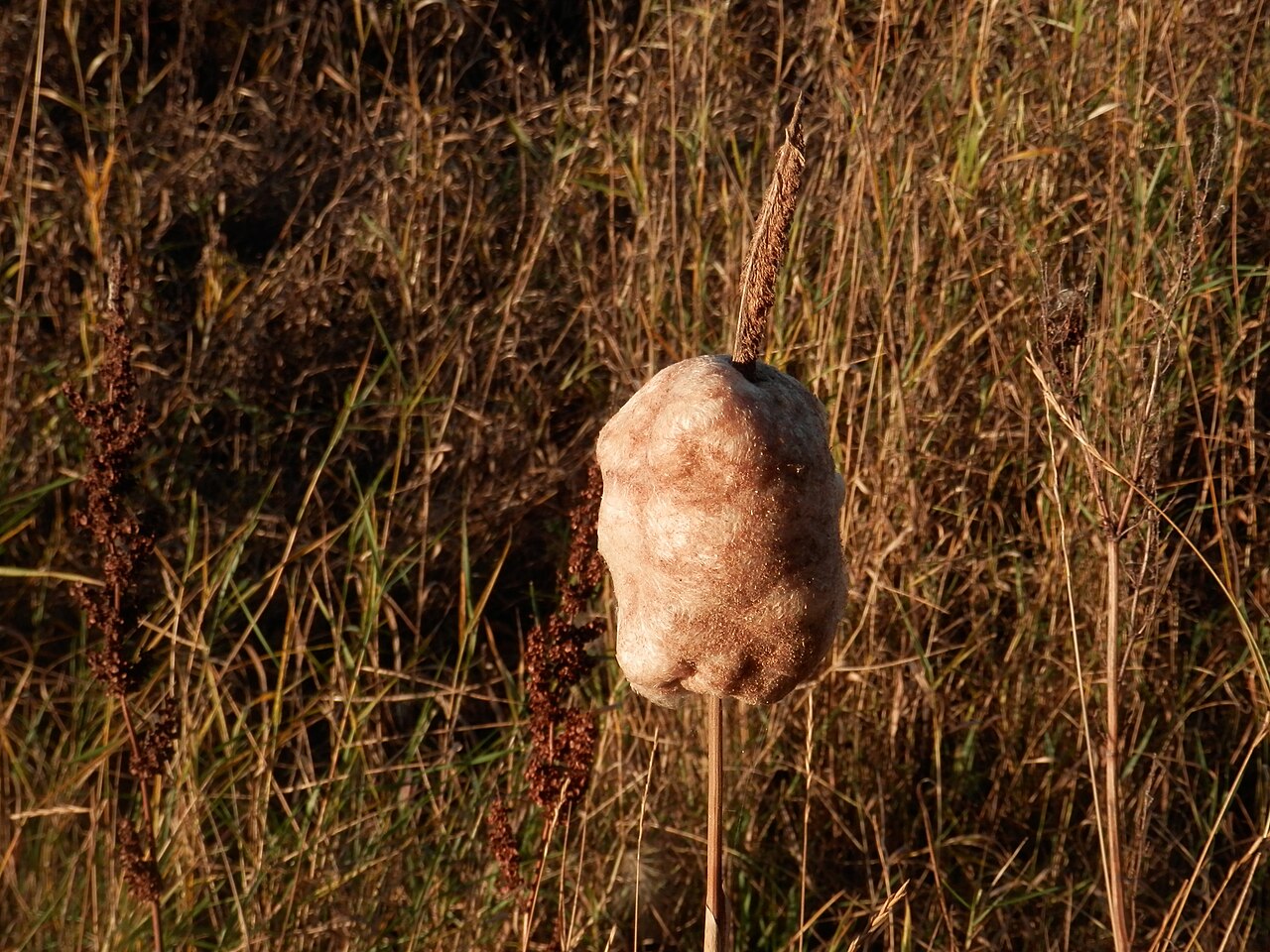
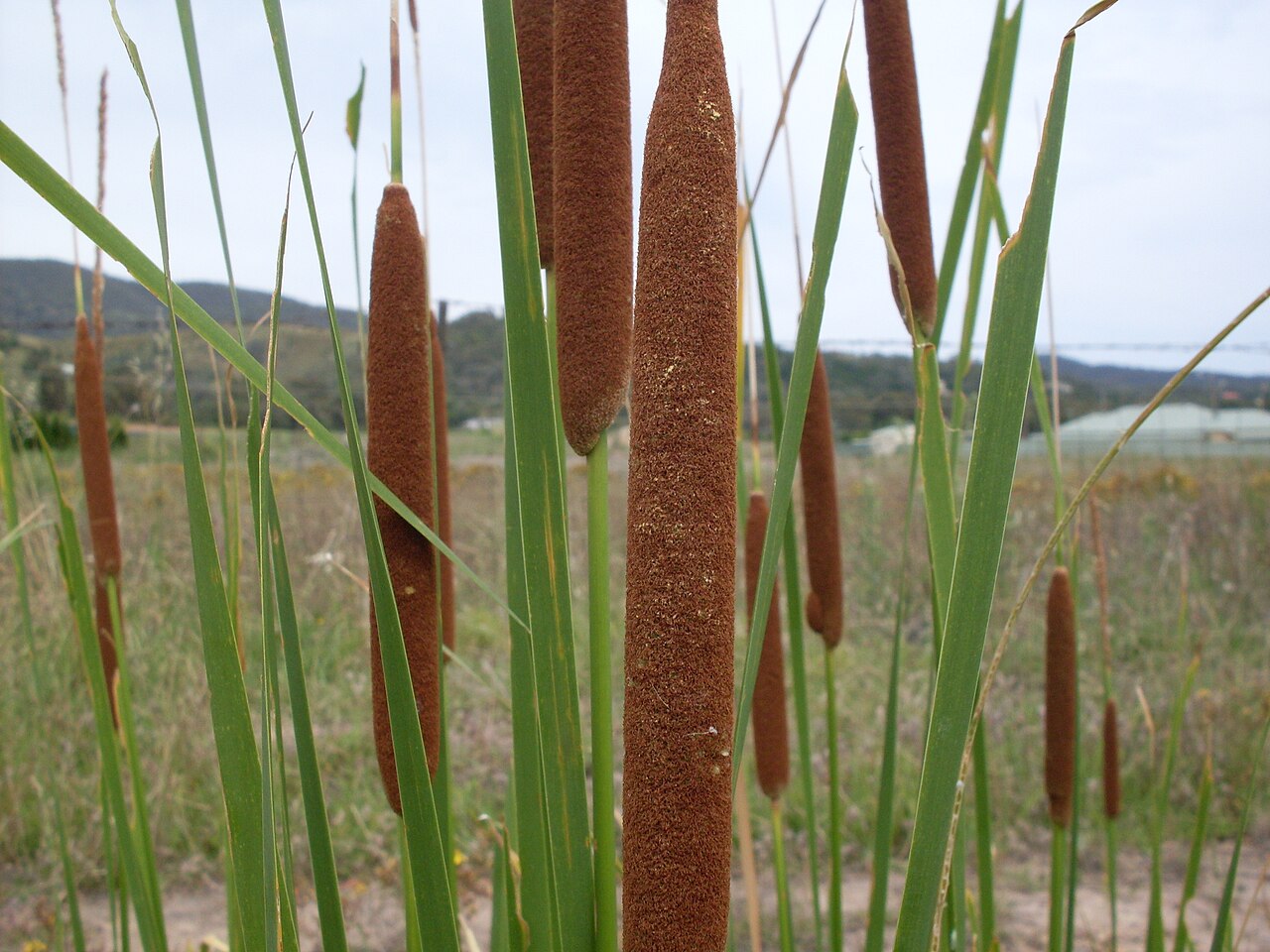
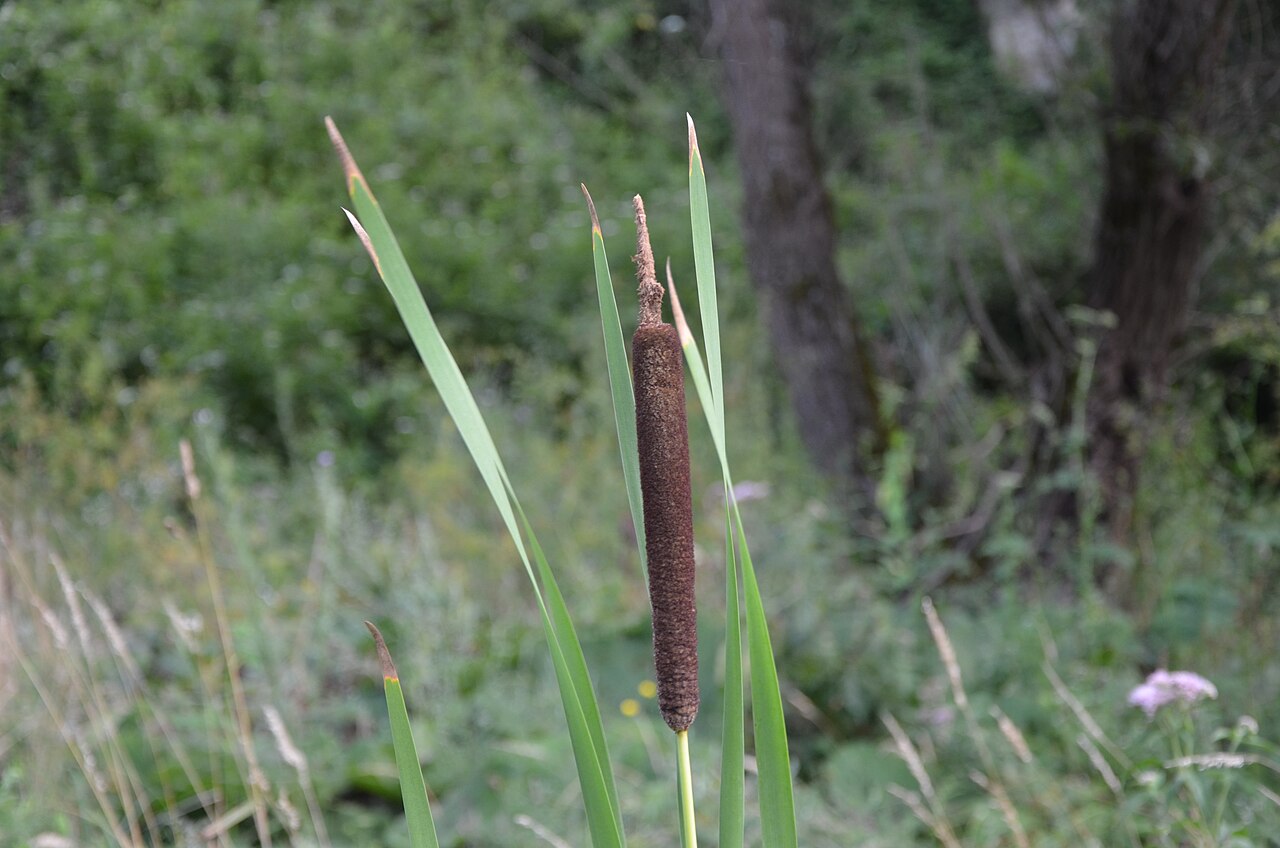
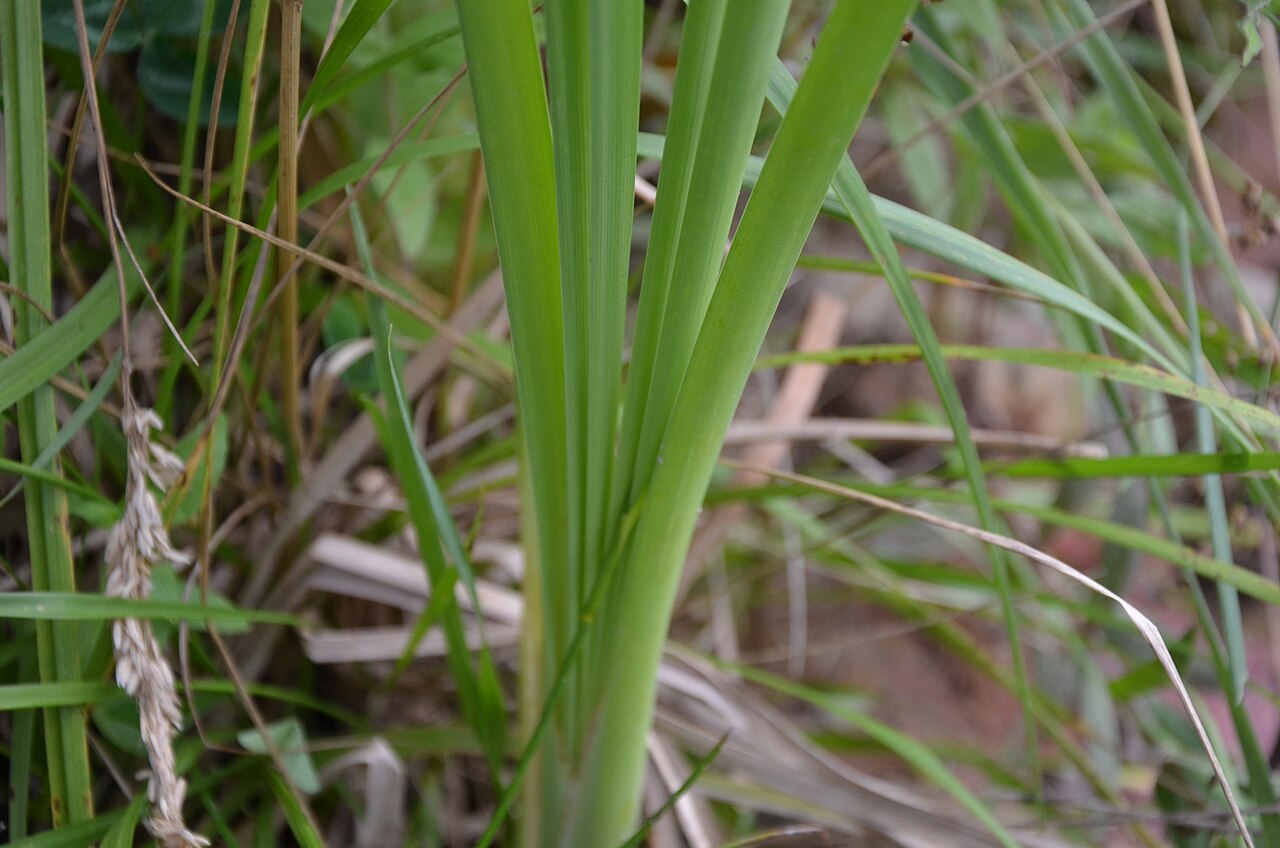
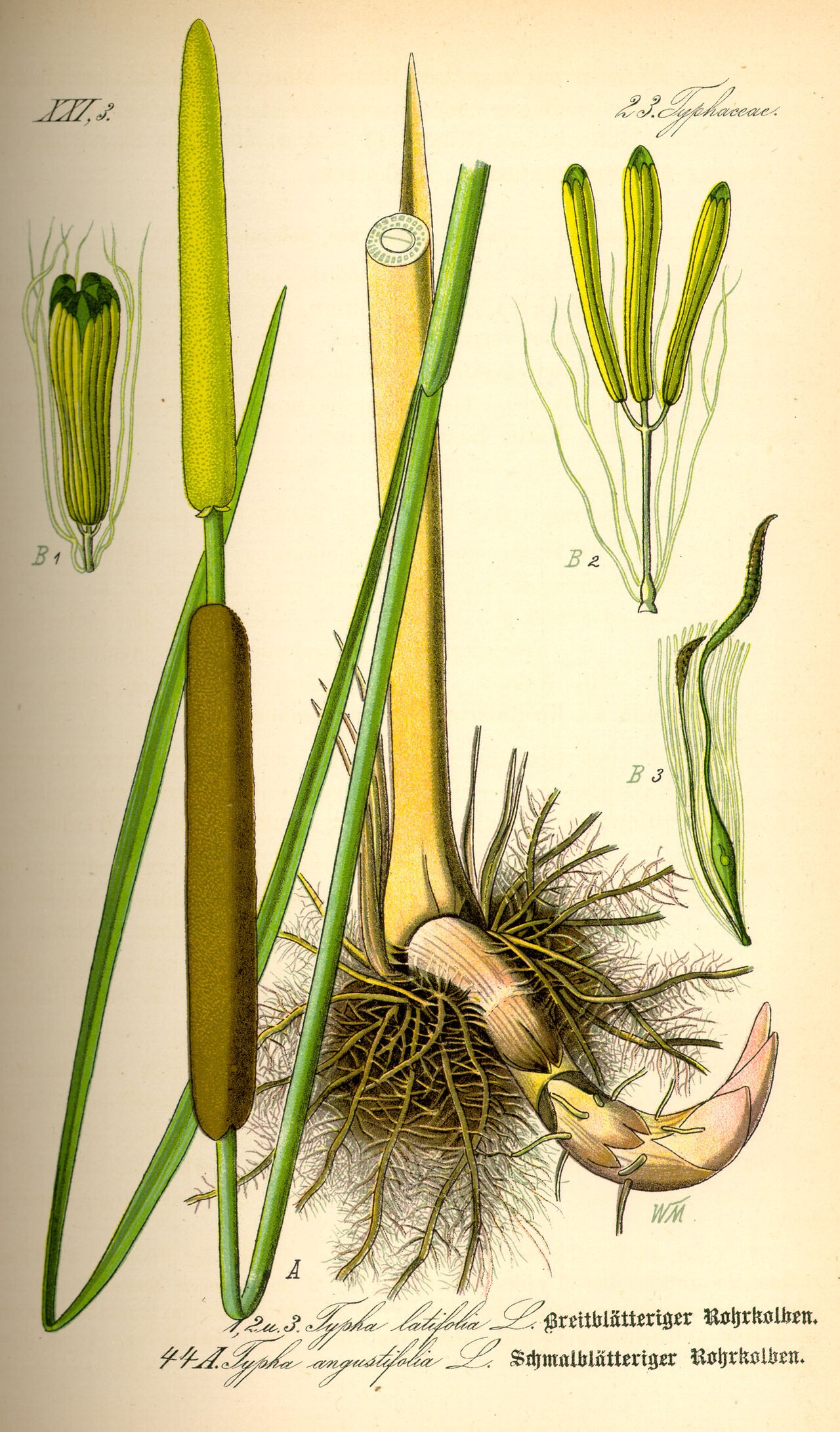
These are aquatic or semiaquatic, rhizomatous, herbaceous perennials that typically grow 0.8 to 2.4 meters tall. Their leaves are long, narrow, hairless, and mostly clustered at the base of a simple, jointless stem that holds the flower spikes. The plants are monoecious, meaning they have separate male and female flowers on the same plant, arranged in dense clusters. The male flowers form a narrow spike at the top of the stem, each reduced to a pair of stamens and some hairs, and they wither after releasing pollen. Below that, a dense, sausage-shaped spike of tiny female flowers can grow up to 30 centimeters long and 1 to 4 centimeters thick. The seeds are tiny—just 0.2 millimeters long—and attached to fine hairs. When ripe, the seed heads break apart into a cottony fluff that carries the seeds away on the wind.
Fossilized fruits of Typha have been found in Central Europe dating back 69 million years. The name Typha comes from an ancient Greek word for the plant, possibly related to *typhos*, meaning marsh.
The most widespread species is *Typha latifolia*, found across the entire temperate Northern Hemisphere and introduced to Australia. *T. angustifolia* is nearly as widespread but doesn't reach as far north; it may be introduced and invasive in North America. *T. domingensis* is more common in the southern Americas and also grows in Australia. *T. orientalis* is widespread in Asia, Australia, and New Zealand. Other species like *T. laxmannii*, *T. minima*, and *T. shuttleworthii* are mostly limited to Asia and southern Europe. These plants grow in open swamps from sea level up to about 760 meters.
Typha species are often among the first plants to colonize fresh, wet mud, thanks to their abundant, wind-dispersed seeds. Buried seeds can stay alive in the soil for a long time, and they germinate best in sunlight with fluctuating temperatures—a common trait among wetland plants that regenerate on mudflats. The plants also spread through rhizomes, forming large, interconnected stands. In many wetlands, Typha species are dominant competitors, often shading out other plants with their dense canopy. In the Great Lakes bays, for instance, they are among the most abundant wetland plants. Different species are adapted to different water depths. Their well-developed aerenchyma (air-filled tissue) lets them survive submersion, and even dead stalks can carry oxygen down to the roots.
Though native to wetlands, Typha can be aggressive and outcompete other native species. They've become problematic in many parts of North America, from the Great Lakes to the Everglades, displacing native sedges and shrinking wet meadows—likely due to changes in wetland hydrology and increased nutrients. An introduced or hybrid species may be making things worse. Control is tough, but the most successful strategy seems to be mowing or burning to remove the aerenchymous stalks, followed by prolonged flooding. Preserving natural water-level fluctuations, including droughts, and keeping conditions infertile can help prevent invasion. Wetland mammals like muskrats frequently eat Typha, and they also use the plants to build feeding platforms and dens, which in turn provide nesting and resting spots for waterfowl.
Some Typha species can accumulate toxins, so they need treatment before eating. Plants growing in polluted water can pick up lead and pesticide residues in their rhizomes and should be avoided.
Many parts of the plant are edible to humans, with different parts usable throughout the year. The starchy rhizomes are nutritious, with a protein content similar to maize or rice, and can be processed into a flour providing 266 kcal per 100 grams. They are fibrous, so the starch must be scraped or sucked from the tough fibers. Evidence of preserved starch grains on grinding stones suggests people were eating the rhizomes in Europe 30,000 years ago. There's also an underground carbohydrate lump that can be peeled and eaten raw or cooked like a potato. Baby shoots emerging from the rhizomes can be picked and eaten raw. Before the plants flower, the tender inside of the shoots can be squeezed out and eaten raw or cooked. The rind of young stems can be peeled off to reveal a tender white heart that can be eaten raw or boiled like asparagus—this has been popular among the Cossacks in Ukraine, who call it "Cossack asparagus." The inner stalk of the leaf bases can be eaten raw or cooked, especially in late spring when young and tender. In early summer, both male and female green flower spikes can be boiled (after removing the sheath of the female spike) and eaten like corn on the cob. In mid-summer, when the male flowers are mature, the pollen can be collected and used as a flour supplement or thickener; the Māori of New Zealand make a special bread called *pungapunga* from the pollen of *T. orientalis*.
- field
- Botany
- known_for
- Edible starchy rhizomes, use in building materials, paper, fiber, biofuel, and traditional crafts
- species_count
- about 30
- height_range
- 0.8–2.4 m (2+1⁄2–8 ft)
- oldest_fossil
- 69 million years ago in modern Central Europe
Lore & Background
Typha species are aquatic or semiaquatic, rhizomatous, herbaceous, perennial plants. They grow to 0.8–2.4 m in height, with long, narrow, hairless leaves. The plants are monoecious, with unisexual flowers forming dense racemes: male flowers form a narrow spike at the top, while female flowers form a dense, sausage-shaped spike below. The seeds are minute and dispersed by wind when the heads disintegrate into cottony fluff. The genus is largely distributed in the Northern Hemisphere, with the most widespread species being Typha latifolia, found across the entire temperate Northern Hemisphere and introduced to Australia. Other species have more restricted ranges. Typha plants are often among the first to colonize newly exposed wet mud, spreading by both seeds and rhizomes. They are dominant competitors in many wetlands, sometimes excluding other plants. Various parts of Typha are edible throughout the year. The pollen can be used as a flour supplement, and the Māori of New Zealand make a special bread called pungapunga from the pollen of T. orientalis.
Reader's Guide
Typha species hold significant ecological and cultural importance. Ecologically, they are dominant competitors in wetlands, often forming large, interconnected stands and displacing native sedges, particularly in regions like the Great Lakes and the Everglades. Their well-developed aerenchymae allow them to tolerate submersion, and even dead stalks transmit oxygen to the rooting zone. Control of invasive Typha is difficult, but mowing or burning followed by prolonged flooding can be effective, as can preserving water-level fluctuations and maintaining infertile conditions. Culturally, Typha has been used for millennia. The plants have been used for building materials, such as rafts and boats around Lake Titicaca, and during World War II, the United States Navy used Typha down as a substitute for kapok in life vests. The fluff is used as thermal insulation, and the stems and leaves can be made into paper, fiber, and biofuel. The seed hairs were used by some indigenous peoples of the Americas as tinder, and the down for bedding and diapers. The leaves are woven into baskets, mats, and chair seats. Despite their utility, Typha can accumulate toxins in polluted water, so care must be taken before consumption.
Did You Know?
- Fruit of Typha have been found as long ago as 69 million years ago in modern Central Europe.
- The Māori of New Zealand make a special bread called pungapunga from the pollen of T. orientalis.
Morphology & Reproductive Architecture
Typha plants are herbaceous, rhizomatous perennials reaching heights of 0.8 to 2.4 meters. Their long, narrow, hairless leaves are arranged alternately and concentrated mostly at the base of a simple, jointless stem. The most visually distinctive feature is the reproductive structure: these plants are monoecious, bearing both male and female flowers on a single vertical stalk. The male flowers are reduced to nothing more than a pair of stamens and a few hairs, clustered in a narrow spike at the very top; they wither immediately after releasing pollen. Beneath them sits the female spike, a dense, sausage-shaped mass that can stretch up to 30 centimeters in length and 1 to 4 centimeters in thickness, packed with countless tiny unisexual flowers. The resulting seeds are minuscule, measuring only about 0.2 millimeters, and cling to delicate hairs. Once the heads mature, they disintegrate into a cottony fluff, freeing the seeds to be carried by wind across open landscapes.
Wetland Ecology & Competitive Dominance
Typha species are extraordinarily effective at colonizing wetland environments. Their wind-borne seeds can persist buried in soil for long periods, germinating most successfully under conditions of sunlight and temperature fluctuation—exactly what freshly exposed mud flats provide. Once rooted, they expand through rhizomes, forming vast interconnected stands. Well-developed aerenchyma tissue grants them tolerance to submersion, and even their dead stalks continue channeling oxygen down to the root zone. In regions such as the Great Lakes and the Everglades, cattails have become aggressive competitors, displacing native sedges and shrinking wet meadows, a trend likely intensified by altered hydrology and elevated nutrient loads. Managing established populations is notoriously difficult; the most effective strategy involves mowing or burning the aerenchymous stalks followed by prolonged flooding. Prevention, however, is more tractable: preserving natural water-level fluctuations, including drought intervals, and maintaining low-nutrient conditions can significantly limit their spread.
Culinary Heritage & Edible Versatility
Across cultures and millennia, Typha has served as a remarkably versatile food source. Beyond the underground parts, the tender inner shoots emerging from the rhizome can be eaten raw, a practice beloved among Cossacks in Ukraine, who dubbed the preparation "Cossack asparagus." In early summer, both the male and female green flower spikes can be boiled and enjoyed like corn on the cob. The Māori of New Zealand developed a distinctive bread called pungapunga from the pollen of T. orientalis. Even the seeds, rich in linoleic acid, find agricultural use as feed for cattle and chickens, with cultivation noted in countries such as Ghana.
Global Distribution & Ancient Lineage
The genus Typha, encompassing roughly 30 species, is predominantly a Northern Hemisphere phenomenon, though its range extends into Australia, New Zealand, and parts of South America. The name itself derives from ancient Greek, possibly linked to the word typhos meaning "marsh," reflecting the plant's deep association with wetland environments. The most widespread species, T. latifolia, spans the entire temperate Northern Hemisphere and has been introduced to Australia. T. angustifolia is nearly as broad in range but does not reach as far north and may be invasive in North America. T. orientalis is common across Asia, Australia, and New Zealand, while T. domingensis favors southern American and Australian waters. More restricted species like T. laxmannii, T. minima, and T. shuttleworthii are largely confined to Asia and southern Europe. Remarkably, fossil evidence of Typha fruit has been recovered from deposits dating back 69 million years in what is now Central Europe, underscoring the genus's extraordinary evolutionary longevity.
Gallery
Frequently Asked Questions
What exactly is Typha?
Typha is a genus of roughly 30 wetland flowering plants belonging to the family Typhaceae. Depending on where you live, people call them cattails, bulrushes, reedmace, punks, cumbungi, or raupō, but they all refer to the same group of tall, reed-like monocots.
How big do Typha plants get?
Individual specimens typically stand between 0.8 and 2.4 metres (about 2½ to 8 feet) tall. They favour shallow water and marshy ground across the Northern Hemisphere, forming dense stands that can dominate a wetland's edge.
Are Typha rhizomes safe to eat?
The starchy rhizomes have been a traditional food source in many cultures and are generally edible. However, because the roots can concentrate heavy metals and other pollutants, harvesting them from contaminated waterways is risky.
What practical uses does Typha have outside of food?
Beyond the edible rhizomes, the genus has long supplied fiber, building material, paper stock, and raw material for traditional crafts. In more recent years researchers have also explored Typha biomass as a feedstock for biofuel production.
How far back does the Typha lineage go?
The oldest known fossil of the genus dates to roughly 69 million years ago and was found in what is now Central Europe. That places Typha's ancestors right at the boundary between the Cretaceous and the Paleogene, making it one of the older surviving wetland plant lineages.
More in Plants & Crops 1-17
Spotted an error? Know more?
This is a living reference — every entry is fact-audited, and reader corrections feed straight into our audit queue. Suggest an edit · See this site's audit record