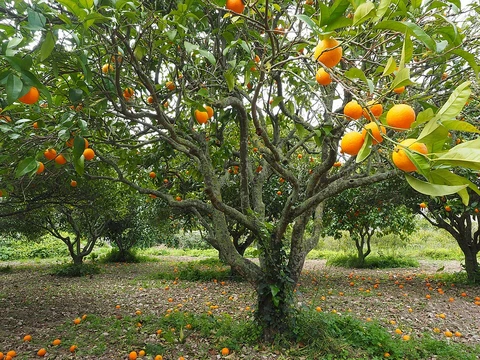
Sweet potato
A staple root vegetable native to South America.

Gogerr · CC BY-SA 4.0
The sweet potato (Ipomoea batatas) is a dicot plant belonging to the morning glory family, Convolvulaceae. It produces large, starchy, sweet-tasting tuberous roots that are eaten as a root vegetable and serve as a dietary staple in various regions. Native to tropical South America, specifically modern-day Ecuador, it is the only major crop plant among the roughly 50 genera and over 1,000 species in its family, though water spinach (Ipomoea aquatica) is also used locally as a green.
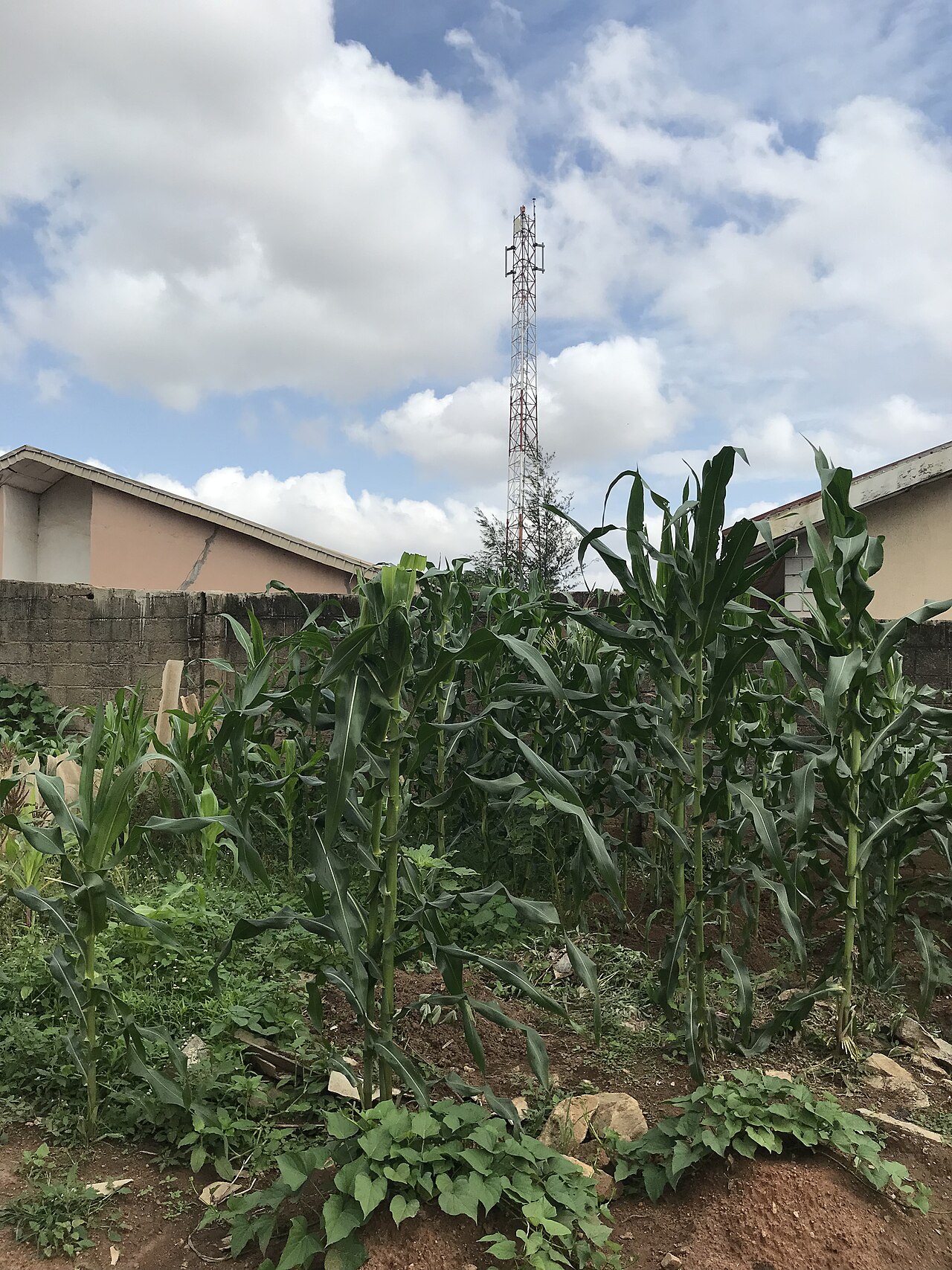
The plant is a herbaceous perennial vine with stems that typically crawl along the ground, forming adventitious roots at the nodes. Its leaves are arranged alternately along the stems, with leaf stalks 13 to 51 centimeters long. The leaf blades vary widely in shape—heart-shaped, kidney-shaped, egg-shaped, rounded, triangular, or spear-shaped—and can be entire, toothed, or lobed three to seven times. They are usually hairless, rarely hairy, and range from 5 to 13 centimeters in length, with tips that are rounded or pointed. Most leaves are green, but anthocyanin accumulation, especially along veins, can turn them purple. Stems can reach 0.5 to 4 meters in total length, with some cultivars producing shoots up to 16 meters long that do not form underground storage organs.
The flowers are hermaphroditic, five-parted, and short-stalked, appearing singly or in small clusters in upright, stalked inflorescences from the leaf axils. They bloom only when days are short, opening before sunrise and closing a few hours later in the morning. The sepals are elongated, tapering to a point, 10 to 15 millimeters long (rarely 7 millimeters), and often finely hairy. The funnel-shaped crown is 4 to 7 centimeters long, with a shorter hem, and is lavender to purple-lavender, though white crowns occur; the throat is usually darker. Stamens are enclosed, of unequal length, with glandular filaments, and the two-chambered ovary has a relatively short style. Seeds result only from cross-pollination.
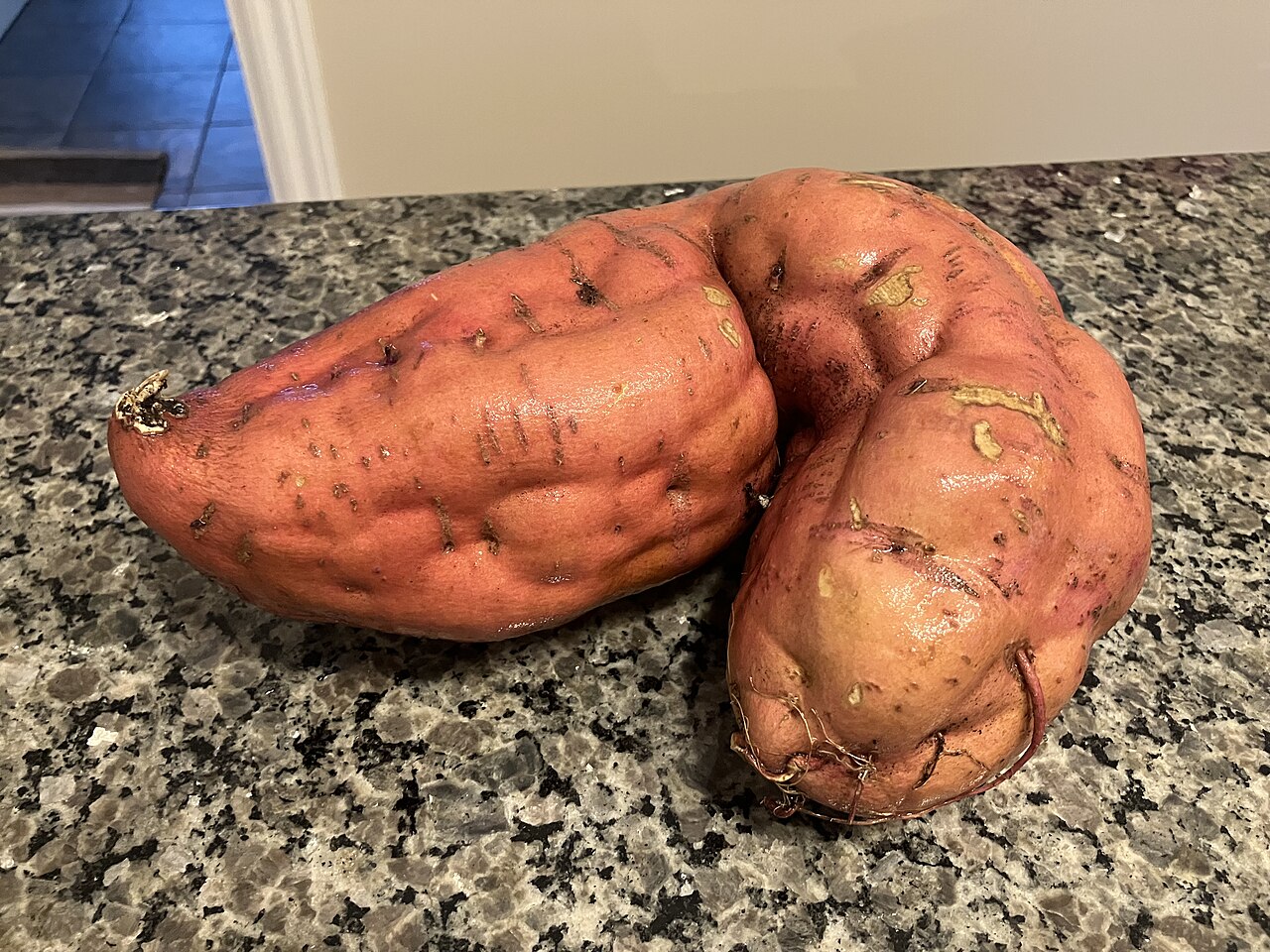
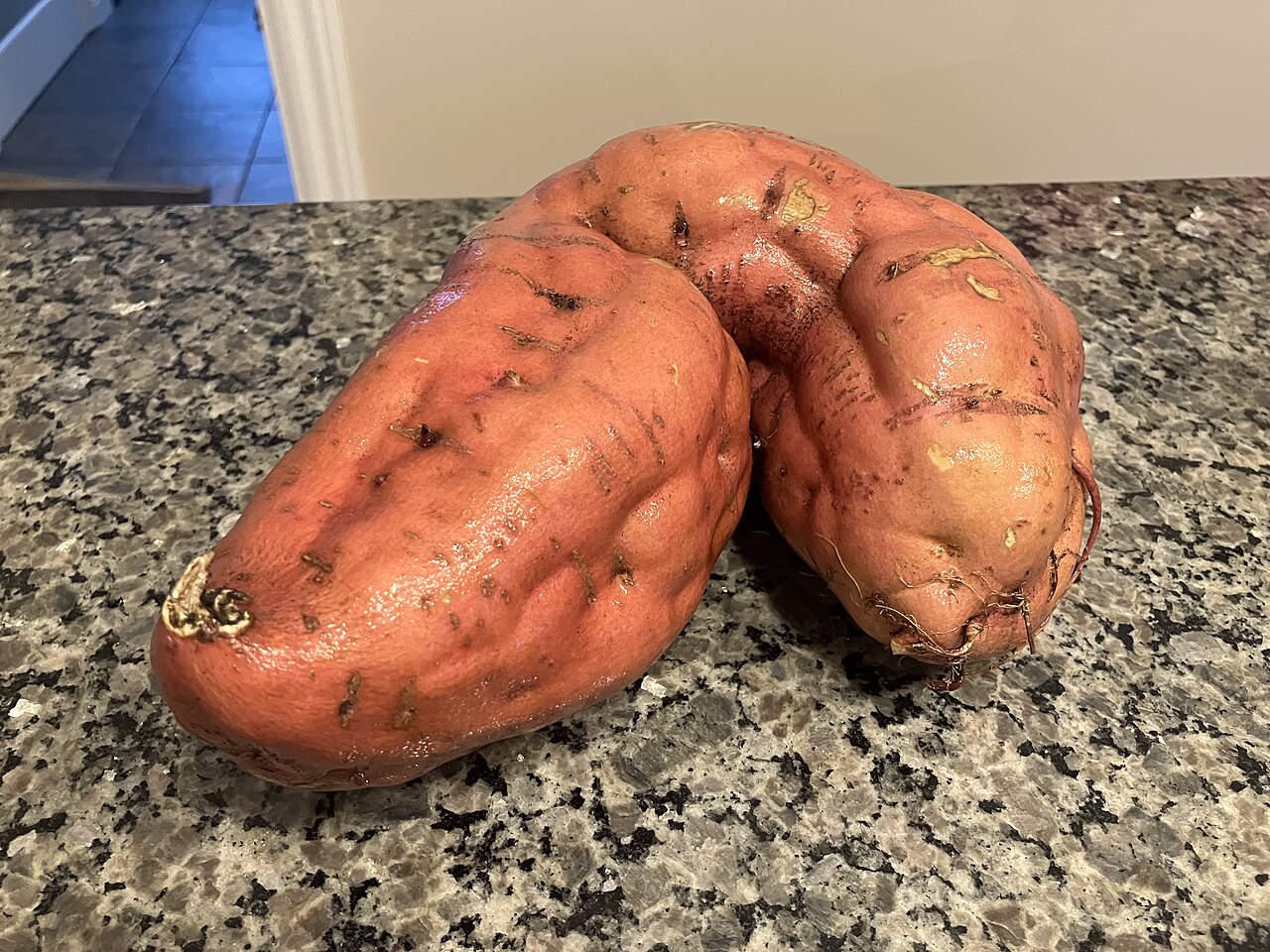
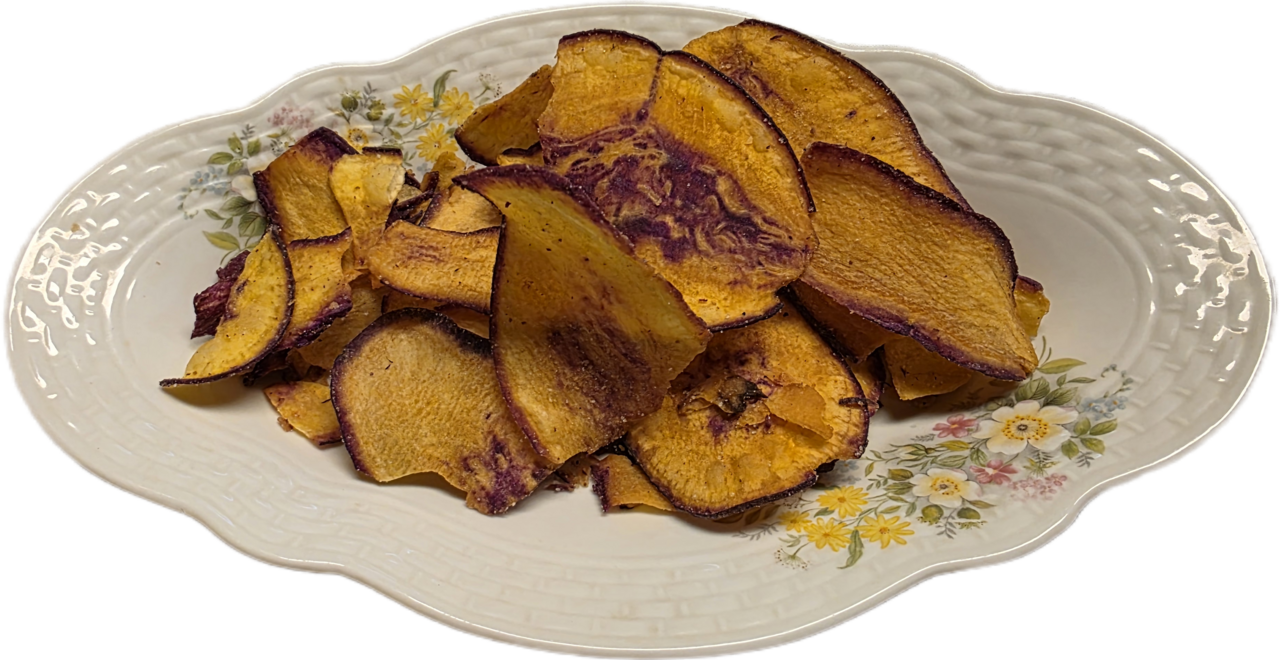
The edible tuberous root is long and tapered, with smooth skin in colors ranging from yellow, orange, red, brown, purple, to beige. Its flesh can be beige, white, red, pink, violet, yellow, orange, or purple. Cultivars with white or pale yellow flesh are less sweet and moist than those with red, pink, or orange flesh. Young shoots and leaves are also eaten as greens. Although darker sweet potatoes are often called yams in parts of North America, they are only distantly related to true yams, which are monocots in the order Dioscoreales; sweet potatoes and potatoes are also distantly related, both in the order Solanales.
The sweet potato originated in South America, in present-day Ecuador. Domestication occurred in either Central or South America, with domesticated sweet potatoes present in Central America at least 5,000 years ago, possibly originating between Mexico’s Yucatán Peninsula and Venezuela’s Orinoco River mouth. The cultigen likely spread to the Caribbean and South America by 2500 BCE. The closest wild relative is *Ipomoea trifida*, a diploid; the sweet potato itself arose from an initial cross between a tetraploid and another diploid parent, followed by a second complete genome duplication. The oldest known radiocarbon-dated remains, from caves in Peru’s Chilca Canyon, date to 8080 ± 170 BC.
The cultivated sweet potato’s genome contains DNA sequences from *Agrobacterium* (specifically related to *Rhizobium rhizogenes*), with genes actively expressed by the plant. These T-DNA transgenes are absent in closely related wild relatives. Studies suggest the genome evolved over millennia, with domestication taking advantage of these natural genetic modifications, making sweet potatoes the first known naturally transgenic food crop.
Before Europeans arrived in the Americas, sweet potato was grown in Polynesia, spread by vine cuttings rather than seeds. It has been radiocarbon-dated in the Cook Islands to 1210–1400 CE. A common hypothesis is that Polynesians brought a vine cutting to central Polynesia after traveling to South America and back, spreading it across Polynesia to Easter Island, Hawaii, and New Zealand. Genetic similarities between Polynesian peoples and indigenous Americans, including the Zenú of present-day Colombia’s Pacific coast, suggest Polynesians may have visited South America and taken sweet potatoes before European contact. Some cultivars of *I. batatas* are grown as ornamental plants, called tuberous morning glory, and the term "yam" is sometimes used for sweet potatoes in North America.
- Scientific name
- Ipomoea batatas
- Family
- Convolvulaceae
- Origin
- Tropical regions of South America (modern Ecuador)
- Type
- Herbaceous perennial vine
- Edible parts
- Tuberous roots, young shoots, and leaves
- Notable trait
- First known example of a naturally transgenic food crop
Lore & Background
The sweet potato is a herbaceous perennial vine with alternate triangle-shaped or palmately lobed leaves and medium-sized sympetalous flowers. Its stems crawl on the ground and form adventitious roots at the nodes. The tuberous root is long and tapered, with smooth skin ranging in color from yellow, orange, red, brown, purple, and beige, while the flesh varies from beige through white, red, pink, violet, yellow, orange, and purple. Cultivars with white or pale yellow flesh are less sweet and moist than those with red, pink, or orange flesh. The sweet potato originates in South America in present-day Ecuador, with domestication occurring only in South America (Peru-Ecuador region), not in Central America. In Central America, domesticated sweet potatoes were present at least 4,000 years ago. The genome of cultivated sweet potatoes contains sequences of DNA from Agrobacterium, with genes actively expressed, making it the first known naturally transgenic food crop. Before European arrival, sweet potato was grown in Polynesia, spread by vine cuttings. A common hypothesis is that Polynesians brought cuttings from South America. Some have noted similarities between words for sweet potato in Polynesian languages and South American languages like Quechua and Aymara, but mainstream linguistic evidence does not confirm a direct shared cognate, so this remains a debated point rather than established fact.
Reader's Guide
The sweet potato is significant as a staple food in many parts of the world, providing a starchy, sweet-tasting tuberous root that is cultivated in numerous varieties with diverse skin and flesh colors. Its domestication history spans at least 5,000 years in Central America, with evidence of pre-Columbian dispersal to Polynesia, likely via human contact between South America and the Pacific islands. The plant's genome contains natural transgenes from Agrobacterium, making it a unique example of a naturally transgenic crop, which has implications for understanding plant evolution and domestication. The sweet potato's introduction to Europe, Asia, and the Pacific through the Columbian exchange and subsequent colonial networks helped establish it as a global crop, particularly important in preventing famines in regions like Japan and Korea. Its taxonomic distinction from the common potato and true yams is often confused in North America, where darker sweet potatoes are called yams, but botanically they are distant relatives. The sweet potato's role in early transoceanic contact and its genetic legacy continue to be subjects of research and scholarly debate.
Did You Know?
- The sweet potato is one of the few crop plants of major importance among the approximately 50 genera and more than 1,000 species of Convolvulaceae—alongside water spinach (Ipomoea aquatica).
- The genome of cultivated sweet potatoes contains sequences of DNA from Agrobacterium, making it the first known example of a naturally transgenic food crop.
- Similarities between words for sweet potato in Polynesian and South American languages have been noted, but mainstream linguistic evidence does not confirm a direct shared cognate.
Gallery

Frequently Asked Questions
What is the sweet potato?
The sweet potato (Ipomoea batatas) is a herbaceous perennial vine grown for its large, starchy, sweet-tasting tuberous roots. It serves as a staple root vegetable across many tropical regions of the world.
Where does the sweet potato originate from?
The sweet potato is native to the tropical lowlands of South America, specifically in the area of modern-day Ecuador.
What parts of the sweet potato plant are edible?
The tuberous roots are the primary food source, but the young shoots and leaves are also harvested and eaten.
What plant family does the sweet potato belong to?
It is classified in Convolvulaceae, the morning glory family, and stands out as one of the very few major crop plants among that family's roughly 50 genera and over 1,000 species.
What makes the sweet potato notable among crops?
It is recognized as the first known example of a naturally transgenic food crop, a distinction that sets it apart in agricultural history.
More in Plants & Crops 1-17
Spotted an error? Know more?
This is a living reference — every entry is fact-audited, and reader corrections feed straight into our audit queue. Suggest an edit · See this site's audit record