Turnip
A root vegetable with white flesh, domesticated in Central Asia, grown worldwide for food and livestock feed.

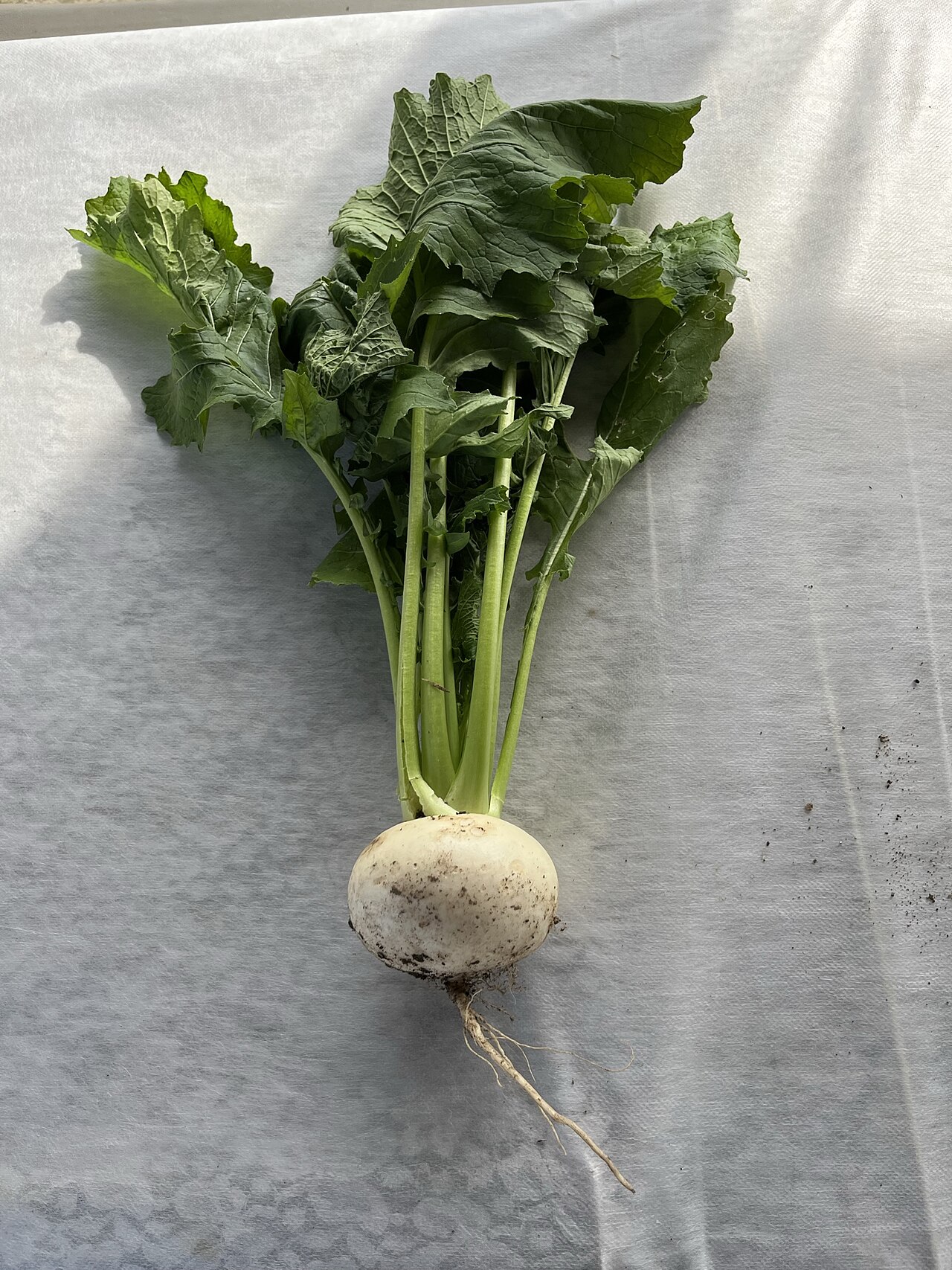
Eric Polk · CC BY-SA 4.0
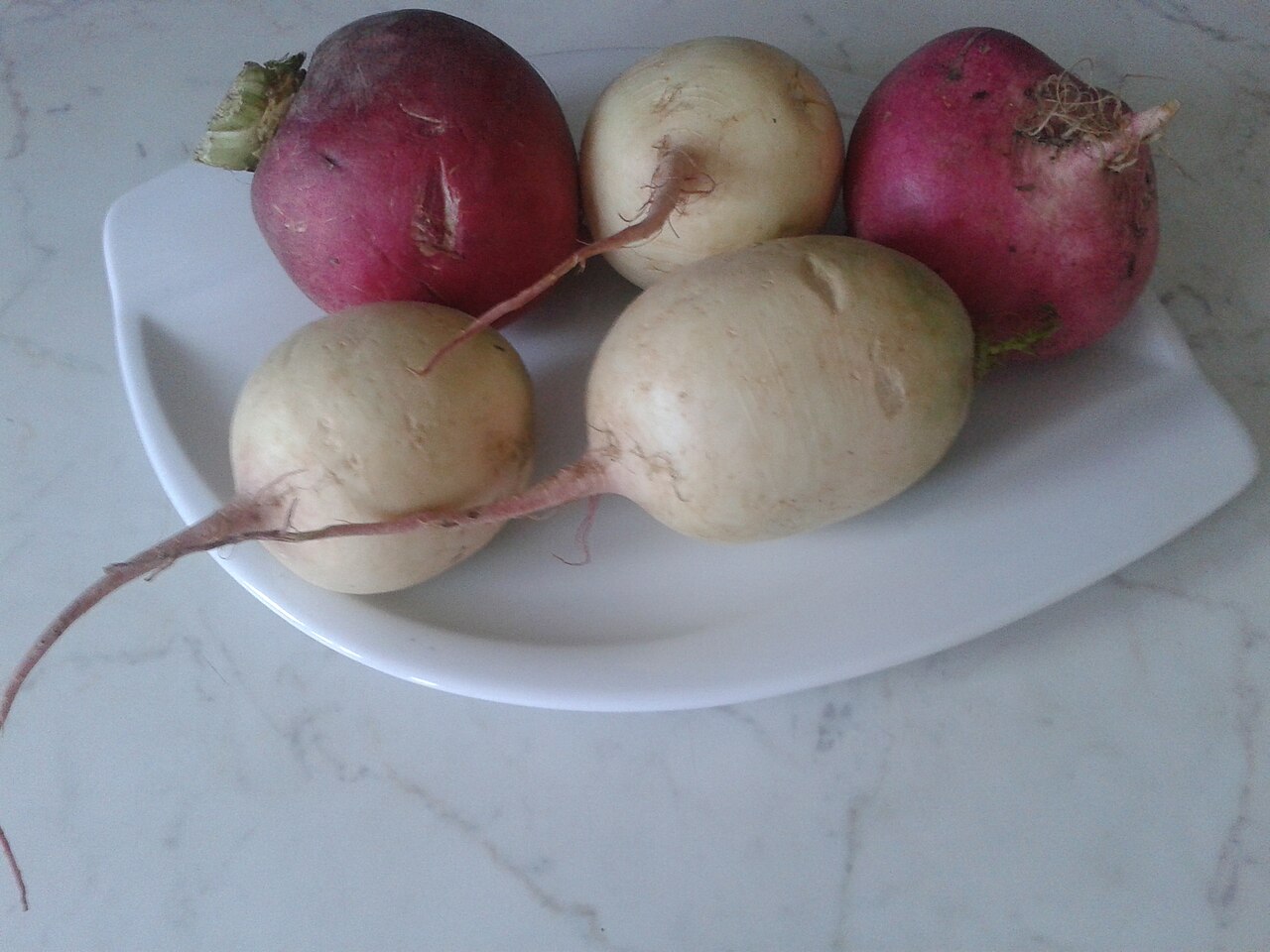
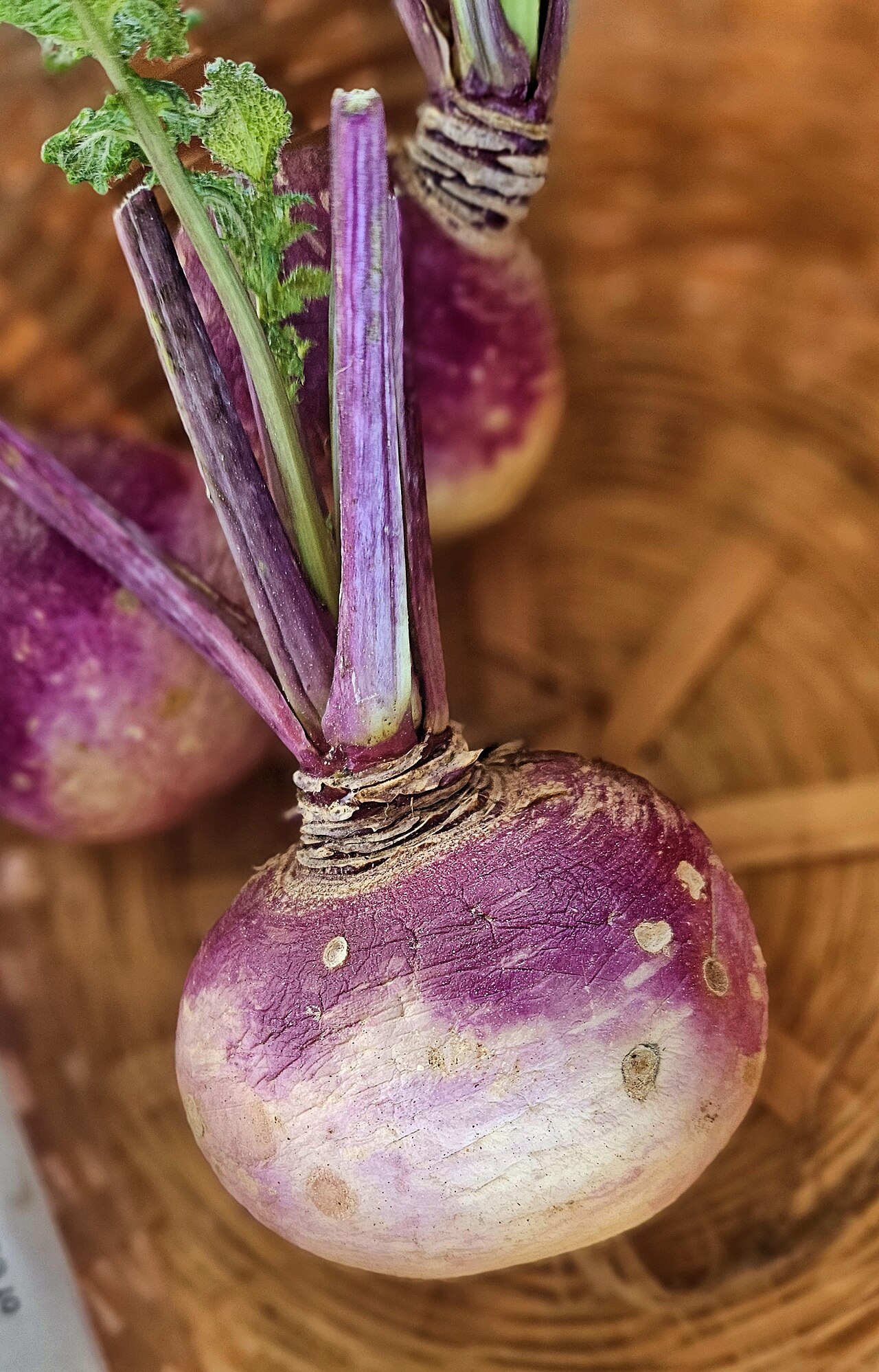
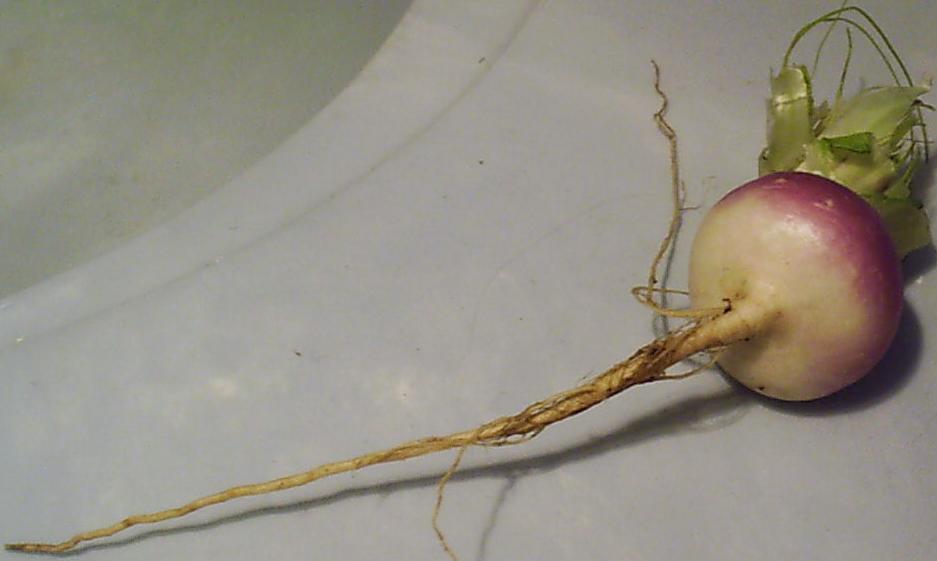
The turnip or white turnip (Brassica rapa subsp. rapa) is a root vegetable commonly grown in temperate climates worldwide for its white, fleshy taproot. Small, tender varieties are grown for human consumption, while larger varieties are grown as feed for livestock. The name turnip used in many regions may also be used to refer to swede (or neep or rutabaga), which is a different but related vegetable.
- Scientific name
- Brassica rapa subsp. rapa
- Type
- Root vegetable
- Domestication origin
- Central Asia, several thousand years ago
- Notable for
- Four-year crop rotation; food for poor in antiquity; heraldic charge
Lore & Background
Edible turnips were domesticated in Central Asia several thousand years ago. They later spread to Europe and East Asia, becoming an important food in the Hellenistic and Roman world. Among Jews in antiquity, the turnip was regarded as a food of the poor. The turnip later spread to China, and reached Japan by 700 CE. Turnips were an important crop in the cuisine of Antebellum America, grown for their greens as well as the roots. In England around 1700, Charles 'Turnip' Townshend promoted the use of turnips in a four-year crop-rotation system. In the Austrian region of Wildschönau, farmers produce a kind of schnaps called Krautinger from a variation of Brassica rapa subsp. rapa, granted permission under Empress Maria Theresia in the 18th century. The turnip is an old vegetable charge in heraldry; it was used by Leonhard von Keutschach, prince-archbishop of Salzburg, and appears in the arms of the former municipality of Kiikala, Finland.
Reader's Guide
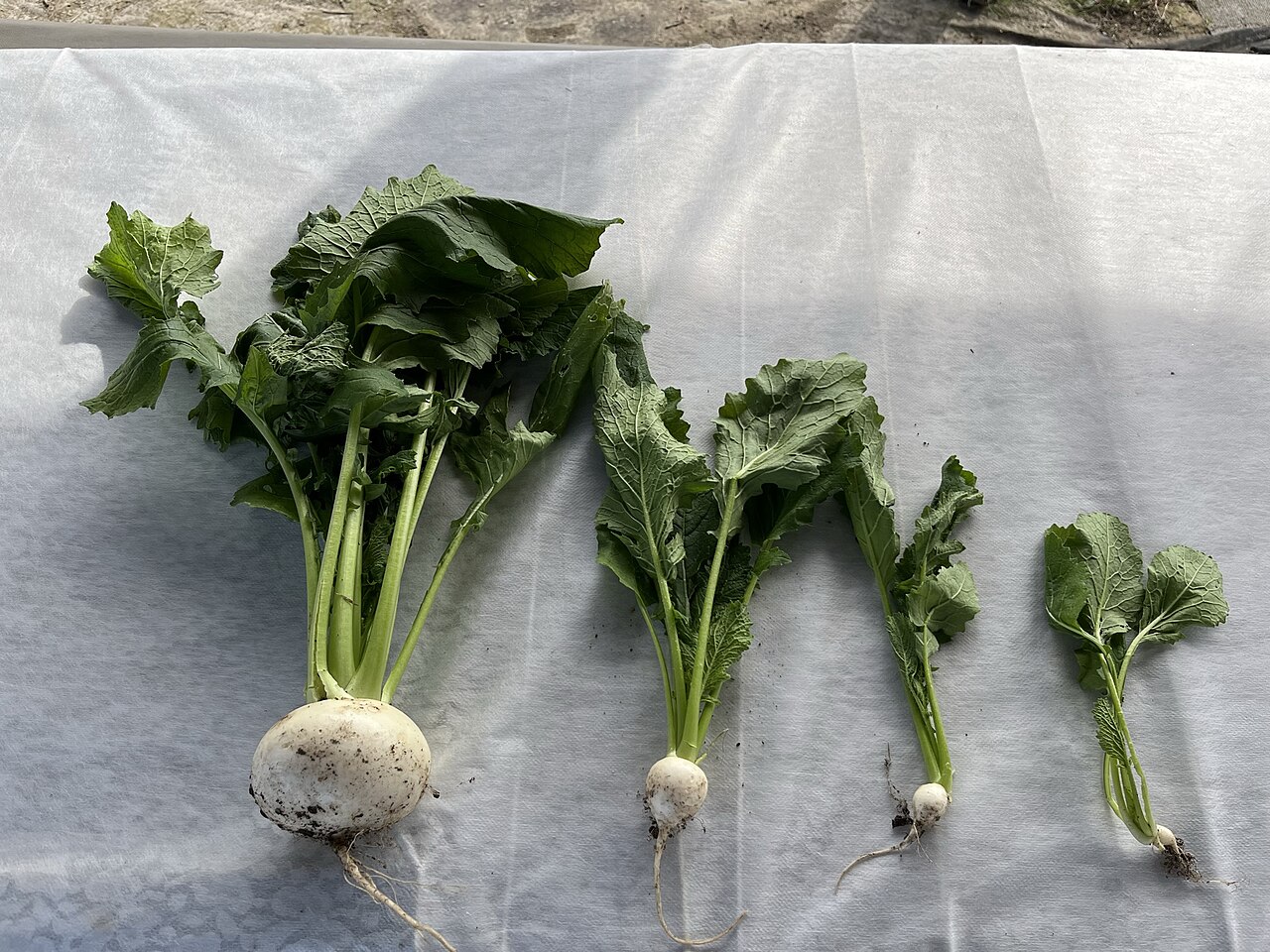
Turnips grow best in cool weather; hot temperatures cause the roots to become woody and bad-tasting. They are typically planted in spring in cold-weather climates (growing season 3–4 months), in late summer for a second fall crop in temperate climates (5–6 months), or in fall in warm-weather climates (7 or more months). Average time from planting to harvest is 55–60 days. Turnips can also be grown in controlled-environmental agriculture using vertical farming techniques, though larger grow cups are needed. As a biennial plant, the root spends the first year growing and storing nutrients, and the second year flowers, produces seeds, and dies. In areas with less than seven-month growing seasons, roots must be pulled and stored over winter, then set back in ground in spring to complete the lifecycle.
Did You Know?
- The origin of the word 'turnip' is uncertain, but it may be a compound of 'turn' (as in turned on a lathe) and 'neep', from Latin napus.
- Boiled turnip greens are a rich source of vitamin K (350% DV) and also contain significant vitamin A, vitamin C, and folate.
- In Scottish and some other English dialects, 'turnip' can refer to rutabagas (swedes), which are larger with yellow flesh, while turnips are smaller with white flesh.
- The turnip is an old vegetable charge in heraldry, used by Leonhard von Keutschach, prince-archbishop of Salzburg.
Gallery
Frequently Asked Questions
What is a turnip?
A turnip is a root vegetable in the species Brassica rapa subsp. rapa, grown across temperate regions worldwide for its fleshy white taproot. Smaller, tender cultivars are typically eaten by people, while larger ones are fed to livestock.
Where and when were turnips first domesticated?
Turnips were first domesticated in Central Asia several thousand years ago. They have since been cultivated in virtually every temperate climate on the planet.
What is the scientific name of a turnip?
Its full taxonomic name is Brassica rapa subsp. rapa, placing it squarely in the brassica family. The name 'turnip' is also sometimes used loosely for the related swede or rutabaga.
Who is credited with popularizing turnip farming in England?
Charles 'Turnip' Townshend, an early-1700s English politician, championed the turnip as a cornerstone of a four-year crop rotation system. His advocacy helped improve soil fertility and cut down on fallow land across English agriculture.
Why are turnips considered historically and culturally significant?
In antiquity they served as a staple food for the poor, and they still appear as a heraldic charge on various coats of arms. Their hardiness and versatility make them one of the most widely grown root vegetables globally.
More in Plants & Crops 1-17
Spotted an error? Know more?
This is a living reference — every entry is fact-audited, and reader corrections feed straight into our audit queue. Suggest an edit · See this site's audit record