Alexei Morozov
Russian forward who scored on his first NHL shift.
Last updated

Акутагава · CC BY-SA 3.0
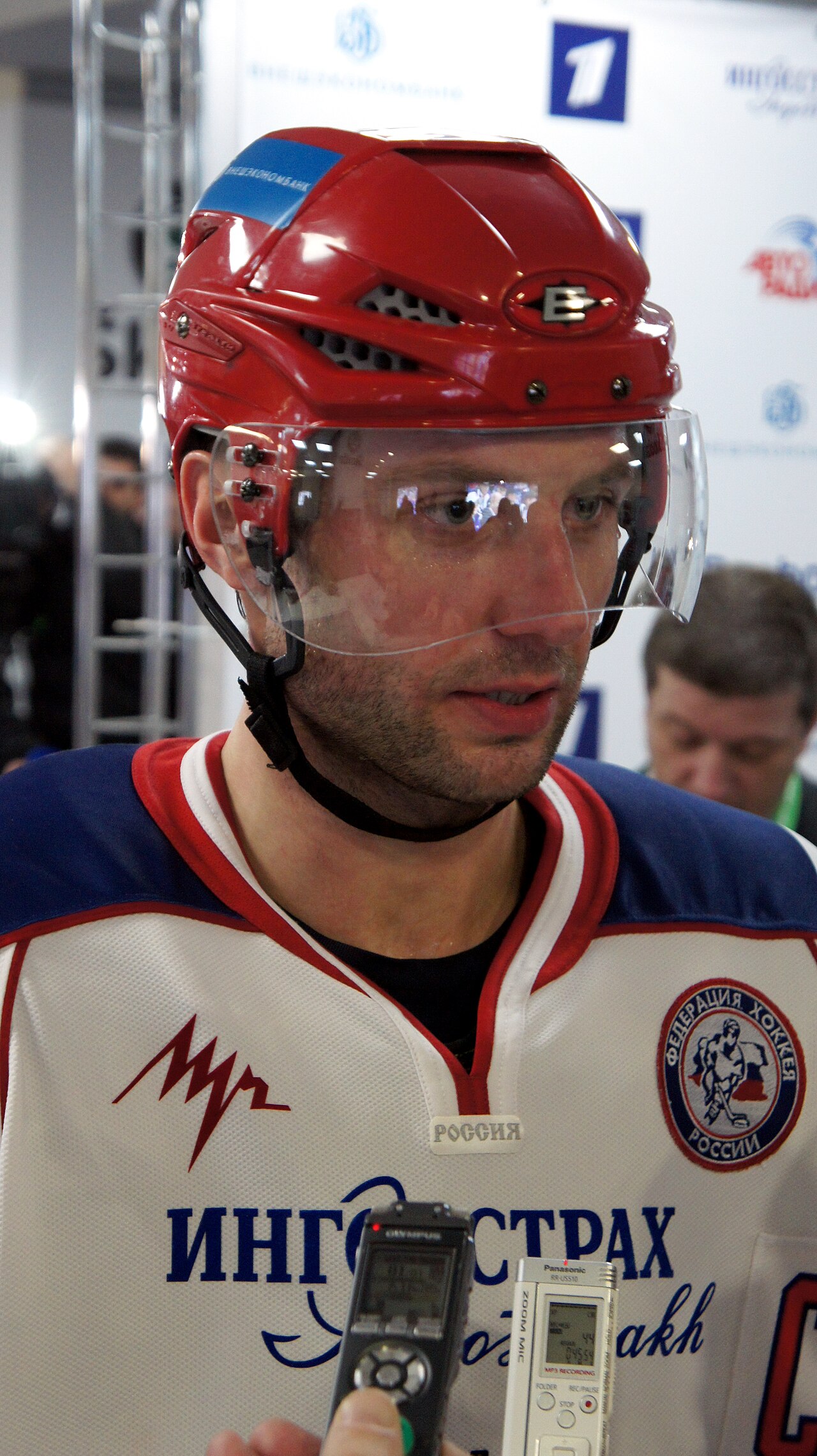
Alexei Alekseyevich Morozov is a Russian former professional ice hockey player who played seven seasons for the Pittsburgh Penguins in the National Hockey League (NHL). He later played in the Kontinental Hockey League (KHL) with Ak Bars Kazan and CSKA Moscow, and currently serves as the president of the KHL. Morozov is notable for scoring on his first shot on his first shift of his first NHL game, a feat he shared with Penguins legend Mario Lemieux.
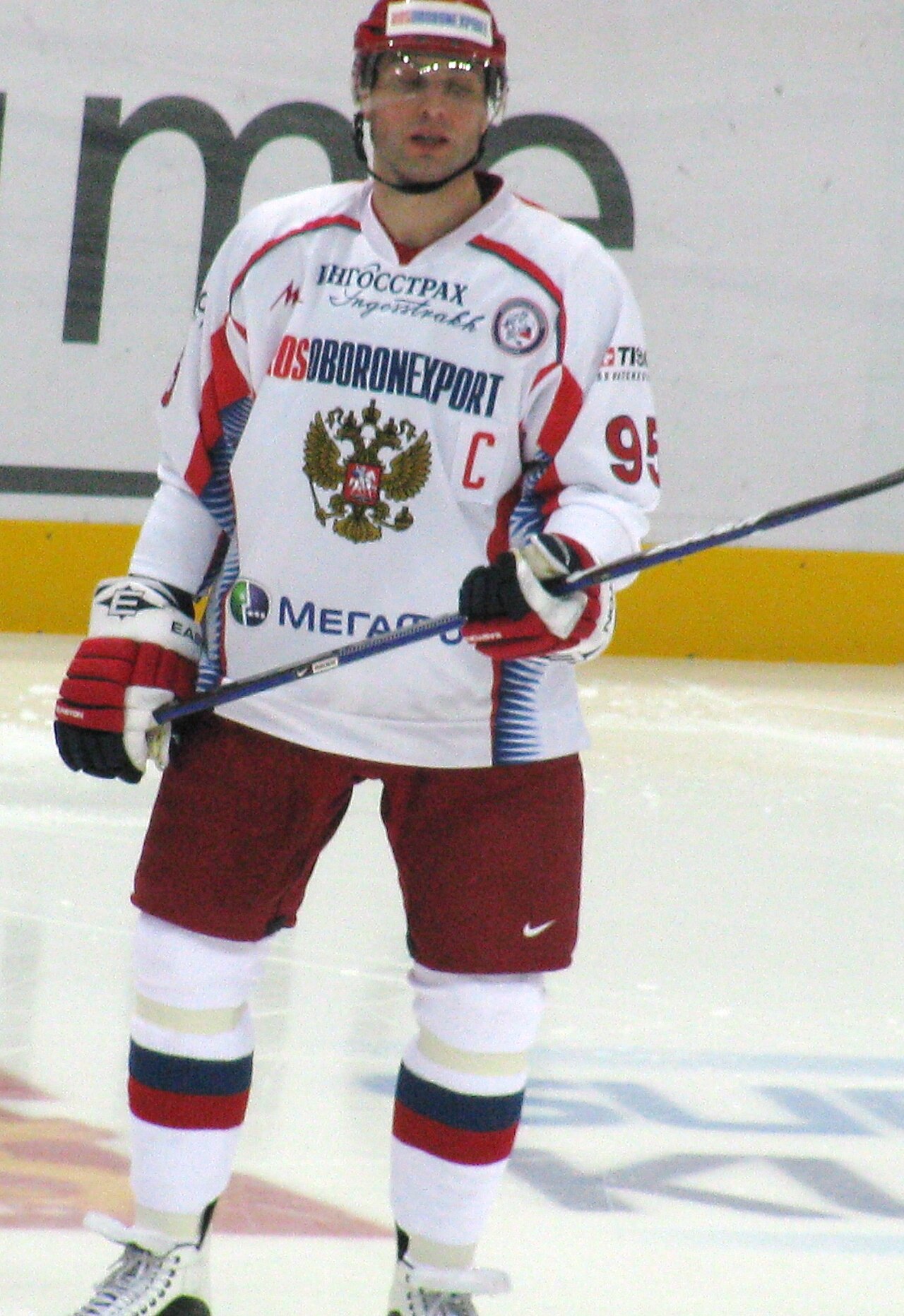
Lore & Background
Morozov was drafted by the Pittsburgh Penguins in the first round, 24th overall, in the 1995 NHL entry draft but remained in Russia until the 1997–98 season. He earned the nickname 'The Devil Killer' for his success against the New Jersey Devils; goaltender Martin Brodeur stated in interviews that he had nightmares of Morozov and that Morozov had over 25 percent of his career goals against him.
Brodeur described Morozov's shots as unpredictable, saying he could never catch the puck cleanly and that Morozov was 'in his head.' Despite this, Morozov played much of his early NHL career on the third and fourth lines due to the depth of a Penguins team featuring Mario Lemieux, Jaromír Jágr, Alexei Kovalev, Martin Straka, and Robert Lang. During the 2002–03 season, the KLM line of Kovalev, Lemieux, and Morozov led the Penguins to a top-three conference record early in the season before injuries and trades dismantled it; Morozov suffered a fractured wrist that ended his season after 25 points in 27 games. The following season, he led all Penguins forwards in points and scored five game-winning goals, including two in the final three games.
The Devil Killer: Morozov's NHL Years in Pittsburgh
Drafted 24th overall by the Pittsburgh Penguins in the 1995 NHL entry draft, Morozov did not join the club until the 1997–98 season, where he scored on his very first shot, first shift, and first game — a debut echoing franchise legend Mario Lemieux. Over seven seasons in Pittsburgh, he logged 451 games, 84 goals, and 219 points.
His most enduring reputation, however, came from a singular rivalry: his devastating effectiveness against the New Jersey Devils earned him the nickname "The Devil Killer." Goaltender Martin Brodeur told Fox Sports Net he had nightmares about Morozov before Penguins matchups, and later told ESPN's Dan Patrick that Morozov had scored over 25 percent of his career goals against him, calling him a player who was "in my kitchen, in my head." Despite this, Morozov spent much of his early NHL years on the third and fourth lines behind a roster stacked with Lemieux, Jagr, Kovalev, Straka, and Lang. His breakthrough arrived in 2002–03 on the KLM line, where he posted 25 points in 27 games before a fractured wrist ended his season. The following year, he led all Penguins forwards in points and delivered five game-winning goals, including two in the final three games.
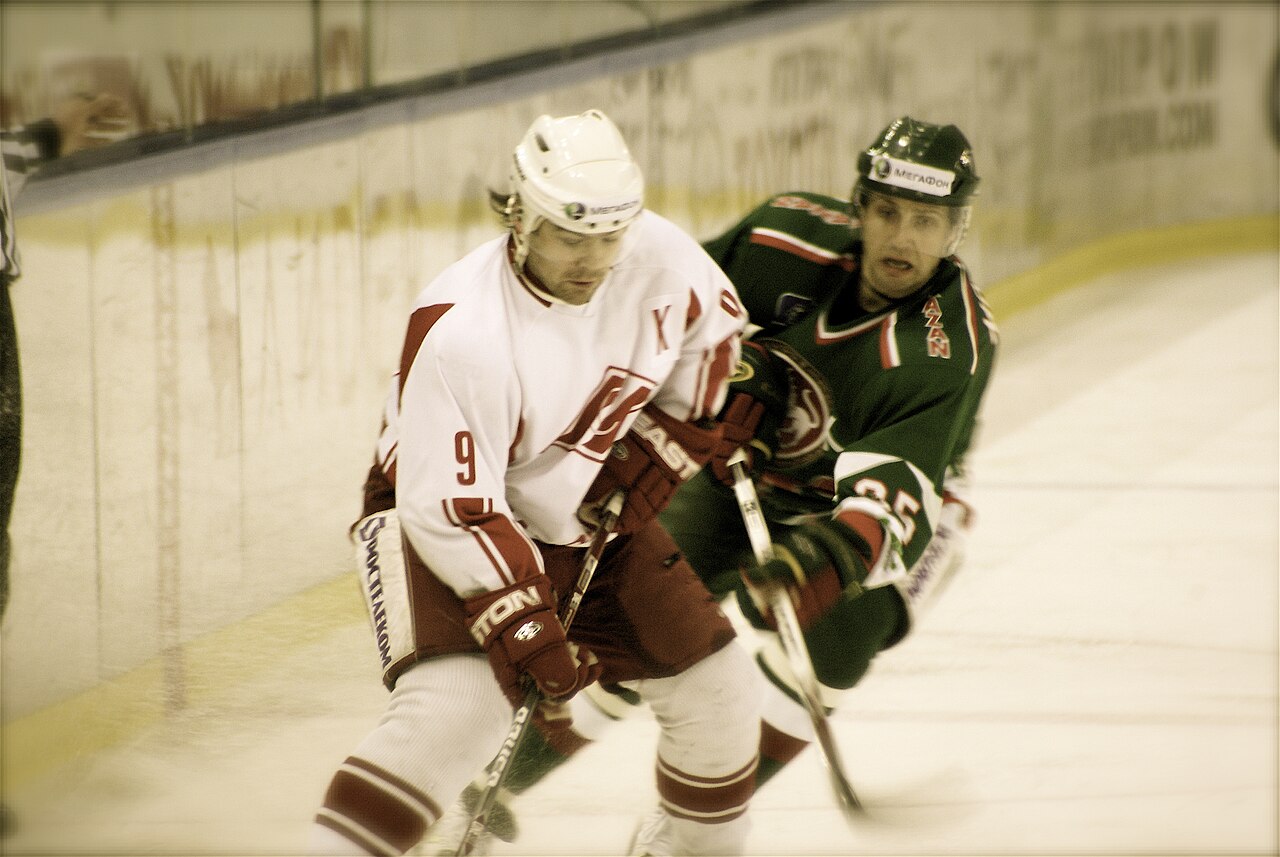
Ak Bars Kazan and the Legend of the ZZM Line
During the 2004–05 NHL lockout, Morozov returned to Russia and joined Ak Bars Kazan in the Russian Superleague, where he would remain for the rest of his playing career. Despite a roster loaded with NHL-caliber stars including Vincent Lecavalier, Dany Heatley, Ilya Kovalchuk, Brad Richards, and Nik Antropov, it was Morozov who led the club in scoring with 46 points that first season. The 2005–06 campaign was even more dominant: he led the entire league in goals with 23, finished second in points behind Sergei Mozyakin, and guided Kazan to its first championship in nearly a decade. In the playoffs, he amassed 26 points in just 13 games to earn the Playoff MVP award and qualified for six additional league honors, winning two.
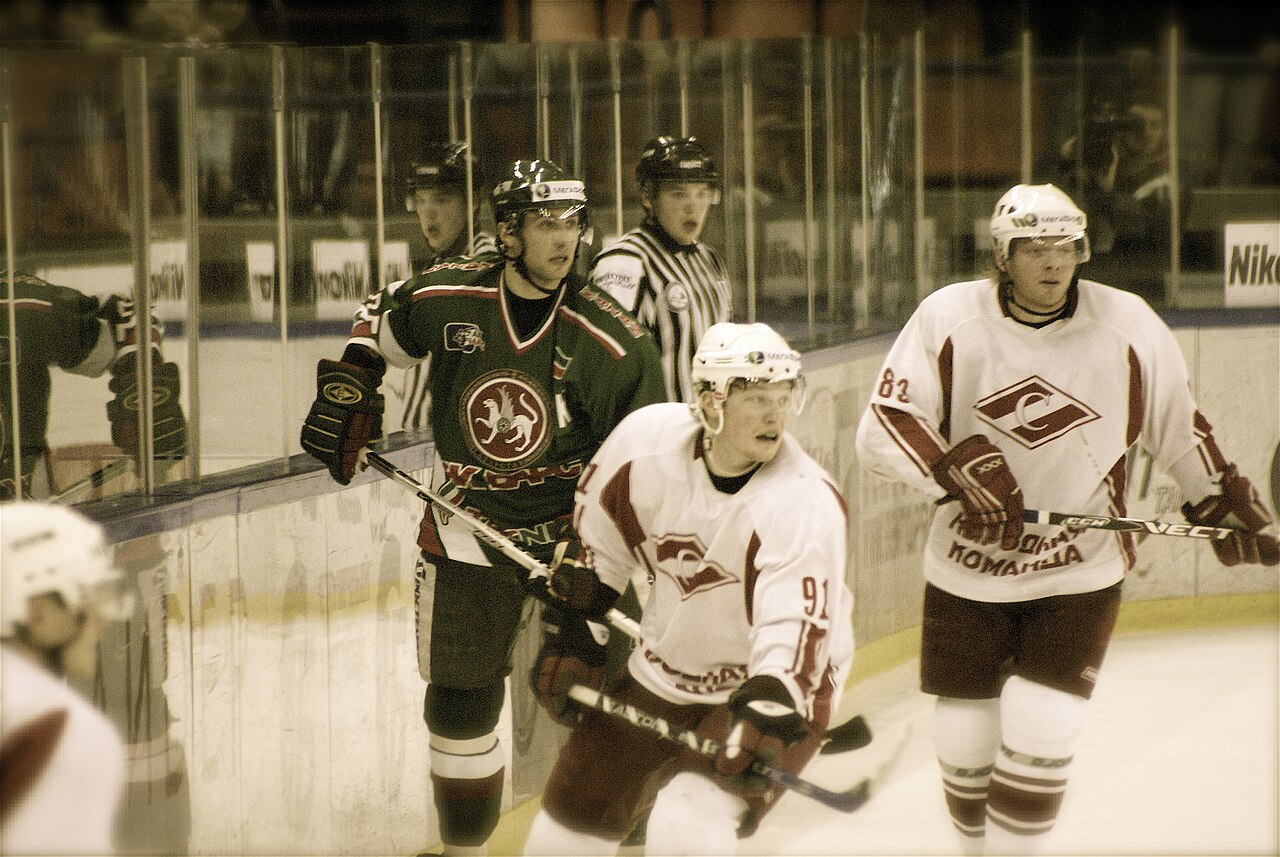
That season also saw the emergence of the ZZM Line — Morozov alongside Sergei Zinovjev and Danis Zaripov — who combined for 51 points in 13 playoff games. Widely regarded as the finest European line since the Cold War era, ZZM helped Ak Bars capture one RSL title, one KHL championship, and one European Cup, while also contributing to Team Russia's two World Championship golds. In 2006–07, Morozov set a new RSL record with 83 points, becoming the first and only player in the league's history to surpass 80, breaking Sergei Makarov's previous mark of 79.
Captain of a Golden Era: National Team Leadership
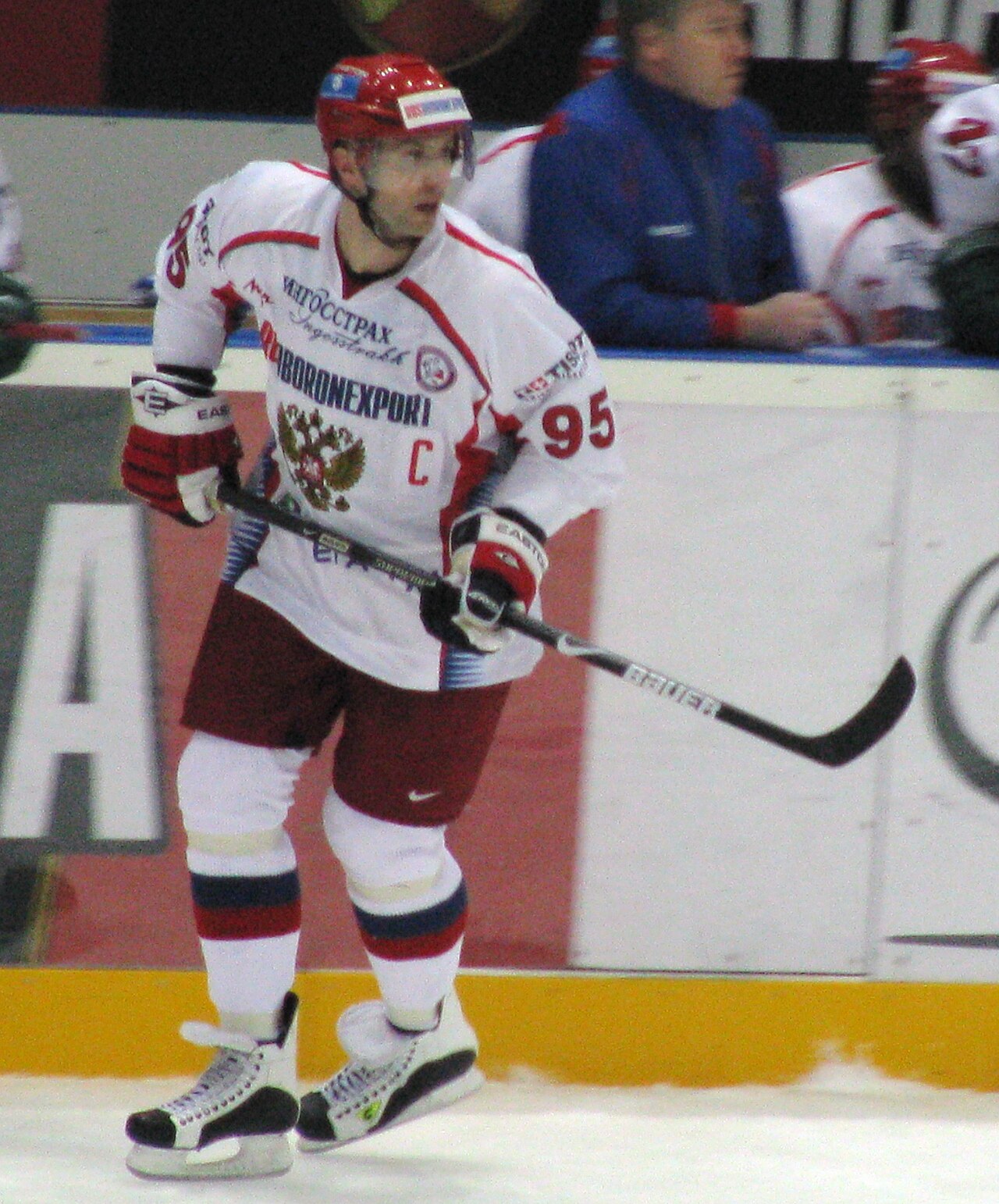
From 2007 to 2011, Morozov carried the captain's "C" on the Russian national team, a role that placed him at the helm during one of the most decorated stretches in the program's history. Under his leadership, Team Russia collected two gold medals, one silver, and one bronze at the World Championships. Notably, during one of those silver-medal campaigns, Morozov was absent due to injury, and Ilya Kovalchuk stepped in to captain the squad in his stead.
His international pedigree stretched even further back: during his NHL rookie season in 1997–98, he earned an Olympic silver medal as part of the Russian Olympic team, proving his value on the world stage well before his domestic career fully took shape. When his captaincy ended in 2012, the baton passed to Ilya Nikulin, a close teammate from their Ak Bars Kazan days. Morozov's tenure as captain spanned a period when Russian hockey was at its competitive peak, and his leadership — both on and off the ice — was a defining thread through that era of sustained international success.
From Pee-Wee to the Boardroom: A Life in Hockey
Morozov's story began long before the NHL or the KHL: as a youth, he represented a minor Moscow ice hockey team at the 1991 Quebec International Pee-Wee Hockey Tournament, a formative experience that set him on a path spanning decades of competitive hockey. Born on 16 February 1977, he went on to play in the KHL with both Ak Bars Kazan and CSKA Moscow, cementing his identity as a cornerstone of Russian professional hockey.
His decision to forgo rejoining the NHL in 2006 — passing up the chance to reunite with compatriots Evgeni Malkin and Alexander Semin in Pittsburgh — in favor of pursuing back-to-back championships with Kazan spoke to a loyalty that defined his later career. The records he established, particularly his 83-point RSL season, and the ZZM Line's legacy as the most celebrated European trio since the Cold War, ensured his name remained etched in the sport's history. Today, as president of the Kontinental Hockey League, Morozov continues to shape the very competition in which he once excelled, transitioning from player to steward of the league's future.
Reader's Guide
Morozov's significance lies in his unique blend of NHL and international success, though his NHL career never fully matched his early potential. His nickname 'The Devil Killer' and Martin Brodeur's candid remarks about his effectiveness highlight a rare psychological impact on a Hall of Fame goaltender. After the 2004–05 NHL lockout, Morozov returned to Russia and became a dominant force in the Russian Superleague (RSL) and later the KHL, forming the ZZM Line with Sergei Zinovjev and Danis Zaripov. This line is regarded as one of the best European lines since the Cold War era, leading Ak Bars Kazan to an RSL championship, a KHL championship, a European Cup Championship, and helping Team Russia win two World Championship gold medals.
Morozov set an RSL record with 83 points in a season, a mark that stood as the league's highest before the RSL was replaced by the KHL. He also captained the Russian national team from 2007 to 2011, winning two gold medals, one silver (though he missed that tournament due to injury), and one bronze at the World Championships. His legacy includes serving as the president of the KHL, bridging his playing career into league leadership.
Career statistics and honours
Medals
- Silver Ice hockey at the 1998 Winter Olympics – Men's tournament
- Gold 2008 IIHF World Championship
- Gold 2009 IIHF World Championship
- Bronze 1996 World Junior Ice Hockey Championships
- Bronze 1997 World Junior Ice Hockey Championships
- Bronze 2007 IIHF World Championship
Regular season and playoffs
| Regular season | Playoffs | |||||||||||
|---|---|---|---|---|---|---|---|---|---|---|---|---|
| Season | Team | League | GP | G | A | Pts | PIM | GP | G | A | Pts | PIM |
| 1993–94 | Krylya Sovetov Moscow | IHL | 7 | 0 | 0 | 0 | 0 | 3 | 0 | 0 | 0 | 0 |
| 1993–94 | Krylia Sovetov–2 Moscow | RUS.2 | 49 | 15 | 11 | 26 | 30 | — | — | — | — | — |
| 1994–95 | Krylya Sovetov Moscow | IHL | 48 | 15 | 12 | 27 | 53 | 4 | 0 | 3 | 3 | 0 |
| 1995–96 | Krylya Sovetov Moscow | IHL | 47 | 13 | 9 | 22 | 26 | — | — | — | — | — |
| 1996–97 | Krylya Sovetov Moscow | RSL | 44 | 21 | 11 | 32 | 32 | 2 | 0 | 1 | 1 | 2 |
| 1997–98 | Krylya Sovetov Moscow | RSL | 6 | 2 | 1 | 3 | 4 | — | — | — | — | — |
| 1997–98 | Pittsburgh Penguins | NHL | 76 | 13 | 13 | 26 | 8 | 6 | 0 | 1 | 1 | 2 |
| 1998–99 | Pittsburgh Penguins | NHL | 67 | 9 | 10 | 19 | 14 | 10 | 1 | 1 | 2 | 0 |
| 1999–2000 | Pittsburgh Penguins | NHL | 68 | 12 | 19 | 31 | 14 | 5 | 0 | 0 | 0 | 0 |
| 2000–01 | Pittsburgh Penguins | NHL | 66 | 5 | 14 | 19 | 6 | 18 | 3 | 3 | 6 | 6 |
| 2001–02 | Pittsburgh Penguins | NHL | 72 | 20 | 29 | 49 | 16 | — | — | — | — | — |
| 2002–03 | Pittsburgh Penguins | NHL | 27 | 9 | 16 | 25 | 16 | — | — | — | — | — |
| 2003–04 | Pittsburgh Penguins | NHL | 75 | 16 | 34 | 50 | 24 | — | — | — | — | — |
| 2004–05 | Ak Bars Kazan | RSL | 58 | 20 | 26 | 46 | 30 | 4 | 0 | 1 | 1 | 2 |
| 2005–06 | Ak Bars Kazan | RSL | 51 | 23 | 26 | 49 | 69 | 13 | 13 | 13 | 26 | 8 |
| 2006–07 | Ak Bars Kazan | RSL | 53 | 34 | 49 | 83 | 36 | 14 | 2 | 15 | 17 | 6 |
| 2007–08 | Ak Bars Kazan | RSL | 57 | 30 | 33 | 63 | 34 | 10 | 4 | 7 | 11 | 8 |
| 2008–09 | Ak Bars Kazan | KHL | 49 | 32 | 39 | 71 | 22 | 21 | 8 | 11 | 19 | 12 |
| 2009–10 | Ak Bars Kazan | KHL | 50 | 26 | 23 | 49 | 24 | 18 | 5 | 7 | 12 | 6 |
| 2010–11 | Ak Bars Kazan | KHL | 53 | 21 | 35 | 56 | 24 | 9 | 5 | 4 | 9 | 3 |
| 2011–12 | Ak Bars Kazan | KHL | 53 | 21 | 29 | 50 | 24 | 5 | 4 | 2 | 6 | 6 |
| 2012–13 | Ak Bars Kazan | KHL | 51 | 12 | 26 | 37 | 20 | 18 | 6 | 9 | 15 | 4 |
| 2013–14 | CSKA Moscow | KHL | 38 | 13 | 10 | 23 | 30 | 4 | 0 | 0 | 0 | 0 |
| KHL/RSL/IHL totals | 665 | 283 | 329 | 612 | 424 | 125 | 47 | 73 | 120 | 56 | ||
| NHL totals | 451 | 84 | 135 | 219 | 98 | 39 | 4 | 5 | 9 | 8 | ||
International
| Year | Team | Event | Result | GP | G | A | Pts | PIM |
|---|---|---|---|---|---|---|---|---|
| 1995 | Russia | EJC | 4th | 5 | 3 | 2 | 5 | 6 |
| 1996 | Russia | WJC | Bronze | 7 | 5 | 3 | 8 | 2 |
| 1997 | Russia | WJC | Bronze | 6 | 5 | 3 | 8 | 6 |
| 1997 | Russia | WC | 4th | 9 | 3 | 3 | 6 | 2 |
| 1998 | Russia | OG | Silver | 6 | 2 | 2 | 4 | 0 |
| 1998 | Russia | WC | 5th | 4 | 0 | 3 | 3 | 2 |
| 2004 | Russia | WC | 10th | 6 | 1 | 1 | 2 | 4 |
| 2007 | Russia | WC | Bronze | 7 | 8 | 5 | 13 | 6 |
| 2008 | Russia | WC | Gold | 8 | 5 | 2 | 7 | 4 |
| 2009 | Russia | WC | Gold | 9 | 1 | 4 | 5 | 0 |
| 2010 | Russia | OG | 6th | 4 | 2 | 0 | 2 | 0 |
| 2011 | Russia | WC | 4th | 9 | 1 | 3 | 4 | 8 |
| Junior totals | 18 | 13 | 8 | 21 | 14 | |||
| Senior totals | 62 | 23 | 23 | 46 | 26 | |||
Tables copied from the source article, totals included as the source gives them: Wikipedia: Alexei Morozov (CC BY-SA 4.0). Wide tables scroll sideways.
Frequently Asked Questions
What were Alexei Morozov's NHL stats with Pittsburgh?
Across 451 games in a Penguins uniform, Morozov tallied 84 goals and 219 total points over his seven-season stint. He was a steady two-way forward for the organization throughout that run.
What is Alexei Morozov's nickname and what other honors does he hold?
During his playing days, Morozov was known by the nickname "The Devil Killer." He also earned a silver medal as a member of the 1998 Russian Olympic hockey team.
More in Pittsburgh Penguins Players
Test yourself
Three questions drawn from this entry’s sources. Pick an answer to check it.
Answers checked against the source article
Sources
Compiled from Wikipedia and the sources listed below. Text from Wikipedia is available under CC BY-SA 4.0; this entry is adapted from it.
- Wikipedia: Alexei Morozov (CC BY-SA 4.0).
- Statistics, medals and awards: the tables of the source article.
- Word definitions: the Codexery glossary, each quoted from its Wikipedia article.
Spotted an error? Know more?
Reader corrections go straight into our review queue. Suggest an edit · How this site is sourced