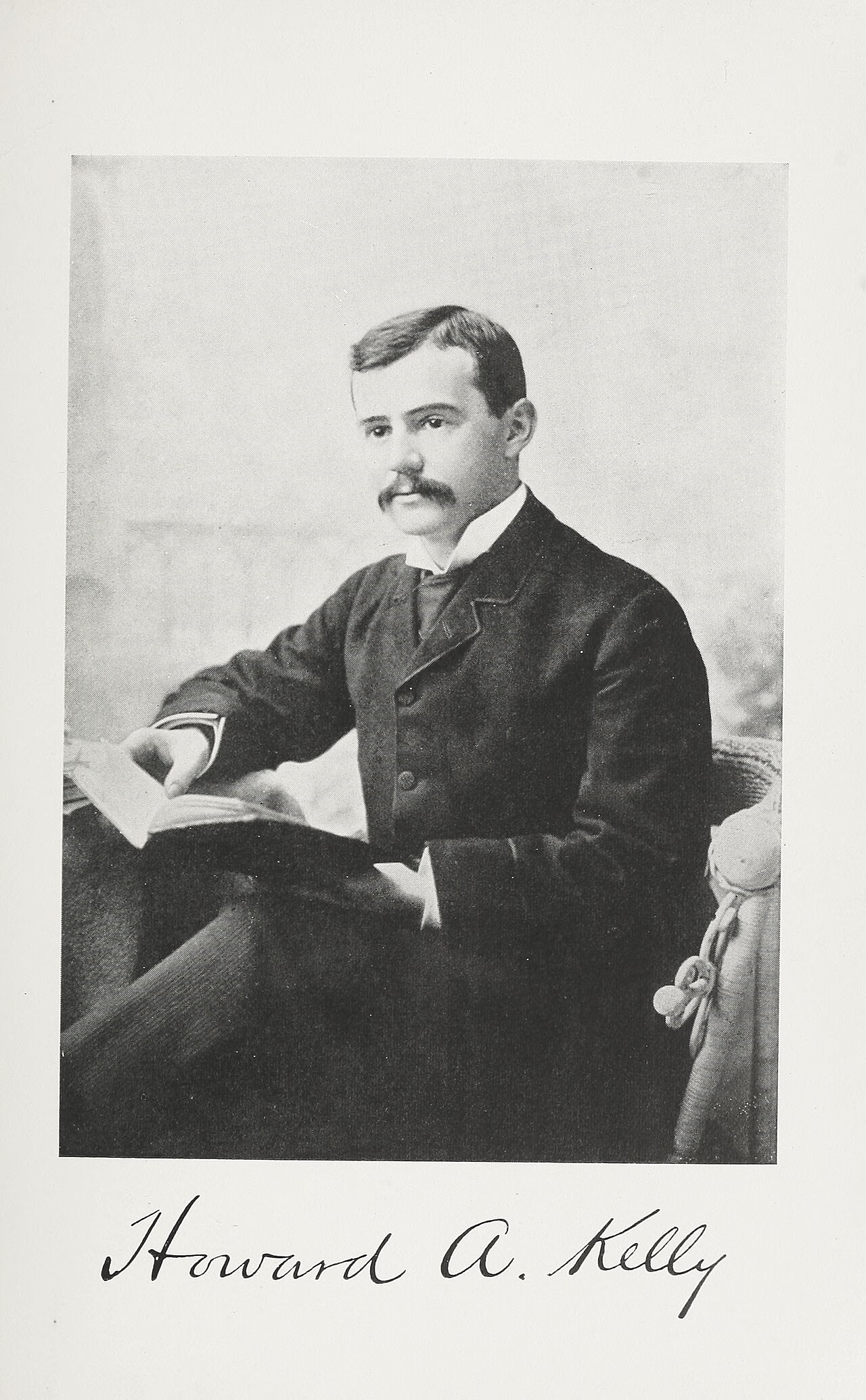
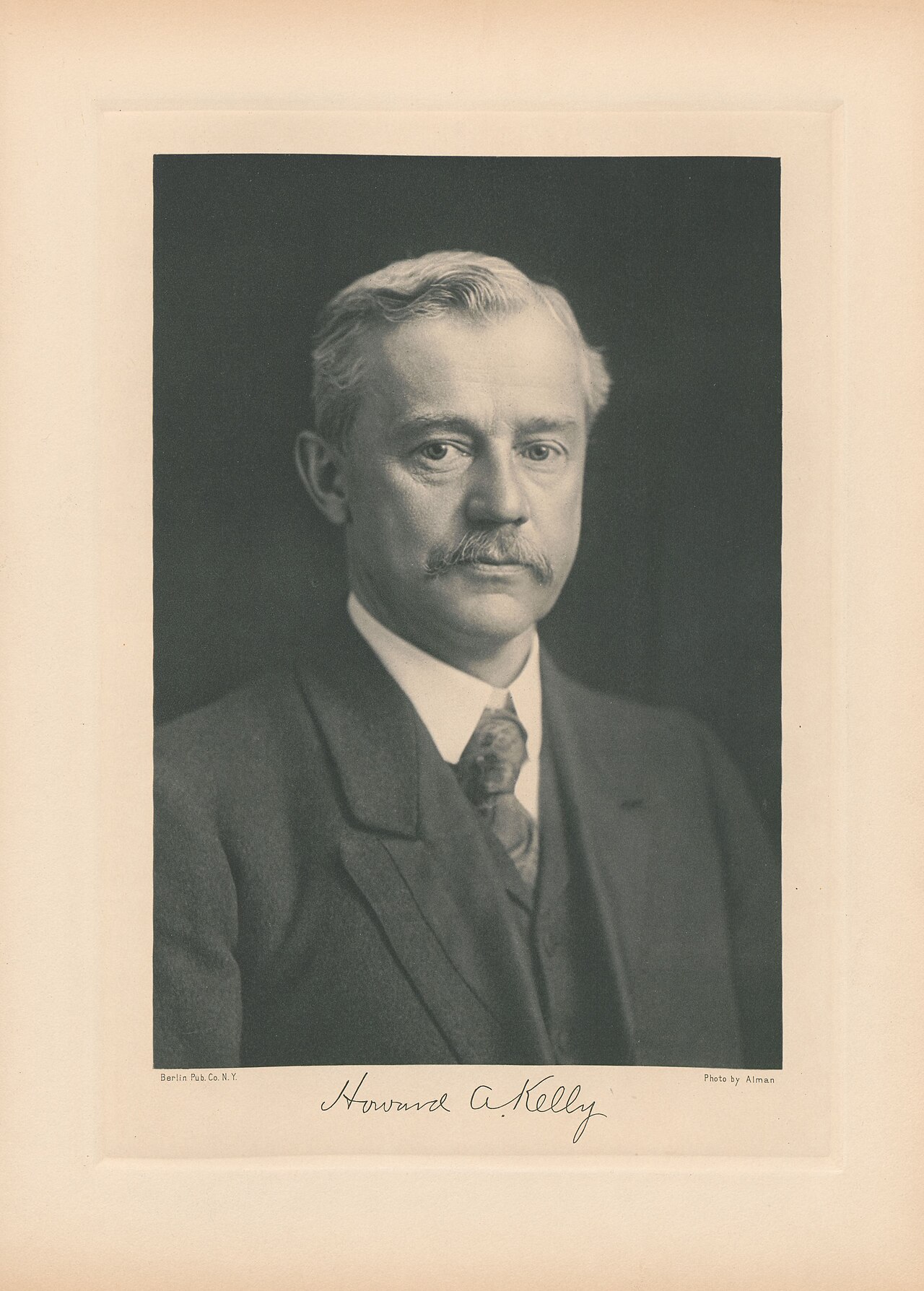
Howard Atwood Kelly
American gynecologist and one of the 'Big Four' founding professors of the Johns Hopkins School of Medicine.

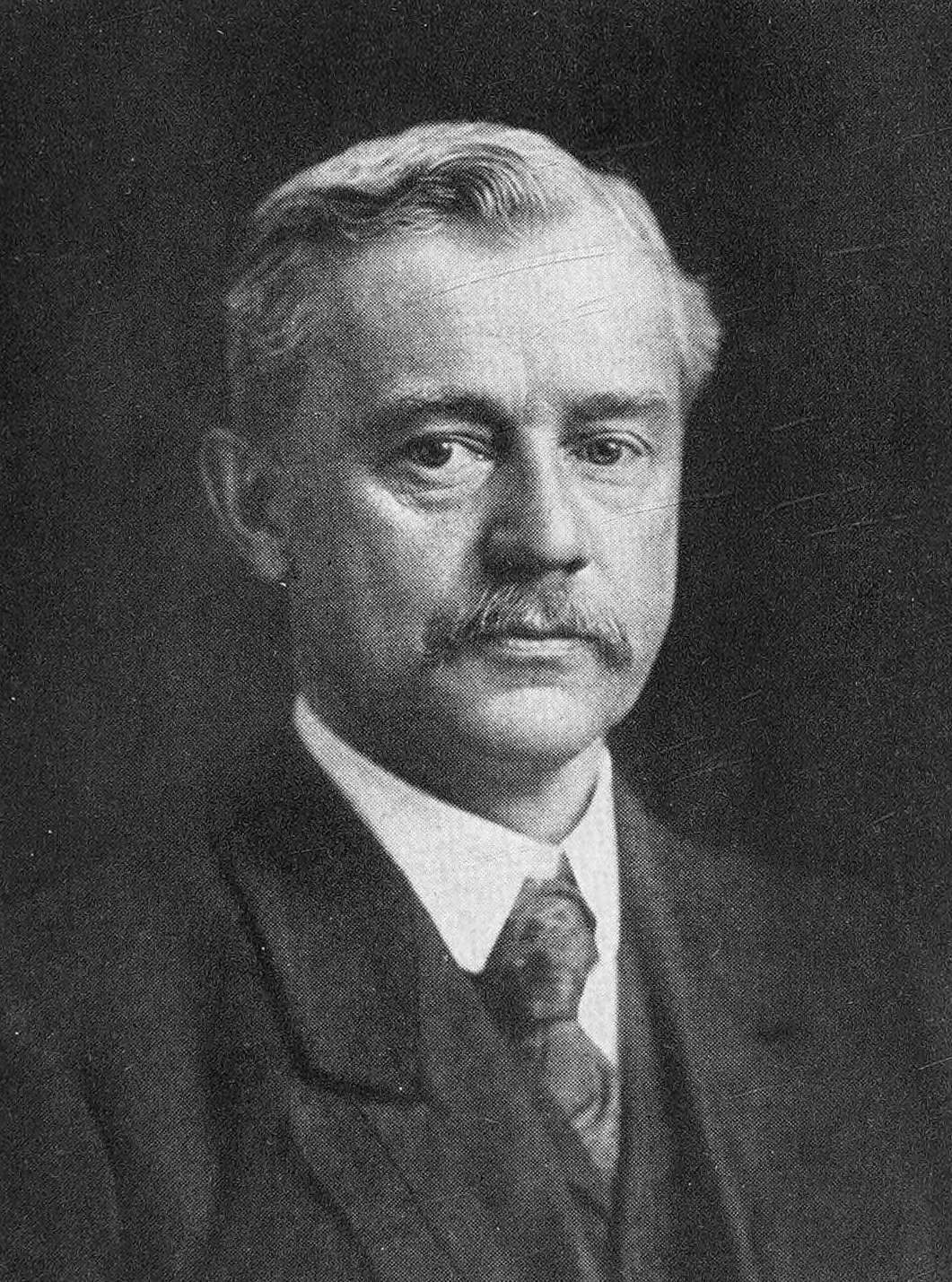
Unknown photographer · Public domain
Howard Atwood Kelly (February 20, 1858 – January 12, 1943) was an American gynecologist who helped turn gynecology into its own medical specialty through new surgical methods and pathological research. Alongside William Osler, William Halsted, and William Welch, he was one of the "Big Four" founding professors at Johns Hopkins Hospital in Baltimore. He also created several medical tools, including an improved cystoscope, Kelly's clamp, Kelly's speculum, and Kelly's forceps. Because he was a well-known prohibitionist and Fundamentalist Christian, many of his contemporaries doubted his medical professionalism.
Kelly was born in Camden, New Jersey, to Henry Kuhl Kelly and Louisa Warner Hard Kelly. His family had a background in politics—his father's great grandfather, Michael Hillegas, was the first U.S. Treasurer—as well as business, real estate, and civil service. Raised with strong religious influence, especially from his mother, he lived with her in Chester during the Civil War while his father served. In his free time, he studied nature and the Bible with her. In fall 1867, he entered Faires Classical Institute, where he grew interested in languages, biology, natural science, and botany. He began undergraduate studies at the University of Pennsylvania in 1873, served as president of the Franklin Scientific Society, and joined the Philadelphia Academy of Natural Sciences at age 17. He earned his B.A. in 1877.
In 1877, Kelly entered the University of Pennsylvania's medical school, focusing on anatomy, and graduated in 1882 with the Anomaly Prize from the Demonstrator of Morbid Anatomy. He completed his residency at Episcopal Hospital in Kensington, Pennsylvania, but since the hospital did not practice gynecology, he opened his own clinic in a two-story house in a working district where he also lived. He saw patients during the day and slept on a sofa at night with a string tied to his toe; a tug on the string would wake him for medical calls. He also made house visits. With funds from a group of Philadelphia philanthropist women, he later opened a formal clinic with an operating room in Norris Square, which became Kensington Hospital for Women, the sixth women's hospital in the United States. There, he developed the "Kelly stitch" to treat stress incontinence and performed Philadelphia's first successful C-section. He gained a reputation for surgical innovation.
From 1886 to 1888, Kelly traveled to England, Scotland, and Germany to observe abdominal and pelvic surgeons. In Leipzig in 1886, Max Saenger introduced him to palpating female ureters. In Berlin in 1888, he worked with pathologist Rudolf Virchow to find the best way to catheterize ureters. In Prague that same year, Czech physician Parel Pawlik showed him how to catheterize ureters using a speculum and perform air cystoscopy. In 1888, on William Osler's recommendation, he returned to the University of Pennsylvania as an associate professor of obstetrics.
In 1889, Osler recruited Kelly to chair gynecological surgery at Johns Hopkins School of Medicine. Along with Osler, William Stewart Halsted, and William H. Welch, he became known as one of the "Big Four." After three years in Baltimore, he founded the Howard A. Kelly Hospital, which operated until 1938. He did not charge his Hopkins patients for surgical fees, but in his private practice, he charged substantial amounts.
In the early 1890s, Kelly focused on urogynecology and helped establish gynecology as a distinct field. His textbook, *Operative Gynecology*, introduced a systematic approach to gynecological medicine and surgery. Besides the "Kelly stitch," he developed other surgical techniques and devices. He identified "Kelly's sign," a method of applying gentle pressure to the ureters to cause peristalsis, making them easier to locate during surgery when they adhere to the peritoneum instead of lying along the psoas muscle.
He improved bladder examination methods, building on what Pawlik had taught him. He invented the "Kelly speculum" for rectal exams and "Kelly's small cylindrical specular," a set of vaginal examination devices, some designed for virgins. He also invented "Kelly's forceps" or "Kelly's clamp," curved hemostatic forceps that look like scissors but have blunt grips instead of sharp teeth or blades. These are used to clamp vessels and control blood flow, and they are among the most common and well-known surgical instruments. Subcategories include tenaculum forceps and alligator forceps. To improve surgical safety, Kelly used nitrous oxide for anesthesia, absorbable sutures, and electrical lights for better visibility. He was also among the first surgeons to wear an operating suit made of sterilized linens, and he invented a wound-sealing product to reduce infection risk.
- known_for
- One of the 'Big Four' founding professors of the Johns Hopkins School of Medicin
Verified Timeline
Lore & Background
Howard Kelly was born in Camden, New Jersey, in 1858 to Henry Kuhl Kelly and Louisa Warner (Hard) Kelly. He was raised with strong religious influence, especially from his mother. During the Civil War, he lived in Chester with his mother while his father served. He entered the Faires Classical Institute in 1867, developing interests in languages, biology, natural science, and botany. He began undergraduate studies at the University of Pennsylvania in 1873, became president of the Franklin Scientific Society, and at age 17 joined the Philadelphia Academy of Natural Sciences. He received his B.A. in 1877. Kelly earned his M.D. from the University of Pennsylvania in 1882, graduating with the Anomaly Prize. After residency at Episcopal Hospital in Kensington, Pennsylvania, he opened his own clinic in a two-story house, sleeping on a sofa with a string tied to his toe to be woken for emergencies. With funds from Philadelphia philanthropist women, he opened a formal clinic that became the Kensington Hospital for Women, where he created the "Kelly stitch" for stress incontinence. From 1886 to 1888, he traveled to England, Scotland, and Germany to observe surgeons, learning techniques for catheterizing ureters and air cystoscopy. In 1888, he became associate professor of obstetrics at the University of Pennsylvania under the recommendation of William Osler. In 1889, Osler recruited Kelly to Johns Hopkins as chair of gynecological surgery. He founded the Howard A. Kelly Hospital, active until 1938. He did not require patients to pay surgical fees at Hopkins but charged significantly in private practice. Kelly developed numerous innovations: Kelly's sign for locating the ureter, the Kelly speculum for rectal exams, small cylindrical specula for vaginal exams, and Kelly's forceps (or clamp), curved hemostatic forceps with blunt grips used to clamp vessels. He promoted surgical safety using nitrous oxide, absorbable sutures, electrical lights, and sterilized linen operating suits. He invented a wound sealing procedure using gauze soaked with celluloid and bichloride, dusted with iodoform and boric acid powder. In the late 1890s, he ligated the internal iliac artery to reduce bleeding for gynecological cancers. He began using radium in 1904 for uterine hemorrhages and fibroid tumors, and by 1917 his clinic held about 5.5 grams of radium, becoming a leading center for radiation therapy.
Reader's Guide
Howard Atwood Kelly's significance lies in his foundational role in establishing gynecology as a distinct medical specialty. As one of the "Big Four" at Johns Hopkins Hospital, he helped shape modern American medical education and practice. His surgical innovations—including the Kelly clamp, Kelly speculum, and Kelly forceps—remain widely used instruments. He advanced urogynecology through techniques for ureter identification (Kelly's sign) and bladder examination. Kelly also pioneered safety measures in surgery, such as absorbable sutures, electrical lighting, and sterile operating suits. His work with radium positioned his clinic as a leading center for radiation therapy. Beyond surgery, he collaborated with medical illustrator Max Broedel, contributing to the field of medical illustration. Kelly authored over 550 articles and books on topics ranging from appendectomy to herpetology. Despite his professional achievements, his strong prohibitionist and Fundamentalist Christian views led contemporaries to express skepticism about his medical professionalism. His legacy endures through the instruments and techniques he developed, as well as his role in elevating gynecology to a recognized specialty.
Did You Know?
- During his residency, Kelly slept on a sofa with a string tied to his toe so that a tug would wake him for medical emergencies.
- Kelly performed the first successful C-section in Philadelphia.
- He kept several dozen cages filled with different types of reptiles in his house and learned to handle rattlesnakes and harvest their venom.
- By 1917, his clinic held about 5.5 grams of radium and was one of the country's leading centers for radiation therapy.
- Kelly collaborated with Max Broedel, the father of medical illustration, and remarked that bringing Broedel to Baltimore was one of his greatest contributions to medicine.
The Big Four and the Birth of a Specialty
In 1889, William Osler extended an invitation that would reshape American medicine: Kelly was recruited to serve as chair of gynecological surgery at the Johns Hopkins School of Medicine in Baltimore. Alongside Osler, William Stewart Halsted, and William H. Welch, Kelly became one of the four founding faculty members whose collective brilliance earned them the enduring nickname "The Big Four." Kelly's contribution was not merely clinical; he fundamentally redefined the scope of his discipline. By the early 1890s, he had pushed gynecology away from being a sub-discipline of general surgery and obstetrics, establishing it as an independent field of study. His landmark textbook, Operative Gynecology, codified a systematic approach to both diagnosis and surgical intervention that gave the specialty its intellectual architecture. Three years after arriving in Baltimore, he founded the Howard A. Kelly Hospital, which operated until 1938, further cementing the institutional infrastructure of the specialty he had helped create.
A Surgeon's Toolkit
Few surgical instruments are as universally recognized as the curved, blunt-tipped hemostatic forceps that bear Kelly's name. Often called Kelly's clamp, these scissor-like tools grip vessels to control bleeding and remain among the most commonly used instruments in operating rooms worldwide. But the clamp was only one element in a broader catalog of innovations. Kelly designed a speculum for rectal examinations and a set of small cylindrical specula for vaginal use, some adapted for patients who were virgins. He refined the cystoscope for bladder examination, building on techniques he had observed in Prague and Berlin during his 1886–1888 European tour. He also devised "Kelly's stitch" to treat stress incontinence and identified "Kelly's sign," a gentle pressure technique that provokes peristaltic movement to locate the ureter during pelvic surgery. Beyond instruments, he championed nitrous oxide anesthesia, absorbable sutures, electric surgical lighting, and sterilized operating garments. His wound-sealing method—layering celluloid-soaked gauze, dusting with iodoform and boric acid, and keeping the site sealed until suture removal—reflected an obsessive commitment to preventing infection.
From Camden to the Operating Table
Howard Atwood Kelly was born on February 20, 1858, in Camden, New Jersey, to Henry Kuhl Kelly and Louisa Warner Hard Kelly. His family's roots reached into early American governance; his father's great-grandfather, Michael Hillegas, had been the first Treasurer of the United States. During the Civil War, his father served in the military while young Kelly and his mother lived in Chester, where he observed nature and studied the Bible with her. In 1867 he entered the Faires Classical Institute, developing interests in languages, biology, and botany. He began undergraduate study at the University of Pennsylvania in 1873, presiding over the Franklin Scientific Society and, at seventeen, joining the Philadelphia Academy of Natural Sciences. He received his B.A. in 1877 and his M.D. in 1882, earning the Anomaly Prize from the Demonstrator of Morbid Anatomy. His residency at the Episcopal Hospital in Kensington was pivotal: gynecology was not yet practiced there, so he set up a clinic in a two-story working-class house, sleeping on a sofa with a string tied to his toe so a tug would wake him for emergency calls. With backing from Philadelphia philanthropic women, he later opened a clinic in Norris Square, which became the Kensington Hospital for Women—the sixth women's hospital in the country.
Faith, Prohibition, and Professional Tension
Kelly's personal convictions were as prominent as his surgical skill. Raised under the strong religious influence of his parents—particularly his mother—he remained a devoted Fundamentalist Christian throughout his career. He was also a vocal prohibitionist, publicly advocating against alcohol in an era when drinking was deeply embedded in social and professional life. This combination of religious zeal and temperance activism created friction within the medical community. Many of his contemporaries expressed open skepticism about his professionalism, questioning whether his fervent personal beliefs might compromise his clinical judgment or his collegial relationships. The tension was compounded by a notable duality in his practice: at Johns Hopkins, Kelly did not require his patients to pay surgical fees, yet in his private practice he charged substantial amounts for his services. This contrast—generous in the public academic sphere, expensive in the private one—fueled further debate about his motives. Despite the controversy, his technical contributions to gynecology and his role in building the Johns Hopkins medical school ensured that his legacy would be judged primarily on the instruments he left behind and the specialty he helped define.
Gallery

Frequently Asked Questions
Who is Howard Atwood Kelly?
Howard Atwood Kelly (1858–1943) was an American gynecologist widely regarded as the father of modern gynecology. He served as one of the four founding professors at Johns Hopkins Hospital and School of Medicine in Baltimore.
What is Howard Atwood Kelly most known for?
He is best recognized for establishing gynecology as a distinct medical specialty through new surgical techniques and pathological research. He also co-founded the Johns Hopkins School of Medicine as one of the legendary 'Big Four' professors.
Who were the 'Big Four' at Johns Hopkins?
The 'Big Four' refers to William Osler, William Halsted, William Welch, and Howard Atwood Kelly, who were recruited together in 1893 to build the Johns Hopkins School of Medicine from the ground up. Kelly's specific contribution was in the field of gynecology.
What medical instruments did Kelly invent or improve?
Kelly is credited with designing or refining several tools still referenced in medicine today, including Kelly's clamp (a hemostatic forceps), Kelly's speculum, Kelly's forceps, and an improved cystoscope. These instruments became standard in operating rooms and diagnostic suites.
Why is Howard Atwood Kelly considered important to the history of medicine?
By developing dedicated surgical approaches to gynecological diseases and advancing pathological research, he transformed gynecology from a loosely defined practice into a recognized, rigorous medical specialty. His work at Johns Hopkins also set a model for how surgical departments could be built around research and innovation.
More in Pioneers Of Medicine 1-24
Spotted an error? Know more?
This is a living reference — every entry is fact-audited, and reader corrections feed straight into our audit queue. Suggest an edit · See this site's audit record