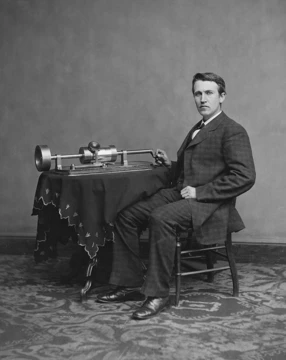
Peter Freuchen

Lorenz Peter Elfred Freuchen (20 February 1886 – 2 September 1957) was a Danish explorer, author, journalist, and anthropologist, best known for his role in Arctic exploration, particularly the Thule Expeditions. Born in Nykøbing Falster to a businessman and his wife, he studied medicine for a time at the University of Copenhagen. In 1906, he joined his first Greenland expedition as part of the Denmark expedition. From 1910 to 1924, he undertook several expeditions alongside the polar explorer Knud Rasmussen, including a crossing of the Greenland ice sheet. Together, they established the Thule Trading Station at North Star Bay in 1910, the most northerly trading post in the world, which became the base for seven Thule Expeditions between 1912 and 1933. The first of these, in 1912, aimed to disprove Robert Peary’s claim of a channel dividing Peary Land from Greenland; the journey across inland ice nearly killed the party but succeeded, with the Royal Geographical Society’s president calling it the finest dogsled journey ever performed. Freuchen wrote about these experiences in *Vagrant Viking* and *I Sailed with Rasmussen*, recounting an incident where, buried under an avalanche, he used his own feces to fashion a dagger to free himself. He lived for years among the Polar Inuit and married an Inuk woman, Navarana Mequpaluk, who accompanied him on expeditions. When she died unbaptized, local clergy refused her burial, so Freuchen buried her himself. Returning to Denmark in the 1920s, he became a Social Democrat, wrote for *Politiken*, and edited the magazine *Ude og Hjemme*. In 1932, an MGM-financed expedition took him back to Greenland; he later worked as a film consultant and scriptwriter, notably on the Oscar-winning *Eskimo/Mala The Magnificent*, based on his novels. He founded the Adventurer’s Club of Denmark in 1938. During World War II, despite having lost a foot to frostbite, he joined the Danish resistance, openly claimed to be Jewish when witnessing antisemitism, was imprisoned and sentenced to death, but escaped to Sweden. In 1956, he won the top prize on the American quiz show *The $64,000 Question* for his knowledge of the seven seas. He was married three times, his final marriage being to Danish-Jewish designer Dagmar Cohn in 1945. His grandson, Peter Ittinuar, became the first Inuk elected to Canada’s House of Commons.
- field
- Exploration, anthropology, journalism, authorship
- nationality
- Danish
- known_for
- Thule Expeditions, Arctic exploration, Inuit ethnography
Verified Timeline
Lore & Background
Peter Freuchen was a Danish explorer, author, journalist, and anthropologist, recognized for his significant contributions to Arctic exploration, particularly through the Thule Expeditions. Born in Nykøbing Falster, Denmark, he initially studied medicine at the University of Copenhagen before embarking on his first Greenland expedition in 1906 as part of the Denmark expedition. Over the following decades, he undertook numerous expeditions alongside polar explorer Knud Rasmussen, including a crossing of the Greenland ice sheet. He spent extensive periods living among the Polar Inuit in North Star Bay, Greenland. In 1910, he and Rasmussen established the Thule Trading Station there, which became the base for seven Thule Expeditions between 1912 and 1933. During the first of these, they tested Robert Peary’s claim of a channel dividing Peary Land from Greenland, a journey that nearly killed them but was later praised by the Royal Geographical Society. Freuchen lost his left foot to frostbite in 1926. He later worked as a journalist, editor, and film consultant, and in 1938 founded the Adventurer’s Club of Denmark. During World War II, he was active in the Danish resistance, was imprisoned and sentenced to death by the Germans, but escaped to Sweden. He married three times, first to an Inuk woman named Navarana, who died in the Spanish flu epidemic; when the church refused to bury her because she was unbaptized, Freuchen buried her himself. He later criticized Christian missionaries for lacking understanding of Inuit culture.
Reader's Guide
His work with Knud Rasmussen helped disprove Peary's channel theory and established a trading network that supported further research. Freuchen's writings and lectures brought Arctic narratives to a wider audience, and his film consultancy influenced early cinematic portrayals of the Arctic. His later activism—joining the Danish resistance, publicly claiming to be Jewish in the face of anti-semitism, and criticizing missionary practices—reflects a commitment to social justice. His grandson, Peter Ittinuar, became the first Inuk MP in Canada, extending Freuchen's legacy into Indigenous political representation.
Did You Know?
- He claimed to have freed himself from an avalanche by using his own feces to fashion a dagger.
- His first wife, Navarana, was denied a church burial because she was unbaptized, so Freuchen buried her himself.
Frequently Asked Questions
Who is Peter Freuchen?
Peter Freuchen was a Danish explorer, journalist, author, and anthropologist best known for his deep involvement in Arctic exploration. He is widely recognized as a co-founder of the Thule Expeditions and a key figure in early 20th-century Inuit ethnography.
What is Peter Freuchen most famous for?
He is most celebrated for his role in the Thule Expeditions, a series of Danish Arctic research ventures, and for his extensive fieldwork documenting Inuit cultures and daily life in the far north.
Why is Peter Freuchen important to the history of Arctic exploration?
As a co-founder of the Thule Expeditions, he helped establish a lasting Danish presence in Arctic research and produced some of the earliest detailed anthropological accounts of Inuit societies, bridging the gap between science and popular understanding of the polar regions.
More in Pioneers And Innovators 1-23
Spotted an error? Know more?
This is a living reference — every entry is fact-audited, and reader corrections feed straight into our audit queue. Suggest an edit · See this site's audit record