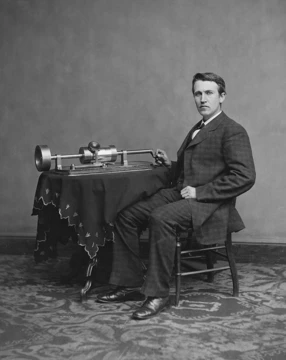
Matthew Henson

dctim1 · CC BY-SA 2.0
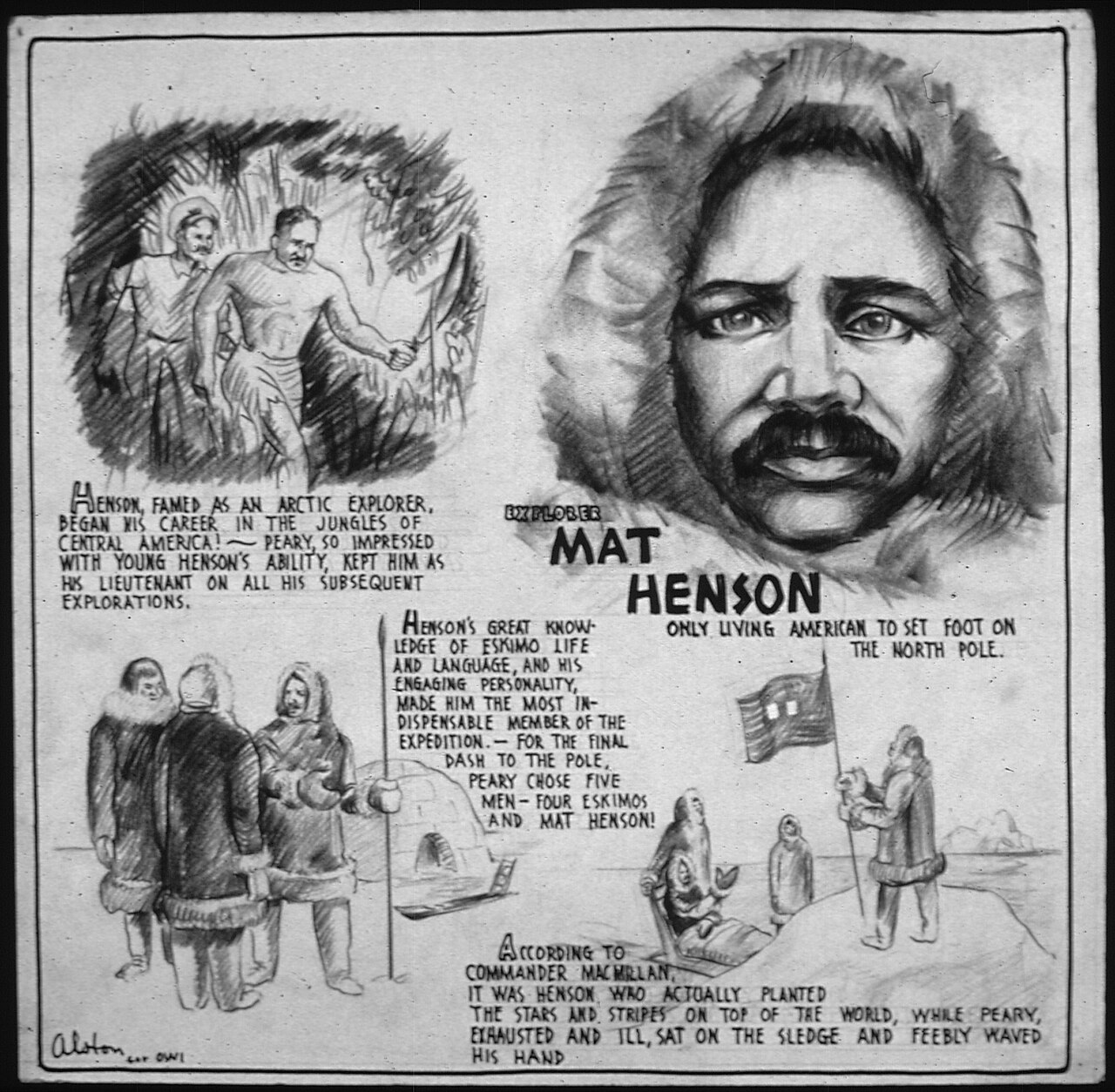
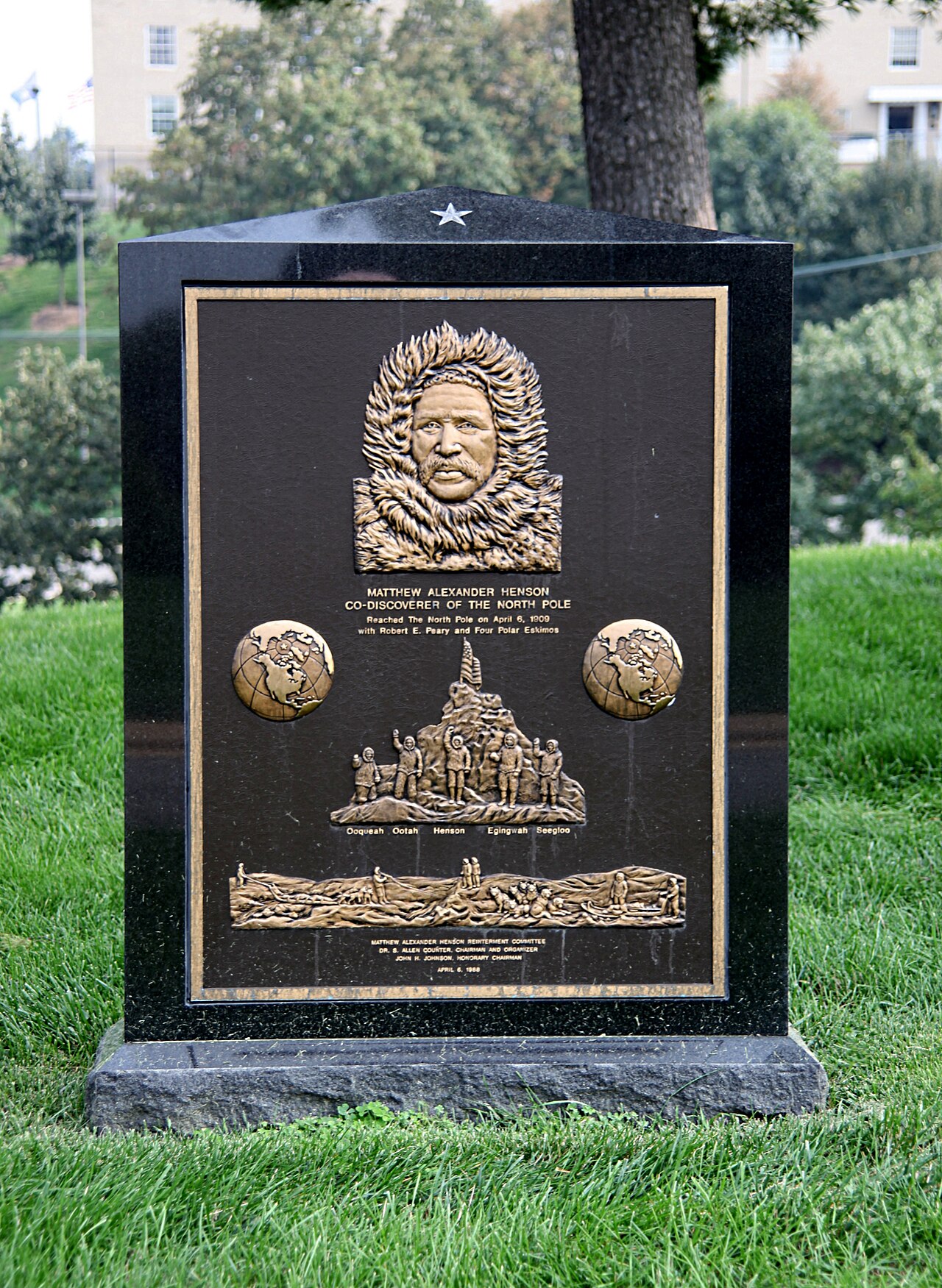
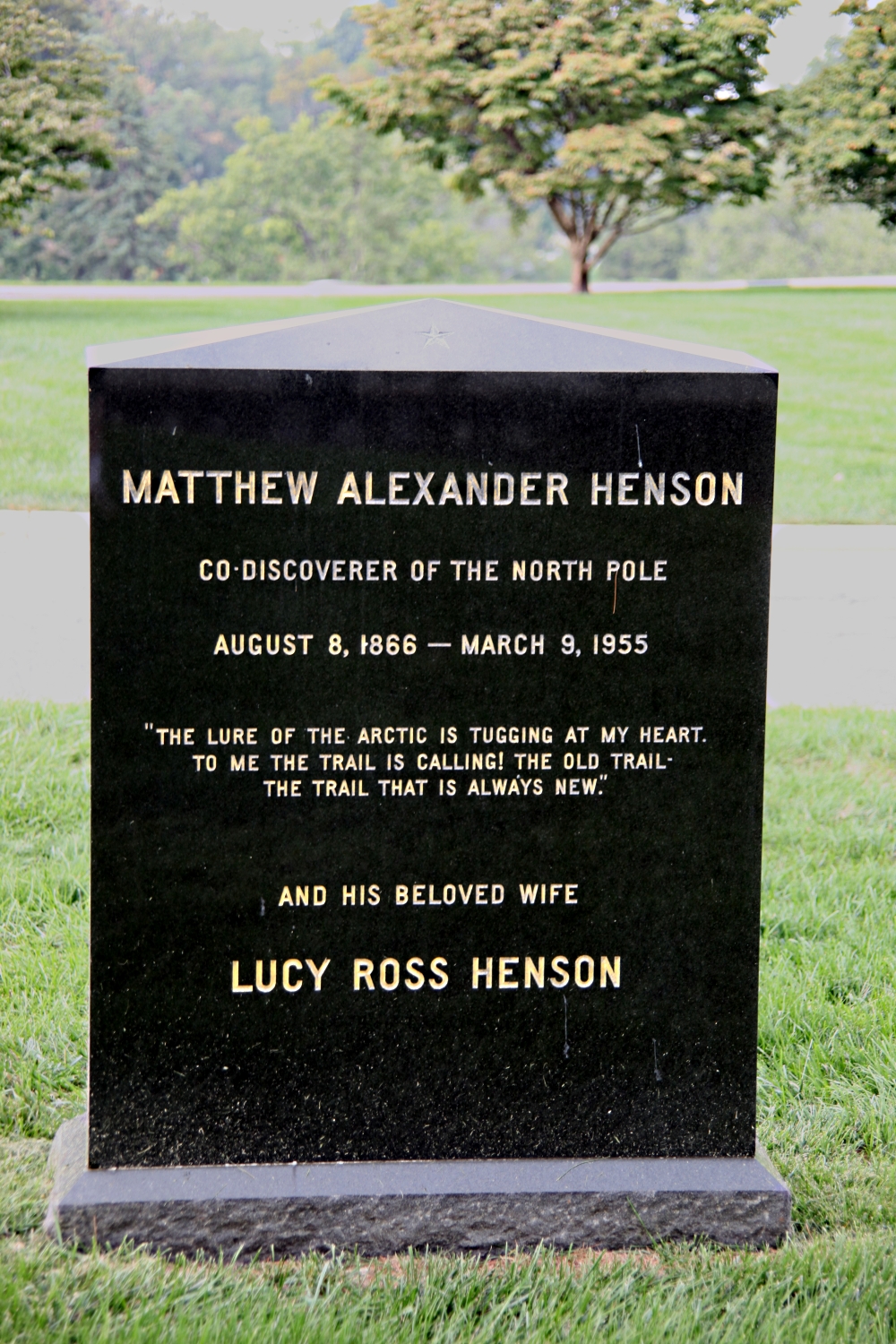
Matthew Alexander Henson (1866–1955) was an American explorer who spent nearly twenty-three years accompanying Robert Peary on seven Arctic voyages, totaling eighteen years of joint expeditions. He is most famous for his role in the 1908–1909 expedition that claimed to have reached the geographic North Pole on April 6, 1909; Henson later stated he was the first of the party to arrive at the pole. Born in Nanjemoy, Maryland, to free Black sharecroppers, his family fled racial violence from groups like the Ku Klux Klan, moving to Georgetown when he was a year old. After his mother died when he was seven and his father later remarried, Henson was sent to an uncle in Washington, D.C., who funded a few years of schooling before also dying. He attended a Black public school for six years and, at age ten, was inspired by a speech from Frederick Douglass at a ceremony honoring Abraham Lincoln. At twelve, he left school to work as a cabin boy on a merchant ship, traveling to Asia, Africa, and the Russian Arctic, where the captain taught him to read and write. Later, while working at a Washington, D.C., clothing store, he met Peary, who hired him as a valet for a Nicaragua canal survey in 1887. Impressed by his seamanship, Peary made Henson his “first man” on Arctic expeditions. Henson learned Inuit survival techniques, mastered their language, and became skilled at driving dog sleds and building igloos. On the 1908–09 Greenland expedition, he was one of six men—including Peary and four Inuit assistants—who claimed to reach the North Pole. The claim was widely accepted, but in 1989, Wally Herbert’s research suggested navigational errors made it unlikely they reached the exact pole. Henson gained fame, publishing a 1912 memoir, *A Negro Explorer at the North Pole*. In 1937, he became the first African American life member of The Explorers Club, and in 1944 received the Peary Polar Expedition Medal. He was received at the White House by Presidents Truman and Eisenhower. In 1988, he and his wife were re-interred at Arlington National Cemetery; in 2000, he posthumously received the National Geographic Society’s Hubbard Medal, and in 2021, a lunar crater was named after him.
- field
- Arctic exploration
- nationality
- American
- known_for
- Member of the 1908–1909 Peary expedition that claimed to have reached the North Pole; first African American life member of The Explorers Club
Lore & Background
Henson was a skilled navigator and craftsman, serving as Peary's "first man" on their expeditions. He studied and mastered Inuit survival techniques, including building igloos for mobile shelter and driving dog sleds in the traditional Inuit manner, becoming the only non-Inuit to achieve such proficiency. The Inuit called him Mahri-Pahluk. He traded with them and learned their language. On the 1908–1909 expedition, Henson was one of six men—including Peary and four Inuit assistants—who claimed to have been the first to reach the geographic North Pole. Henson later stated in interviews that he was the first of their party to arrive at what they believed was the pole. His Arctic experience spanned seven voyages over nearly 23 years, with a total of 18 years spent on expeditions alongside Peary. Their teams covered thousands of miles by dog sled, reaching the "Farthest North" point of any expedition until 1909. Henson's memoir, *A Negro Explorer at the North Pole*, was published in 1912. He was the first African American made a life member of The Explorers Club in 1937, and later received the Peary Polar Expedition Medal in 1944.
Reader's Guide
His contributions as navigator, craftsman, and dog-sled driver were essential to the expedition's progress, yet for decades his achievements were largely overshadowed by Peary's fame. Over nearly twenty-three years, Henson accompanied Peary on seven Arctic voyages, spending a total of eighteen years in the field. He was known as Peary's "first man," serving as a navigator and craftsman while also studying Inuit survival techniques alongside Peary. Henson became the only non-Inuit to master driving dog sleds and training dog teams in the Inuit manner, and he learned to build igloos for mobile shelter. The Inuit called him Mahri-Pahluk. During the 1908–1909 expedition, Henson was one of six men—including Peary and four Inuit assistants—who claimed to have reached the geographic North Pole on April 6, 1909. Henson later stated in interviews that he was the first of their party to arrive at what they believed was the pole. The team's claim was widely accepted for decades, though later research in 1989 found their expedition records unreliable and indicated navigational errors could have caused them to fall short. Henson published a memoir in 1912 titled *A Negro Explorer at the North Pole*. In 1937, he became the first African American made a life member of The Explorers Club, and in 1944 he received the Peary Polar Expedition Medal. He was later received at the White House by Presidents Truman and Eisenhower. In 1988, he and his wife were re-interred at Arlington National Cemetery, and in 2000 he posthumously received the Hubbard Medal from the National Geographic Society. A lunar crater was named after him in 2021.
Did You Know?
- Henson was born to sharecropper parents who were free Black Americans before the Civil War.
- In 1988, Henson and his wife were re-interred at Arlington National Cemetery.
The Life and Work Chronicled
Beyond the well-known franchises, the film places significant emphasis on Henson's creative and romantic partnership with his wife, Jane Henson, presenting their collaboration as a central thread rather than a passing footnote. The documentary draws on interviews with family members and longtime collaborators, with Frank Oz among those who appear on screen to offer personal perspectives. Rather than relying solely on archival footage, the film incorporates animated sequences built from Henson's own drawings, adding a visual dimension that previous treatments of his life had not explored. The result is a portrait that balances the public-facing achievements with the private creative relationships that fueled them, giving audiences a more complete sense of the man behind the marionettes.
From Biopic to Documentary: A Decade in the Making
The road to the finished film was anything but straightforward.
Critical Response and Reception
Critics responded warmly to Ron Howard's documentary. On Rotten Tomatoes, 98 percent of 61 reviews came in positive, averaging 7.8 out of 10, with the consensus praising the film for steering clear of hagiography while still delivering a clear picture of Henson's artistry. Individual reviews highlighted different strengths: Michael Nordine of Variety acknowledged the film's conventional structure but called it a heartfelt tribute. Matthew Carey of Deadline Hollywood singled out the animated sequences built from Henson's drawings as a fresh element absent from earlier documentaries. Daniel Feinberg of The Hollywood Reporter noted the film leans more on evidence of Henson's drive than deep psychological insight, while Kate Erbland of Indiewire gave it a B+, commending Howard's willingness to lean into honesty even as the film could not fully capture the full scope of its subject's life and work.
Premiere and Global Release
The selection placed the documentary alongside other significant works in a competitive festival context, giving it a high-profile introduction before its broader audience. The relatively short gap between the Cannes premiere and the streaming launch meant that critical buzz from the festival could carry directly into the film's mass release. The dual strategy of festival prestige followed by immediate global streaming ensured the documentary reached both cinephile audiences and the general viewership that had grown up with Henson's creations, from Muppets to Sesame Street, without a long theatrical window in between.
Gallery
Frequently Asked Questions
Who is Matthew Henson?
Matthew Henson was an American explorer who spent nearly two decades in the Arctic traveling alongside Robert Peary. He is also recognized as the first African American to become a life member of The Explorers Club.
What is Matthew Henson most famous for?
He is best known for his role in the 1908–1909 expedition that claimed to reach the geographic North Pole on April 6, 1909. Henson later stated that he was the first member of that party to actually set foot on the pole.
How many Arctic voyages did Matthew Henson make with Robert Peary?
Henson joined Peary on seven separate Arctic expeditions over a span of roughly 23 years. Altogether, he spent about 18 years in the field on those joint voyages.
Why is Matthew Henson considered an important pioneer?
His sustained contributions to polar exploration broke racial barriers in a field that had long excluded Black Americans. He is celebrated as a trailblazer who helped redefine who was regarded as a legitimate explorer in the early twentieth century.
More in Pioneers And Innovators 1-23
Spotted an error? Know more?
This is a living reference — every entry is fact-audited, and reader corrections feed straight into our audit queue. Suggest an edit · See this site's audit record