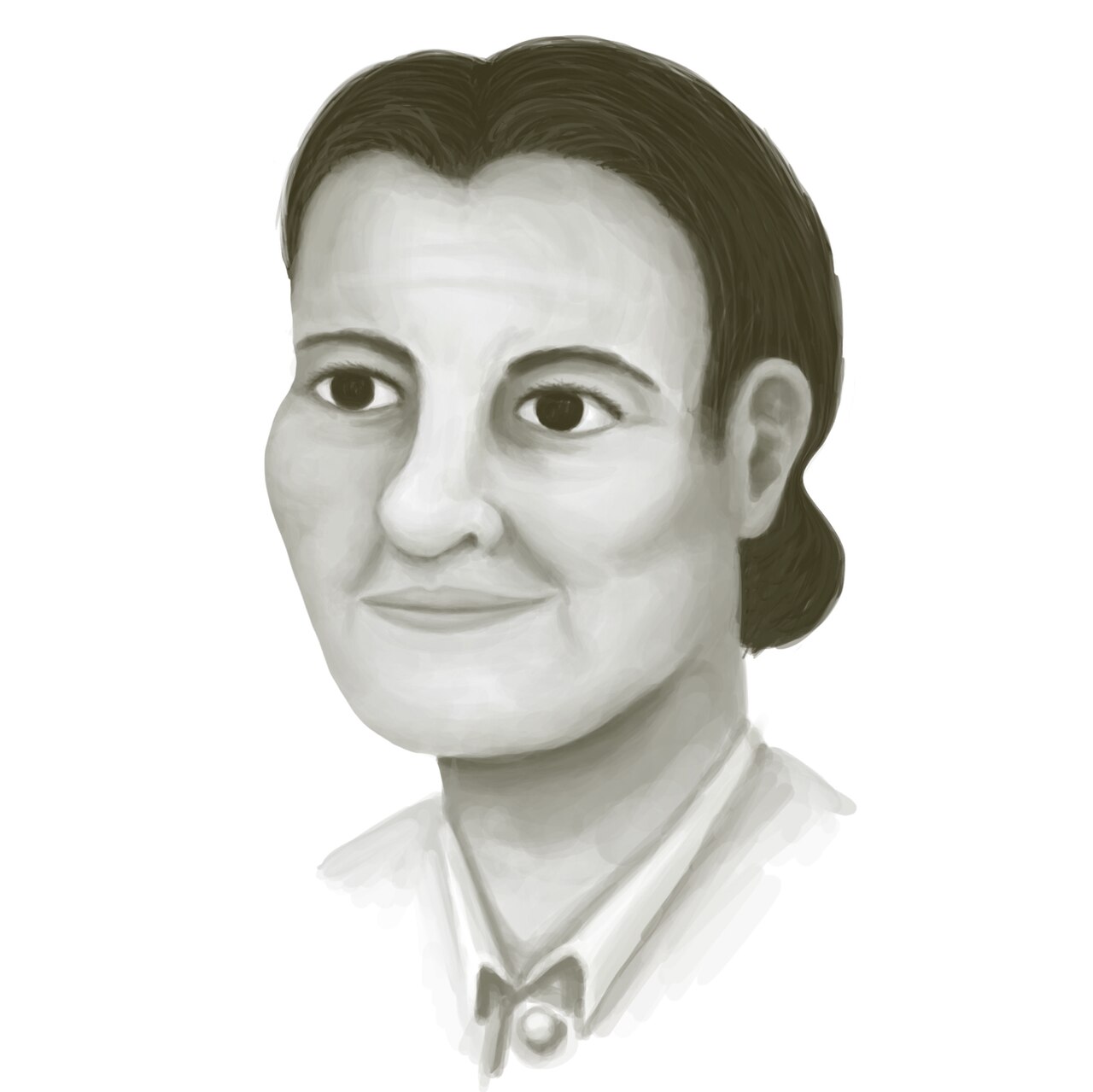
G. E. M. Anscombe
British analytic philosopher, student of Wittgenstein, introduced consequentialism.

Albarluque · CC BY-SA 3.0
G. E. M. Anscombe, also known as Elizabeth Anscombe, was a British analytic philosopher. Her work spanned the philosophy of mind, philosophy of action, philosophical logic, philosophy of language, and ethics. She was a key figure in analytical Thomism, a fellow of Somerville College, Oxford, and a professor of philosophy at the University of Cambridge.
Anscombe studied under Ludwig Wittgenstein and became a leading expert on his work. She edited and translated many of his writings, especially the *Philosophical Investigations*. Her 1958 paper "Modern Moral Philosophy" brought the term "consequentialism" into analytic philosophy and had a major impact on the development of virtue ethics. Her 1957 book *Intention* was called by Donald Davidson the most important work on action since Aristotle. It is widely seen as a foundational text in the philosophy of action and also influenced the philosophy of practical reason.
Anscombe was born on 18 March 1919 in Limerick, Ireland, where her father, a captain in the Royal Welch Fusiliers, was stationed during the Irish War of Independence. Both parents worked in education: her mother was a headmistress, and her father led science and engineering at Dulwich College. She attended Sydenham High School and then studied literae humaniores at St Hugh's College, Oxford, tutored by archaeologist Dorothea Gray. She got a second class in her honour moderations in 1939 and a first in her finals in 1941, despite reservations from her Ancient History examiners.
While still at Sydenham, Anscombe converted to Catholicism. She was formally received into the Church during her first year at St Hugh's and remained a practicing Catholic for life. In 1941 she married Peter Geach, also a Catholic convert, a student of Wittgenstein, and a distinguished philosopher. They had three sons and four daughters.
After graduating, she held a research fellowship at Newnham College, Cambridge from 1942 to 1945, specifically to attend Wittgenstein's lectures. Her interest started as an undergraduate when she read the *Tractatus Logico-Philosophicus*. She said she decided to study with him as soon as she opened the book in Blackwell's and read section 5.53. She found his therapeutic method freed her from philosophical traps that traditional training could not. She wrote that she had long struggled with phenomenalism, feeling trapped by it, and that Wittgenstein's classes in 1944 finally attacked its central nerve.
After her Cambridge fellowship, she got a research fellowship at Somerville College, Oxford. During the 1946/47 academic year, she still traveled to Cambridge weekly for tutorials with Wittgenstein on the philosophy of religion. She became one of his favorite students and closest friends; he called her "old man," and she was, according to Ray Monk, an exception to his general dislike of academic women. He trusted her understanding of his work enough to choose her as translator of the *Philosophical Investigations*, arranging for her to improve her German in Vienna. She visited him often after he left Cambridge in 1947, and he stayed at her Oxford house in 1950. She was at his deathbed in Cambridge in April 1951. He named her, along with Rush Rhees and Georg Henrik von Wright, as his literary executor. After his death, she edited, translated, and published many of his manuscripts and notebooks.
Anscombe did not avoid controversy. As an undergraduate in 1939, she publicly criticized Britain entering the Second World War. In 1956, while a research fellow, she unsuccessfully protested Oxford granting an honorary degree to Harry S. Truman, calling him a mass murderer for using atomic bombs on Hiroshima and Nagasaki. She published her position in a privately printed pamphlet, saying she feared going to the ceremony "in case God's patience suddenly ends." She also defended the Catholic Church's opposition to contraception, which upset some colleagues. Later in life, after abortion was legalized in Great Britain, she was arrested while protesting outside an abortion clinic. She remained at Somerville College from 1946 and was elected Professor of Philosophy at the University of Cambridge.
- field
- Analytic philosophy
- nationality
- British
- known_for
- Introducing the term consequentialism; monograph Intention; editing Wittgenstein's works
Lore & Background
Anscombe was born in Limerick, Ireland, to Captain Allen Wells Anscombe and Gertrude Elizabeth Thomas. She attended Sydenham High School and read literae humaniores at St Hugh's College, Oxford, where she converted to Catholicism. After graduating, she studied under Wittgenstein at Cambridge, later becoming his literary executor and translating his Philosophical Investigations. She was a research fellow at Somerville College, Oxford, and later Professor of Philosophy at the University of Cambridge. Anscombe courted controversy throughout her life. As an undergraduate she criticized Britain's entry into the Second World War. Truman, denouncing him as a mass murderer for using atomic bombs. She defended the Catholic Church's opposition to contraception and was later arrested protesting outside an abortion clinic. S. Lewis at the Oxford Socratic Club, disputing his argument that naturalism was self-refuting; Lewis subsequently rewrote the relevant chapter of his book Miracles. She was buried adjacent to Wittgenstein in the St Giles' graveyard, Huntingdon Road.
Reader's Guide
Anscombe's significance lies in her foundational contributions to analytic philosophy, particularly in ethics and the philosophy of action. As a student and literary executor of Ludwig Wittgenstein, she edited, translated, and published many of his manuscripts, including the Philosophical Investigations, shaping the reception of his work. Her role in the debate with C. S. Lewis over naturalism's self-refutation is often cited, though accounts of its effect on Lewis vary. Anscombe's legacy also includes her willingness to engage in public controversy, from opposing Truman's honorary degree to defending Catholic moral teachings.
Did You Know?
- She was a student of Ludwig Wittgenstein and became his literary executor, editing and translating many of his works.
The Wittgenstein Connection
Anscombe's encounter with Ludwig Wittgenstein's thought began almost by accident. As an undergraduate at St Hugh's College, Oxford, she opened the Tractatus Logico-Philosophicus in a bookshop and was struck by a single passage on the identity of objects and signs. That moment set her on a path that would define her intellectual life. She secured a research fellowship at Newnham College, Cambridge, in 1942 specifically to attend Wittgenstein's lectures, and she described his therapeutic approach as finally extracting the "central nerve" of philosophical confusions that had trapped her for years—particularly her long struggle with phenomenalism. The relationship deepened into genuine friendship; Wittgenstein, who generally disliked academic women, called her "old man" and regarded her as an exception to that rule. When he left Cambridge in 1947, she continued visiting him, and he even stayed at her Oxford home in 1950. He entrusted her, alongside Rush Rhees and Georg Henrik von Wright, with the role of literary executor, and she devoted the following decades to editing, translating, and publishing his manuscripts and notebooks, most notably rendering the Philosophical Investigations into English.
Shaping Contemporary Philosophy
Anscombe's own original writings, though fewer in number than her editorial labours, proved enormously influential. Her 1957 monograph Intention, which examined the nature of human action and the logic of intention, was later praised by Donald Davidson as the most important treatment of action since Aristotle. It is widely regarded as a foundational text in the contemporary philosophy of action and has also shaped debates in practical reason. Two years later, her 1958 article "Modern Moral Philosophy" did something equally transformative: it introduced the term "consequentialism" into the vocabulary of analytic philosophy and launched a sustained critique of utilitarian and contractarian frameworks. That essay became a seminal influence on the rise of virtue ethics in the late twentieth century. Across her career, Anscombe worked in philosophy of mind, philosophy of language, philosophical logic, and ethics, and she became a prominent figure in analytical Thomism, weaving her Catholic faith into her philosophical commitments. Her range and depth ensured that her impact extended well beyond any single subfield.
An Academic Life Spanning Two Universities
Born in Limerick, Ireland, in 1919 to a military officer and a headmistress, Anscombe grew up in a household where education was central. She attended Sydenham High School before enrolling at St Hugh's College, Oxford, in 1937 to study literae humaniores, commonly called "Greats." She earned a first-class degree in 1941, though her Ancient History examiners had reservations. After the war, she held research fellowships first at Newnham College, Cambridge (1942–1945), and then at Somerville College, Oxford, from 1946 onward. In 1941 she married Peter Geach, a fellow Catholic convert and Wittgenstein student, and together they raised seven children. In 1970 she was elected Professor of Philosophy at the University of Cambridge, a post she held until her retirement in 1986. Her standing in the wider academic community was recognised when she was elected a fellow of the British Academy in 1967 and a Foreign Honorary Member of the American Academy of Arts and Sciences in 1979. Her career thus bridged two of Britain's great universities and spanned more than four decades of active scholarship.
A Voice of Conscience in Public Life
Anscombe's Catholic faith, which she embraced while still at Sydenham High School and which was formalised during her first year at Oxford, never remained confined to the private sphere. In 1939, as an undergraduate, she publicly criticised Britain's entry into the Second World War. Two decades later, in 1956, she mounted a vigorous protest against Oxford's decision to confer an honorary degree on Harry S. Truman, whom she denounced as a mass murderer for the atomic bombings of Hiroshima and Nagasaki. She privately printed a pamphlet in which she wrote that she "should fear to go" to the degree ceremony "in case God's patience suddenly ends." She also drew controversy among colleagues by defending the Catholic Church's opposition to contraception. In her later years, after abortion was legalised in Britain, she was arrested while protesting outside an abortion clinic. These episodes reveal a thinker who treated moral conviction as a public obligation and was willing to accept personal cost—academic friction, legal trouble, and social isolation—for the sake of what she regarded as truth.
Gallery
Frequently Asked Questions
What is the connection between Anscombe and Wittgenstein?
Anscombe studied under Wittgenstein at Cambridge and went on to become one of the leading authorities on his thought. She edited and translated several of his manuscripts, most notably producing the standard English edition of his *Philosophical Investigations*.
Why is G. E. M. Anscombe important in philosophy?
She reshaped several subfields of analytic philosophy simultaneously—action theory, ethics, logic, and the philosophy of mind—often through short, densely argued papers rather than long treatises. Her insistence on returning to classical and Thomistic resources also helped revive interest in natural-law ethics within the analytic tradition.
More in Philosophers 1-24
Spotted an error? Know more?
This is a living reference — every entry is fact-audited, and reader corrections feed straight into our audit queue. Suggest an edit · See this site's audit record