
Franz Brentano
German philosopher who revived intentionality and influenced phenomenology.

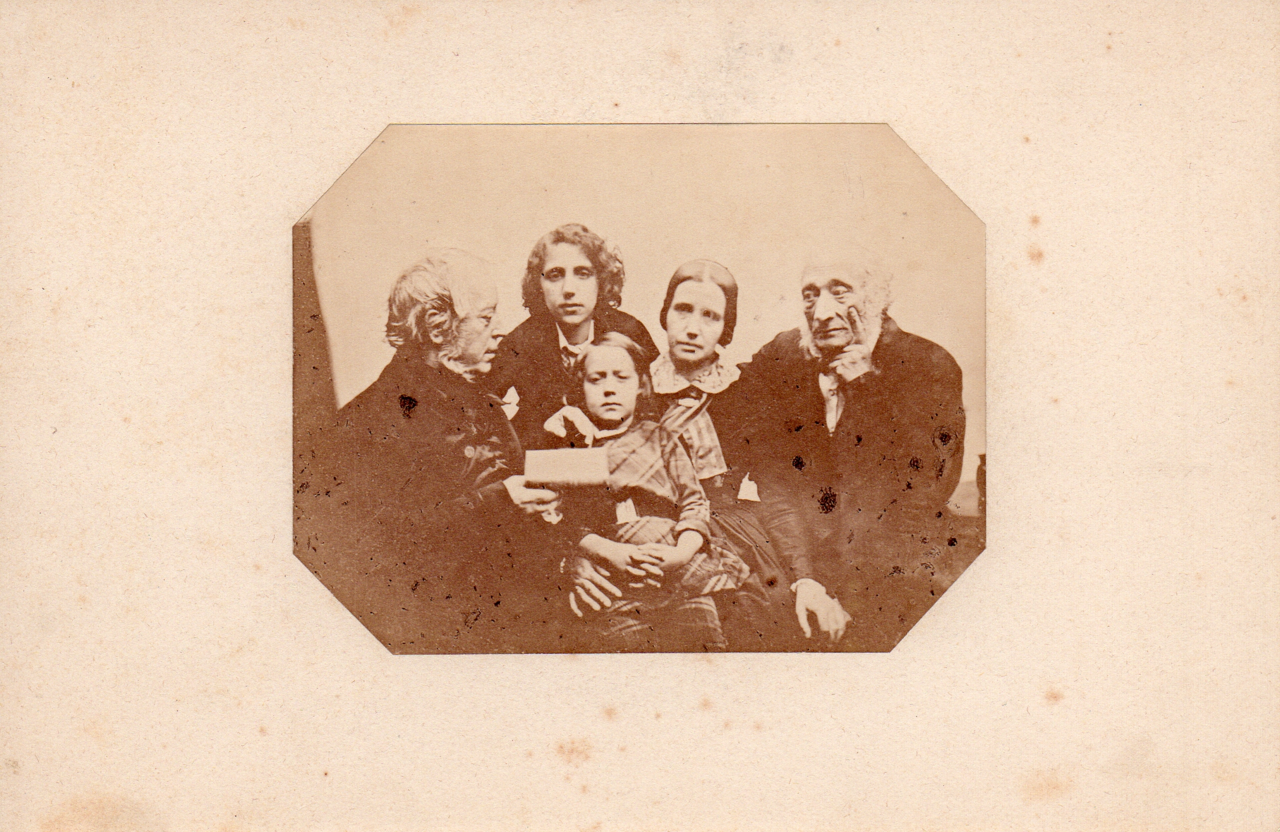
Franz Anton Brentano · Public domain
Franz Clemens Honoratus Hermann Josef Brentano (1838–1917) was a German philosopher and psychologist. His major work, *Psychology from an Empirical Standpoint* (1874), brought back the medieval scholastic idea of intentionality into modern philosophy. He began his career as a Catholic priest but left the priesthood in 1873, objecting to the dogma of papal infallibility as defined in *Pastor aeternus*. Afterward, he taught as a non-denominational professor, and his influence sparked work in linguistics, logic, mathematics, and experimental psychology among the younger philosophers known as the School of Brentano.
Brentano was born in Marienberg am Rhein, near Boppard. His father was Christian Brentano; his brother was Lujo Brentano; and his paternal uncle was Clemens Brentano, with Bettina von Arnim as an aunt. Other relatives included Gunda (née Brentano) and Friedrich von Savigny. His paternal grandfather had Italian roots, and among his ancestors were Sophie von La Roche and Johann Philipp Stadion, Count von Warthausen. He studied philosophy at universities in Munich, Würzburg, Berlin (under Adolf Trendelenburg), and Münster, focusing on Aristotle and scholastic thought. His 1862 dissertation at Tübingen, supervised by Franz Jakob Clemens, was titled *On the Several Senses of Being in Aristotle*. He then studied theology, entered seminaries in Munich and Würzburg, and was ordained a Catholic priest on 6 August 1864. In 1866, he completed his habilitation thesis, *The Psychology of Aristotle, in Particular His Doctrine of the Active Intellect*, and began lecturing at Würzburg, where his students included Carl Stumpf and Anton Marty. From 1870 to 1873, he was deeply involved in the debate over papal infallibility. Opposing it strongly, he left the priesthood and his academic post in 1873, though he remained religious and later gave lectures on God’s existence at Würzburg and Vienna.
In 1874, he published *Psychology from an Empirical Standpoint*. From 1874 to 1895, he taught at the University of Vienna. His students there included Edmund Husserl, Sigmund Freud, Tomáš Masaryk, Rudolf Steiner, Alexius Meinong, Carl Stumpf, Anton Marty, Kazimierz Twardowski, and Christian von Ehrenfels. He started as a full professor but was forced to give up his Austrian citizenship and professorship in 1880 to marry Ida Lieben, because Austro-Hungarian law forbade marriage for those who had been ordained, even if they later left the priesthood. He stayed on as a *Privatdozent*. After Twardowski left for Lwów and his wife died in 1894, Brentano retired and moved to Florence in 1896, marrying his second wife, Emilie Ruprecht, in 1897. At the outbreak of World War I, he relocated to Zürich, where he died in 1917.
Brentano is best known for reviving the concept of intentionality from scholastic philosophy, which he presented in his lectures and in *Psychology from an Empirical Standpoint*. He defined intentionality as the key trait of mental phenomena, setting them apart from physical phenomena. Every mental act is directed at an object—the intentional object. For example, a belief is about something believed, a desire about something desired. He used the phrase “intentional inexistence” to describe how objects exist in the mind. Mental phenomena have original intentionality, while physical phenomena can only have derived intentionality. He wrote: “Every mental phenomenon is characterized by what the Scholastics of the Middle Ages called the intentional (or mental) inexistence of an object… In presentation something is presented, in judgement something is affirmed or denied, in love loved, in hate hated, in desire desired and so on. This intentional in-existence is characteristic exclusively of mental phenomena.” He also distinguished between genetic psychology (the study of causes and development) and descriptive psychology (the analysis of mental phenomena as they appear).
- born
- 16 January 1838
- died
- 17 March 1917
- field
- Philosophy, psychology
- nationality
- German
- known_for
- Reintroduction of intentionality; descriptive psychology; theory of judgment
Verified Timeline
Quick Facts
- Region
- Western philosophy
- Era
- 19th-century philosophy
- Birth Name
- Franz Clemens Honoratus Hermann Josef Brentano
- Birth Date
- 16 January 1838
- Birth Place
- Marienberg am Rhein · de, / Rhineland, Prussia, German Confederation
- Death Date
- 17 March 1917 · 16 January 1838
- Death Place
- Zürich, Switzerland
- Education
- Ludwig-Maximilians-Universität München / Friedrich Wilhelm University of Berlin / University of Münster / University of Tübingen / (PhD, 1862) / University of Würzburg / (Dr. phil. hab., 1866)
- School Tradition
- School of Brentano / Aristotelianism / Intentionalism ("act psychology") / Empirical psychology / Austrian phenomenology / Austrian realism
- Institutions
- University of Würzburg / (1866–1873) / University of Vienna / (1873–1895)
- Main Interests
- Ontology / Psychology
- Thesis1 Title
- Von der mannigfachen Bedeutung des Seienden nach Aristoteles (On the Several Senses of Being in Aristotle)
Facts from the source article.
Lore & Background
Brentano was born at Marienberg am Rhein, near Boppard, on 16 January 1838. He studied philosophy at the Ludwig-Maximilians-Universität München, the University of Würzburg, the Friedrich Wilhelm University of Berlin (with Adolf Trendelenburg) and the University of Münster, with a special interest in Aristotle and scholastic philosophy. He wrote his dissertation in 1862 at Tübingen under the title *Von der mannigfachen Bedeutung des Seienden nach Aristoteles* (On the Several Senses of Being in Aristotle), with thesis advisor Franz Jakob Clemens. He was ordained a Catholic priest on 6 August 1864. In 1866, he defended his habilitation thesis, *Die Psychologie des Aristoteles, insbesondere seine Lehre vom Nous Poietikos* (The Psychology of Aristotle, in Particular His Doctrine of the Active Intellect, published 1867), and began to lecture at the University of Würzburg. Between 1870 and 1873, he was heavily involved in the debate on papal infallibility; a strong opponent of such dogma, he gave up his priesthood and his tenure in 1873. In 1874, Brentano published his major work, *Psychology from an Empirical Standpoint*. From 1874 to 1895, he taught at the University of Vienna, Austria-Hungary. Among his students were Edmund Husserl, Sigmund Freud, Tomáš Masaryk, Rudolf Steiner, Alexius Meinong, Carl Stumpf, Anton Marty, Kazimierz Twardowski, and Christian von Ehrenfels. He was forced to give up both his Austrian citizenship and his professorship in 1880 in order to marry Ida Lieben, but was permitted to stay at the university only as a *Privatdozent*. After the departure of Twardowski back to Lwów and the death of his wife in 1894, Brentano retired and moved to Florence in 1896, where he married his second wife, Emilie Ruprecht, in 1897. He transferred to Zürich at the outbreak of the First World War, where he died on 17 March 1917.
Reader's Guide
Brentano is best known for his reintroduction of the concept of intentionality—a concept derived from scholastic philosophy—to contemporary philosophy in his lectures and in his work *Psychologie vom empirischen Standpunkt* (Psychology from an Empirical Standpoint). He defined intentionality as the main characteristic of mental phenomena, by which they could be distinguished from physical phenomena: every mental phenomenon has content, is directed at an object (the intentional object). He used the expression 'intentional inexistence' to indicate the status of the objects of thought in the mind. Brentano introduced a distinction between genetic psychology (genetische Psychologie) and descriptive psychology (beschreibende or deskriptive Psychologie): genetic psychology is the study of psychological phenomena from a third-person point of view, while descriptive psychology aims to describe consciousness from a first-person point of view. He also claimed that 'Wahrnehmung ist Falschnehmung' ('perception is misconception'), maintaining that external, sensory perception could not tell us anything about the de facto existence of the perceived world, though we can be absolutely sure of our internal perception. However, in a reprinting of his *Psychologie vom Empirischen Standpunkte*, he recanted this previous view. Brentano's theory of judgment holds that a judgment depends on having a presentation, but this presentation does not have to be predicated; all judgments are existential, of the form '+A' (A exists) or '–A' (A does not exist).
Did You Know?
- Brentano was originally a Catholic priest, ordained on 6 August 1864, but withdrew from the priesthood in 1873 due to opposition to the dogma of papal infallibility defined in *Pastor aeternus*.
- Among his students were Edmund Husserl, Sigmund Freud, Tomáš Masaryk, and Rudolf Steiner.
- He was forced to give up his Austrian citizenship and professorship in 1880 to marry Ida Lieben, because Austro-Hungarian law denied matrimony to persons who had been ordained priests.
- Brentano claimed that 'Wahrnehmung ist Falschnehmung' ('perception is misconception'), though he later recanted this view in a reprinting of his *Psychologie vom Empirischen Standpunkte*.
- His theory of judgment holds that all judgments are existential, taking the form of either '+A' (A exists) or '–A' (A does not exist).
The Intentionality Revolution
Brentano's most enduring intellectual contribution was his revival of a medieval scholastic idea—intentionality—and its transplantation into modern philosophical discourse. In his 1874 masterwork, Psychology from an Empirical Standpoint, he argued that the defining mark of any mental act is its directedness toward an object. A belief is about something believed; a desire is about something desired; a judgment affirms or denies a content. He called this feature "intentional inexistence," meaning that every psychological phenomenon carries its object within itself as a kind of immanent reference. Crucially, he used this property to draw a sharp boundary between the mental and the physical: physical things can at best mediate an intentional relation in a secondary, derived way, but they cannot generate original intentionality on their own. This single criterion, he maintained, was sufficient to separate the realm of mind from the realm of matter, and it became a cornerstone for every subsequent theory of consciousness.
The Priest Who Became a Professor
Brentano's early career was shaped by a profound conflict between his faith and his conscience. Ordained a Catholic priest in 1864 after studying theology in Munich and Würzburg, he found himself in fierce opposition to the dogmatic definition of papal infallibility articulated in the 1870 encyclical Pastor aeternus. His resistance was not a quiet disagreement but a public, sustained engagement in the controversy between 1870 and 1873. The cost was steep: in 1873 he surrendered both his clerical orders and his university position at Würzburg. Yet he did not abandon religious inquiry; he continued to lecture on the existence of God at both Würzburg and later Vienna. His subsequent career as a non-denominational professor was thus born from a personal act of conscience, and it freed him to pursue philosophy without ecclesiastical constraint, setting the stage for the extraordinary intellectual circle he would go on to cultivate.
The School of Brentano and Its Legacy
The circle of thinkers who gathered around Brentano's lectures—often called the School of Brentano—became one of the most consequential intellectual networks of the late nineteenth and early twentieth centuries. Among his students were figures who would reshape entire disciplines: Edmund Husserl and the phenomenological movement, Sigmund Freud and psychoanalysis, Alexius Meinong and object theory, Kazimierz Twardowski and the Lviv-Warsaw school, Christian von Ehrenfels and Gestalt psychology, and Tomáš Masaryk, who would become a political leader. Brentano's teaching did not remain confined to philosophy; it radiated into linguistics, logic, mathematics, and experimental psychology, spawning research programs across multiple fields. His distinction between genetic psychology—the third-person, experiment-driven study of mental processes—and descriptive psychology, which aimed to characterize the structures of consciousness from the inside, gave his students methodological tools that outlived him. The breadth of his influence testifies to the generative power of a single professor's classroom.
A Life of Relocations and Personal Sacrifice
Brentano's personal life was marked by repeated uprooting and difficult compromises. Born in 1838 near Boppard on the Rhine into a family of considerable cultural pedigree—his paternal uncle was the poet Clemens Brentano, and his mother's side connected him to the Savigny and von Arnim families—he moved through several German universities before settling at Würzburg. His Viennese years (1874–1895) brought both his greatest academic productivity and a bitter personal cost: Austrian law barred former priests from marriage, so when he wished to wed Ida Lieben in 1880, he was compelled to relinquish his Austrian citizenship and his full professorship, continuing only as a Privatdozent. After Ida's death in 1894 and the departure of his protégé Twardowski to Lwów, Brentano retired to Florence in 1896, where he married Emilie Ruprecht the following year. When the First World War erupted, he relocated again, this time to Zürich, where he passed away in March 1917. His life thus traced a path from the Rhineland through Bavaria, Austria, Italy, and Switzerland.
Gallery


Frequently Asked Questions
Who is Franz Brentano?
Franz Brentano was a German philosopher and psychologist (1838–1917) best remembered for reshaping modern thought by reviving the medieval concept of intentionality. He is also associated with descriptive psychology and a distinctive theory of judgment.
What is Franz Brentano's most important work?
His 1874 book *Psychology from an Empirical Standpoint* is regarded as his magnum opus, in which he reintroduced the scholastic notion of intentionality into contemporary philosophical discussion. That single volume became a cornerstone for later developments in both psychology and phenomenology.
What does 'intentionality' mean in Brentano's philosophy?
For Brentano, intentionality captures the idea that every mental act—perceiving, judging, remembering—is inherently directed toward some object or content. He pulled this concept out of medieval scholasticism and made it a central lens through which consciousness could be studied.
How did Franz Brentano influence phenomenology?
His students, most famously Edmund Husserl and Alexius Meinong, built directly on his emphasis on the structure of mental acts and his descriptive method. Brentano's framework for analyzing judgment and representation provided the groundwork that Husserl expanded into full-blown phenomenology.
When and where was Franz Brentano born, and when did he die?
He was born on 16 January 1838 in Germany and died on 17 March 1917. His full name, Franz Clemens Honoratus Hermann Josef Brentano, reflects his Catholic heritage.
More in Philosophers 1-24
Spotted an error? Know more?
This is a living reference — every entry is fact-audited, and reader corrections feed straight into our audit queue. Suggest an edit · See this site's audit record