Postural orthostatic tachycardia syndrome
A dysautonomia causing excessive heart rate increase upon standing.
Last updated
Postural orthostatic tachycardia syndrome (POTS) is a disorder of the autonomic nervous system marked by an abnormal rise in heart rate upon standing. In adults, the heart rate increases by at least 30 beats per minute within ten minutes of upright posture, without a significant drop in blood pressure. It can cause a wide range of symptoms and is estimated to affect 1–3 million people in the United States, with onset most common around age 20 and a fivefold higher prevalence in females.
Signs and symptoms
Individuals with POTS experience a diminished quality of life due to disruptions in standing, sports, school, work, and other domains. The primary manifestation in adults is a heart rate increase of more than 30 beats per minute within ten minutes of standing, typically exceeding 120 beats per minute; for those aged 12 to 19, the minimum increase is 40 beats per minute. Common orthostatic symptoms—worsened by upright posture and relieved by reclining—include palpitations, light-headedness, chest discomfort, shortness of breath, nausea, weakness or heaviness in the lower legs, blurred vision, and cognitive difficulties.
Symptoms may be exacerbated by prolonged sitting or standing, alcohol, heat, exercise, or large meals. Up to one-third of patients experience fainting, and some develop orthostatic headaches or blood pooling in the extremities, seen as a reddish-purple color of the legs or hands upon standing. Chronic fatigue is reported by 48% of people with POTS, and 32% report sleep disturbances. Narrowed pulse pressures can occur, with a drop to 0 mm Hg upon standing in some cases, making it nearly impossible to stand.
Additional signs include excessive or absent sweating, heat intolerance, digestive issues, post-exertional malaise, coat-hanger pain, brain fog, and syncope or presyncope.
Mechanisms
The pathophysiology of POTS involves multiple interacting mechanisms that are poorly understood and can overlap. Many patients have low blood volume (hypovolemia), which reduces blood flow to the heart and triggers reflex tachycardia. In 30% to 60% of cases classified as hyperadrenergic POTS, norepinephrine levels are elevated on standing, often due to hypovolemia or partial autonomic neuropathy; a smaller minority have very high standing norepinephrine levels even without these factors, termed central hyperadrenergic POTS.
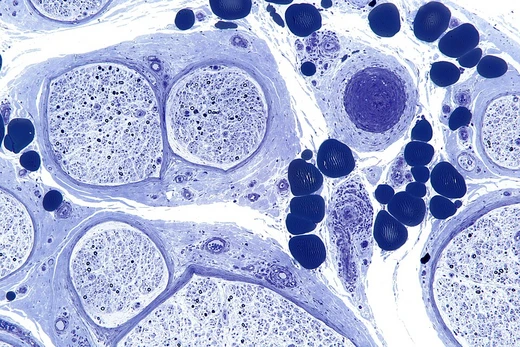
Neuropathic POTS involves denervation of sympathetic nerves in the lower limbs, leading to impaired blood vessel constriction and blood pooling, with heart rate increasing to compensate. Some patients show reduced myocardial MIBG reuptake on scintigraphy, possibly indicating autonomic cardiac neuropathy or reduced norepinephrine transporter expression. Increasing evidence suggests POTS may be autoimmune: many patients have elevated autoantibodies against the α1-adrenergic receptor and the muscarinic acetylcholine M4 receptor, and levels of anti-α1-adrenergic receptor autoantibodies correlate with symptom severity.
Diagnosis
Diagnosis of POTS can usually be made in primary care but may require specialists in complex cases. The criteria for patients aged 20 or older include a sustained heart rate increase of at least 30 beats per minute within ten minutes of upright posture (via tilt table test or standing), with symptoms such as lightheadedness, palpitations, tremulousness, generalized weakness, blurred vision, or fatigue that worsen when upright and improve when lying down.
For ages 12 to 19, the required increase is more than 40 beats per minute. There must be no sustained systolic blood pressure drop of 20 mmHg or more, symptoms must have lasted longer than three months, and other causes of orthostatic tachycardia—such as spinal fluid leak, dehydration, heart problems, adrenal insufficiency, epilepsy, or Parkinson's disease—must be ruled out. The active stand test or head-up tilt test is used; the active stand test is often sufficient, with heart rate and blood pressure measured every minute for ten minutes after lying down for 5 to 10 minutes.
Medication that affects heart rate is stopped beforehand. Compared to tilt table testing, the active stand test typically shows a smaller heart rate increase, and a repeat may be needed if POTS is strongly suspected but the initial test is unclear.
Treatment
No treatments for POTS have received FDA approval specifically for this condition, and no large clinical trials have confirmed effective strategies. Management combines multiple methods to counteract cardiovascular dysfunction and address symptoms. Increasing water intake—eight to ten cups daily, especially after waking—helps expand blood volume. Raising salt intake through food, salt tablets, or electrolyte solutions aids water retention and raises blood pressure.
When oral measures are insufficient, intravenous saline or desmopressin may be used. Small, frequent meals are recommended for those whose symptoms worsen with large meals; alcohol, high-carbohydrate foods, and excessive caffeine should be avoided because they can exacerbate symptoms or promote fluid loss. Extreme heat may also aggravate symptoms. Prolonged inactivity worsens POTS, and graded exercise or endurance training can relieve symptoms for some patients, though exercise should not be used for those with ME/CFS.
Aerobic exercise for 20 minutes a day, three times a week, is sometimes recommended for those who can tolerate it; semi-reclined positions such as recumbent cycling, rowing, or swimming may be easier initially.
Did You Know?
- In up to 50% of cases, symptom onset followed a viral illness.
- The risk of POTS-related diagnoses was 5.35 times higher after SARS-CoV-2 infection than after mRNA vaccination.
More in Peripheral Nervous System Disorders
Sources
Compiled from Wikipedia and the sources listed below. Text from Wikipedia is available under CC BY-SA 4.0; this entry is adapted from it.
- Wikipedia: Postural orthostatic tachycardia syndrome (CC BY-SA 4.0).
- Word definitions: the , each quoted from its Wikipedia article.
Spotted an error? Know more?
Reader corrections go straight into our review queue. Suggest an edit · How this site is sourced