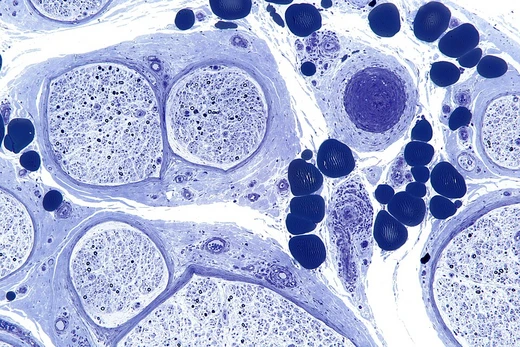
Alcoholic polyneuropathy
A peripheral nerve disorder from chronic alcoholism and nutritional deficiency.
Last updated
Alcoholic polyneuropathy is a neurological disorder characterized by simultaneous malfunction of peripheral nerves throughout the body, involving axonal degeneration in both sensory and motor neurons that initially affects the distal ends of the longest axons. It is caused primarily by chronic alcoholism, though vitamin deficiencies are known to contribute to its development, and it typically occurs in chronic alcoholics with some form of nutritional deficiency. Treatment may include nutritional supplementation, pain management, and abstaining from alcohol.
Quick Facts
- Field
- Neurology
Facts from the source article.
Signs and symptoms
An early warning sign in chronic alcoholics is weight loss, as it often indicates a nutritional deficiency that can lead to the disease. Alcoholic polyneuropathy usually develops gradually over months or years, and axonal degeneration may begin before symptoms appear. Sensory and motor symptoms typically develop symmetrically, with the legs affected first, followed by the arms; the hands become involved when symptoms reach above the ankle, producing a stocking-and-glove pattern of sensory disturbances.
Sensory issues include numbness, painful sensations, abnormal sensations such as pins and needles, and heat intolerance. Pain may be dull and constant or sharp and lancinating, and many individuals experience tenderness upon palpation of foot and leg muscles, along with cramping or a burning sensation in the feet and calves. Motor symptoms follow gradually and may include muscle cramps, weakness, erectile dysfunction in men, urinary problems, constipation, diarrhea, muscle wasting, and decreased or absent deep tendon reflexes.
Some individuals experience frequent falls and gait unsteadiness due to ataxia, which may result from cerebellar degeneration, sensory ataxia, or distal muscle weakness. Over time, difficulty swallowing, speech impairment, muscle spasms, and muscle atrophy may occur. Related disorders such as Wernicke–Korsakoff syndrome and cerebellar degeneration may also be present. Severity ranges from asymptomatic cases detectable only on careful examination to profound physical disability.
Causes
The general cause appears to be prolonged heavy alcohol consumption accompanied by a nutritional deficiency, though debate continues over whether the main cause is the direct toxic effect of alcohol or the result of alcoholism-related malnutrition; a 2019 metastudy found the relationship between ethanol toxicity and neuropathy remains unproven. Alcoholics often have disrupted social links and irregular lifestyles, leading to missed meals and poor dietary balance, and alcoholism can cause loss of appetite, alcoholic gastritis, and vomiting that reduce food intake.
Alcohol abuse damages the gastrointestinal lining and reduces nutrient absorption, and the combination of these factors may result in a nutritional deficiency linked to the development of alcoholic polyneuropathy. Evidence shows that providing adequate vitamins improves symptoms despite continued alcohol intake, suggesting vitamin deficiency is a major factor; experimental models in rats and monkeys found no convincing evidence that proper nutrition along with alcohol produces polyneuropathy.
Most individuals with alcoholic polyneuropathy have some degree of nutritional deficiency. Alcohol increases the metabolic demand for thiamine because of its role in glucose metabolism, and thiamine levels are usually low in alcoholics due to decreased intake and alcohol's interference with intestinal absorption. Thiamine is important in three reactions of glucose metabolism, and its deficiency may prevent neurons from maintaining necessary ATP levels through impaired glycolysis, which could explain impaired nerve conduction, though other factors likely play a part.
Management
Alcoholic polyneuropathy has no known cure, but several treatments can help control symptoms and support a person's ability to live independently. Physical therapy can be useful for strengthening weakened muscles and improving balance and walking. The most important step for managing the condition is to stop drinking alcohol. Abstinence supports a healthier diet and helps keep the neuropathy from getting worse or coming back.
After quitting, significant recovery usually takes a few months, though some people may notice minor improvements sooner due to the general benefits of detoxification. If a person continues to drink, taking vitamins alone is unlikely to improve symptoms for most. Nutritional therapy using intravenous multivitamins can help until the person is able to eat properly again, and vitamin supplements—especially thiamine—are part of treatment. In more serious cases of nutritional deficiency, a doctor may prescribe 320 mg of benfotiamine daily for four weeks, followed by 120 mg daily for another four weeks, to restore thiamine levels.
Painful nerve sensations, called dysesthesias, can be managed with gabapentin or amitriptyline, often combined with over-the-counter pain relievers like aspirin, ibuprofen, or acetaminophen. Tricyclic antidepressants such as amitriptyline or carbamazepine may ease stabbing pains and have sedative effects. Anticonvulsants like gabapentin or pregabalin work by blocking the reuptake of norepinephrine and serotonin to relieve nerve pain, but they take weeks to become effective and are rarely used for sudden pain. Topical creams containing capsaicin can also help with minor muscle and joint aches.
Epidemiology
Alcoholic polyneuropathy is a nerve condition linked to long-term heavy drinking. In 2020, the National Institutes of Health suggested that between one-quarter and two-thirds of chronic alcohol users in the United States develop some form of neuropathy. When looking specifically at sensory and motor polyneuropathy, reported rates range from 10% to 50% of alcoholics, though this varies with how patients are selected and how the condition is diagnosed.
If electrodiagnostic tests are used, the condition can be detected in up to 90% of those examined. How widespread and severe the disease becomes depends on local diet, a person's drinking patterns, and genetics. Large studies show that the strongest predictor of both severity and likelihood is the total amount of alcohol consumed over a lifetime. Nutrition, age, and other medical conditions play smaller roles.
For reasons not yet understood, women are more often affected. Some alcoholic drinks contain bioactive congeners, meaning different beverages may carry different risks.
Nutritional deficiencies are also a factor, particularly of thiamine, niacin, pantothenic acid, pyridoxine, biotin, vitamin B12, folic acid, and vitamin A. A genetic component may explain higher rates in certain ethnic groups. One example involves a variant of the ALDH2 enzyme, common among Southeast and East Asians, that slows the breakdown of acetaldehyde. The buildup of this toxic compound may contribute to nerve damage.
Did You Know?
- The first description of symptoms associated with alcoholic polyneuropathy was recorded by John C. Lettsome in 1787, noting hyperesthesia and paralysis in legs more than arms.
- Alcoholic polyneuropathy is not life-threatening but may significantly affect quality of life, with effects ranging from mild discomfort to severe disability.
- A good prognosis may be given for mild neuropathy if the person has abstained from drinking for 3–5 years.
More in Peripheral Nervous System Disorders
Sources
Compiled from Wikipedia and the sources listed below. Text from Wikipedia is available under CC BY-SA 4.0; this entry is adapted from it.
- Wikipedia: Alcoholic polyneuropathy (CC BY-SA 4.0).
- Word definitions: the , each quoted from its Wikipedia article.
Spotted an error? Know more?
Reader corrections go straight into our review queue. Suggest an edit · How this site is sourced