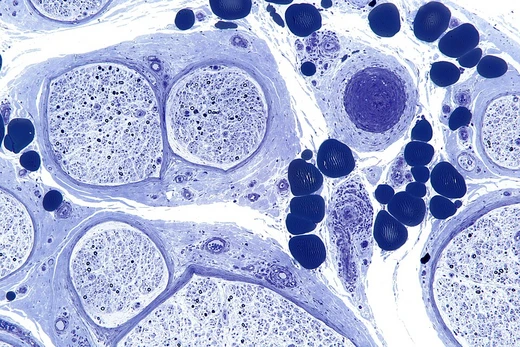
Anti-MAG peripheral neuropathy
An autoimmune neuropathy targeting myelin-associated glycoprotein.
Last updated
Anti-MAG peripheral neuropathy is a disorder in which the immune system produces antibodies against myelin-associated glycoprotein, damaging Schwann cells and leading to nerve dysfunction. It accounts for about 10% of peripheral neuropathy cases and typically presents with hand tremors or difficulty walking, along with sensory and motor deficits.
Quick Facts
- Field
- Immunology, neurology
Facts from the source article.
Background
Myelin, composed of multiple layers of closely opposed membrane wrapped around the axon, acts as an electrical insulator that speeds action potential conduction up to about fifteen times faster, enabling rapid and accurate signal transmission. Disruption of the myelin sheath allows leakage of the action potential, slowing nerve messages and impairing function. Schwann cells, the glial cells of the peripheral nervous system, create and maintain these myelin sheaths; damage to them leads to myelin degeneration and communication problems.
Myelin-associated glycoprotein (MAG) is a type I transmembrane glycoprotein found in the membranes of Schwann cells and oligodendrocytes. Its expression is specific to myelin-forming cells, beginning early in myelination and remaining high in mature animals, suggesting roles in both formation and maintenance. Research with MAG knockout mice shows that early peripheral nervous system development is relatively normal without MAG, but these mice develop motor deficits with age due to degeneration of myelinated axons, indicating MAG's importance in sheath maintenance.
Symptoms and signs
Patients typically experience sensory ataxia and mild to moderate muscle weakness, often starting in the toes and fingers and progressing inward. A mild to moderate tremor in the extremities is common and worsens as the disease advances. In later stages, debilitating tremors, complete sensory loss in limbs, and extensive muscle atrophy may occur.
Diagnosis
Diagnosis centers on detecting anti-MAG antibodies in patient sera, most effectively using an ELISA assay. Additional biological indicators include elevated cerebral spinal fluid proteins and elevated IgM monoclonal levels, which can be tested through serum samples or spinal fluid obtained via spinal tap and analyzed with an assay or blot.
Treatments
Various drug and therapeutic treatments exist, though many have proven ineffective. Conventional therapies such as steroids, immunosuppressants, chemotherapy, and intravenous immunoglobulin have not helped most patients, though immunotherapy provides relief for some minor symptoms. The combination of chlorambucil, a chemotherapy drug used as an immunosuppressant, and prednisone, a steroid immunosuppressant, yields minimal to no benefits in most patients, with only a small number experiencing minor improvements like decreased tremors; it is not effective in severe cases and is not considered a long-term therapy.
Cyclophosphamide, used for lymphomas, slows cell growth and acts as an immunosuppressant, producing significant improvements in sensory loss and quality of life within a few months, but carries a risk of cancer and is therefore not used regularly. Fludarabine, an immunosuppressant for hematological malignancies, has shown significant improvement in neuropathy patients but is not used regularly due to a lack of studies and potential toxicity, requiring about a year to stabilize the patient. Intravenous immunoglobulin has shown no promise in treating anti-MAG neuropathies.
Did You Know?
- MAG is a type I transmembrane protein with domains both inside and outside the cell membrane.
- Current research focuses on immunosuppressants that target antibodies to prevent Schwann cell damage.
More in Peripheral Nervous System Disorders
Sources
Compiled from Wikipedia and the sources listed below. Text from Wikipedia is available under CC BY-SA 4.0; this entry is adapted from it.
- Wikipedia: Anti-MAG peripheral neuropathy (CC BY-SA 4.0).
- Word definitions: the , each quoted from its Wikipedia article.
Spotted an error? Know more?
Reader corrections go straight into our review queue. Suggest an edit · How this site is sourced