Proximal diabetic neuropathy
A diabetic nerve disorder causing proximal leg pain and weakness.
Last updated
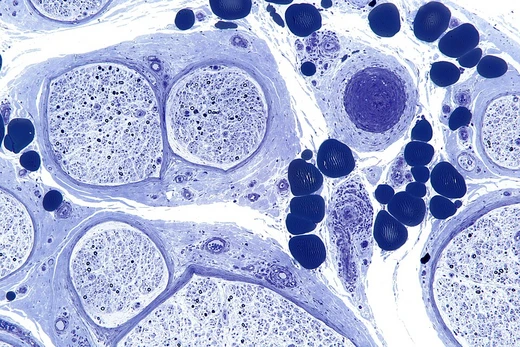
Proximal diabetic neuropathy, also called diabetic amyotrophy, is a complication of diabetes mellitus that damages nerves of the lumbosacral plexus. It primarily affects the thighs, hips, buttocks, and lower legs, causing muscle wasting, weakness, and pain. This condition is less common than distal polyneuropathy and is most frequently seen in people with type 2 diabetes.
Quick Facts
- Most common in
- type 2 diabetes
- Nerves affected
- lumbosacral plexus
Facts from the source article.
Signs and symptoms
The first symptom is usually sudden pain in the buttocks, hips, thighs, or legs, often starting on one side but possibly spreading to both sides. Variable weakness in proximal lower limb muscles, such as the thigh and buttocks, follows. Muscle twitching (fasciculations) may occur in affected muscles, and weight loss is sometimes associated. Unlike diabetic polyneuropathy, which affects the feet and lower legs, the pain and weakness of proximal diabetic neuropathy onset more quickly and involve nerves closer to the torso.
Causes
This condition most commonly affects people with type 2 diabetes, though it can occur in those without diabetes (nondiabetic lumbosacral radiculoplexus neuropathy). Hyperglycemia likely plays a role but may not be the direct cause. Proposed mechanisms include endoneurial microvessel disease, where pericytes are damaged by high blood sugar, leading to nerve ischemia, or an immune-mediated microvasculitis that also causes ischemia.
Did You Know?
- Medications such as gabapentin or pregabalin can help reduce pain.
- The condition is often monophasic and improves after initial onset, though pain and weakness usually do not completely resolve.
More in Peripheral Nervous System Disorders
Sources
Compiled from Wikipedia and the sources listed below. Text from Wikipedia is available under CC BY-SA 4.0; this entry is adapted from it.
- Wikipedia: Proximal diabetic neuropathy (CC BY-SA 4.0).
- Word definitions: the , each quoted from its Wikipedia article.
Spotted an error? Know more?
Reader corrections go straight into our review queue. Suggest an edit · How this site is sourced