Heretic
A wizard's blade and four elemental schools carve a path where guns cannot follow.
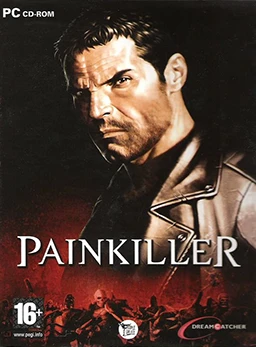
Heretic is a 1994 first-person shooter developed by Raven Software and published by id Software. Set in a high-fantasy world, it cast the player as a wizard wielding elemental magic and a sword, offering a distinctly magical alternative to the gun-and-gore formula of its contemporaries. It is a standalone title and is not part of the Painkiller franchise; it predates Painkiller by a decade and belongs to its own lineage alongside its sequel, Hexen: Beyond Heretic.
As one of the earliest fantasy-themed FPS titles, Heretic demonstrated that the first-person shooter genre could support a non-military, spell-based identity. Its elemental magic system and sword combat influenced the design language of later fantasy shooters and established Raven Software as a creative force in the medium.
Quick Facts
- Developer
- Raven Software
- Publisher
- id Software
- Release year
- 1994
- Genre
- First-person shooter; Fantasy
- Platform
- PC (DOS)
- Player role
- Wizard; Mage
- Sequel
- Hexen: Beyond Heretic (1995)
Lore & Background
In the world of Heretic, a dark force has corrupted the land and its inhabitants. The player, a lone wizard of considerable power, must journey through cursed forests, ruined temples, and subterranean lairs to drive back the encroaching darkness. Unlike the industrial corridors of other shooters, every environment is drenched in gothic and high-fantasy imagery: torch-lit stone halls, overgrown ruins, and caverns filled with monstrous creatures.
The defining mechanical identity is the elemental magic system. The wizard can switch between four schools—Fire, Air, Water, and Earth—each granting a distinct ranged spell and altering the feel of combat. A sword serves as the reliable close-range option, and the interplay between melee and spellcasting gives encounters a rhythmic, almost martial quality that sets Heretic apart from purely gun-based titles.
The game's tone is one of mythic solitude. There is no squad, no briefing officer, no modern military hardware. The wizard walks alone through a world that has forgotten the old pacts, fighting to restore balance with nothing but will, blade, and the raw forces of nature.
Reader's Guide
Raven Software set out to build a shooter that felt like a fantasy novel rather than a war film. The team leaned into a hand-painted, gothic aesthetic and designed an elemental magic system—Fire, Air, Water, Earth—that let the player swap spell schools mid-combat, a mechanic that was genuinely novel in 1994. The proprietary engine handled the sword-swing animations and particle-based spell effects without the overhead of a licensed middleware package.
Critics and the early PC-gaming community received Heretic as a welcome tonal shift alongside Doom. It was praised for its level design, the tactile feel of sword combat, and the way the magic system rewarded experimentation. It was not a commercial blockbuster, but it carved a clear niche.
Its legacy is quieter but durable. The fantasy-FPS lane it opened—spell-casting, melee, non-military settings—echoes in later titles across the genre. It also cemented Raven Software's reputation as a studio willing to differentiate through theme and systems rather than raw firepower. Heretic stands as a proof-of-concept that the first-person shooter could be a wizard's story as easily as a soldier's.
Did You Know?
- The game was developed by Raven Software, the same team that would later produce Hexen: Beyond Heretic and contribute to the Duke Nukem 3D project.
- Heretic was published by id Software, giving it distribution and visibility alongside the Doom franchise, yet it occupied a completely different thematic space.
- The sword in Heretic functions as a primary melee weapon with its own dedicated animation set, making close-quarters combat a deliberate design pillar rather than a fallback.
More in Development & Legacy
Elsewhere in Painkiller
Spotted an error? Know more?
Reader corrections go straight into our review queue. Suggest an edit · How this site is sourced