
Frozen orbit
An orbit minimizing perturbations for long-term stability.

NASA/GSFC/Arizona State University · Public domain
A frozen orbit is a satellite path where the effects of orbital disturbances are reduced by setting the initial orbital parameters just right. These disturbances, or perturbations, can come from the central body not being a perfect sphere, among other causes. In a frozen orbit, a satellite’s altitude at the same point in each loop stays nearly unchanged for a long time. Changes in tilt, the high and low points of the orbit, and its oval shape are kept small because the starting values are chosen so that these disturbances cancel each other out. This creates a stable orbit over the long term, cutting down on the need for fuel to make corrections.
For satellites circling Earth, changes to their paths come from the planet’s bulge, the pull of the Sun and Moon, sunlight pressure, and air resistance. These forces must be countered with maneuvers to keep the satellite where it’s wanted. A geostationary satellite, for instance, needs speed changes of about 40–50 meters per second each year to stay put. For Sun-synchronous satellites, a planned shift of the orbit plane, called precession, can be useful. These missions often use a nearly circular orbit at 600–900 kilometers high, with a tilt between 97.8 and 99.0 degrees, so the plane’s precession matches Earth’s movement around the Sun—roughly one degree per day. This means the satellite passes over places on Earth at the same local time each orbit. For example, in a “Dawn-Dusk” orbit, it always crosses points where it’s 6 a.m. on the northbound leg and 6 p.m. on the southbound leg. In a “Noon-Midnight” orbit, the Sun lies in the orbit plane, so it crosses noon on the northbound leg and midnight on the southbound leg. These orbits are good for Earth observation missions like weather, imaging, and mapping.
The Earth’s bulge also affects the orbit’s oval shape. But there are nearly circular orbits where the eccentricity vector has no long-term or slow drift—only small, repeating changes that match the orbital period. Such an orbit is perfectly periodic, aside from the plane’s precession, and is called a frozen orbit. These are often chosen for Earth observation missions that need repeated views under steady conditions. Many Earth observation satellites run in Sun-synchronous frozen orbits for these observational benefits.
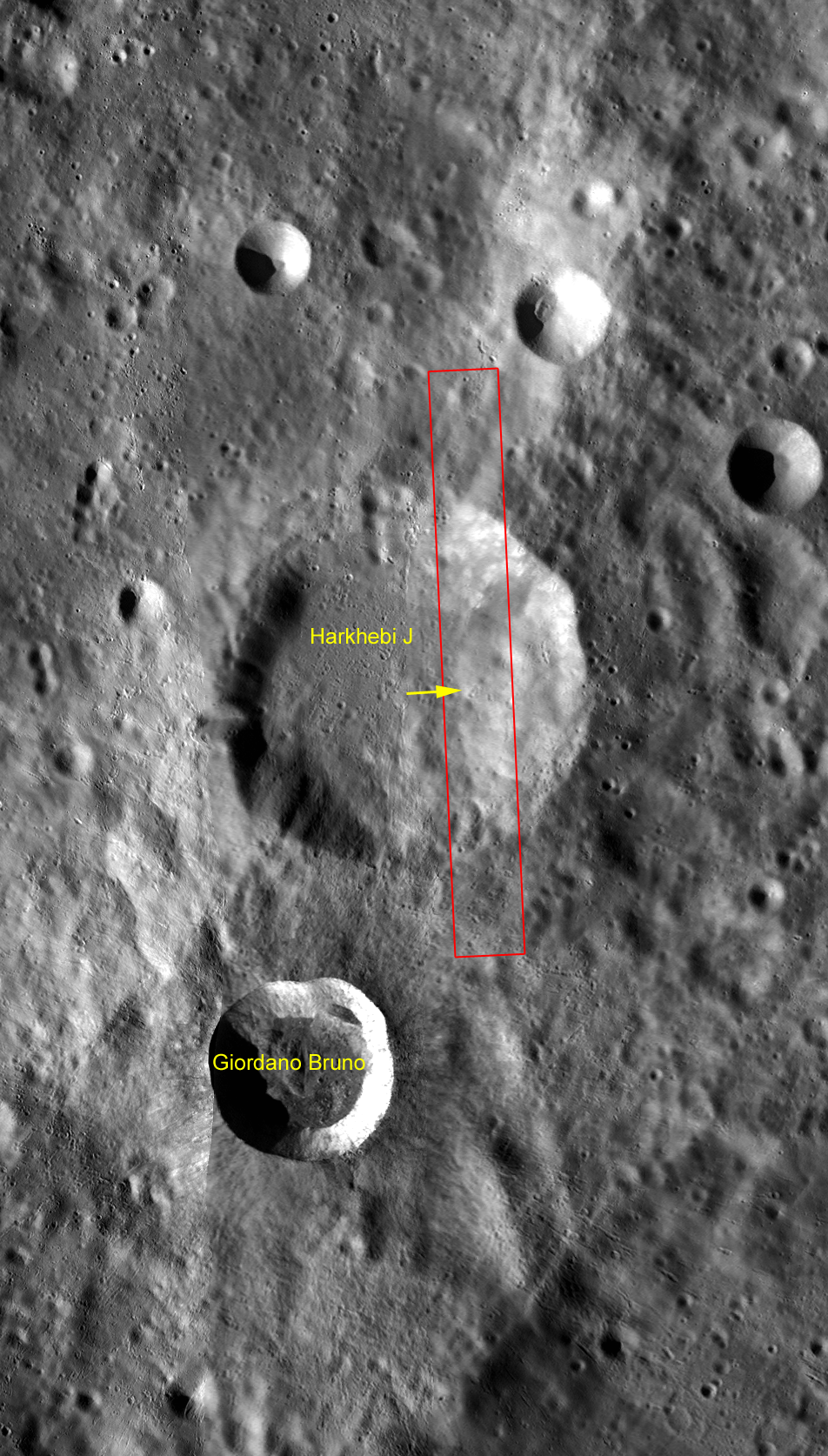
For the Moon, studies have found that most low lunar orbits are unstable. Four frozen lunar orbits exist at tilts of 27°, 50°, 76°, and 86°. As NASA noted in 2006, lunar mascons—dense regions—pull on a satellite passing 50 or 60 miles overhead, tugging it in various directions. Without periodic rocket boosts, most satellites in low lunar orbits, under about 60 miles or 100 kilometers, will eventually crash into the Moon. The frozen orbits, however, allow a spacecraft to stay in low orbit indefinitely. The Apollo 15 subsatellite PFS-1 had a tilt of 28°, close to one frozen orbit, but PFS-2, with an 11° tilt, was less fortunate. For lunar orbits between 500 and 20,000 kilometers high, Earth’s gravity causes disturbances. Research from 2005 identified a class of elliptical, inclined lunar orbits that resist these effects, making them frozen as well.
The classical theory behind frozen orbits comes from Dirk Brouwer’s analytical work for NASA in 1959. It examines how the Earth’s shape, especially the J₂ and J₃ terms in the gravity model, perturbs the orbit. The J₂ term causes a shift in the orbital pole, which can be expressed in orbital elements. The J₃ term, from Earth’s slight pear shape, adds its own perturbations. The same analysis shows that J₂ also affects the eccentricity vector’s components, with one part being the in-plane perturbation from the in-plane force and another part coming from the new position of the ascending node.
- field
- Orbital mechanics
- known_for
- Long-term stable orbit minimizing perturbations
- applications
- Earth observation, Sun-synchronous orbits, lunar orbits
Lore & Background
For spacecraft in orbit around Earth, changes to orbital parameters are caused by Earth's oblateness, gravitational attraction from the Sun and Moon, solar radiation pressure, and air drag. These perturbing forces must be counteracted by maneuvers to keep the spacecraft in the desired orbit. Perturbing forces caused by Earth's oblateness also perturb eccentricity, but near-circular orbits exist with no secular or long-periodic perturbations of the eccentricity vector, only periodic perturbations equal to the orbital period. Such an orbit is perfectly periodic (except for orbital plane precession) and is called a frozen orbit.
Reader's Guide
Frozen orbits are significant because they provide long-term stability for artificial satellites, reducing the need for station-keeping propellant. This is especially valuable for Earth observation missions where repeated observations under constant conditions are desirable. The classical theory of frozen orbits is based on analytical perturbation analysis for artificial satellites, considering the J2 and J3 terms of the geopotential model. For lunar orbits, scientists have identified four frozen lunar orbits at inclinations of 27°, 50°, 76°, and 86°, as lunar mascons make most low lunar orbits unstable. These orbits are often the preferred choice for Earth observation missions, including Sun-synchronous frozen orbits.
Did You Know?
- Four frozen lunar orbits have been identified at 27°, 50°, 76°, and 86° inclination.
- The orbit of the Apollo 15 subsatellite PFS-1 had an inclination of 28°, close to one of the frozen lunar orbits.
- For Sun-synchronous spacecraft, an appropriate inclination of 97.8–99.0 degrees is selected so that precession equals about 1 degree per day.
Orbits Defined by Their Central Body
The taxonomy of gravitational orbits begins with identifying which celestial object sits at the center of the path. At the broadest scale, a galactocentric orbit traces a loop around the core of a galaxy—the Sun itself follows this pattern as it circles the Milky Way's center. Stepping inward, heliocentric orbits encircle the Sun, encompassing every planet, comet, and asteroid in our Solar System, along with countless artificial satellites and fragments of space debris. Notably, moons do not qualify as heliocentric; they instead orbit their parent planet. Geocentric orbits center on Earth, accommodating both the Moon and human-made satellites. Selenocentric orbits (from Selene) describe paths around Earth's Moon, while areocentric orbits (from Ares) do the same for Mars. For the remaining planets—Mercury, Venus, Jupiter, Saturn, and Uranus—Greek-derived terms exist (hermeocentric, cytherocentric, zenocentric, kronocentric, uranocentric) but remain far less established in common usage than their Earth and Mars counterparts.
Altitude Tiers of Earth Orbit
Once an orbit is confirmed as geocentric, its altitude above the surface determines its practical category. Very low Earth orbit spans roughly 100 to 450 kilometers, while low Earth orbit extends up to 2,000 kilometers. Medium Earth orbit occupies the band between 2,000 km and just under 35,786 km, and it hosts the constellation of navigation satellites—GPS, GLONASS, Galileo, and BeiDou—with GPS spacecraft specifically at 20,200 km altitude and a period near twelve hours. At 35,786 km altitude (semi-major axis of 42,164 km), geosynchronous orbit matches Earth's sidereal rotation; a geostationary orbit is the special zero-inclination case that hovers over a fixed equatorial point. Beyond that altitude lies high Earth orbit. A transatmospheric orbit is a special case where the apogee clears 100 km but the perigee dips back into the atmosphere. Perturbation dynamics shift with altitude: below roughly 800 km, atmospheric drag dominates non-gravitational forces, whereas above that threshold solar radiation pressure takes over—though the crossover height fluctuates with solar activity.
Inclination and Direction of Travel
An orbit's tilt relative to a reference plane and its direction of travel further refine its classification. A non-inclined orbit lies flat against its reference plane—equatorial if that plane is the equator, ecliptic if it is the ecliptic. A near-equatorial orbit, with inclination close to zero, grants a single spacecraft rapid revisit capability over equatorial ground sites. At the opposite extreme, a polar orbit sweeps over both poles each revolution, carrying an inclination near 90 or −90 degrees. The polar Sun-synchronous variant adds the constraint of crossing the equator at the same local solar time every pass, a property that keeps shadow patterns consistent and makes it ideal for imaging satellites. Directionally, a prograde orbit travels with the primary's rotation (eastward on Earth) and is conventionally assigned an inclination under 90 degrees; a retrograde orbit runs against that rotation and is specified above 90 degrees. Few Earth satellites are deliberately launched retrograde because the rocket already inherits an eastward velocity component from the planet's spin, so flying against it demands extra fuel.
Eccentricity: From Circles to Escape
The shape of an orbit is governed by its eccentricity, and the taxonomy splits paths into closed (periodic) and open (escape) families. Circular orbits, with an eccentricity of exactly zero, trace a perfect circle. Elliptical orbits carry an eccentricity between zero and one, producing a stretched oval. Parabolic and hyperbolic paths are open—vehicles on them never return—while radial orbits can belong to either family. Two named elliptical trajectories deserve special attention. The geostationary or geosynchronous transfer orbit (GTO) places its perigee at low-Earth-orbit altitude and its apogee at the geostationary altitude, serving as a stepping-stone for communication satellites. The Hohmann transfer orbit is a maneuver that moves a spacecraft between two circular orbits, representing one of the most fuel-efficient ways to change altitude. Together, these classifications—centric, altitude-based, inclination-based, directional, and eccentricity-based—form a comprehensive framework for describing any gravitational path in space.
Gallery


Frequently Asked Questions
What is a frozen orbit?
A frozen orbit is a satellite orbit whose parameters—altitude, inclination, and others—are deliberately chosen so that the natural gravitational drift of the central body is essentially cancelled out. The orbit therefore holds its shape and altitude nearly perfectly across thousands of revolutions without requiring fuel corrections.
Why is it called 'frozen'?
The name is a metaphor: the key orbital elements are 'locked' or 'frozen' in place rather than slowly creeping to new values the way a typical orbit would. To an observer, the geometry appears static over very long timescales, as if time had been paused for that particular path.
What perturbations is a frozen orbit designed to counteract?
The dominant effect is the central body's equatorial bulge (the J2 zonal harmonic), which tugs on a satellite unevenly and gradually shifts its perigee and altitude. Smaller contributions come from lunar and solar third-body gravity, higher-order geopotential terms, and, at lower altitudes, residual atmospheric drag.
Where are frozen orbits used in practice?
They are a staple of Earth-observation and weather-satellite missions in sun-synchronous configurations, where a stable altitude and predictable nodal precession keep imaging geometry consistent. The same tuning principle is applied to lunar orbits, where a carefully selected set of parameters yields a long-lived, low-maintenance path around the Moon.
How does a frozen orbit reduce mission cost?
Because the orbit self-corrects against the dominant perturbations, the spacecraft needs far fewer station-keeping burns to remain on station. That means less propellant at launch, a lighter vehicle, or a longer operational lifetime before fuel is exhausted—direct savings in every one of those areas.
More in Orbits And Celestial Mechanics 1-24
Spotted an error? Know more?
This is a living reference — every entry is fact-audited, and reader corrections feed straight into our audit queue. Suggest an edit · See this site's audit record