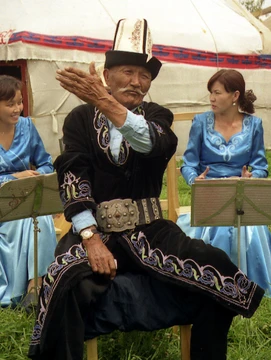
Oral poetry
Poetry composed and transmitted without writing.

Oral poetry is poetry created and passed along without writing. However, because written and spoken literature can intertwine in complex ways, this definition isn't always clear-cut.
Some consider any poetry performed live to be oral poetry. In many cultures, it overlaps with or is identical to song. Though "oral" literally means "of the mouth," some traditions—like African talking drums—perform it through other means. Oral poetry is most clearly found in oral cultures, but it can also thrive in highly literate ones.
It differs from oral literature in general, since oral literature includes non-poetic language registers. In most oral traditions, poetry is defined by following metrical rules; non-poetic examples in Western culture include some jokes, speeches, and storytelling.
A key movement in studying oral poetry was the oral-formulaic theory by Milman Parry and Albert Lord. It helped bring oral poetry into academic literary study and showed how stock phrases allowed poets to improvise verse. Their work led to the view that orally improvised poetry—as opposed to poetry composed without writing but memorized and performed later—is often seen as the prime example. Examples include the Serbo-Croatian guslars' epics, Basque bertsolaritza, and freestyle rap.
However, much oral poetry is memorized word-for-word, though wording not essential to sense or metre tends to shift between performances and performers. While the original composition may have been unwritten, memorized traditions sometimes start from a written text. Likewise, memorized poems can be written down, and those written versions can then influence memorized ones. Prominent examples include some nursery rhymes, ballads, and medieval Scandinavian skaldic verse.
Poetic improvisation remains a living tradition worldwide. Regional and national traditions include: Argentina's payada, Basque bertsolaritza, Malta's Għana, Italy's canto a braccio (Lazio) and improvvisazione in ottava rima (Tuscany), other Italian traditions like stornelli, Arabia's vernacular Nabati, and American hip hop's rap.
- Field
- Oral poetry
- Known for
- Composition and transmission without writing; overlap with song; performance in oral and literate cultures
Lore & Background
Oral poetry is sometimes considered to include any poetry which is performed live. In many cultures, oral poetry overlaps with, or is identical with, song. Although the term oral etymologically means 'to do with the mouth', in some cultures oral poetry is also performed by other means, such as talking drums in some African cultures. Oral poetry exists most clearly within oral cultures, but it can survive, and indeed flourish, in highly literate cultures.
Oral poetry differs from oral literature in general because oral literature encompasses linguistic registers which are not considered poetry. In most oral literature, poetry is defined by the fact that it conforms to metrical rules; examples of non-poetic oral literature in Western culture include some jokes, speeches and storytelling. An influential movement in the study of oral poetry has been the oral-formulaic theory developed by Milman Parry and Albert Lord, which showed how stock phrases could enable poets to improvise verse. One consequence of their work is that orally improvised poetry is sometimes seen as the example par excellence of oral poetry.
Much oral poetry, however, is memorised verbatim – though the precise wording, particularly of words which are not essential to sense or metre, do tend to change from one performance to another. Although the original composition of a memorised oral poem may have been undertaken without the use of writing, memorial traditions sometimes originate in a written text. Likewise, memorised oral poems can come to be written down, leading to a situation in which written versions in turn influence memorised versions.
Reader's Guide
Oral poetry is significant because it represents a fundamental mode of human artistic expression that does not rely on writing. The oral-formulaic theory of Milman Parry and Albert Lord helped bring oral poetry within the realms of academic literary study and illuminated how poetic form and orality interrelate. Their work showed that stock phrases enable poets to improvise verse, making orally improvised poetry—such as the epics of Serbo-Croatian guslars, Basque bertsolaritza, and freestyle rap—a key example of the form. However, much oral poetry is memorised verbatim, and the boundaries between written and oral traditions are often blurred: memorial traditions can originate in written texts, and memorised poems can be written down, influencing later oral versions. The definition of oral poetry remains contested, as the complex relationships between written and spoken literature in some societies make a simple definition hard to maintain. Regional traditions such as Argentina's payada, Malta's Għana, Italy's canto a braccio and improvvisazione in ottava rima, Arabia's Nabati, and American rap demonstrate the living, global nature of oral poetry.
More in Oral literature 1-24
Spotted an error? Know more?
Reader corrections go straight into our review queue. Suggest an edit · How this site is sourced