Gawęda
Polish oral and literary genre of stylized noble tales.

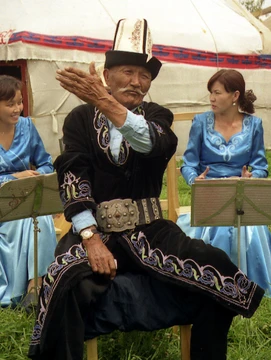
Gawęda is a genre of Polish oral folklore and an epic literary form stylized as an oral tale. It is characterized by freedom of composition, rich digressions, and language close to colloquial speech. The word literally means 'oral tale.' During the Romantic period in the first half of the 19th century, the 'szlachta gawęda' (gawęda szlachecka) developed, telling of the lives and manners of the nobility and affirming the Sarmatian world of values.
- Field
- Polish oral folklore and literary genre
- Nationality
- Polish
- Known for
- Epic literary works stylized as oral tales, especially the szlachta gawęda of the Romantic period
- Leading author
- Henryk Rzewuski (Pamiątki Soplicy, 1839–41)
- 20th century representative
- Melchior Wańkowicz (Tędy i owędy)
Lore & Background
The gawęda genre has roots in Polish oral folklore, with the word itself meaning 'oral tale.' In the first half of the 19th century, during the Romantic period, the literary subgenre 'gawęda szlachecka' emerged, focusing on the lives and manners of the nobility and upholding Sarmatian values. The leading author of this line was Henryk Rzewuski, whose work Pamiątki Soplicy (Memoirs of Soplica, 1839–41) became a key example. Other authors included K. Gaszyński (Kontuszowe pogadanki), Władysław Syrokomla (Urodzony Jan Dęboróg), Wincenty Pol (Wieczór przy kominku), A. Gorczyński, K.W. Wójcicki, and Ignacy Chodźko (Pamiętniki kwestarza).
Reader's Guide
The gawęda genre played a significant role in the development of the Polish historical novel. Its influence extended beyond dedicated works, with gawęda elements appearing in major literary works such as Adam Mickiewicz's Pan Tadeusz, Juliusz Słowacki's Preliminaria peregrynacji do Ziemi Świętej JO. księcia Radziwiłła Sierotki, and Henryk Sienkiewicz's Trilogy. In the 20th century, Melchior Wańkowicz was recognized as a representative of the gawęda style, exemplified by his autobiographical coming-of-age novel Tędy i owędy ('Here and There'). The genre's freedom of composition and colloquial language helped shape a distinctive narrative voice in Polish literature.
Did You Know?
- The word 'gawęda' literally means 'oral tale.'
- The leading author of the szlachta gawęda was Henryk Rzewuski, with his work Pamiątki Soplicy (1839–41).
- Gawęda elements appear in Adam Mickiewicz's Pan Tadeusz and Henryk Sienkiewicz's Trilogy.
- Melchior Wańkowicz is recognized as a 20th-century representative of the gawęda style.
Defining the Form: Freedom, Digression, and the Spoken Word
Gawęda, a term that translates straightforwardly as 'oral tale,' occupies a distinctive place in Polish literary culture. At its core, it is a genre born from the spoken word—rooted in oral folklore—yet it also functions as a recognized epic literary form in which written works deliberately mimic the texture of a storyteller's voice. What sets gawęda apart from more rigid narrative structures is its embrace of compositional freedom. Rather than following a tight, linear plot, a gawęda meanders through rich digressions, allowing the narrator to wander, reflect, and circle back, much as a real speaker would at a gathering. The language it employs sits close to everyday colloquial speech, rejecting the elevated register of formal prose in favor of something warm, immediate, and conversational. This combination of structural looseness, digressive richness, and vernacular diction gives the genre a distinctly human, unpolished quality that distinguishes it from more polished literary traditions. It is, in essence, the written ghost of a voice heard around a fire.
The Nobility's Voice: Gawęda Szlachecka and the Sarmatian World
The most celebrated flowering of gawęda in Polish letters came during the Romantic era of the early nineteenth century, when the subgenre known as gawęda szlachecka—literally the 'nobility's tale'—emerged as a powerful vehicle for preserving and celebrating the Sarmatian worldview. These works centered on the daily lives, customs, and social codes of the Polish szlachta, treating their world not as a relic but as a living value system worthy of literary affirmation. Henryk Rzewuski stands as the genre's defining voice, his Pamiątki Soplicy (Memoirs of Soplica, published 1839–41) setting the standard for the form. Yet Rzewuski was far from alone. A constellation of writers carried the tradition forward: K. Gaszyński with his Kontuszowe pogadanki, Władysław Syrokomla through Urodzony Jan Dęboróg, Wincenty Pol in Wieczór przy kominku, alongside contributions from A. Gorczyński, K.W. Wójcicki, and Ignacy Chodźko, whose Pamiętniki kwestarza added a distinctive charitable-collector's perspective. Together, these authors wove a rich tapestry of aristocratic memory, ensuring that the Sarmatian ethos found a permanent home in Polish prose.
Seeding the Great Works: Gawęda's Imprint on Polish Literary Giants
Though gawęda szlachecka had its own dedicated practitioners, the genre's truest impact may lie in how it seeped into the work of Poland's most towering literary figures. The digressive, conversational, and structurally free qualities of the oral-tale tradition left visible fingerprints across the canon. In Adam Mickiewicz's Pan Tadeusz, the sweeping narrative and episodic digressions echo the gawęda spirit. Juliusz Słowacki drew on the same wellspring in his Preliminaria peregrynacji do Ziemi Świętej JO. księcia Radziwiłła Sierotki, a work whose wandering, anecdotal structure mirrors the oral storyteller's art. Most remarkably, Henryk Sienkiewicz's celebrated Trilogy absorbed gawęda elements into its vast historical canvases, blending the genre's colloquial warmth and narrative freedom with the grand sweep of epic storytelling. This cross-pollination was no accident. The szlachta gawęda played a significant role in shaping the trajectory of the Polish historical novel, providing a native formal vocabulary that allowed later writers to tell national stories with a distinctly Polish, unpretentious voice rather than importing foreign narrative models.
Living Tradition: From Wańkowicz to Comparative Scholarship
The gawęda tradition did not end with the Romantic generation; it continued to find new voices and new scholarly attention well into the modern era. Melchior Wańkowicz is widely recognized as a twentieth-century heir to the style, and his autobiographical coming-of-age novel Tędy i owędy (Here and There) demonstrates how the genre's conversational freedom and digressive richness could be applied to personal memoir in a modern context. Beyond individual authors, gawęda has attracted comparative and cross-cultural scholarly interest. It is frequently placed alongside the Norse saga and the Russian skaz tradition as a parallel form of oral-derived narrative, suggesting a broader European pattern of literary works that preserve the rhythms of spoken storytelling. Academic studies, such as Krzysztof Stępnik's 1976 genological analysis of short narrative forms in Polish verse, and Krystyna Kardyni-Pelikánová's 1991 comparative study of oral narrative in Polish and Czech modern prose, underscore the genre's enduring relevance to literary theory. Gawęda thus remains a living thread connecting folk tradition, national literature, and international comparative scholarship.
Frequently Asked Questions
What is Gawęda?
Gawęda is a Polish oral-folklore genre and literary form that imitates the feel of a spoken tale. The word itself translates to 'oral tale,' and the form is defined by its loose structure, frequent digressions, and a register close to everyday Polish speech.
Who is the leading author associated with Gawęda?
Henryk Rzewuski is widely regarded as the foremost writer in this tradition, best known for his multi-volume work Pamiątki Soplicy, published between 1839 and 1841.
What is the 'szlachta gawęda'?
The szlachta gawęda (also called gawęda szlachecka) is a subgenre that flourished during the Romantic period in the first half of the nineteenth century. It dramatizes the daily lives, customs, and values of the Polish nobility, celebrating the Sarmatian cultural worldview.
How does Gawęda differ from a standard novel or epic?
Rather than following a tight, linear plot, a gawęda is built around free-form composition with abundant asides and tangential stories. Its language deliberately mirrors colloquial Polish, making it feel like a storyteller addressing an audience rather than a formal literary narration.
Did Gawęda survive into the twentieth century?
Yes—Melchior Wańkowicz is a prominent twentieth-century practitioner, and his collection Tędy i owędy is a notable example of the tradition carried forward in modern Polish letters.
More in Oral literature 1-24
Spotted an error? Know more?
Reader corrections go straight into our review queue. Suggest an edit · How this site is sourced