Mongol epic poetry
Mongol epic poetry is a sung oral tradition of heroes and history.

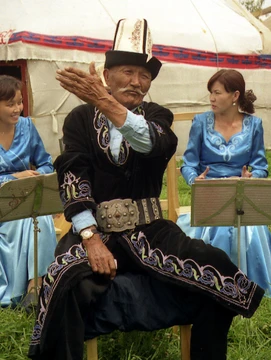
Mongol epic poetry is called *tuuli* in the Mongolian language. It forms a major part of the country's oral literature. The best-known examples are the *Jangar* and the *Geser*. Performers commonly sing these epics while playing instruments like the Morin khuur (a horse-head fiddle) and the Tovshuur (a lute). The stories typically cover Mongolian history, portray ideal worlds and heroic figures, and describe the conquest of new territories. In 2009, UNESCO added Mongol epic poetry to its List of Intangible Cultural Heritage in Need of Urgent Safeguarding.
For centuries, these epics were not written down, remaining purely oral until the 18th century. Although oral transmission continues, written versions now exist, and some performers enhance their recitations by reading these texts. The *Geser* epic was transmitted orally among the Mongols long before it was ever written down; its first Mongolian edition appeared in the 18th century, and it was later adapted into a distinctly Mongol form. The *Jangar* took its current shape among the Kalmyks and was first recorded in writing in the 19th century. During World War II, the Soviet government promoted the *Geser* to encourage patriotism among the Buryats. But in the years after the war until Stalin’s death in 1953, the epic tradition was denounced as “feudal” and anti-Russian. Under the Mongolian People’s Republic, traditional culture was suppressed, and rapid globalization, urbanization, and modernization further eroded public interest in epics. Fewer skilled singers emerged, and performances became rarer. To reverse this decline, the Mongolian government adopted the National Safeguarding Plan of the Mongolian Epic in 2011. It then partnered with NGOs to organize epic-singing competitions, award singers with recognition and financial prizes, and raise awareness by featuring the tradition in modern media.
Chinese scholars generally identify three main “epic centers” for Mongol epics within China, each with its own distinct tradition. The Bargu Epic Center belongs to the Bargu Mongols of northeastern Inner Mongolia. Its epics are very short, focusing on herdsmen or hunters battling monsters, and are passed down by amateurs—there are no professional singers here. The Oirat Epic Center, associated with the Oirat and Chahar Mongols, includes the *Epic of Jangar*.
- Field
- Oral literature, epic poetry
- Known for
- Jangar and Geser epics
- Cultural heritage status
- UNESCO List of Intangible Cultural Heritage in Need of Urgent Safeguarding (as of 2009)
- Primary instruments
- Morin khuur (horse-head fiddle), Tovshuur (lute)
Lore & Background
Epics were, until the 18th century, not put in writing. Although they are still passed down orally, they have been written down, and some performers add to their own performances through reading written versions. The Geser was transmitted orally among the Mongols long before it was ever written down; its first edition in Mongolian was published in the 18th century, and it was then Mongolized to become a Mongol epic. The Jangar took its current form among the Kalmyks and was first recorded in writing in the 19th century. During the Second World War, the Soviet government promoted the Geser to foster patriotism among Buryats, but in the years following the war until Stalin's death in 1953, the epic tradition was attacked as 'feudal' and anti-Russian.
Reader's Guide
Mongol epic poetry holds significance as a living oral tradition that preserves historical and cultural narratives of the Mongol people. Its inclusion on the UNESCO list in 2009 highlights its endangered status and the need for urgent safeguarding. The epics are not merely entertainment but are traditionally believed to have supernatural effects, and performances are highly respected. The tradition encompasses three main epic centers within China—Bargu, Oirat, and Horchin—each with distinct characteristics: Bargu epics are short and focus on herdsmen against monsters; Oirat epics are longer, more complex, and reflect Buddhist influences and the historical Dzungar Khanate; Horchin epics feature non-combatant protagonists and named monsters. The narrative structure, as analyzed by Walther Heissig, includes three hundred motifs grouped into fifteen groups, with common patterns of fighting and courtship. The hero's horse is a key companion, often born at the same time as the hero and imbued with speech and prophecy. The legacy of Mongol epic poetry is also seen in related genres like the hero-tale and tales of the fiddle, which draw from both traditional epics and foreign novels.
Did You Know?
- The two most well-known epics are the Jangar and the Geser.
- Epics were not put in writing until the 17th century.
- Traditionally, women have been banned from performing epics, though restrictions have loosened in recent years.
More in Oral literature 1-24
Spotted an error? Know more?
Reader corrections go straight into our review queue. Suggest an edit · How this site is sourced