
Einstein on the Beach
A non-narrative opera by Robert Wilson and Philip Glass.

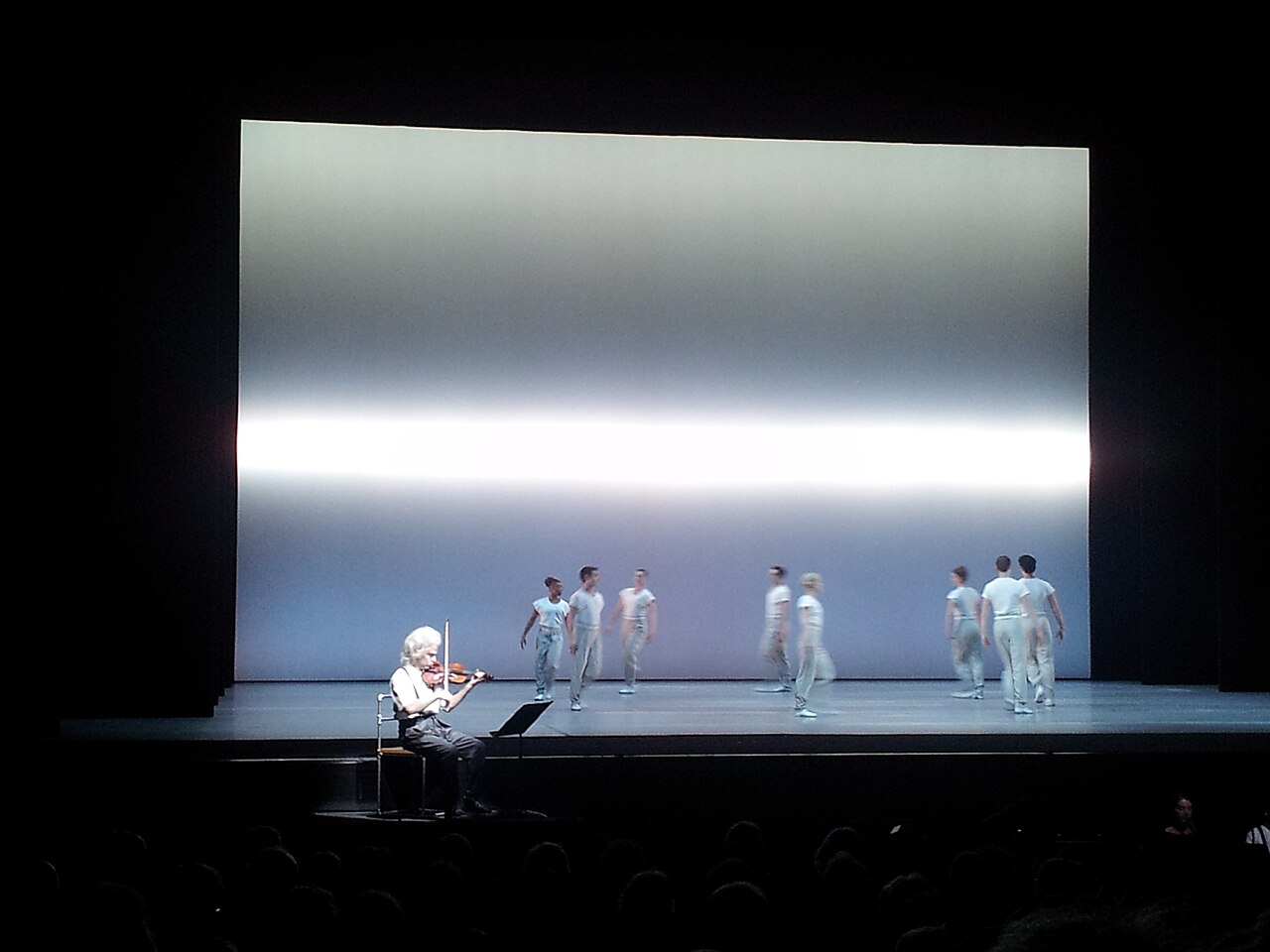
Esther Westerveld · CC BY 2.0
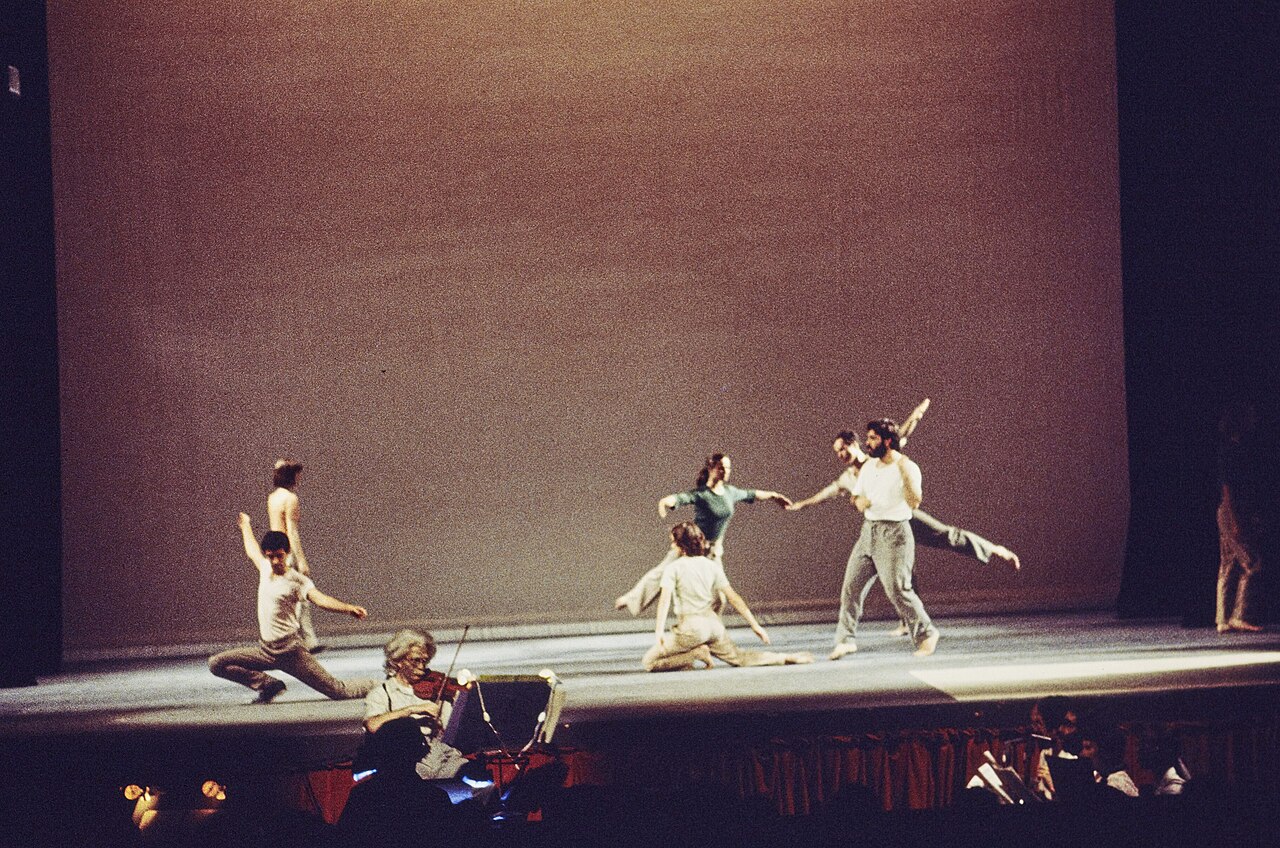
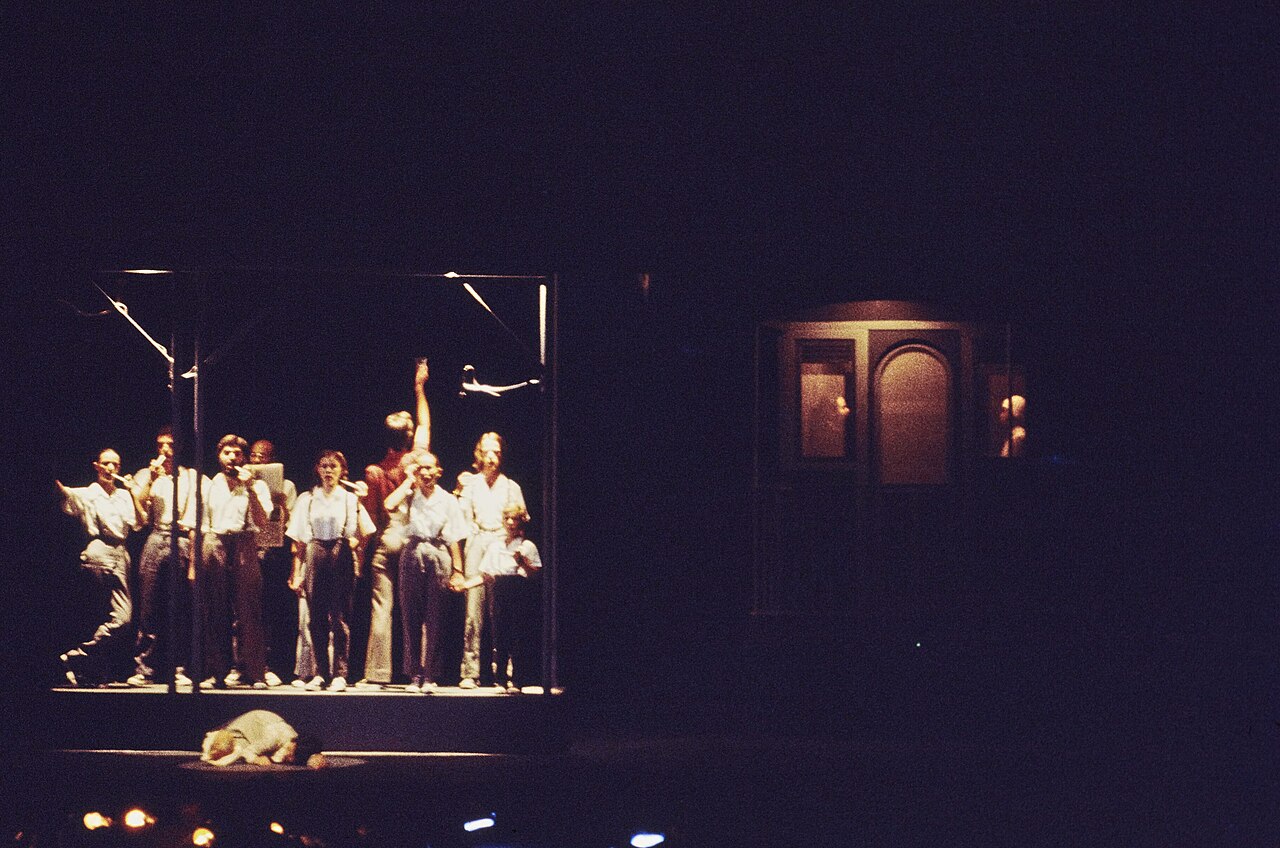
Einstein on the Beach is a four-act opera created by Robert Wilson, who directed and designed it, with music by Philip Glass. Instead of following a traditional story, the opera uses a formalist structure based on Wilson’s storyboards, which define specific spatial arrangements. These acts are linked by five short intermezzos called “knee plays.” The score is Glass’s first opera and also his longest, running about five hours without an intermission; audience members are free to enter and leave whenever they like.
The work premiered on July 25, 1976, at the Théâtre Municipal in Avignon, France, during the Avignon Festival. Its texts were contributed by Christopher Knowles, Samuel M. Johnson, and Lucinda Childs. Einstein on the Beach is the first opera in Glass’s Portrait Trilogy, followed by Satyagraha (1979) and Akhnaten (1983). Glass described these three works as portraits of individuals whose ideas reshaped their eras through intellectual power rather than military force.
Glass and Wilson first met to discuss a collaboration, settling on an opera lasting four to five hours centered on a historical figure. Wilson initially suggested Charlie Chaplin or Adolf Hitler, both of whom Glass rejected. Glass proposed Mahatma Gandhi (later the subject of Satyagraha), and they compromised on Albert Einstein. The title likely references Nevil Shute’s apocalyptic novel On the Beach; the opera was originally called Einstein on the Beach on Wall Street but was later shortened, though neither creator recalls when or why. Glass composed the music in 1975 while in Cape Breton, Nova Scotia, working from Wilson’s notebook of sketches: “I put [the notebook] on the piano and composed each section like a portrait of the drawing before me. The score was begun in the spring of 1975 and completed by the following November, and those drawings were before me all the time.”
The premiere was performed by the Philip Glass Ensemble and presented by the Byrd Hoffmann Foundation. That summer, the opera also traveled to Hamburg, Paris, Belgrade, Venice, Brussels, and Rotterdam. In November 1976, the Byrd Hoffman Foundation, in cooperation with the Metropolitan Opera, held two performances. Primary roles were filled by Lucinda Childs, Robert Wilson, Sheryl S. Sutton, and Samuel M. Johnson, all of whom returned for a 1984 revival at the Brooklyn Academy of Music (BAM). A one-hour documentary about that production, *Einstein on the Beach: The Changing Image of Opera*, aired on public television and was later shown at the Morgan Library & Museum during its 2012 exhibition “Robert Wilson/Philip Glass: Einstein on the Beach.” In 1988, director Achim Freyer, who had staged the world premiere of Glass’s *Akhnaten* in Stuttgart in 1984, designed a highly abstract reworked version for the Stuttgart State Opera, with new spoken texts from the early 20th century and conducted by Michael Riesman.
In 1992, International Production Associates mounted a revival with Wilson, Glass, and Childs, restaged at the McCarter Theatre at Princeton University and later touring to Frankfurt, Melbourne, Barcelona, Madrid, Tokyo, BAM, and Paris. In 2007, Carnegie Hall presented a concert version with violinist Tim Fain as soloist; the *New York Times* praised his “electrifying, virtuosic workout” in the solo passages of the second, fourth, and fifth knee plays and the “Spaceship Interior” scene. Fain continues to tour with Glass in duo recitals, always including the solo from “Knee Play 2.”
A revival with all original collaborators was commissioned by the New York City Opera to open its 2009–10 season, but was canceled after General Manager designate Gerard Mortier withdrew. The team behind that effort then formed a new group under Pomegranate Arts. After a month of rehearsals overseen by Glass, Wilson, and Childs, the first performance in 20 years took place on January 20, 2012, at the Power Center for the Performing Arts on the University of Michigan campus in Ann Arbor, with two additional performances that weekend. Kate Moran and Helga Davis replaced Childs and Sutton in their roles. Violinist Jennifer Koh (a Grammy nominee) played Einstein in the preview, alternating with Antoine Silverman on the subsequent tour. The instrumentalists and solfege soprano were current members of the Philip Glass Ensemble, without Glass himself. The 2012 cast also included dancers from the Lucinda Childs Dance Company: Ty Boomershine, Vincent McCloskey, Matthew Pardo, Patrick O’Neill, Stuart Singer, Lonnie Poupard, Caitlin Scranton, Sharon Milanese, Katie Dorn, Katherine Helen Fisher, Anne Lewis, Shakirah Stewart, and Sarah Hillmon. The chorus comprised sopranos Michèle Eaton, Melanie Russell, Lindsay Kesselman; altos Hai-Ting Chinn, Solange Merdinian, Kate Maroney; tenors John Kawa, Philip Anderson, Tomas Cruz; and basses Greg Purnhagen, Joe D.
- Composer
- Philip Glass
- Librettist
- Christopher Knowles, Samuel M. Johnson, Lucinda Childs
- Premiere Venue
- Théâtre Municipal, Avignon, France
- Length
- Approximately five hours without intermission
- Genre
- Opera
- Part of
- Portrait Trilogy
Lore & Background
Glass and Wilson first met to discuss a collaborative work and decided on an opera of between four and five hours based around a historical persona. Wilson initially suggested Charlie Chaplin or Adolf Hitler, whom Glass rejected, while Glass proposed Mahatma Gandhi; Albert Einstein was the eventual compromise. The title appears to reference the apocalyptic novel On the Beach by Nevil Shute. The opera was originally to be titled Einstein on the Beach on Wall Street but was later shortened; neither Glass nor Wilson remember when or why. Glass recounts: 'I put [Wilson’s notebook of sketches] on the piano and composed each section like a portrait of the drawing before me.'
Reader's Guide
Einstein on the Beach is significant as a landmark of minimalist opera and a defining work of the Portrait Trilogy. Its rejection of conventional plot in favor of a formalist structure, using repeating sequences of spaces and knee plays, challenged traditional opera conventions. The work's length and policy of allowing free audience movement were radical. The opera has been revived multiple times, including a major 2012 tour that brought it to venues worldwide. Its influence extends beyond music into theater and performance art, demonstrating how abstract, non-narrative approaches can create powerful theatrical experiences. The opera's collaborative nature, involving Wilson's visual design and Glass's music, set a precedent for interdisciplinary works.
Did You Know?
- The opera's title was originally Einstein on the Beach on Wall Street but was shortened; neither Glass nor Wilson remember when or why.
- The opera contains writings by Christopher Knowles, Samuel M. Johnson, and Lucinda Childs.
- The first performance in 20 years took place on January 20, 2012, at the University of Michigan in Ann Arbor.
- The opera was first filmed for streaming in 2014 by Culturebox from Théâtre du Châtelet.
Origins and the Choice of Einstein
Glass and Wilson met to discuss a collaborative opera lasting four to five hours centered on a historical figure. Einstein emerged as the compromise that satisfied both artists. The title's connection to Nevil Shute's apocalyptic novel On the Beach is suggested, and the work was originally slated to be called Einstein on the Beach on Wall Street before the name was shortened—neither creator recalls the exact moment or reason for the change.
Structure, Form, and the Portrait Trilogy
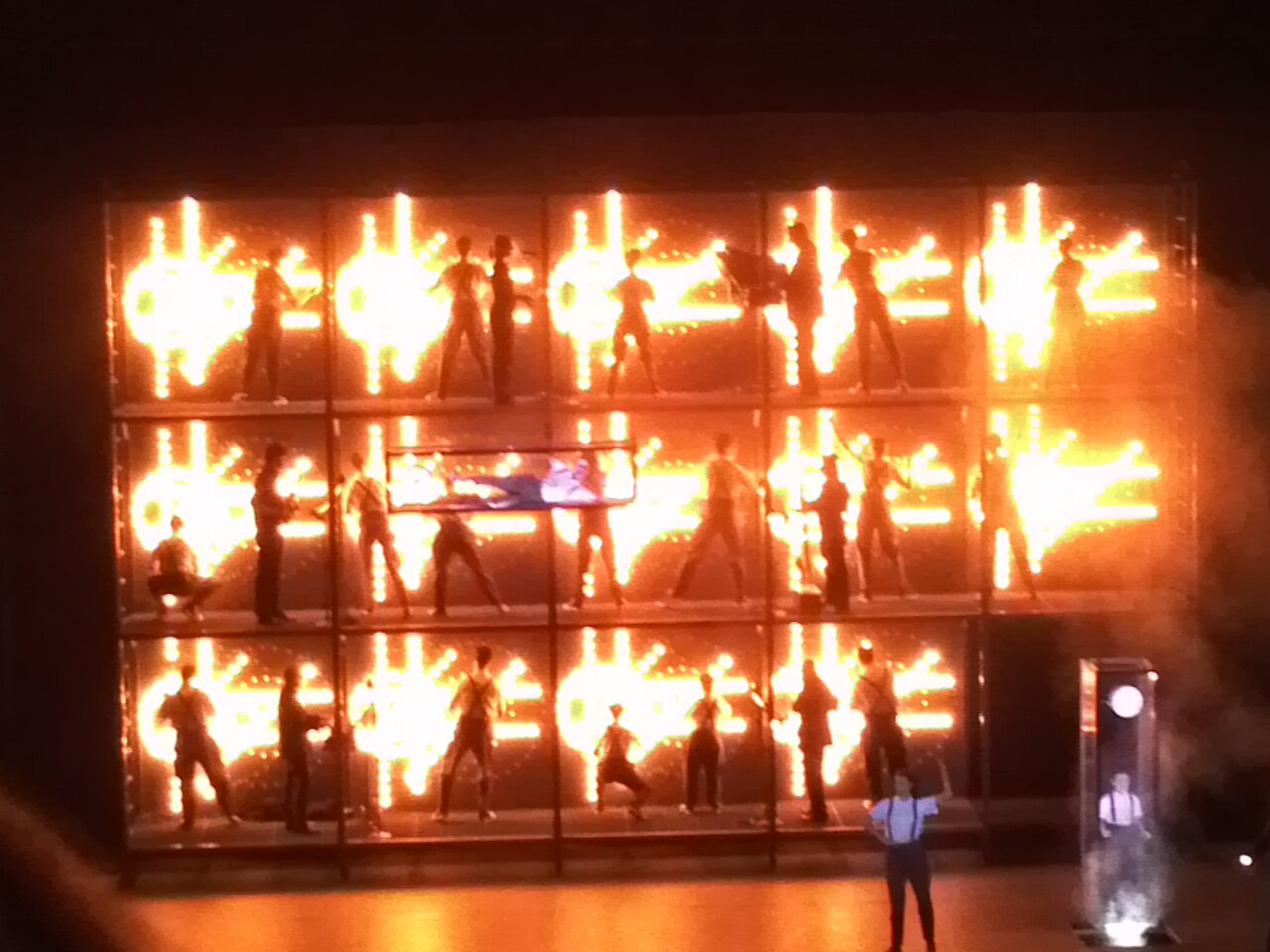
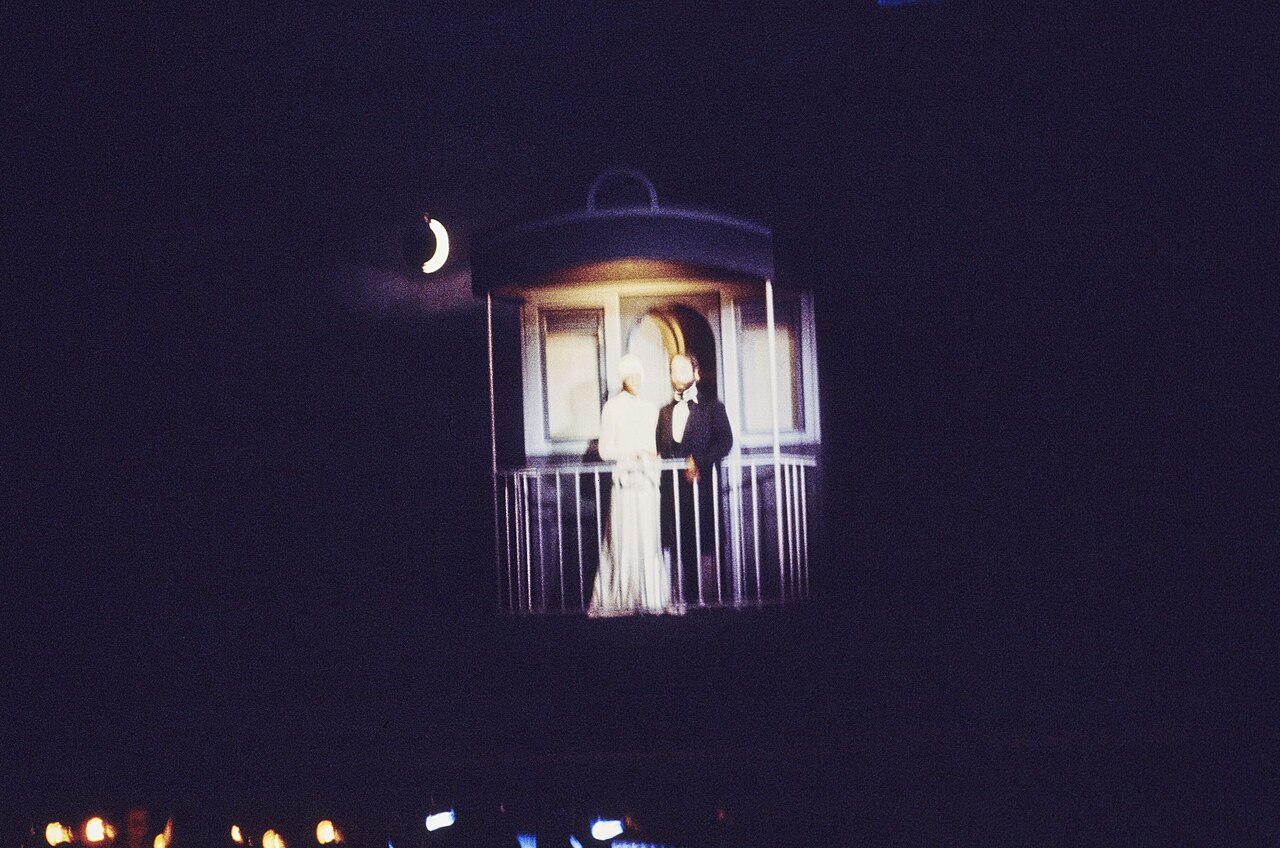
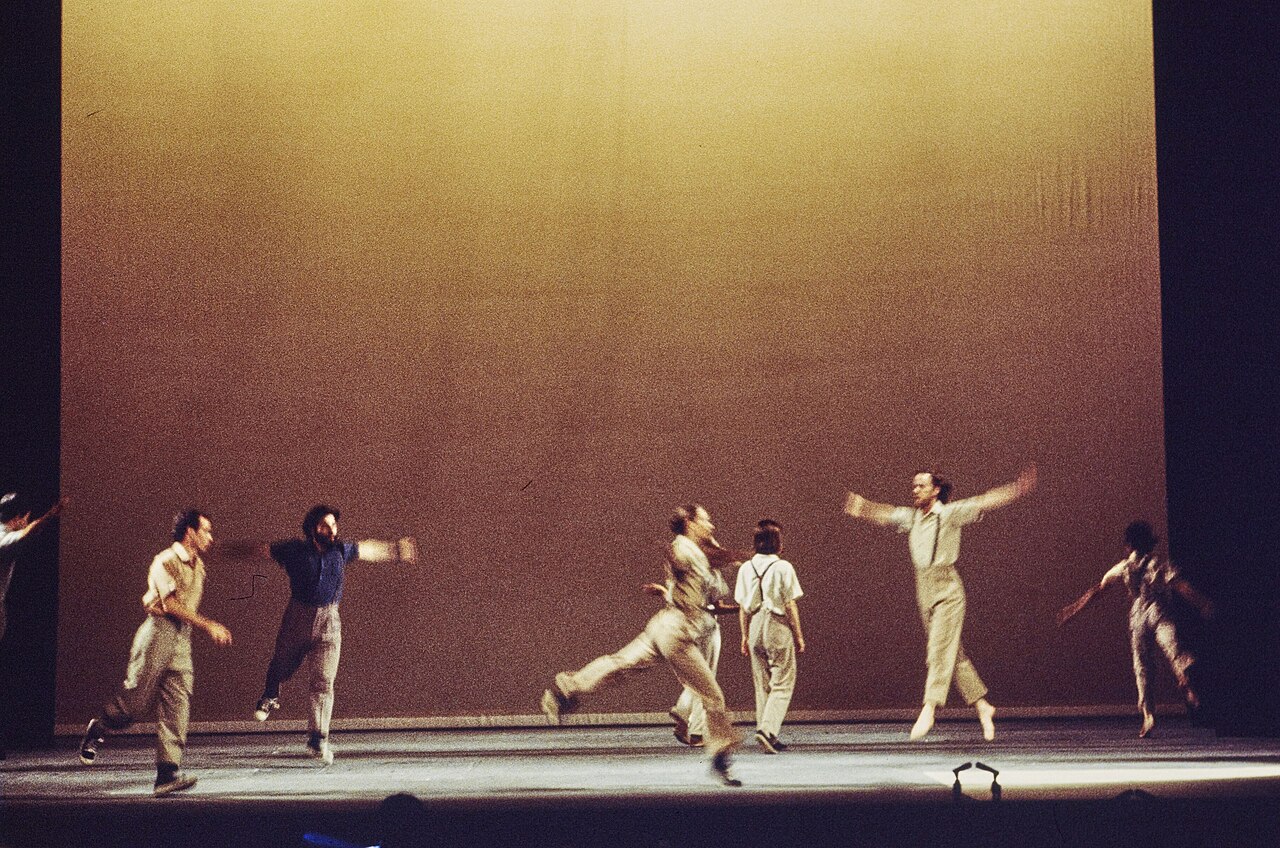
Rather than following a conventional dramatic arc, Einstein on the Beach adopts a formalist architecture. Wilson laid out structured spaces through a series of storyboards, and these visual frameworks are linked by five intermezzos called knee plays. The opera unfolds across four acts and runs approximately five hours without intermission, a duration that prompted the decision to let audience members come and go freely. Writings by Christopher Knowles, Samuel M. Johnson, and Lucinda Childs are woven into the work. It stands as Glass's first and longest opera score. Glass described these three operas as portraits of individuals whose personal vision reshaped their era's thinking through the power of ideas rather than military force.
The 1976 Premiere and First Tour
The Philip Glass Ensemble performed the music, and the Byrd Hoffmann Foundation presented the production. The opera's primary characters were filled by Lucinda Childs, Robert Wilson, his pupil Sheryl S. Sutton, and Samuel M. Johnson. The work's immediate reception was strong enough to generate a summer tour across Hamburg, Paris, Belgrade, Venice, Brussels, and Rotterdam. All three of the original principal performers—Childs, Wilson, and Johnson—would later reappear in the 1984 Brooklyn Academy of Music revival, creating a thread of continuity stretching from the festival debut to the American stage.
Revivals and Enduring Presence
Einstein on the Beach has enjoyed a remarkably long performance life. Brooklyn Academy of Music mounted a production in 1984, documented in a one-hour public television film titled Einstein on the Beach: The Changing Image of Opera. In 1988, director Achim Freyer staged a reworked, highly abstract version at the Stuttgart State Opera with new early-twentieth-century spoken texts, conducted by Michael Riesman. A 1992 revival by International Production Associates, with all three creators involved, toured to Frankfurt, Melbourne, Barcelona, Madrid, Tokyo, Brooklyn, and Paris. In 2007, Carnegie Hall hosted a concert version featuring violinist Tim Fain, whose solo work in the knee plays and the Spaceship Interior scene drew praise from the New York Times. After a planned New York City Opera revival was canceled in 2009, the team regrouped under Pomegranate Arts, staging a new production in Ann Arbor in January 2012 before touring to Montpellier, Reggio Emilia, London, Toronto, Brooklyn, and Berkeley.
Gallery
Frequently Asked Questions
What is Einstein on the Beach?
It is a four-act opera directed by Robert Wilson with a musical score by Philip Glass. Rather than following a conventional plot, the work is built around Wilson's storyboard-based visual spaces and five short intermezzo pieces known as 'knee plays.'
Who created Einstein on the Beach?
Robert Wilson directed and designed the visual structure, while Philip Glass composed the music. Christopher Knowles, Samuel M. Johnson, and Lucinda Childs contributed to the libretto.
How long is Einstein on the Beach and are there intermissions?
A full performance lasts roughly five hours with no scheduled breaks. Audiences are free to leave or re-enter the theater at whatever point they wish.
Is there a plot in Einstein on the Beach?
The work deliberately rejects linear storytelling in favor of an abstract, formalist approach. Wilson's structured visual scenes and Glass's repetitive musical cycles create an immersive experience organized around mood and image rather than character or narrative.
Why is Einstein on the Beach considered significant?
It marks Philip Glass's first and longest opera and stands as a landmark of minimalism in late-20th-century performance. As part of his Portrait Trilogy, it also became a defining example of large-scale interdisciplinary collaboration between visual art and music.
More in Opera And Musical Theatre 1-19
Spotted an error? Know more?
This is a living reference — every entry is fact-audited, and reader corrections feed straight into our audit queue. Suggest an edit · See this site's audit record