
Die Walküre
Second opera of Wagner's Ring cycle, premiered 1870.

via Wikipedia: Die Walküre · see source
Die Walküre (The Valkyrie), WWV 86B, is the second of four epic music dramas in Richard Wagner’s cycle *Der Ring des Nibelungen* (The Ring of the Nibelung). It premiered as a standalone opera at the National Theatre in Munich on 26 June 1870, and was first performed as part of the full Ring cycle at the Bayreuth Festspielhaus on 14 August 1876. Although Wagner composed the music in the order the cycle is performed, he wrote the texts in reverse sequence, making *Die Walküre* the third libretto completed (by July 1852); the music was finished by March 1856.
Wagner largely followed the principles he laid out in his 1851 essay *Opera and Drama*, where music interprets the text emotionally and uses recurring leitmotifs to represent people, ideas, and situations, instead of conventional arias, ensembles, and choruses. He showed some flexibility here, especially in Act III, where the Valkyries sing together in ensembles. As with *Das Rheingold*, Wagner wanted to delay any performance until the whole cycle could be staged, but his patron, King Ludwig II of Bavaria, insisted on the 1870 Munich premiere. The work has since gained popularity as a standalone piece and is still performed independently of the tetralogy.
The story draws on Norse mythology from the *Völsunga saga* and the *Poetic Edda*. It follows the Volsung twins Sieglinde and Siegmund, separated in childhood, who meet and fall in love. This angers the gods, who decree that Siegmund must die. Sieglinde and her unborn child are saved by the defiant Valkyrie Brünnhilde, Wotan’s daughter, who then faces divine punishment.
Wagner began work on what became the Ring project in October 1848 with a prose outline for *Siegfried’s Death*, based on the legendary Germanic hero. After traveling to Switzerland in May 1849, he expanded the project, deciding a single work would not suffice. He planned a series of music dramas, each telling a stage of the story, with *Siegfried’s Death* as the culmination. In his 1851 essay “A Communication to My Friends,” he wrote: “I propose to produce my myth in three complete dramas, preceded by a lengthy Prelude (Vorspiel).” Each drama would be independent but not performed separately; he envisioned a special festival where they would be presented over three days and a fore-evening.
Following this scheme, Wagner preceded *Siegfried’s Death* (later *Götterdämmerung*) with the story of Siegfried’s youth, *Young Siegfried* (later *Siegfried*), then *Die Walküre*, dealing with Siegfried’s origins, and finally the prologue *Das Rheingold*. Because he prepared the texts in reverse chronological order, *Die Walküre* was the third drama conceived and written, though it appears second in the cycle.
The prior history: after the gods entered Valhalla at the end of *Das Rheingold*, Fafner uses the Tarnhelm to become a dragon and guards the gold and ring in the forest. Wotan visits Erda for wisdom and fathers a daughter, Brünnhilde, as well as eight other daughters (possibly also by Erda). These nine are the Valkyries, who retrieve fallen heroes to defend Valhalla from Alberich. Wotan also wanders the earth and, with a mortal Völsung woman, fathers the twins Siegmund and Sieglinde, who grow up separately. From the Völsungs, Wotan hopes for a hero who, unbound by the gods’ treaties, will take the ring from Fafner.
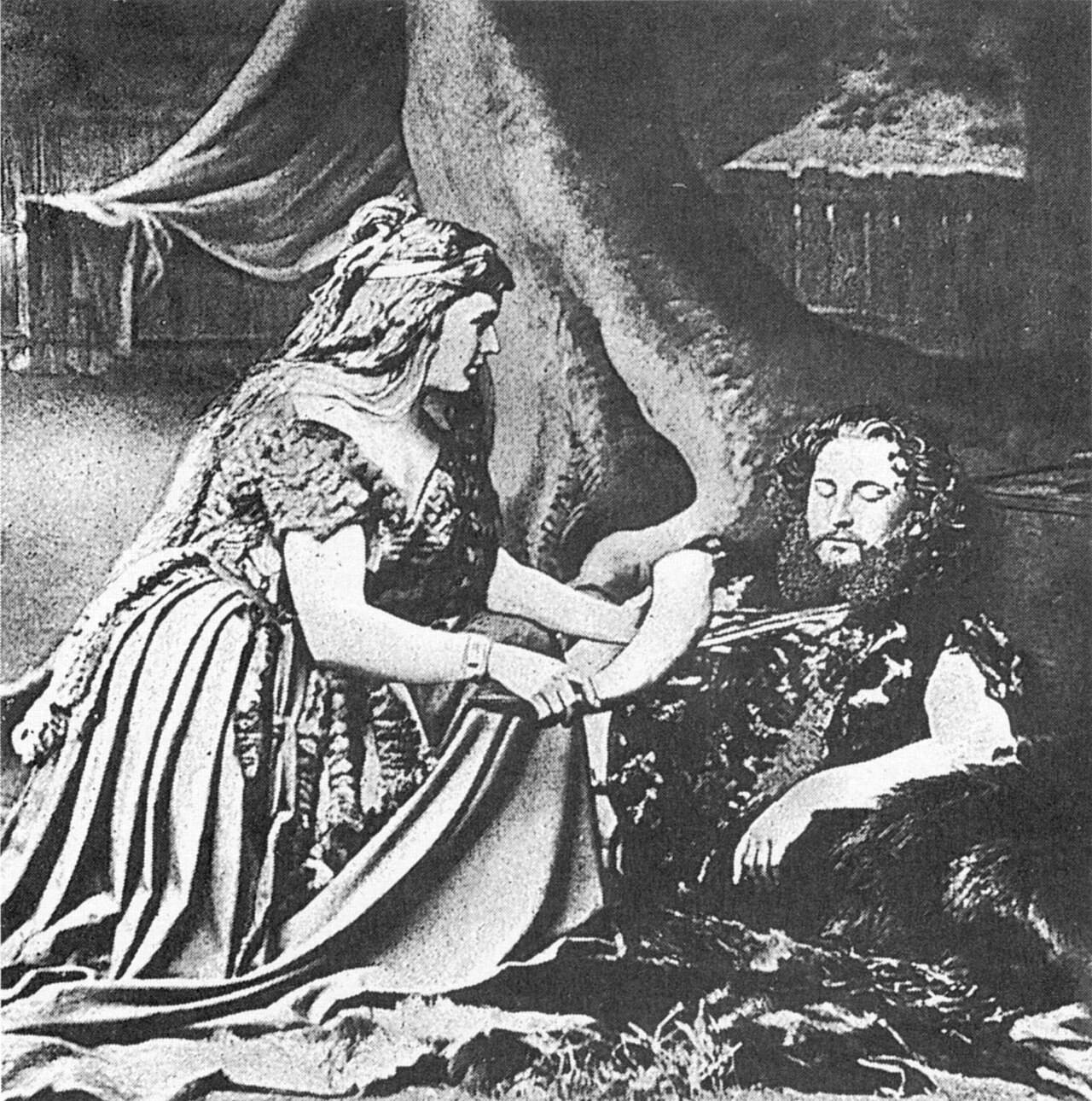
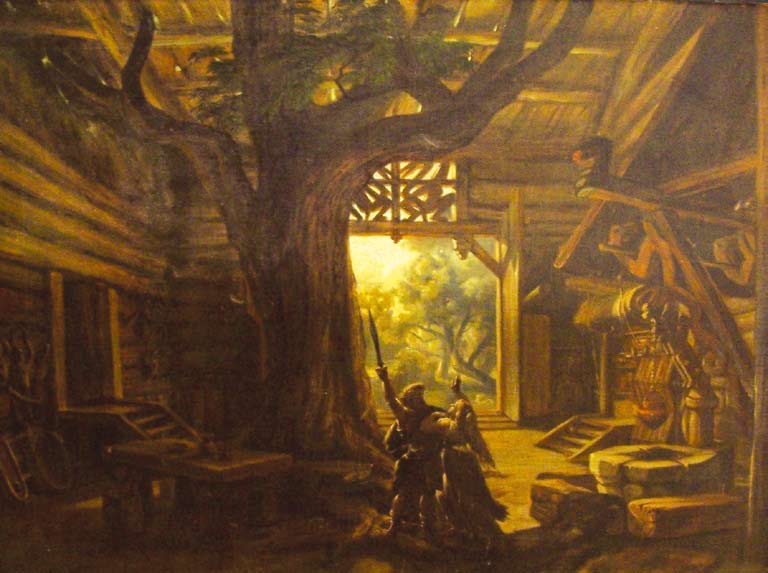
Act I: During a storm, Siegmund seeks shelter in a house built around a massive ash tree. Unarmed and wounded, he collapses. Sieglinde, wife of Hunding, gives him water and mead, and tells him he may rest until her husband returns. They feel a growing attraction. Siegmund prepares to leave, saying misfortune follows him; Sieglinde replies that misfortune already dwells with her. Hunding returns and questions Siegmund, who calls himself Wehwalt (“woeful”) and explains he grew up in the forest with his parents and twin sister, but their home was burned, his mother killed, and his sister lost. He recently fought the relatives of a forced bride; his weapons were destroyed, the bride killed, and he fled. Hunding reveals he is kin to Siegmund’s pursuers; Siegmund may stay, but they must fight in the morning. Before leaving, Sieglinde glances meaningfully at a spot on the tree where, in the firelight, a sword is buried to the hilt. She later returns, having drugged Hunding’s drink, and reveals she was forced into marriage.
- Composer
- Richard Wagner
- First performance (single opera)
- 26 June 1870, National Theatre Munich
- First performance (Ring cycle)
- 14 August 1876, Bayreuth Festspielhaus
- Text completed
- July 1852
- Music completed
- March 1856
- Genre
- Music drama (opera)
- Part of cycle
- Der Ring des Nibelungen
Verified Timeline
Lore & Background
Wagner conceived the Ring cycle in reverse order of performance, so Die Walküre was the third of the four texts to be written, although he composed the music in performance sequence. The text was completed by July 1852, and the music by March 1856. Wagner largely followed the principles of his 1851 essay Opera and Drama, using recurring leitmotifs to represent people, ideas, and situations rather than conventional operatic units, though he showed flexibility in Act III when the Valkyries engage in frequent ensemble singing.
Reader's Guide
Die Walküre holds a significant place in Wagner's oeuvre as the second drama of the Ring cycle, bridging the prologue Das Rheingold and the later Siegfried and Götterdämmerung. Its story, based on Norse mythology, focuses on the Volsung twins Siegmund and Sieglinde, whose incestuous love angers the gods, leading to Siegmund's death and the defiance of the Valkyrie Brünnhilde. The work was initially intended by Wagner to be performed only within the complete cycle, but the 1870 Munich premiere was arranged at the insistence of his patron, King Ludwig II of Bavaria. Die Walküre has achieved some popularity as a stand-alone work and continues to be performed independently. Its use of leitmotifs and emotional interpretation of text through music exemplifies Wagner's principles of music drama, while the ensemble singing in Act III shows his flexibility in applying those principles.
Did You Know?
- Die Walküre was the third of the four Ring texts to be written, even though it appears second in performance order.
- The music for Die Walküre was completed by March 1856, but the first performance did not take place until 1870.
- Wagner showed flexibility in his Opera and Drama principles by including frequent ensemble singing in Act III.
- The 1870 Munich premiere was arranged at the insistence of King Ludwig II of Bavaria, against Wagner's wish to wait for the complete cycle.
- The story is based on Norse mythology from the Völsunga saga and the Poetic Edda.
Composition and the Ring's Architecture
Wagner's Ring project took shape in October 1848, when he drafted a prose outline for Siegfried's Death, based on the legendary hero of Germanic myth. After travels to Switzerland in May 1849, he concluded that a single work would not suffice and expanded the plan into a series of music dramas, each telling a stage of the story. In 1851 he outlined his purposes in his essay 'A Communication to My Friends,' proposing three complete dramas preceded by a lengthy prelude, to be performed at a specially appointed festival over three days and a fore-evening. Following this scheme, he worked backward from the finale: Siegfried's Death (later Götterdämmerung) was preceded by Young Siegfried (later Siegfried), which was in turn preceded by Die Walküre, dealing with Siegfried's origins, all fronted by Das Rheingold. Because of this reverse chronological writing order, Die Walküre was the third of the four texts to be conceived and written, its text completed by July 1852, even though it appears second in the tetralogy. The music, however, was composed in performance sequence, with its score finished by March 1856.
Musical Drama and the Leitmotif System
In shaping Die Walküre, Wagner largely followed the principles he had set out in his 1851 essay Opera and Drama. Under this framework, the music would interpret the text emotionally, reflecting the feelings and moods behind the work, using a system of recurring leitmotifs to represent people, ideas, and situations rather than the conventional operatic units of arias, ensembles, and choruses. Wagner showed flexibility in the application of these principles here, particularly in Act III, when the Valkyries engage in frequent ensemble singing.
Premieres and the Stand-Alone Legacy
Wagner's original intention, as with Das Rheingold, was to defer any performance of the new work until it could be shown in the context of the completed cycle. That plan was disrupted in 1870 when his patron, King Ludwig II of Bavaria, insisted on a staged production. The result was a performance at the National Theatre Munich on 26 June 1870, presented as a single opera. The work's first performance as part of the Ring cycle came six years later, on 14 August 1876, at the Bayreuth Festspielhaus. Despite Wagner's preference for the cycle to be experienced as a whole, Die Walküre has achieved some popularity as a stand-alone work and continues to be performed independently from the tetralogy.
Mythological Roots and the Central Conflict
The story of Die Walküre is based on the Norse mythology told in the Völsunga saga and the Poetic Edda. In this version, the Volsung twins Siegmund and Sieglinde, separated in childhood, meet and fall in love. This union angers the gods, who demand that Siegmund must die. Sieglinde and the couple's unborn child are saved by the defiant actions of Wotan's daughter, the title character, Valkyrie Brünnhilde, who as a result faces the gods' retribution. The prior history established in Das Rheingold deepens the stakes: Fafner has used the Tarnhelm to assume the form of a dragon and guards the gold and the ring in the depths of the forest. Wotan has visited Erda seeking wisdom, and by her has fathered a daughter, Brünnhilde; he has fathered eight other daughters, possibly also by Erda. These, with Brünnhilde, are the Valkyries, whose task is to recover heroes fallen in battle and bring them to Valhalla. Wotan has also wandered the earth, and with a woman of the Völsung race has fathered the twins Siegmund and Sieglinde, who have grown up separately and unaware of each other. From the Völsungs Wotan hopes for a hero who, unencumbered by the gods' treaties, will obtain the ring from Fafner.
Gallery
Frequently Asked Questions
What is Die Walküre?
Die Walküre, also called The Valkyrie, is the second music drama in Richard Wagner's four-part cycle Der Ring des Nibelungen. Although it was conceived as one link in a larger tetralogy, it is frequently staged and experienced as a standalone opera.
Who composed Die Walküre and when was it finished?
Richard Wagner wrote both the libretto and the score, completing the text in July 1852 and the music in March 1856. The work is catalogued as WWV 86B.
What mythology does Die Walküre draw from?
Wagner based the drama on Norse legends, specifically the Völsunga saga and the Poetic Edda. These sources supply the pantheon of gods, giants, and heroic figures that shapes the plot.
When and where did Die Walküre premiere?
It first appeared as a single opera at Munich's National Theatre on 26 June 1870. Its debut as part of the complete Ring cycle followed on 14 August 1876 at the newly built Bayreuth Festspielhaus.
Why is Die Walküre significant in the operatic repertoire?
As the second installment of the Ring, it deepens the mythological narrative and showcases some of the most celebrated vocal and orchestral writing in all of opera. Its enduring popularity as an independent work testifies to its power to captivate audiences even outside the four-opera context.
More in Opera And Musical Theatre 1-19
Related in Opera And Musical Theatre
Links follow this subject's own source article.
Spotted an error? Know more?
This is a living reference — every entry is fact-audited, and reader corrections feed straight into our audit queue. Suggest an edit · See this site's audit record