
Cinderella (Prokofiev)

C. S. Evans · Public domain
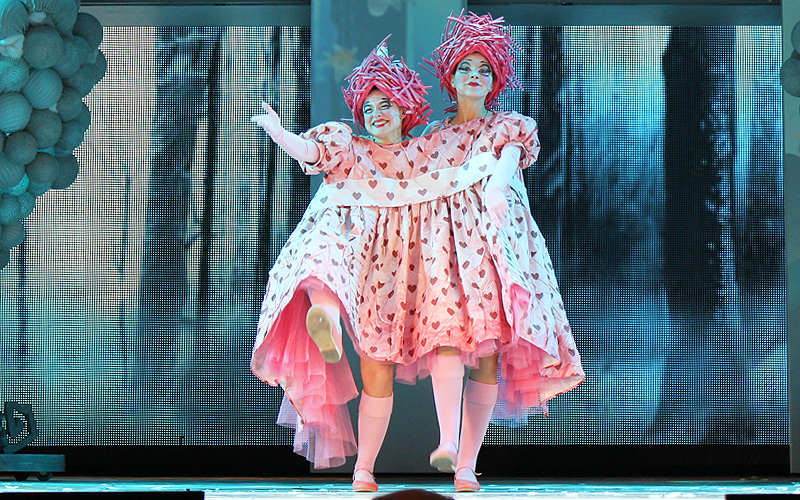
Sergei Prokofiev’s ballet *Cinderella* (Op. 87) was set to a scenario by Nikolai Volkov. Composed between 1940 and 1944, the work was interrupted while Prokofiev wrote his opera *War and Peace*. Premiering on 21 November 1945 at the Bolshoi Theatre, it was conducted by Yuri Fayer, with choreography by Rostislav Zakharov and Galina Ulanova dancing the title role. Known for its cheerful music, lavish sets, and comic double-roles for the stepmother and stepsisters—often played by men in drag—the ballet treats these characters as more foolish than cruel.
**Story**
**Act I** Cinderella is forced to serve her domineering stepmother and two stepsisters as they prepare for the Spring Ball, where the Prince is expected to choose a bride. While making a new shawl, the stepsisters quarrel, tearing it in two, then storm off. The stepmother orders Cinderella to clean up and finish her chores. Her father returns from business but, still grieving his first wife’s death, is too weak to defy the stepmother. When a beggar woman appears seeking shelter, the family tries to drive her away, but Cinderella offers her a place by the fire and an old pair of slippers. The beggar thanks her and leaves. After the family departs for the ball, Cinderella dances with a broom, imagining the Prince. The beggar returns, now revealing herself as a fairy godmother. She transforms the slippers into glass dancing shoes, turns Cinderella’s rags into a gown, a pumpkin and mice into a carriage and horses, and grasshoppers and dragonflies into footmen. She warns that the magic will end at midnight, leaving only the glass slippers. Twelve dwarfs will appear to repeat the warning if Cinderella lingers. She then leaves for the ball.
**Act II** At the Spring Ball, the stepsisters try and fail to impress the court. The Prince, bored with formal events and unwilling to marry without love, refuses to dance—especially with the obnoxious sisters. When Cinderella arrives, transformed into a beautiful princess, the Prince is captivated and asks her to dance. She wins over the court with her grace. During refreshments, the Prince gives her one of three imported oranges; she offers the other two to her stepsisters, who do not recognize her. The couple walks in the royal gardens, dancing and declaring their love. As they return for the next waltz, Cinderella forgets the time. At midnight, the twelve dwarfs spring from the clock to remind her. Fearing exposure as a servant in rags, she flees, losing a glass slipper. The Prince, heartbroken, vows to find her.
**Act III** The next morning, the Prince summons every shoemaker in the kingdom, but none claim to have made the slipper. Concluding the princess must be from abroad, he searches the Mediterranean, the Orient, and beyond.
- composer
- Sergei Prokofiev
- librettist
- Nikolai Volkov
- premiere_venue
- Bolshoi Theatre
- conductor
- Yuri Fayer
- choreographer
- Rostislav Zakharov
- title_role
- Galina Ulanova
Lore & Background
The story follows Cinderella, a young woman forced into servitude by her stepmother and stepsisters, who attends a ball with the help of her fairy godmother, loses a glass slipper at midnight, and is eventually reunited with the Prince.
Reader's Guide
Cinderella is notable for its jubilant music, lush scenery, and for the comic double-roles of the stepmother and the two stepsisters (which can be performed in travesti), more mad than bad in this treatment. The ballet is scored for a large orchestra and includes a sequence of 34 numbers across three acts. Its enduring popularity stems from Prokofiev's melodic richness and the ballet's adaptability for various choreographers, making it a staple of the classical ballet repertoire.
Did You Know?
- The stepmother and stepsisters are portrayed as more mad than bad, and can be performed in travesti.
- The fairy godmother transforms a pumpkin and mice into a carriage and horses, and grasshoppers and dragonflies into footmen.
Gallery

Frequently Asked Questions
What is Cinderella (Prokofiev)?
Cinderella, Op. 87, is a full-length ballet composed by Sergei Prokofiev to a scenario by Nikolai Volkov. Although it sometimes appears in opera and musical-theatre listings, it is a choreographed stage work rather than a sung opera.
Who created the original production of Cinderella (Prokofiev)?
The ballet opened at the Bolshoi Theatre with Rostislav Zakharov as choreographer, Yuri Fayer conducting, and Galina Ulanova dancing the title part. That inaugural cast and staging set the benchmark for how the work has been presented ever since.
What is Cinderella (Prokofiev) famous for musically?
Prokofiev's score is often singled out as one of his most lyrical and immediately accessible, packed with singable melodies that resonate even with listeners unfamiliar with ballet. Its warmth and melodic richness have kept it a mainstay of both concert halls and dance stages.
Why is Cinderella (Prokofiev) important in ballet history?
Since its premiere the work has inspired a remarkable succession of choreographers, each reinterpreting the narrative with fresh movement vocabulary. Its lasting popularity testifies to both the flexibility of Prokofiev's score and the timeless draw of the fairy-tale plot.
How does the story of Cinderella (Prokofiev) end?
Following the classic Perrault framework, Cinderella is recognized at the royal ball and ultimately wins the prince's hand. Prokofiev and Volkov's scenario brings the narrative to a joyful, celebratory close befitting a fairy-tale ballet.
More in Opera And Musical Theatre 1-19
Spotted an error? Know more?
This is a living reference — every entry is fact-audited, and reader corrections feed straight into our audit queue. Suggest an edit · See this site's audit record