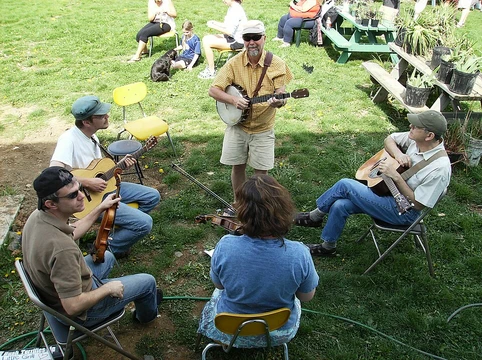
The Carolina Tar Heels
Old time string band active in the 1920s.

Unknown author · Public domain
The Carolina Tar Heels were an old-time string band from the United States, most active during the 1920s. The original lineup featured Dock Walsh on banjo and Gwen Foster on harmonica. Clarence Ashley joined on guitar after meeting Walsh at a fiddlers’ contest in Boone, North Carolina, in 1926 or 1927. Garley Foster later took over harmonica duties from Gwen, though the two Fosters were not related. The band’s name was already in use before Ralph Peer first recorded them in 1927. They recorded twice that year—once in Atlanta and again in August in Charlotte for Peer and Victor—before Ashley joined their sessions in 1928 in Atlanta and 1929 in New Jersey. In 1931, an unrelated group broadcasting from Atlanta began using the same name, so the original band sometimes performed as “The Original Carolina Tar Heels” or “The Pine Mountain Boys.” Their final recording session took place on February 24, 1932, in Atlanta. Decades later, the group was featured on Harry Smith’s 1952 *Anthology of American Folk Music*, which highlighted era-defining acts. The 1960s folk revival prompted Dock Walsh and Garley Foster to come out of retirement and form a new Carolina Tar Heels, this time including Walsh’s son, Drake.
- field
- Old time string band
- nationality
- American
- active_years
- 1920s–1932
- known_for
- Early recorded old time music, inclusion in the Anthology of American Folk Music
- key_members
- Dock Walsh, Gwen Foster, Clarence Ashley, Garley Foster
Lore & Background
The Carolina Tar Heels originally consisted of Dock Walsh on banjo and Gwen Foster on harmonica. Clarence Ashley joined on guitar after meeting Dock Walsh at a fiddlers' contest in Boone, North Carolina in 1926 or 1927. Garley Foster later replaced Gwen on harmonica; despite sharing a surname, Gwen and Garley were not related. The band's name was already in use before their first recording session in 1927. They recorded twice in 1927—once in Atlanta and later in August in Charlotte for Peer and Victor—and began recording with Ashley in 1928 in Atlanta and in 1929 in New Jersey. In 1931, an unaffiliated group broadcasting out of Atlanta also called the Carolina Tar Heels started up, so the original group sometimes used the monikers 'The Original Carolina Tar Heels' or 'The Pine Mountain Boys.' The group stopped recording in 1932 after a February 24th session in Atlanta.
Reader's Guide
The Carolina Tar Heels are significant as an early recorded old time string band whose work was preserved in the 1952 Anthology of American Folk Music, compiled by Harry Smith. This anthology showcased what Smith considered the most era-defining and significant groups, cementing the Tar Heels' place in folk music history. Their recordings from the late 1920s and early 1930s capture a transitional period in American vernacular music, bridging rural string band traditions and the commercial recording industry. The 1960s folk revival brought Dock Walsh and Garley Foster out of retirement to form a new band with Dock's son Drake Walsh, demonstrating the enduring appeal of their sound. The band's multiple name variations—including 'The Original Carolina Tar Heels' and 'The Pine Mountain Boys'—reflect the fluid nature of early recording groups and the challenges of distinguishing themselves from imitators.
Did You Know?
- The band's name was already in use before Ralph Peer first recorded them in 1927.
- Clarence Ashley joined after meeting Dock Walsh at a fiddlers' contest in Boone, North Carolina in 1926 or 1927.
- Gwen Foster and Garley Foster were not related despite sharing a surname.
- The group sometimes used the moniker 'The Pine Mountain Boys' after an unaffiliated group started broadcasting as the Carolina Tar Heels in 1931.
Pioneering Roots and Early Dominance
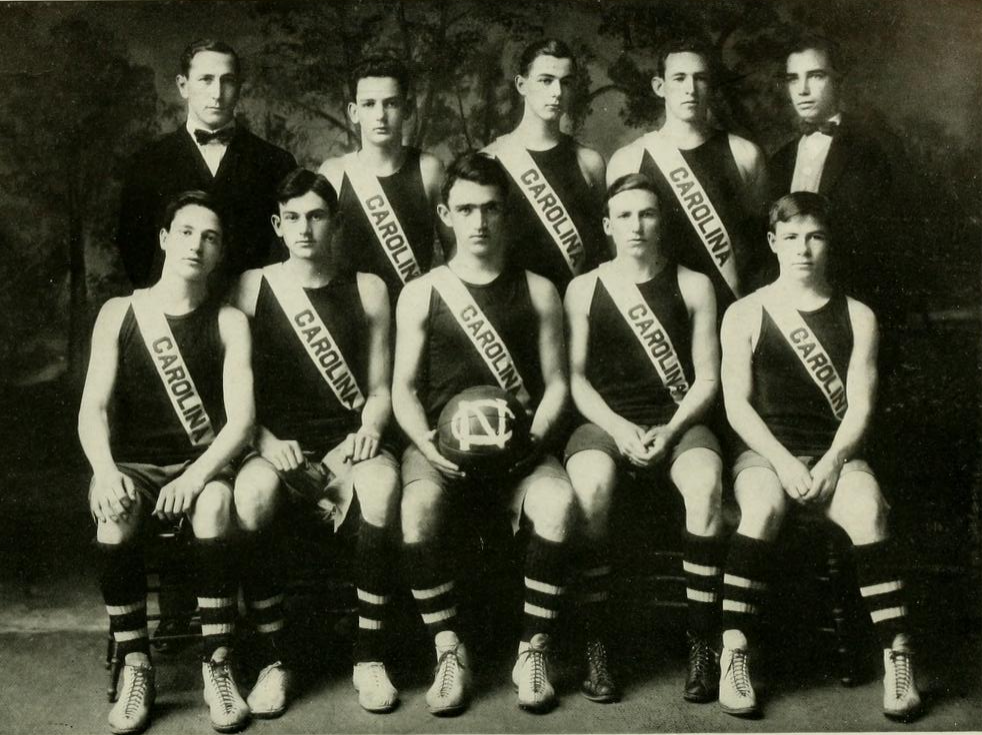
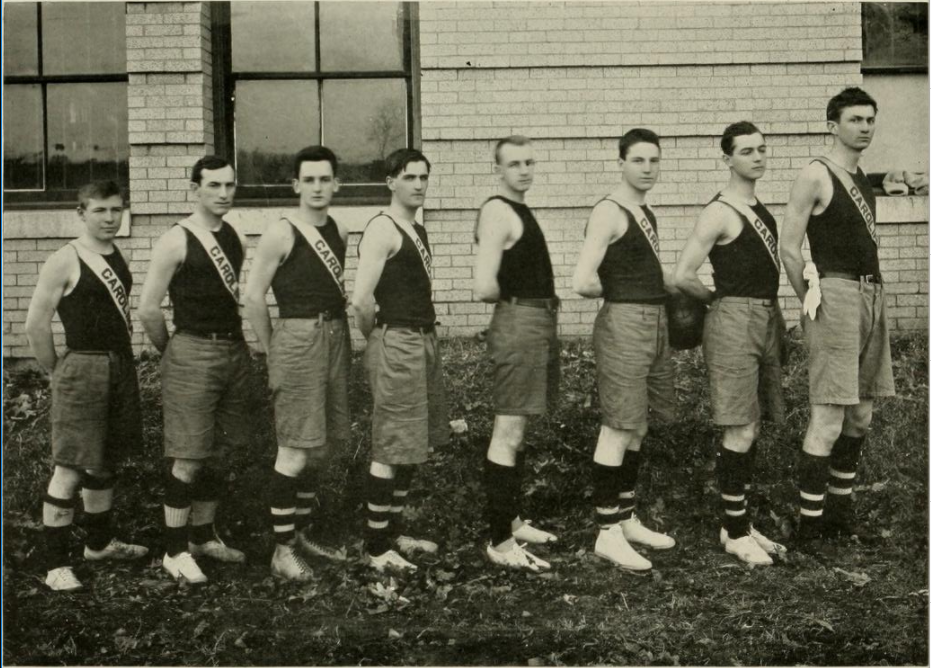
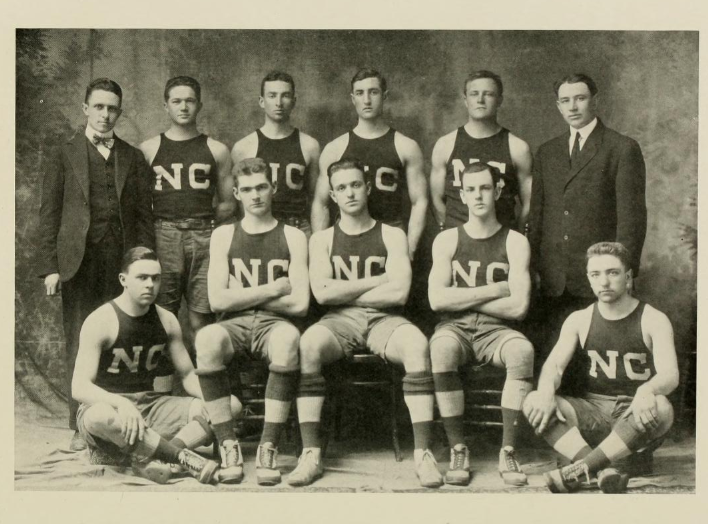
The University of North Carolina took the field for the first time in 1888, posting a modest 1–3 record under captains Bob Bingham and Steve Bragaw. Those early contests, including matchups against Wake Forest and Trinity, laid the groundwork for what would become one of the state's oldest athletic traditions. Notably, in 1895 a Carolina game against the Georgia Bulldogs featured one of the earliest recorded uses of the forward pass, a play that would not be officially legalized until 1906. The program's golden era arrived in the late 1890s under coach William A. Reynolds, who guided the Tar Heels to a perfect 9–0 campaign in 1898 and a claimed Southern championship. That season produced a staggering 53–0 dismantling of Georgia, a 29–0 victory over John Heisman's Auburn Tigers, and a hard-fought 6–2 triumph over Virginia that marked the first Carolina win in what would later be dubbed the South's Oldest Rivalry. Reynolds departed after four seasons with a 27–7–4 mark to take the Georgia job, leaving behind a program with genuine national recognition.
A Dynasty of Coaches
From the early 1900s through the 1950s, the Tar Heels cycled through a remarkable succession of head coaches, each leaving a distinct mark on Chapel Hill football. Herman Olcott compiled an 11–4–3 record over two seasons, while Thomas Trenchard, who coached in 1895 and again from 1913 to 1915, posted a 26–9–2 mark with a standout 10–1 campaign in 1914. Brothers Bob and Bill Fetzer shared the helm from 1921 to 1925, amassing a 30–12–4 record; Bob subsequently became Carolina's first athletics director, serving from 1923 to 1952. Chuck Collins held the job for eight seasons, the longest tenure in program history up to that point, finishing 38–31–9 with a 9–1 peak in 1929. Perhaps no coach left a deeper imprint than Carl Snavely, nicknamed The Grey Fox for his distinctive grey game-day suits. Across two stints, Snavely finished 59–35–5, led single-wing offenses considered among the fastest in the South, and guided teams to the Sugar Bowl in 1946 and 1948. He was enshrined in the College Football Hall of Fame in 1965.
Conference Titles and National Recognition
The Tar Heels have accumulated a substantial body of postseason and conference-level achievement over more than a century of competition. Across their history, the program has appeared in 37 bowl games, a testament to sustained competitiveness in the NCAA Division I Football Bowl Subdivision. During their tenure in the Southern Conference, which ended in 1952, Carolina captured three conference championships and earned 32 first-team All-Southern Conference selections. After joining the Atlantic Coast Conference in 1953, the Tar Heels added five ACC titles to their résumé, with the most recent coming in 1980. Player recognition has been equally impressive: thirty Tar Heel athletes have been named first-team All-Americans, and since the ACC era began, 174 players have received first-team All-ACC honors. These numbers reflect a program that, while often described as experiencing intermittent success, has consistently produced talent that stands out at the national level. The combination of bowl appearances, conference championships, and individual accolades paints a picture of a football tradition that has remained relevant across multiple conference landscapes and eras of college athletics.
The NFL Pipeline and Rivalry Identity
Beyond the gridiron statistics, Carolina football has built a lasting identity through its pipeline to the National Football League and its deep-rooted rivalries. The program has produced a remarkable roster of professional players spanning multiple decades, including Lawrence Taylor, Charlie Justice, Chris Hanburger, Ken Willard, Don McCauley, William Fuller, Harris Barton, Jeff Saturday, Alge Crumpler, Willie Parker, Greg Ellis, Dré Bly, Julius Peppers, Hakeem Nicks, T.J. Yates, Mitch Trubisky, Sam Howell, Javonte Williams, Josh Downs, and Drake Maye. This breadth of NFL talent underscores the program's role as a developmental platform for players who go on to define careers at the professional level. On the identity front, the Tar Heels' fiercest and most important rivalry is with the NC State Wolfpack, a matchup that carries intense in-state energy. Equally significant is the clash with the Virginia Cavaliers, a contest long celebrated as the South's Oldest Rivalry. The program's spirit is further embodied by its official fight song, I'm a Tar Heel Born, and its mascot, Rameses, symbols that connect generations of fans to a tradition stretching back to 1888.
Gallery
Frequently Asked Questions
Who is The Carolina Tar Heels?
The Carolina Tar Heels were an American old-time string band that was most active during the 1920s. The group is best remembered for its early recorded sessions that captured the sound of rural Appalachian music for a wider audience.
What instruments did The Carolina Tar Heels play?
The core instrumentation featured Dock Walsh on banjo, a harmonica player (initially Gwen Foster, later replaced by Garley Foster), and, after 1926 or 1927, Clarence Ashley on guitar. The two Fosters who played harmonica for the band were not related to each other.
When did The Carolina Tar Heels record?
The band made its recorded appearances in 1927, first in Atlanta and then again in August in Charlotte, North Carolina, for Ralph Peer and Victor Records. Notably, the group's name was already established in the region before Peer ever put them in front of a microphone.
Why is The Carolina Tar Heels important?
Their 1927 sessions are considered among the earliest recordings of old-time string-band music, preserving a sound that might otherwise have been lost. The tracks were later included in the landmark Anthology of American Folk Music, cementing their place in the history of American roots music.
How did Clarence Ashley join The Carolina Tar Heels?
Ashley met Dock Walsh at a fiddlers' contest held in Boone, North Carolina, around 1926 or 1927, and the two subsequently formed a musical partnership. Ashley's addition of guitar gave the ensemble a fuller string-band sound that carried through their later recordings.
More in Old-time bands 1-24
Spotted an error? Know more?
This is a living reference — every entry is fact-audited, and reader corrections feed straight into our audit queue. Suggest an edit · See this site's audit record