Che Apalache
Argentinian-American string band fusing bluegrass and Latin music.

Sitarooman · CC BY-SA 4.0
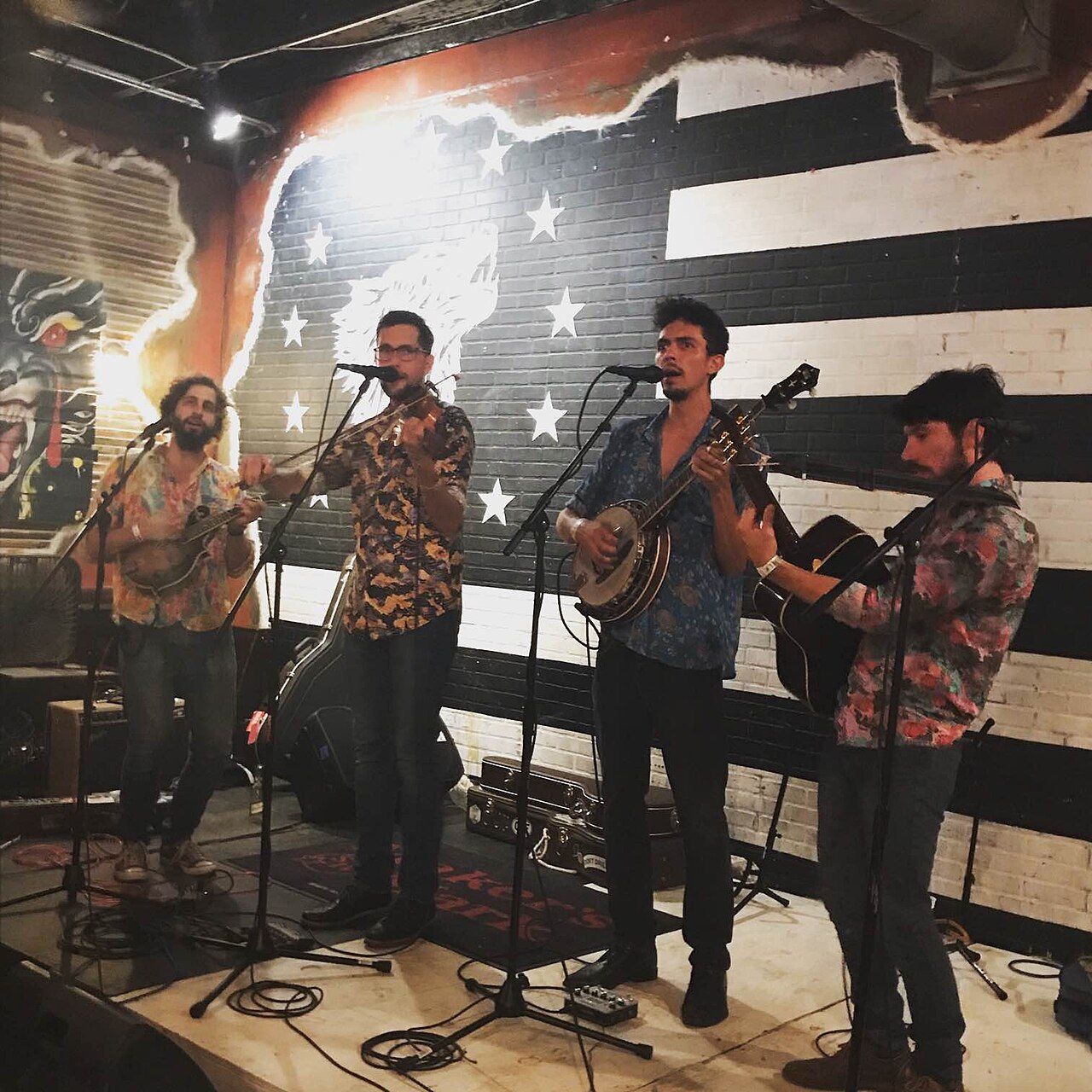
Che Apalache was a string band from Buenos Aires, Argentina, with members from Argentina and Mexico. The group formed in 2013 after Joe Troop, a North Carolina native who had lived in Spain and Japan, moved to Buenos Aires in 2010 to teach bluegrass. He built up the local scene and eventually started the band with some of his best students. For the first five years, they played only Appalachian music, which Troop described as feeling avant-garde for Buenos Aires. Later, they added Latin styles from Argentina and Mexico. The band originally used an upright bass but settled on a lineup of Martin Bobrik, Franco Martino, and Pau Barjau. Their name combines "Che," a casual Spanish greeting, with "Apalache," a misspelling of the Spanish word for Appalachia, which is actually 'Apalaches' (plural).
In 2017, the Virginia Folklife Program and PineCone helped them tour the United States. That same year, they recorded an album in Argentina before their first US tour. Their music drew from Uruguayan murga, candombe, flamenco, mountain gospel, Spanish Sephardic Jewish music, and classic bluegrass like the Stanley Brothers. They sang in English, Spanish, and Japanese, and used intricate percussive rhythms played on their instruments, along with other extended techniques uncommon in acoustic music. Banjoist Béla Fleck found their style so unique that he produced their second album, Rearrange My Heart, in his home studio. The album came out on August 9, 2019, on Free Dirt Records and earned a Grammy nomination. Rolling Stone Country said the group merged cultures to break down folk music boundaries. NPR called them a big hit, and Alt.Latino praised the album as a must-hear. Che Apalache disbanded in 2020 because of the COVID-19 pandemic. Their discography includes Latin Grass (2017, self-released) and Rearrange My Heart (2019, Free Dirt Records).
- formed
- 2013
- disbanded
- 2020
- origin
- Buenos Aires, Argentina
- field
- Music
- nationality
- Argentinian-American
- known_for
- Blending Appalachian bluegrass with Latin styles; Grammy-nominated album Rearrange My Heart
Lore & Background
Che Apalache was formed in Buenos Aires in 2013 by Joe Troop, a North Carolina native who moved to Argentina in 2010 to teach bluegrass music. Troop grew up in Winston-Salem, North Carolina, and was inspired to play bluegrass after hearing a Doc Watson concert as a child. In Argentina, he developed the local bluegrass scene and formed the band with some of his best students. The band initially played only Appalachian music for five years, later incorporating Latin styles from Argentina and Mexico. Their lineup settled as Martin Bobrik and Franco Martino from Buenos Aires, and Pau Barjau from Mexico.
In 2017, Che Apalache received assistance from the Virginia Folklife Program and PineCone to tour the United States. They recorded an album in Argentina from February to May of that year in preparation for their first US tour. The band's name combines 'Che', a casual Spanish greeting, and 'Apalache', a misspelling of the Spanish word for Appalachia, which is actually 'Apalaches' (plural).
Reader's Guide
Che Apalache's significance lies in their fusion of Appalachian bluegrass with diverse Latin American and other musical traditions, including Uruguayan murga, candombe, flamenco, mountain gospel, and Spanish Sephardic Jewish music. They sang in English, Spanish, and Japanese, and were noted for intricate percussive rhythms played on their instruments. Their uncommon style caught the attention of Béla Fleck, who produced their second album, Rearrange My Heart, in his home studio. The album was released on August 9, 2019, on Free Dirt Records and received a Grammy nomination. Rolling Stone Country noted the group 'merges cultures to smash through the boundaries often set up around many types of folk music,' while NPR's Alt.Latino praised the 'brilliant mash up of bluegrass and various forms of Latin music.' The band disbanded in 2020 due to the COVID-19 pandemic, leaving a legacy of cross-cultural musical innovation.
Did You Know?
- Che Apalache's name combines the Spanish greeting 'Che' with 'Apalache', a misspelling of the Spanish word for Appalachia, which is actually 'Apalaches' (plural).
From the Piedmont to Buenos Aires
Joe Troop grew up in Winston-Salem, in the rolling Piedmont region of North Carolina, where a childhood concert by Doc Watson planted a lifelong devotion to bluegrass. After years spent living in Spain and Japan, Troop relocated to Argentina in 2010 with the mission of teaching bluegrass in a country where the genre was virtually unknown. Over the following years he nurtured a small but passionate local scene, and in 2013 he gathered some of his most talented students to form Che Apalache. For their first five years the group performed exclusively Appalachian repertoire, a choice Troop felt was almost revolutionary for a city like Buenos Aires. The ensemble eventually settled on a core trio—Martin Bobrik and Franco Martino, both from Buenos Aires, and Pau Barjau from Mexico—after initially experimenting with an upright bass. As the years progressed, the musicians began weaving in the Latin musical traditions they had absorbed growing up in Argentina and Mexico, setting the stage for a sound that would eventually captivate a global audience.
A Sound Without Borders
Che Apalache's musical vocabulary stretches far beyond the typical bluegrass palette. The trio drew from Uruguayan murga, candombe rhythms, Spanish flamenco, mountain gospel, and even Sephardic Jewish melodies, layering them atop the classic Stanley Brothers–style bluegrass that anchored their sound. They performed in English, Spanish, and Japanese, and their arrangements featured intricate percussive techniques played directly on the instruments themselves—extended approaches rarely heard in acoustic folk ensembles. This fearless eclecticism earned them the attention of banjo virtuoso Béla Fleck, who described the group as "so unique and fascinating that it was impossible for me to say no," adding that their music represented human expression "in spades." Critics echoed that enthusiasm. Rolling Stone Country observed that the band "merges cultures to smash through the boundaries often set up around many types of folk music," while NPR's Alt.Latino column called their 2019 record a "brilliant mash up of bluegrass and various forms of Latin music" and declared it a "Must Hear" from beginning to end.
Rise to National and International Recognition
Che Apalache's trajectory from a small Buenos Aires teaching project to an internationally recognized act accelerated dramatically in 2017. With support from the Virginia Folklife Program and PineCone, the Piedmont Council of Traditional Music, the band undertook their first United States tour that summer. In the months leading up to the trip, from February through May, they recorded material in Argentina to prepare for the journey. That same summer they claimed victory at the prestigious Clifftop old-time music contest in the neo-traditional band category, a significant validation of their hybrid approach. Their self-released 2017 album Latin Grass documented this period of growth. The band's breakthrough came when Béla Fleck agreed to produce their second record, Rearrange My Heart, in his home studio. Released on August 9, 2019, through Free Dirt Records, the album earned a Grammy nomination and was hailed by NPR's All Things Considered as "a big hit," cementing the trio's place in the broader folk and roots music landscape.
A Name, a Philosophy, and an Abrupt End
The very name of the band tells a story of cultural bridging. "Che" is a casual Spanish greeting, equivalent to "buddy" or "man," while "Apalache" is the Spanish rendering of Appalachia—together evoking a friendly nod from one musical tradition to another. That spirit of cross-cultural curiosity defined everything the group did, from their multilingual performances to their willingness to fold flamenco and candombe into bluegrass structures. Fleck summed up their ethos by insisting that music "should be about human expression," and he felt the trio embodied that principle fully. Yet their story ended abruptly. In 2020, the global pandemic forced the band to disband, cutting short what had been a rapidly expanding creative arc. Their two albums—Latin Grass and Rearrange My Heart—remain as a compact but powerful testament to what happens when Appalachian string-band traditions meet the rhythmic and melodic worlds of Latin America, and when a small group in Buenos Aires decides that genre boundaries are meant to be crossed rather than respected.
Gallery
Frequently Asked Questions
Who is Che Apalache?
Che Apalache was an Argentinian-American string band based in Buenos Aires that fused Appalachian bluegrass with Latin musical traditions from Argentina and Mexico. The group was active from 2013 until they disbanded in 2020.
How did Che Apalache get started?
The band came together in 2013 when Joe Troop, a bluegrass instructor originally from North Carolina who had relocated to Buenos Aires in 2010, assembled a group from among his most talented students. Troop had spent several years cultivating the local old-time music scene before putting the band together.
What made Che Apalache's sound distinctive?
For their first five years the group performed exclusively Appalachian old-time music, which Troop felt sounded almost avant-garde in the Buenos Aires context. They later wove in Argentine and Mexican Latin styles, creating a cross-cultural fusion that set them apart from typical string bands.
What is Rearrange My Heart?
Rearrange My Heart is a Grammy-nominated album by Che Apalache that showcased their signature blend of bluegrass and Latin musical elements. It became one of the band's most widely recognized recordings.
When did Che Apalache stop performing?
The band disbanded in 2020 after roughly seven years of activity in Buenos Aires. Their run had begun in 2013 when Troop first gathered his students into a regular group.
More in Old-time bands 1-24
Spotted an error? Know more?
This is a living reference — every entry is fact-audited, and reader corrections feed straight into our audit queue. Suggest an edit · See this site's audit record