The Golden Volcano
A posthumous novel with two endings on gold and greed.

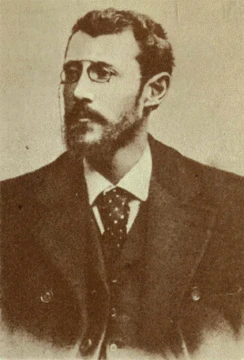
Jules Verne’s novel *The Golden Volcano* (French: *Le Volcan d’or*) was published after his death in 1906, with editing by his son Michel Verne. The story is set during the Gold Rush and follows two French-Canadian cousins who inherit a mining claim along the Klondike’s shores.
After Verne’s longtime publisher Pierre-Jules Hetzel died in 1886, Verne gained more freedom to write novels with satirical or philosophical tones. In 1896, when gold seekers flooded the Klondike, Verne responded—partly because his son Michel had taken up prospecting. Verne saw the Gold Rush as a sign of civilization’s decline, a theme he also explored in *The Survivors of the “Jonathan”*, *The Chase of the Golden Meteor*, and *The Castaways of the Flag*. He wrote *The Golden Volcano* in 1899 but did not publish it, likely because its dark tone and harsh condemnation of greed clashed with his *Voyages Extraordinaires* series. Michel Verne first released it in 1906 after giving it a happy ending, which weakened Jules’ original message but allowed the book to appear. The original, unaltered manuscript was finally published in 1989 by the Société Jules Verne, thanks to Piero Gondolo della Riva.
Verne does not imitate Jack London’s descriptions of the Great North, but he still makes readers feel the cold through vivid accounts of Dawson City snowstorms and the Chilkoot Pass crossing. He describes northern towns with his usual precision. As in *Five Weeks in a Balloon*, *The Children of Captain Grant*, and *The Mysterious Island*, Verne shows a fascination with extreme natural events. Twice, when greed corrupts people and the two heroes nearly come to blows with rival prospectors, nature steps in. First, an earthquake hits Forty Miles Creek. Then, the Golden Volcano erupts. Nature seems to act as a judge, sending the characters home, punishing the wicked, and chastising the innocent.
In the original plot, Summy Skim and Ben Raddle, residents of Montreal, unexpectedly inherit a mining claim in the Klondike, Yukon. They join the Gold Rush but face disaster, disease, extreme weather, and murderous rivals—Malone and Hunter. Just as they are about to fight, an earthquake strikes and floods the area. Ben falls ill and breaks his leg, so Summy and their guide Bill Stell take him to a hospital, where he recovers in a few months.
Quick Facts
- Author
- Jules Verne
- Title Orig
- Le Volcan d'or
- Illustrator
- George Roux
- Country
- France
- Language
- French
- Series
- Voyages Extraordinaires
- Genre
- Adventure novel
- Publisher
- Pierre-Jules Hetzel
- Pub Date
- 1906
- English Pub Date
- 1962
Facts from the source article.
Lore & Background
Jules Verne wrote The Golden Volcano in 1899 but did not publish it, perhaps because of its dark tone and unequivocal condemnation of greed, which contrasts with the rest of his Voyages Extraordinaires series. After the death of his publisher Pierre-Jules Hetzel in 1886, Verne was partially freed from constraints and created more original novels with satirical or philosophical tones. The Klondike Gold Rush of 1896 inspired Verne, as his son Michel became involved in prospecting, and Verne regarded gold as the cause of civilization's decline.
Reader's Guide
The novel's significance lies in its dual publication history and the stark contrast between Jules Verne's original vision and his son's revision. The original manuscript, published unaltered in 1989 by the Société Jules Verne, ends with the heroes returning with less money than they came with, reinforcing Verne's pessimistic thesis about greed. Michel Verne's 1906 edition, however, gives the story a happy ending with the cousins growing rich and a double wedding, effectively subverting his father's message. This divergence highlights the editorial pressures and commercial considerations that shaped Verne's posthumous legacy. The novel also showcases Verne's fascination with extreme natural phenomena, as nature intervenes twice—through an earthquake and a volcanic eruption—to punish the wicked and chastise the innocent.
Did You Know?
- The original manuscript was not published until 1989, 83 years after Michel Verne's edition.
- Michel Verne renamed the character Jacques Laurier to Jacques Ledun in his revised edition.
More in Novels by Jules Verne 1-24
Spotted an error? Know more?
Reader corrections go straight into our review queue. Suggest an edit · How this site is sourced