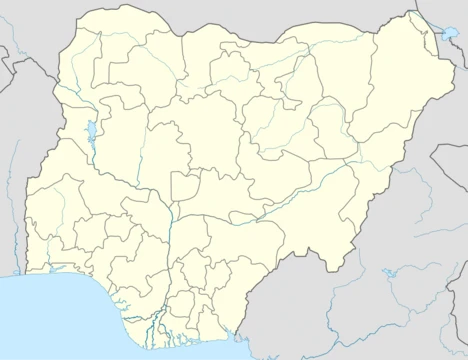
Oyo State
Southwestern Nigerian state, home to many national firsts.

via Wikipedia: Oyo State · see source
Oyo State is a state in southwestern Nigeria, with its capital at Ibadan, the third most populous city in the country and formerly the second most populous city in Africa. Nicknamed the 'Pace Setter State', it is the largest state in Southern Nigeria by landmass and the second most populous in the region after Lagos. The state is noted for being the site of the first university in Nigeria, the University of Ibadan, founded in 1948, and for many other 'firsts' in the country, including the first television station, first stadium, and first teaching hospital. With a projected population of 7,976,100 in 2022, Oyo State is the sixth most populous in Nigeria.
The vast majority of residents are Yoruba, and the state occupies territory once ruled by the powerful Oyo Empire, which controlled much of the region until 1896. The modern city of Oyo, built in the 1830s, serves as a remnant of that imperial era, with the Alaafin continuing a ceremonial role. Formed in 1976 from the former Western State, Oyo originally included what is now Osun State, which split off in 1991. Its capital, Ibadan, was the administrative center of the old Western Region under British colonial rule. The state’s economy remains largely agrarian; the western city of Shaki is considered its breadbasket, with cassava, cocoa, and tobacco among the most important crops. Geographically, Oyo covers about 28,454 square kilometers, with a landscape of old hard rocks and dome-shaped hills rising from 500 meters in the south to 1,200 meters in the north. Major rivers like the Ogun, Oba, and Osun originate in these highlands. The state features natural attractions such as Old Oyo National Park and Agodi parks and gardens, though the endangered African wild dog has been locally extirpated. The climate is equatorial, with dry and wet seasons and average daily temperatures between 25°C and 35°C. Notable landmarks include Cocoa House in Ibadan, the first skyscraper in Africa, and the first television station on the continent, NTA Ibadan. The state also hosts the first teaching hospital in Nigeria, University College Hospital, Ibadan, and several other universities and polytechnics.
- Capital
- Ibadan
- Population (2022 projection)
- 7,976,100
- Area
- 28,454 square kilometres
- Nickname
- Pace Setter State
- Major Ethnic Group
- Yoruba
- Date Formed
- 1976 (from Western State)
- Notable Firsts
- First university, first television station, first stadium in Nigeria
Verified Timeline
Lore & Background
The vast majority of Oyo State residents are Yoruba. Present-day Oyo State sits on territory formerly ruled by the Oyo Empire, a powerful Yoruba empire that ruled much of Oyo state and by extension major parts of Yoruba lands from c. 1300 to 1896. Built in the 1830s, the modern city of Oyo 'New Ọyọ' (Ọ̀yọ́ Àtìbà) is considered a remnant of the imperial Oyo era. Although the medieval great Oyo empire collapsed in 1835, the Alaafin (owner and custodian of the palace) continues to serve a ceremonial role in the new city of Oyo. The state was formed in 1976 from Western State, and included Ọsun State, which was split off in 1991. In 2024, Yoruba separatists unsuccessfully attempted to overthrow the state government in Ibadan.
Reader's Guide
Oyo State holds a significant place in Nigerian history as the site of many pioneering institutions. The University of Ibadan, founded in 1948 as a college of the University of London, was the first degree-awarding institution in Nigeria. The state also hosted the first television station in Africa (NTA Ibadan), the first skyscraper built in Africa (Cocoa House), and the first teaching hospital in Nigeria (University College Hospital, Ibadan). The state economy remains largely agrarian, with the western city of Shaki described as the state's breadbasket; cassava, cocoa, and tobacco are among the most important crops. The state contains natural features including the Old Oyo National Park, and its climate is equatorial with dry and wet seasons. The capital city of Ibadan is the 3rd most populated city in Nigeria according to the 2006 official census.
Did You Know?
- Oyo State is the biggest state in Southern Nigeria in terms of landmass.
- The first television station in Africa, NTA Ibadan, is located in Oyo State.
- Cocoa House in Ibadan was the first skyscraper built in Africa.
- The University of Ibadan, founded in 1948, was the first degree-awarding institution in Nigeria.
- The state has the highest number of towns and cities mentioned in the top 50 most populous towns in Nigeria, with Ibadan, Ogbomoso, Oyo, Saki and Iseyin all featuring.
Frequently Asked Questions
What is Oyo State?
Oyo State is a southwestern Nigerian state whose capital, Ibadan, ranks as the country's third-largest city. It holds the title of Southern Nigeria's largest state by land area and is the second most populous in that region after Lagos.
Why is Oyo State nicknamed the 'Pace Setter State'?
The nickname reflects the state's string of national firsts, including hosting Nigeria's first university (the University of Ibadan), its first television station, its first stadium, and its first teaching hospital.
How big is Oyo State in terms of population and area?
As of the 2022 projection, roughly 7.98 million people live across the state's 28,454 square kilometres of land.
When was Oyo State formed and from what?
Oyo State came into existence in 1976 when it was carved out of the former Western State.
What is the dominant ethnic group in Oyo State?
The Yoruba people make up the major ethnic group in the state.
More in Nigerian States 1-24
Spotted an error? Know more?
This is a living reference — every entry is fact-audited, and reader corrections feed straight into our audit queue. Suggest an edit · See this site's audit record