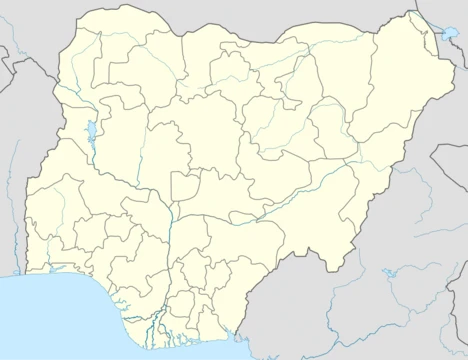
Edo State
Heartbeat of Nigeria, home of the Benin Empire.

via Wikipedia: Edo State · see source
Edo State, located in Nigeria’s South-South geopolitical zone, was created on 27 August 1991 after Bendel State was split into Edo and Delta States. Often called the heartbeat of the nation, its capital is Benin City, which ranks as Nigeria’s fourth-largest city and serves as the hub of the country’s rubber industry. The state is the 21st largest in Nigeria by land area and, as of 2024, was the 20th most populous, with an estimated 5,250,000 residents (a projected 4,777,000 in 2021). It shares borders: 133 km with Kogi State to the north, 81 km across the Niger River to the northeast, about 4 km across the Niger with Anambra State to the east, 350 km with Delta State to the southeast and south, and Ondo State to the west.
The territory within Edo’s modern boundaries once hosted several empires and kingdoms, notably the Benin Empire, whose second dynasty arose in the 11th century AD. The ancient city of Edo—now Benin City—contained some of the world’s largest earthworks. In 1897, a British punitive expedition destroyed much of this city and incorporated the area into the Southern Nigeria Protectorate. The region later became the Mid-Western Region in 1963, formed from Benin and Delta provinces of the Western Region, with Benin City as its capital. It was renamed Midwest State in 1967 under a new 12-state structure, then Bendel State in 1976. During the Nigerian Civil War, Biafran forces occupied the area and briefly declared a “Republic of Benin,” which collapsed within a day when Nigerian troops retook Benin City.
Edo State is home to a diverse population, predominantly Edoid peoples, including the Edo (or Bini), Esan, Ora, Akoko-Edo, Owan, Afemai, and Igala, among others. The Edo language, widely spoken in Benin City, is the most common Edoid tongue. Christianity, introduced by Portuguese missionaries in the 15th century, is dominant in Edo South, while Islam prevails in Edo North; traditional religions are also practiced across the state’s three senatorial districts. The population is roughly 5 million, with four major ethnic groups: Edo (Binis), Owan, Esan, and Afemai (Etsako & Akoko Edo). The Edo-speaking people occupy seven of the 18 local government areas and make up 57.54% of the total population, followed by Esan (14.14%), Igala in Esan South East LGA (3%), Etsako (12.19%), Owan (7.43%), Ijaw (6%), and Akoko Edo (5.70%). Other communities include Igarra in Akoko Edo, Itsekiri in Ikpoba-Okha, Ijaw and Urhobo in Ovia North East and South West, and Ika in Igbanke (Orhionmwon LGA). The state’s political organization among the Edo people follows a three-tier age-group system, with age rather than lineage determining authority. Benin City itself is structured by age-grades, wards, and chiefs—both hereditary and non-hereditary—serving the Oba, who embodies divine kingship.
Edo State has a tropical wet and dry (savanna) climate, with an average yearly temperature of 28.78°C (83.8°F)—slightly lower than Nigeria’s average—and receives about 183.49 mm of precipitation annually over 265.91 rainy days (72.85% of the year). Its elevation is 239.16 meters (784.6 ft) above sea level. The state comprises 18 local government areas. The Edo State House of Assembly (Fifth Assembly) has 24 divisions. The judiciary, headed by a Chief Judge, is the third arm of government; on 19 May 2023, former Governor Godwin Obaseki swore in Hon. Justice Daniel Iyobosa Okungbowa as Acting Chief Judge after Justice Joe Acha retired. As of 12 November 2024, Monday Okpebholo is the governor, with Dennis Idahosa as deputy.
- Capital
- Benin City
- Population (2024)
- 5,250,000
- Rank by population
- 20th most populous in Nigeria
- Rank by landmass
- 21st largest in Nigeria
- Created
- 27 August 1991
- Geopolitical zone
- South-South
- Official language
- English
Verified Timeline
Lore & Background
Edo State was established on 27 August 1991 when Bendel State was split into Edo and Delta States. The Mid-Western Region, a division of Nigeria, came into being in 1963 from Benin and Delta provinces of the Western Region, with Benin City as its capital. In 1967, the region transmuted into Midwest State, and was renamed Bendel State in 1976. During the Nigerian Civil War, Biafran forces occupied the region and declared it the 'Republic of Benin', but the republic collapsed a day later when Nigerian troops retook Benin City. In 1897, the British Empire conducted a punitive expedition and invasion of the region, destroying most of the ancient city of Edo and incorporating the territory into what would become the Southern Nigeria Protectorate. The Edo people's political organization is expressed in a three-tier age group system that cuts across kin groups, making age rather than lineage the criterion of authority. Benin City itself is organized on the basis of age-grades similar to those of the villages, as well as on the basis of wards and chiefs, both hereditary and non-hereditary, serving the Oba in specialised functions. The Oba is the focal point of the Benin political system, based squarely on divine kingship. The state is predominantly inhabited by Edoid people, including the Edo (or Bini), Esan, Ora, Akoko-Edo, Owan, and Afemai people, among others. Christianity was introduced to the region by Portuguese missionaries during the 15th century, while Islam is dominant in Edo North.
Reader's Guide
Edo State holds significant historical and cultural importance as the successor to the Benin Empire, one of Africa's most renowned pre-colonial kingdoms. The state's capital, Benin City, was the site of the ancient city of Edo, which featured some of the largest earthworks in the world. The British punitive expedition of 1897 destroyed much of the ancient city and incorporated the territory into the Southern Nigeria Protectorate. Today, Edo State is a diverse, cosmopolitan region with a population of over 5 million, comprising multiple ethnic groups and languages. The main ethnic groups are Édo, Etsako, Esan, Owan, and Akoko Edo, with the Edo speaking people constituting 57.54% of the total population. The state produces crude oil and other mineral resources like limestone and quarry, and has a cement factory at Okpella. Tourist attractions include the Emotan Statue in Benin City, Ise Lake and River Niger Beach in Agenebode, and the Okpekpe hills. The state's political system features a governor, a 24-member House of Assembly, and a judiciary headed by a chief judge. Monday Okpebholo is the current governor, sworn into office on 12 November 2024. The electoral system uses a modified two-round system requiring a plurality and over 25% of the vote in at least two-thirds of local government areas.
Did You Know?
- Edo State was created on 27 August 1991 when Bendel State was split into Edo and Delta States.
- Benin City, the state capital, is the fourth largest city in Nigeria and the centre of the country's rubber industry.
- The ancient city of Edo, site of modern-day Benin City, was home to some of the largest earthworks in the world.
- During the Nigerian Civil War, Biafran forces declared the occupied region the 'Republic of Benin', but it collapsed a day later when Nigerian troops retook Benin City.
- The Edo people's political organization uses a three-tier age group system, where age rather than lineage is the criterion of authority.
Frequently Asked Questions
What is Edo State and where is it located?
Edo State is a Nigerian state in the South-South geopolitical zone, often called the 'heartbeat of the nation.' It was officially established on 27 August 1991 when it was carved out of the former Bendel State.
What is Edo State's capital and what makes it notable?
Benin City is the capital and ranks as the fourth-largest city in Nigeria. It also serves as the centre of the country's rubber industry.
Why is Edo State historically important?
The state's borders cover territory that once belonged to the Benin Empire, a kingdom that took shape in the 11th century AD. The ancient city of Edo, now modern Benin City, was home to some of the largest earthworks ever built in the world.
How large is Edo State in population and area?
With roughly 5.25 million residents as of 2024, it sits at 20th among Nigerian states by population. By landmass it ranks 21st in the country.
Which geopolitical zone does Edo State belong to?
Edo State is part of Nigeria's South-South geopolitical zone, placing it in the southern-central portion of the country alongside its neighbouring states in that region.
More in Nigerian States 1-24
Related in Nigerian States
Links follow this subject's own source article.
Spotted an error? Know more?
This is a living reference — every entry is fact-audited, and reader corrections feed straight into our audit queue. Suggest an edit · See this site's audit record